The Street-Level Blueprint: Why ‘Spider-Man: Brand New Day’ Proves to Be the MCU’s Ultimate Winning Formula
HOW SPIDER-MAN JUST SAVED THE ENTIRE MCU! 🕷️💥
Breaking box office records with a staggering $1.67 billion run, Spider-Man: Brand New Day isn’t just a massive hit—it’s the definitive blueprint for Marvel’s future! 📈✨
By stripping away the convoluted multiversal clutter and returning to a grounded, street-level narrative focused on raw emotional resonance, Tom Holland’s fourth solo outing proved that character-driven storytelling still reigns supreme. With brilliant crossovers featuring Jon Bernthal’s Punisher and jaw-dropping mutant expansions, Marvel has found its winning formula again. 🧬🔥
Want to know why this formula is changing everything for Phase Six and beyond?👇👇👇

For several years, the overarching discourse surrounding the Marvel Cinematic Universe has centered on fatigue. As the franchise expanded deeper into cosmic threats, multiversal incursions, and reality-bending timelines, critics and fans occasionally voiced a longing for the intimate, character-driven storytelling that defined the early days of the Infinity Saga. Enter Spider-Man: Brand New Day.
Shattering expectations with a historic box office run crossing $1.67 billion worldwide, Tom Holland’s fourth solo outing has done more than just print money for Sony and Disney—it has provided a masterclass in how modern superhero blockbusters can balance massive cinematic universe connectivity with grounded, deeply personal stakes.
Stripping Away the Multiverse for Pure Character Study
Following the reality-altering memory-wipe conclusion of Spider-Man: No Way Home, the creative team faced a monumental challenge: how do you follow up a multi-billion-dollar nostalgia-fueled event film? The answer, brilliantly executed by director Destin Daniel Cretton, was to scale everything back down.
Instead of relying on alternate dimensions or sprawling cosmic armadas, Brand New Day anchors itself entirely on isolation, grief, and selflessness. By forcing Peter Parker to operate completely anonymously—with his loved ones having forgotten his very existence—the film strips away the safety nets of high-tech Stark resources and global celebrity status. It returns Peter to his roots as a gritty, street-level protector scraping by in New York City.
This pivot proved that audiences aren’t necessarily tired of superhero movies; they are tired of stakes that feel abstract and detached from human emotion. By focusing on Peter’s internal struggle, his evolving physical abilities, and his quiet determination to protect a city that doesn’t remember him, the film achieved an emotional resonance that resonated deeply with global audiences.
The Power of Smart, Organic Crossovers
One of the primary critiques leveled against modern franchise filmmaking is the “homework assignment” problem—where character appearances feel forced simply to set up future projects. Brand New Day successfully subverts this trap by integrating its crossover characters with organic narrative purpose.
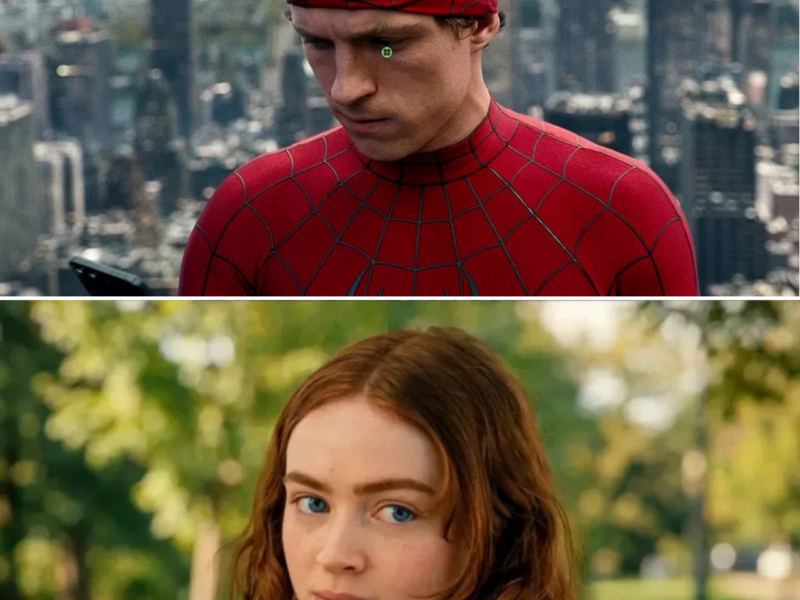
The inclusion of Jon Bernthal’s Frank Castle (The Punisher), Mark Ruffalo’s Bruce Banner, Florence Pugh’s Yelena Belova, and the introduction of Sadie Sink as a wounded, complex Jean Grey didn’t feel like corporate mandated cameos. Instead, each character served as a thematic mirror for Peter. The dynamic between Holland and Bernthal, in particular, offered a fascinating study in contrasting moral codes regarding justice and sacrifice. By keeping the scope tight while weaving in corner-of-the-universe additions—including expanding the mutant mythos and touching upon Department of Damage Control secrets—Marvel proved that universe-building works best when it serves the protagonist’s immediate journey rather than overshadowing it.
Empathy as the Ultimate Weapon
At its core, the triumph of Brand New Day lies in its thematic philosophy. In an era where blockbusters frequently rely on CGI-heavy punch-fests to resolve conflicts, Brand New Day famously pivots toward empathy. The emotional climax—where Peter reaches out to Jean Grey, using his own history of loss to pull her back from the brink of absolute despair—subverts traditional action tropes.
Peter’s defining declaration that experiencing loss does not mean one has to suffer in isolation encapsulates the timeless appeal of the character. It is a message of community and compassion that struck a chord with viewers, proving that spectacle is only as effective as the emotional weight behind it.
A Blueprint for Phase Six and Beyond
As the MCU navigates its way toward its next massive overarching events, the lessons of Spider-Man: Brand New Day are impossible to ignore. The film has effectively handed Marvel Studios a playbook for future success:
Prioritize Grounded Stakes: High-concept threats work best when the emotional core remains intensely personal.
Organic Integration: Crossovers and expanded universe lore should enrich the protagonist’s narrative arc rather than distract from it.
Character-First Filmmaking: Never lose sight of the foundational traits that made these heroes iconic in the comic books.
The phenomenal success of Brand New Day demonstrates that the superhero genre still has plenty of mileage left, provided studios are willing to trust the humanity of their characters over mere computer-generated noise. For Peter Parker, navigating the shadows of anonymity has never looked brighter—and for the MCU, this street-level formula may well be the key to securing its future for the next decade.