The Dark Side of Palworld 1.0: Why the Community is Furious Over Pocketpair’s “Unfinished” UI and Game-Breaking Quality of Life Failures
Palworld 1.0 is breaking concurrent player records again, but a massive fundamental flaw is quietly tearing multiplayer servers—and real-world friendships—completely apart…
Hardcore players are just now realizing that the highly anticipated update completely ignored game-breaking UI nightmares, missing base-building tools, and a restrictive Guild system that secretly ruins how you play with friends. What major features did Pocketpair supposedly promise but silently scrap right before launch?
Find out exactly why the most dedicated players are threatening a massive boycott until these UI disasters are fixed 👇

The official release of Palworld 1.0 was supposed to be a flawless victory lap for developer Pocketpair. By pushing the wildly successful creature-collecting survival game out of Early Access, the studio delivered sweeping endgame content, towering new bosses, and a massive influx of brand-new Pals. Millions of players flocked back to the servers to experience the definitive version of the survival phenomenon. However, a rapidly growing segment of the hardcore player base is declaring the 1.0 launch fundamentally flawed. Beneath the shiny new content drops lies a tangled web of outdated user interfaces, restrictive multiplayer mechanics, and missing Quality of Life (QoL) features that are leaving the community utterly frustrated.
Across Reddit, X (formerly Twitter), and massive dedicated Discord servers, a localized meltdown is occurring. Players are accusing Pocketpair of ignoring the most crucial, foundational mechanics that keep survival games playable in the long term. A recent comprehensive breakdown by popular gaming content creator ItalianSpartacus highlighted a laundry list of these failures, echoing the growing sentiment that Palworld 1.0 is a phenomenal game trapped inside an intensely frustrating user experience.
The Guild System Crisis: Tearing Multiplayer Friendships Apart
Perhaps the most explosive debate currently dominating community forums surrounds Palworld’s highly restrictive multiplayer party mechanics. In traditional survival titans like Rust or Ark: Survival Evolved, players can seamlessly party up to explore, fight, and trade while maintaining their own sovereign territories. In Palworld 1.0, the system forces players into a suffocating corner: if you want to properly party up with your friends to run dungeons and share loot, you must join the same Guild.
This requirement triggers a massive, server-wide problem. Guilds are strictly bound by the server’s base cap limitations. If a group of ten friends decides to form a Guild to experience the multiplayer aspects of the game together, they are stripped of their individual freedom to build personal bases. They are forced to share a heavily restricted number of communal settlements.
“I bought a dedicated server so my friends and I could play together, but the Guild system ruins the entire survival experience,” complained a prominent user on the official Palworld subreddit. “Half of the fun of this genre is building your own unique base. If we team up, we have to cram all of our stuff into one or two shared bases, which immediately turn into cluttered, chaotic nightmares. If we stay out of a Guild to build our own houses, we can’t properly play the game together. It’s an unacceptable oversight for a 1.0 launch.”
Players are aggressively demanding a simple, modernized “Party Up” system entirely separate from Guilds, allowing friends to organically team up for boss raids and exploration without sacrificing their architectural independence.
The Palbox Nightmare: A Data-Management Disaster
For a game fundamentally built around catching hundreds of unique creatures, the community points to the Palbox—the primary storage system for captured Pals—as the single worst UI element in the game. As players push deep into the 1.0 endgame and stockpile hundreds of creatures for intricate breeding programs, navigating the Palbox has become a logistical nightmare.
The primary issue? The total absence of a functional text search bar.
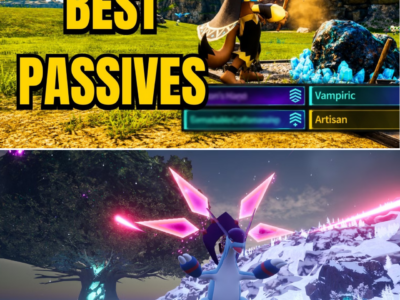
Min-maxers and breeders who need to locate specific passive traits are forced to rely on a clunky, incredibly limited “Sort” function. For instance, if a player wants to breed two Pals possessing rare, Rainbow-tier passive traits (such as “Vampiric”), they cannot simply type “Vampiric” into a search bar. They cannot even sort by the color tier of the passive trait. Instead, they must manually sift through pages of hundreds of Pals, or attempt to memorize exact Palpedia numerical designations just to find what they are looking for.
Furthermore, the sorting algorithm completely fails when combining elements. Searching for a dual-type Pal, such as a Dark/Ground type, forces the system to pull up every single Dark type and every single Ground type independently, rather than isolating creatures that possess both traits simultaneously. Content creators and hardcore breeders have labeled the system “archaic,” begging Pocketpair for a UI overhaul that reflects modern gaming standards.
Base Building Frustrations: Where is the Eyedropper?
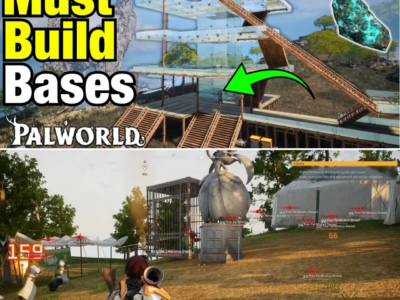
Base building is the lifeblood of the survival-crafting genre, yet Palworld 1.0’s construction mechanics remain bafflingly rigid. Dedicated architects on TikTok and X have showcased incredible, sprawling fortresses, but they are incredibly quick to point out the excruciating tedium required to build them.
Players are expressing deep frustration over the inability to dynamically adjust wall heights or seamlessly utilize rounded tiles—a feature desperately needed to break up the monotonous, blocky aesthetics of standard bases. Even worse is the punishment for making a slight error. If a player accidentally places a stone wall a few inches off-center, they cannot simply click and drag to nudge it into place. The piece must be entirely disassembled, returning the raw materials to the inventory, and then rebuilt from scratch.
However, the loudest outcry regarding construction is the glaring absence of an “Eyedropper” tool. Standardized in modern survival hits like Enshrouded and V Rising, an eyedropper tool allows a player to look at an existing structure—like a glass window or a specific metal foundation—click it, and instantly equip that exact piece to continue building. In Palworld 1.0, builders are forced to back out of their active gameplay, open the radial Technology Screen or build menu, manually scroll through massive lists of unlocked construction sets, select the window, and re-enter build mode. When constructing massive, multi-tiered bases requiring hundreds of alternating pieces, this menu-hopping adds hours of mindless, infuriating downtime.
Work Preference Priorities: Battling Incompetent Artificial Intelligence
The core loop of Palworld relies heavily on automating your base using captured Pals. Yet, the 1.0 update still lacks a nuanced priority system for AI behavior, leading to massive inefficiencies that drive players insane.
Currently, the “Set Work Preferences” menu only allows players to toggle a specific job (like Lumbering or Handiwork) entirely on or off. If a player assigns a diverse Pal to handle Watering crops, but leaves its Handiwork and Transporting abilities active, the Pal’s AI will inevitably become distracted. Players report watching their crucial agricultural Pals abandon dying crops simply to haul a random piece of dropped wood halfway across the base.
The community is overwhelmingly pointing to the acclaimed indie game RimWorld as the gold standard that Pocketpair desperately needs to copy. Players are demanding a numerical priority list (1 through 5) where they can instruct a Pal to always prioritize Watering first, move to Handiwork second if no crops need water, and only default to Transporting items if absolutely zero primary tasks are available. Until this is implemented, players are forced to painstakingly micromanage their bases, entirely shutting down specific machines or assembly lines just to force the AI to focus on the right jobs.
Missing Map Data and the Call for Pinned Recipes
The list of QoL grievances continues into the general exploration and crafting systems. Despite a massive map expansion in 1.0, zooming in on specific islands fails to yield detailed sub-region names. Players attempting to coordinate boss hunts or share resource locations on Discord are forced to use vague landmarks (“East of the Tower of Rayne” or “South of the Fort Ruins”) because specific biomes like the Cinnamon Forest lack proper geographical labeling on the overworld map.
In the crafting menus, the inability to “pin” recipes to the main Heads-Up Display (HUD) is causing immense friction. When a player realizes they need to craft a complex late-game item requiring refined ingots, carbon fiber, and high-quality cloth, they must memorize the exact quantities of each sub-material. Without a pinning feature, players find themselves constantly running back and forth between different assembly lines, repeatedly opening menus just to check how many circuit boards they still need to manufacture.
The Verdict: Will Pocketpair Listen?
While Palworld 1.0 undeniably delivers an incredibly fun, addictive, and chaotic survival experience, the friction caused by these UI and UX oversights cannot be ignored. The game currently sits at a fascinating crossroads. It has successfully established itself as an industry titan, but the lack of fundamental features threatens to push the most dedicated, long-term players away.
Historically, PC players would turn to third-party mods to fix these exact issues. However, the community is vocally rejecting that approach for Palworld’s official release. They argue that fundamental features—like a working search bar, an eyedropper tool, and a functional multiplayer party system—should not be outsourced to unpaid modders.
As Pocketpair navigates ongoing legal pressures and plans future DLC expansions, the immediate health of their flagship game relies entirely on a QoL intervention. The content is undoubtedly there, but until the developers streamline the interface and give players the tools they need to actually manage their massive empires, Palworld 1.0 will continue to be viewed by its most hardcore fans as a brilliant masterpiece that is frustratingly rough around the edges.