‘CAPITALISM 101’: How Palworld 1.0 Players Are Building Ultra-Optimized ‘Skyscraper’ Bases to Print End-Game Resources—and Keep Worker Pals From Revolting
Are your Pals secretly plotting a full-blown revolt against your sweatshop empire in Palworld 1.0? 😳🔥
While thousands of players are watching their entire base production collapse due to depressed, sick Pals going on strike, top efficiency strategists just exposed the ultimate 1.0 automation layout that prints end-game resources on autopilot without ever touching a pickaxe again! But why are community veteran builders claiming that the newly added Item Retrieval Machine and Pal Research Lab are completely changing workplace ethics—and what single deadly mistake on floor 3 is causing entire bases to instantly break?
Find out how to max out your base efficiency before your workers file an HR report against you! 👇
If you thought surviving the wilderness of Pocketpair’s hit survival game Palworld was about catching legendary monsters and dodging wild boss attacks, the community has news for you: version 1.0 has officially transformed the game into a cutthroat corporate simulator.
Following major expansion updates and systemic overhauls—including maximum base levels raised to Level 30, Japanese-style architecture, and advanced automation structures—players across Reddit, X (formerly Twitter), and Discord are abandoning primitive wooden huts in favor of multi-story industrial complexes.
Prominent creator and guide expert Spyro ZA recently dropped a viral breakdown titled “Palworld 1.0 How To Build An Optimised Base For INSANE Productivity,” igniting a massive wave of debate within the community. The verdict? If you are still manually mining Ore, chopping down trees, or hunting wild Pals for drops in the late game, you are playing Palworld completely wrong.
Here is an in-depth breakdown of how top-tier players are min-maxing their base operations in version 1.0, navigating delicate Pal workplace ethics, and using futuristic tech to dominate the resource economy.
Phase 1: Location & The Rise of the ‘Skyscraper’ Meta
Location has always been key in Palworld, but 1.0 has shifted how players approach land ownership. In the early game, sprawling flat spots near starter locations—such as the iconic starting pond—remain fan favorites. However, as players push past Level 20 and venture toward mid-to-late game biomes, proximity to high-density resource nodes like Ore, Coal, Sulfur, Pure Quartz, and late-game deposits becomes mandatory.
Yet, a major structural limitation plagues every player: the strict blue boundary perimeter emitted by the Palbox. Any structure built outside this circle naturally decays over time, and assigned Pals flatly refuse to work on tasks beyond the line.
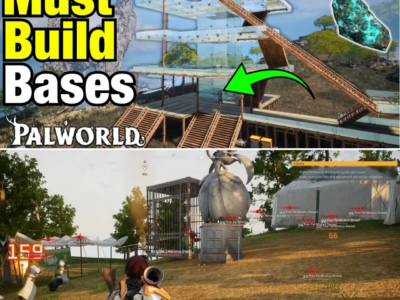
To combat this horizontal real-estate constraint, the community has engineered a solution: verticality.
“The height limit in Palworld is absurdly high,” notes content creator Spyro ZA during his viral breakdown. “Instead of squeezing everything onto one flat floor, you build vertically like a skyscraper—three, four, five, or six floors tall.”
By building vertical towers, players maximize floor space within the Palbox radius. However, veteran builders on Reddit’s r/Palworld issue a crucial warning: Pal pathfinding can get messy on multi-tiered staircases. To prevent Pals from glitching out or starving on the top floor, players design “open elevator” shafts using flying Pals or build dedicated wide stairwells to keep traffic flowing smoothly between production floors.
Phase 2: Preventing HR Strikes (Sanity & Labor Management)
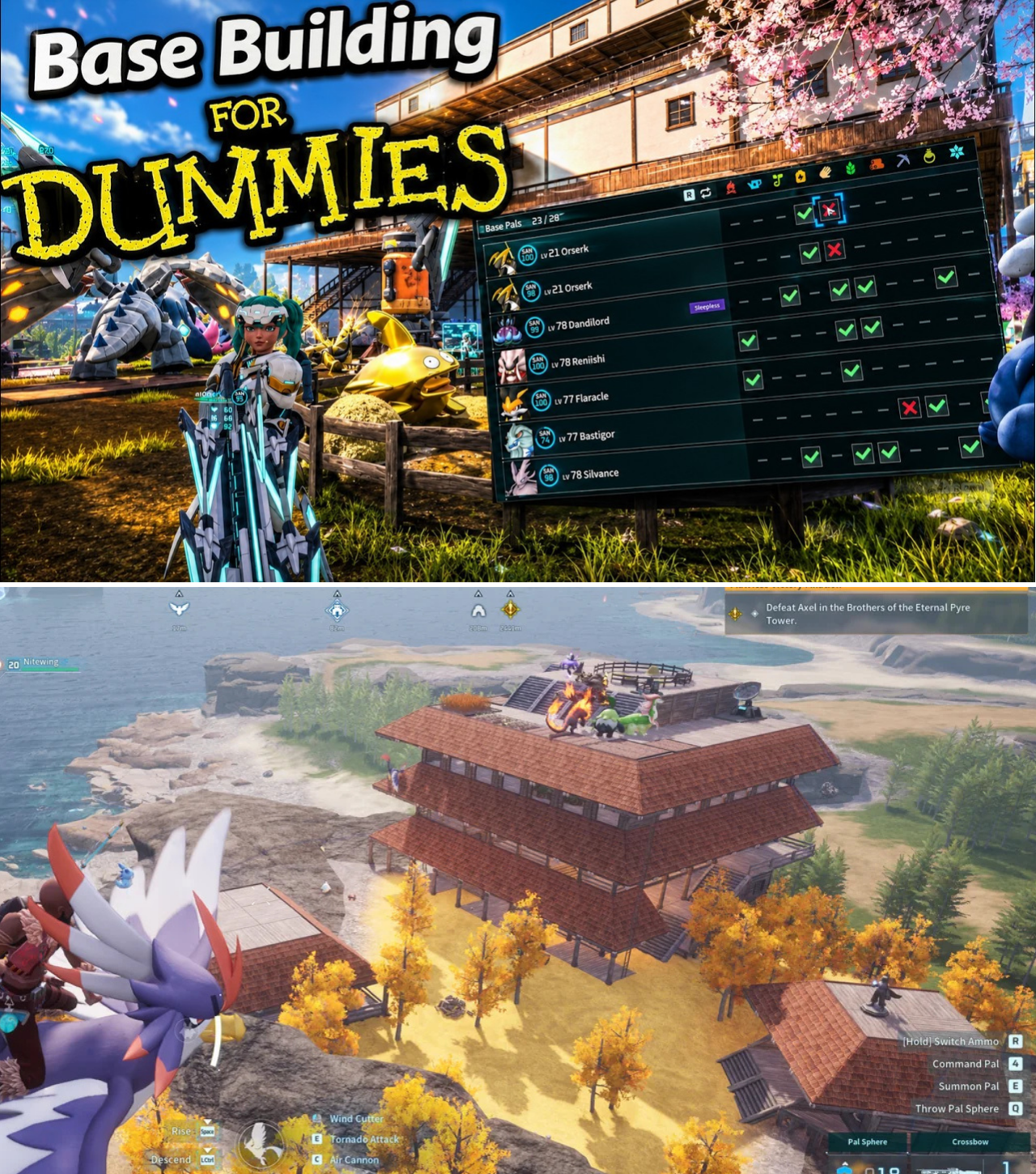
With great productivity comes great stress—specifically for the Pals running the machinery. In Palworld 1.0, worker Pals possess a crucial metric: Sanity (SAN).
If a Pal’s SAN drops too low due to overwork, poor sleeping conditions, or starvation, they develop negative status ailments like Ulcers, Fractures, or Depression. In extreme cases, they go on strike and completely refuse to perform tasks.
Community strategists emphasize that maintaining high SAN isn’t just moral; it’s an absolute economic necessity.
The Pal Bed Ratio: Every Pal assigned via the Palbox requires an accessible Pal Bed. Upgrading from basic straw beds to high-tier beds drastically accelerates night-time SAN recovery.
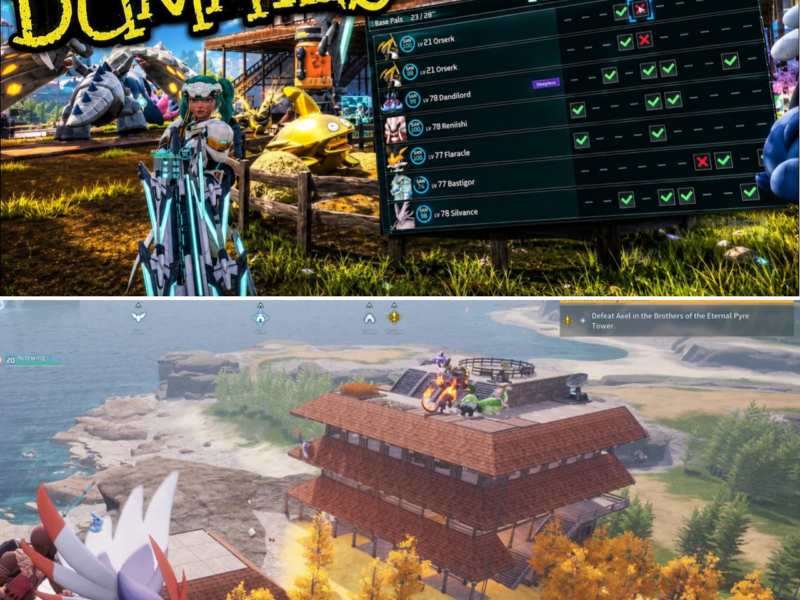
Workload Preferences via Monitoring Stand: Added as a vital QoL facility, the Monitoring Stand allows players to fine-tune individual Pal tasks. If a Pal has Level 3 Mining but Level 1 Harvesting, players can disable their Harvesting suitability so the Pal doesn’t waste precious work hours on low-yield crops.
SAN Regeneration Tech: High-drain activities—such as working in Coal Mines or operating the Gold Coin Assembly Line—cause rapid mental fatigue. To combat this, base planners surround work areas with Hot Springs, clinics, and advanced technology like the Alpha Wave Generator and Beta Wave Generator to passively suppress SAN degradation.
As one popular Reddit user joked: “It starts sounding like a lecture on extreme corporate capitalism. You’re balancing vending machines, shift rotations, and mental health spas just to keep your assembly line pumping 24/7.”
Phase 3: Total Automation (Farms, Ranches, and the Grinder Loop)
The holy grail of Palworld 1.0 base building is 100% passive automation, where the player never has to manage food, basic crafting materials, or sphere ingredients manually.
The Crop Loop
By placing Grow Beds (Wheat, Tomato, Lettuce, Berries) alongside a nearby Feeding Trough, players establish a self-sustaining loop. Pals with Planting, Watering, Gathering, and Transporting work suitabilities plant, irrigate, harvest, and deposit food directly into the trough. The workers feed themselves, and the player can periodically swing by to grab surplus food for personal exploration.
Passive Drop Farming at the Ranch
Why run around the world hunting wild Pals for drops when you can farm them at home? Assigning specific Pals to the Ranch yields continuous passive drops:
Soothsayer produces Bones (essential for crafting Cement).
Kelpsea produces Pal Fluids.
Other dedicated Ranch Pals generate High-Quality Pal Oil, Wool, and Eggs without breaking a sweat.
Converting Excess into Paldium
Paldium Fragments are required for almost every tier of Pal Sphere, but mining Paldium nodes in the wild is painfully slow. Modern bases rely heavily on the Grinder (or its advanced variant, the Cryogenic Grinder). By assigning a Pal with Watering or Freezing suitability to the Grinder, players can process thousands of excess Stone or Metal into endless piles of Paldium Fragments automatically.
Phase 4: High-Tech Upgrades & Quality of Life Game-Changers
The 1.0 update brought game-changing technological structures that elevate base output to legendary levels:
The Pal Research Lab
Unlocked early in the tech tree, the Pal Research Lab allows players to spend Ancient Pal Manuscripts—farmed by sending Pals on passive missions via the Pal Expedition Station—to unlock permanent global passives. These passives increase Kindling speeds, Handiwork efficiency, and crop yields across all connected bases simultaneously.
Specialized Worksite Boosters
Researching Level 2 nodes in the Lab unlocks secondary productivity structures. Placing a Flame Cauldron instantly buffs all Kindling Pals, a Minecart boosts Mining speed, and a Large Toolbox accelerates Handiwork.
The Statue of Power & Pal Condenser
To max out individual worker stats:
Players spend Pal Souls at the Statue of Power to permanently enhance a Pal’s Work Speed.
The Pal Essence Condenser allows players to combine duplicate Pals into 4-star worker super-units, boosting their core Work Suitability skill levels (e.g., upgrading a Level 3 Mining Pal into a Level 4 powerhouse).
Work Suitability Enhancement Books purchased from Wandering Merchants grant permanent skill upgrades to specialized base managers.
The ‘MRI Machine’: Item Retrieval Machine
Perhaps the single biggest Quality-of-Life addition in 1.0 is the Item Retrieval Machine (unlocked in late-game technology). Resembling a giant medical MRI scanner, this structure acts as a centralized neural hub for every chest, container, and refrigerator inside your base boundary.
Instead of running between dozens of localized wooden chests to find specific ingots or crafting components, players can simply walk up to the Item Retrieval Machine and search, filter, or bulk-deposit items directly across the entire base inventory.
The Community Verdict: What Lies Ahead for Palworld Base Builders?
The response from the Palworld community to these 1.0 optimizations has been overwhelmingly positive, though not without humorous commentary regarding the sheer scale of base management.
On Discord and Reddit, discussion threads are packed with players sharing floorplan blueprints, chest exclusion settings, and automated breeding loops. While some casual players admit to being overwhelmed by the depth of SAN management and work preference toggles, hardcore survivalists praise Pocketpair for giving late-game base building real strategic weight.
As Pocketpair continues to expand the map with new biomes, high-tier raids, and oil rig strongholds, one thing is crystal clear: players who master vertical skyscraper architecture, SAN balancing, and high-tech automation loops will reign supreme over Palpagos.
So check your Palbox, inspect your Feeding Troughs, and construct those Hot Springs—because on these islands, an optimized base is the ultimate key to survival.