The lights in the historic Ryman Auditorium dimmed to a reverent hush on March 19, 2025, as the Grand Ole Opry celebrated its 100th anniversary with a live broadcast that would etch itself into country music history. What began as a star-studded tribute to a century of twang, heartache, and honky-tonk quickly became something far more profound—a resurrection of the genre’s soul, delivered not through pyrotechnics or viral gimmicks, but through pure, unfiltered voices that carried the weight of decades.
The stage filled slowly at first. Alan Jackson, the stoic Georgia boy turned Hall of Famer, stepped forward in his signature black hat and crisp white shirt to deliver a stirring rendition of his 1992 classic “A Lot About Livin’ (And a Little ‘Bout Love).” His baritone rolled through the wooden pews like a warm summer rain, reminding everyone why traditional country still resonates: it’s honest, it’s lived-in, it’s real. The crowd—packed with longtime fans, industry insiders, and a new generation discovering the Opry for the first time—leaned in, phones forgotten for once.

Then came Brad Paisley, guitar in hand, flashing that trademark grin as he reunited with Alison Krauss for their haunting 2003 duet “Whiskey Lullaby.” The harmonies wrapped around the room like smoke, Paisley’s playful precision meeting Krauss’s ethereal purity in a performance that felt both timeless and urgently present. Reba McEntire followed, commanding the stage with the effortless grace of a woman who has defined female country for over four decades. Her take on classics and newer material alike showcased why she’s the Queen: power, poise, and an emotional depth that can break hearts or mend them in the same breath.
Carrie Underwood, the modern torchbearer, entered next. At 42, she remains one of the most powerful vocalists in any genre, her three-octave range capable of both thunder and tenderness. But on this night, she wasn’t there to dominate. She was there to honor. Underwood announced a special tribute to her longtime mentor and friend, Randy Travis, the man whose baritone had once defined an era of neo-traditional country in the late ’80s and early ’90s.
Travis, now 65, had suffered a near-fatal stroke in July 2013 that left him with aphasia, severely impairing his speech and singing abilities. Doctors had once suggested pulling the plug; his wife Mary Travis refused, standing vigil through years of grueling therapy. Progress came slowly—walking with assistance, regaining fragments of communication—but full vocal recovery seemed impossible. Yet Travis refused to fade entirely. He released new music with AI assistance to recreate his voice, appeared sporadically in public, and even announced the “More Life Tour” for 2026 with his original band and special guest vocalist James Dupré, a testament to resilience that moved fans worldwide.
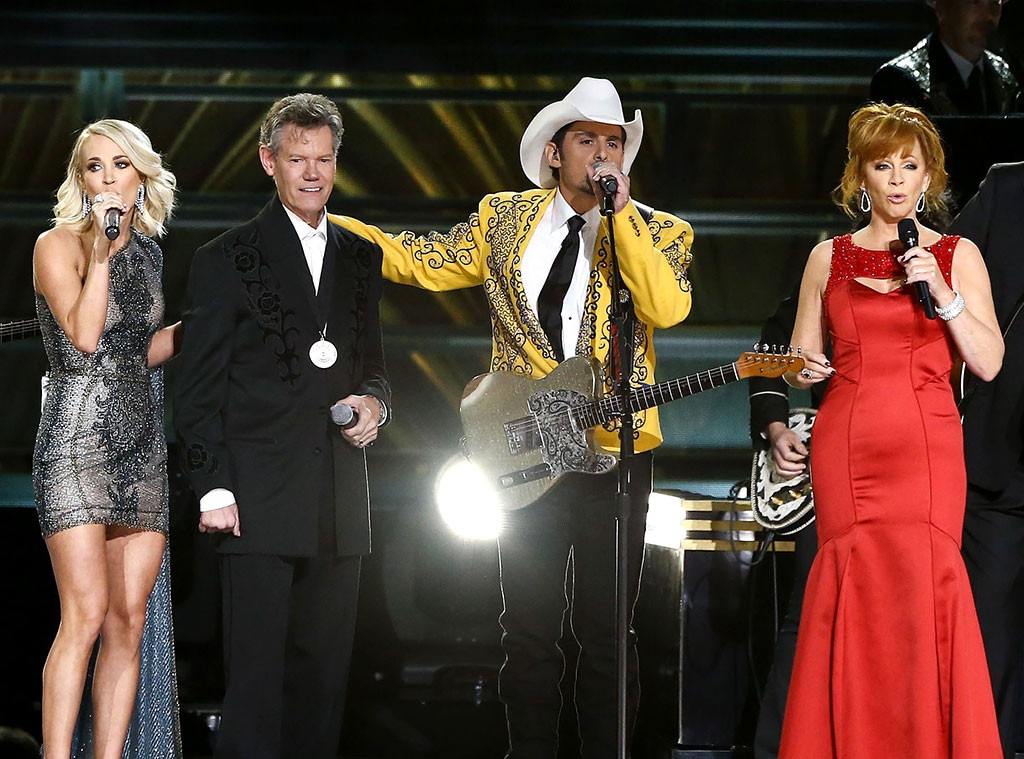
Underwood began with Travis’s 2002 hit “Three Wooden Crosses,” her voice soaring with reverence. The lyrics—about redemption, faith, and unexpected grace—took on added layers knowing Travis was seated in the audience, watching the woman he had once guided now carrying his torch. She transitioned seamlessly into his signature 1987 smash “Forever and Ever, Amen,” the song that had topped charts for three weeks and become an enduring wedding and anniversary anthem.
The arrangement was stripped down: just Underwood, a gentle acoustic backing, and the weight of history. As she reached the final chorus, something extraordinary happened. Instead of finishing alone, Underwood walked to the edge of the stage, microphone extended toward the front rows where Randy Travis sat in his wheelchair, beaming with quiet pride.
She held the mic to him.
The arena—already on the edge—froze. Travis, eyes shining, leaned forward. With one soft, trembling word that carried every ounce of his fought-for strength, he sang:
“Amen.”
It wasn’t the booming baritone of his prime. It was fragile, raw, imperfect—and devastatingly beautiful. That single syllable hit like a thunderclap in church. Time seemed to stop. The crowd erupted into an instant standing ovation, tears streaming down faces from the orchestra to the balcony. Even the legends onstage—Jackson, Paisley, McEntire—stood motionless, eyes glassy. Keith Urban and Brooks & Dunn, watching from the wings, later admitted they were overcome, unable to speak for long moments afterward.
Underwood, visibly moved, leaned down for a heartfelt hug. Travis, still smiling through his own emotion, wrapped an arm around her. The moment lingered, unscripted and unbreakable. Cameras caught every detail: the way her hand rested on his shoulder, the way he nodded in gratitude, the collective sigh of release from 2,300 souls in the Mother Church of Country Music.
Social media ignited immediately. Clips of that “Amen” racked up millions of views within hours. Hashtags like #RandyTravisAmen, #Opry100, and #RealCountry trended globally. Fans posted: “Not a dry eye when Randy sang ‘Amen’—pure magic.” “This is why country will never die.” “That one word said more than a thousand songs.” Even non-country listeners tuned in, drawn by the humanity on display.
The performance wasn’t isolated. The night featured other tributes and reunions that reinforced the theme: country music’s roots run deep, and they’re still vital. Alan Jackson’s set evoked the ’90s heyday; Paisley’s collaboration with Krauss reminded everyone of country’s bluegrass soul; McEntire’s commanding presence proved legends don’t retire—they evolve. But Travis’s moment became the emotional centerpiece, a living reminder that the genre’s heart beats in resilience, faith, and the unbreakable bond between artist and audience.
In interviews after the broadcast (aired live on NBC and Peacock), Underwood spoke through tears: “Randy taught me so much about what it means to be authentic in this business. To see him there, to give him that last word—it wasn’t planned down to the second, but it felt destined. That ‘Amen’ was his, and it was ours.”
Travis, communicating through his team and limited speech, later shared a simple message via his website and social channels: gratitude. For his wife Mary, for the fans who never stopped believing, for the music that still flows through him even when words struggle to follow.
The Opry 100 celebration extended beyond one night. It sparked renewed interest in traditional country amid debates about the genre’s direction—pop crossovers, bro-country critiques, evolving sounds. Yet here, in a single evening, the answer came not in arguments but in applause: real country didn’t fade. It walked back into the spotlight, voices blending like old friends around a porch light, raw and real.
By the second chorus of every shared song, half the crowd was wiping tears. And when Randy Travis uttered that trembling “Amen,” it wasn’t just a word. It was a declaration.
Country music lives. It hurts, it heals, it endures. And on March 19, 2025, in the hallowed circle where so many legends began, it reminded the world exactly who it is.
The night didn’t end with the final bow. It echoed in living rooms, truck cabs, and church pews for weeks. Fans replayed the clip obsessively, finding new layers each time: the pride in Travis’s eyes, the tenderness in Underwood’s gesture, the way an entire industry paused to honor one man’s fight and one word’s power.
In an era of fleeting trends and algorithm-driven hits, this was permanence. A century of Opry history distilled into a single, soul-shaking syllable.
Because sometimes, the most powerful performances don’t require a full song. Sometimes, one word—delivered with everything you’ve got left—is enough to bring the house down and lift it right back up.
Amen to that.
News
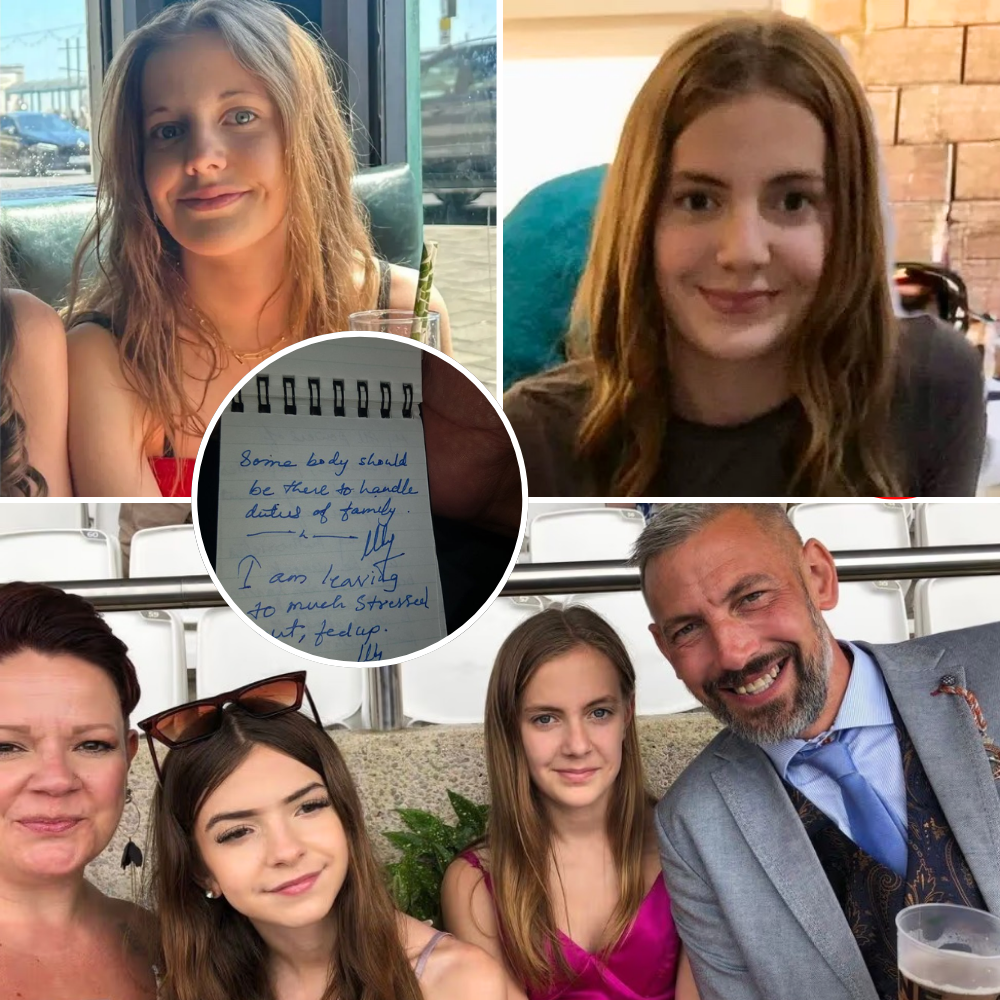
Mum Went to Wake Her 12-Year-Old for School… Instead Found Amelia Dead After Relentless Snapchat Torment 😭 Last Night She Was Happy & Laughing – The Devastating Details Inside
A cheerful 12-year-old girl with a smile that warmed every room spent her final evening wrapped in the simple joys of family life, laughing freely while sharing fish and chips at her grandparents’ house. No one could have predicted that the next morning would bring the kind of silence no parent should ever endure. On […]

👀 American Idol Judges Stunned by Braden Rumfelt’s Voice After Two Major Surgeries Destroyed His Baseball Career — His Comeback Story Is Unbelievable! 😱
The spotlights in the American Idol audition room pulsed with that familiar electric hum as 22-year-old Braden Rumfelt stepped forward, guitar slung over his shoulder, his twin brother Kellen right beside him with fingers poised on the strings. Murphy, North Carolina, felt a world away in that moment—the small-town life of substitute teaching, quiet family […]

😲 She Wrote “String Cheese” While Battling Postpartum Depression… Now Hannah Harper Is Stealing American Idol! Her Incredible Journey Will Inspire You ❤️
The Hawaiian stage lights bathed the Aulani Resort in a golden glow as 25-year-old Hannah Harper, a stay-at-home mom from the tiny town of Bunker, Missouri, gripped the microphone with the same quiet determination she once used to wrangle three rambunctious boys through a long day of laundry and snacks. Her homemade patchwork dress shimmered […]

😱 American Idol Top 20 Poll SHOCK: Hannah Harper & Keyla Richardson Dominate… But Who’s Going HOME Next? 😭 Who’s in Danger?
Hawaii’s sun-drenched shores at Disney’s Aulani Resort became the unlikely battlefield where American Idol Season 24’s Top 20 delivered heart-stopping performances that have left fans divided, judges stunned, and Gold Derby readers casting their clearest verdict yet on who might not survive America’s vote. With the first live results episode looming on March 30, the […]
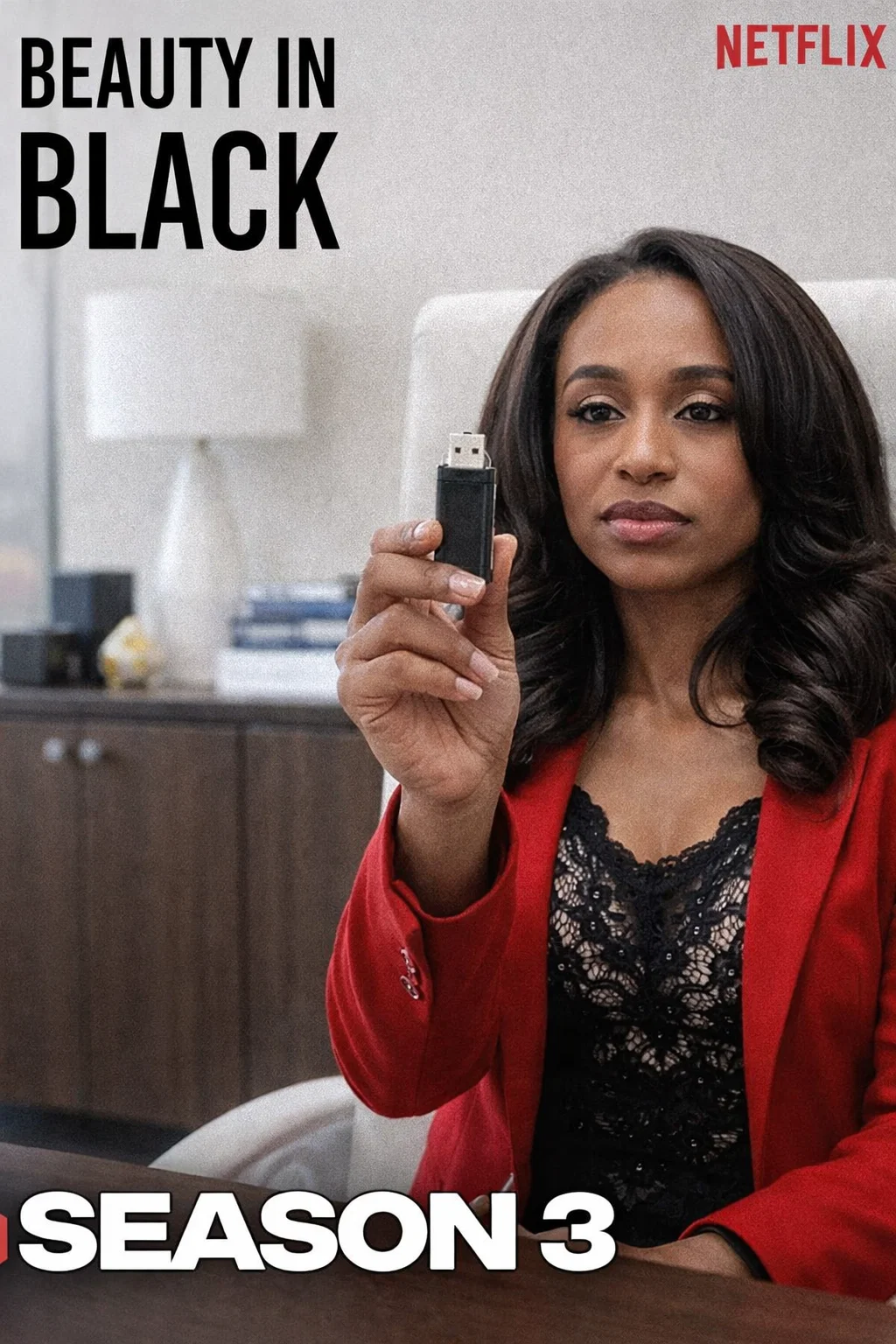
😱💔 Kimmie Standing On The Rooftop With That USB Drive Has Fans Terrified — Is She About To Destroy The Entire Bellarie Empire? 👀
The first explosive trailer for Beauty in Black Season 2 Part 2 is here — and everything shifts fast. The new footage shows Kimmie stepping fully into her power with zero hesitation, but one bold move has fans in total shock. Is she protecting herself… or setting something much bigger in motion? The stakes feel […]

💥 “Is The Baby Okay?” — Virgin River Season 7 Finale Left One Devastating Clue About Mel & Jack’s Child That Changes Everything 😭
Netflix just dropped the news everyone has been waiting for: Virgin River is officially returning for Season 7 — and fans are already bracing for another emotional chapter. The release date and exact drop time are now confirmed, meaning the next wave of romance, heartbreak, and small-town secrets is closer than expected. But one storyline […]
End of content
No more pages to load