THE BLAME GAME: Why Gaslighting Consumers Won’t Save Hollywood-Style ‘Woke Slop’ From Total Financial Ruin
🚨 STOP BLAMING US! The gaming industry is collapsing and publishers are pointing the finger at YOU! 🛑
They forced unwanted agendas, DEI checklists, and garbage live-service slop down our throats, and now that their multi-million dollar games are crashing and burning, corporate executives have the absolute audacity to blame “toxic, anti-woke” gamers for not buying them! From the disastrous fallout of recent flops to the forced involvement of consulting firms like Sweet Baby Inc., publishers would rather watch their companies bleed out than admit they made uninspired, unplayable trash. The absolute hubris of these studio bosses has finally pushed the gaming community over the edge—and the collective pushback is reaching nuclear levels. Are we witnessing the death of corporate gaming as we know it, or will they finally learn that good games, not politics, make money? 🤬🎮
The brutal truth they don’t want you to hear has just been completely exposed. Watch this before it gets taken down! 👇
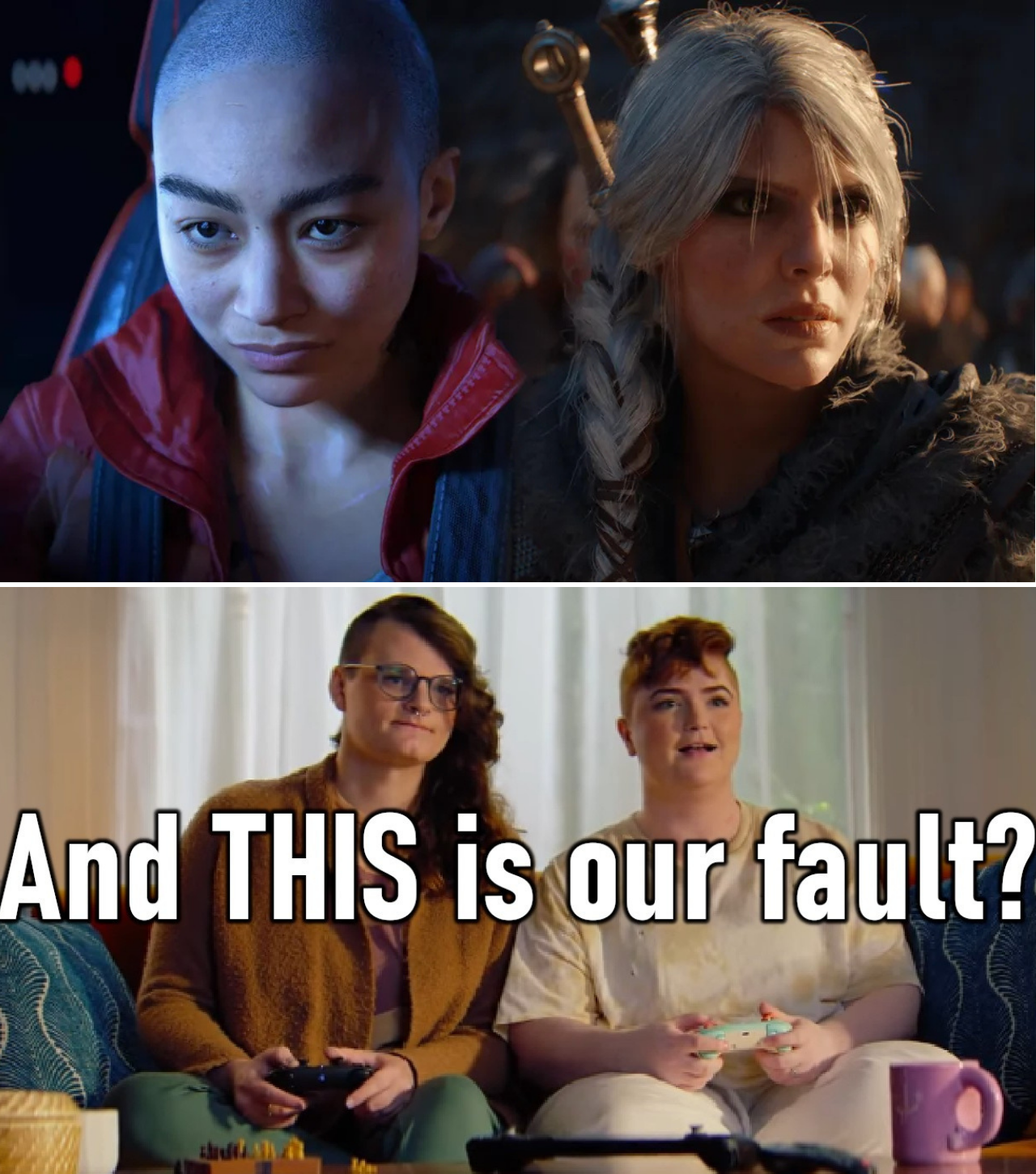
The multi-billion-dollar video game industry is facing an unprecedented identity crisis, and instead of looking in the mirror, corporate publishers are pointing their fingers directly at the players. Over the past few years, a toxic pattern has emerged within the gaming landscape: a massive studio spends hundreds of millions of dollars developing a live-service title packed with corporate-mandated diversity initiatives, political agendas, and aggressive monetization schemes. The game launches, it predictably bombs on Steam and consoles, and within 48 hours, corporate-backed gaming journalists and developers flood social media to accuse the player base of bigotry, “anti-woke” toxicity, and systemic resistance to change.
The gaming community has officially had enough of the gaslighting. From Reddit threads to viral YouTube commentaries, players are loudly pushing back against the narrative that they are obligated to fund games they never asked for. The sentiment is clear: gamers aren’t boycotting titles because they hate diversity; they are ignoring them because the games are uninspired, mechanical corporate “slop” that prioritizes virtue signaling over actual entertainment value.
The Live-Service Mirage and Corporate Hubris
The fundamental disconnect between modern publishers and their core audience lies in the obsession with the “live-service” business model. Following the historical financial success of long-lasting live-service giants, almost every major gaming conglomerate attempted to replicate the formula. They built cheap, replaceable, and boring titles designed to play off artificial hype, expecting gamers to continuously chase a carrot on a stick for years on end.
“Everyone makes these live-service games that no one wants, no one asks for, and no one really plays because they are terrible,” popular commentator Qwazar77 stated in a scathing critique of the industry’s current trajectory. Pointing to high-profile disasters like Warner Bros.’ Suicide Squad: Kill the Justice League, critics argue that publishers are completely blind to the reality of the market. Most players who enjoy live-service games are already heavily invested in established eco-systems like Warframe, Destiny, or Fortnite, which boast years of accumulated content and ingrained habits. Trying to force a new, unpolished corporate product into that space is an exercise in futility.
Yet, when these multi-million-dollar gambles inevitably crash, publishers refuse to acknowledge their structural failures. Instead, the narrative is twisted to target the consumer. If a game fails, executives claim it wasn’t because the gameplay loop was monotonous or the writing was subpar—it was because “reactionary gamers” revolted against the game’s progressive themes.
The Consulting Firm Boogeyman: DEI vs. Good Design
At the absolute center of the modern gaming culture war is the heavily scrutinized role of external diversity, equity, and inclusion (DEI) consulting firms, most notably Sweet Baby Inc., along with ideological influences tracing back to the early days of online gaming disputes involving figures like Anita Sarkeesian.
Gamers have increasingly voiced suspicions that the creative soul of their favorite studios has been hijacked by external committees. Instead of allowing developers to write compelling narratives and design organic worlds, games are widely perceived to be built around a corporate checklist. Characters are altered, dialogue is sanitized, and narratives are warped to fit specific social agendas.
The tragic irony, as many community analysts note, is that the historical concept of “do your job well and get rewarded” has successfully governed human commerce for millennia. When studios focus strictly on making an excellent product, audiences respond with overwhelming financial support. Games like Black Myth: Wukong, Elden Ring, and Baldur’s Gate 3 achieved monumental success by delivering uncompromised, high-quality experiences tailored to what core gamers actually want.
Conversely, when studios prioritize political pandering over core design mechanics, the product suffers. Giants like Bungie’s Destiny franchise have seen massive drops in community goodwill and player retention after being “shreked by their own hubris,” as critics put it, shifting their focus toward pleasing corporate consultants rather than satisfying the core player base that built their success in the first place.
The Devastation of Single-Player Legacies
The corporate obsession with ideological messaging and live-service metrics has also deeply infected traditional single-player gaming spaces. Major hardware ecosystems, including Xbox, have spent the last few years absorbing legendary independent studios, only to dismantle them or force them to pivot toward monetized multiplayer models or structurally safe, agenda-driven single-player titles.
The consequences have been devastating for the industry’s financial health. Layoffs have plagued nearly every major studio, projects are being abruptly canceled, and legendary development houses are being shuttered. Yet, the corporate machine appears completely incapable of learning the right lessons.
Industry watchdogs predict that the gaming market is trapped in a vicious, repeating cycle. As the current era of bloated, heavily engineered single-player titles continues to face financial rejection from the public, publishers are already preparing to pivot back. Within the next year or two, experts warn we will enter a “re-awoken live-service slop era,” where executives will double down on the exact same failed multiplayer mechanics under the delusional belief that the previous failures were merely a fluke caused by poor marketing or “consumer intolerance.”
The Warframe Blueprint: Embracing the Core Audience
While corporate titans flounder in PR nightmares and declining stock prices, a few industry outliers have proven that a different path is entirely possible. Developers who refuse to bend to Wall Street checklists or mainstream ideological trends continue to thrive.
A prime example frequently cited by the community is Digital Extremes’ Warframe. The title bucks nearly every single modern corporate trend in the book. Instead of alienating their long-term supporters to chase a mythical “wider, generalized audience,” the developers fixated entirely on their core community. They listened to feedback, preserved their distinct creative vision, and respected their players’ time and financial investments.
The corporate fear of “alienating wider audiences” has paralyzed mainstream publishers, leading them to create hyper-sanitized, deeply offensive-free, and ultimately soulless products. By trying to please absolutely everyone—including corporate ESG investors who don’t even play video games—studios end up pleasing absolutely no one.
The Verdict: The Consumer Sovereignty Strike Back
The gaming industry is currently learning a brutal, multi-million-dollar lesson in free-market capitalism: you cannot insult, lecture, and alienate your primary consumer base and then expect them to hand over their hard-earned money out of charity.
The attempt to label the entire gaming community as “toxic” or “bigoted” for rejecting deeply flawed, boring, and politically forced products is a desperate survival tactic employed by failing corporate executives. Gamers aren’t losing interest in video games; they are actively starving for genuine, passionate, and uncompromised art.
As long as major publishers choose to blame the audience instead of addressing their own creative bankruptcy, their games will continue to rot on digital shelves. The era of blind consumerism is officially dead. If the corporate titans want to survive the late 2020s, they will have to stop playing politics, fire the corporate consulting committees, and get back to doing the one thing they were actually hired to do: make video games fun again.