
THE $20 TRAGEDY: Suitcase Murder Exposes the Raw, Systemic Dark Side of Pattaya’s Tourist Economy
🚨 THE $20 TRAGEDY: The Twisted Reality of Pattaya’s Neon Underbelly.
A 17-year-old girl is dead, her body stripped naked and packed into a travel suitcase left by the dark railway tracks. The suspected killer? A 46-year-old foreign national. But as international media outlets dig into the official interrogation files, the alleged motive behind this horrific crime has just been leaked, and it has sparked a massive, volatile debate across X and Reddit.
The price of her life? Exactly 500 Baht. Less than twenty dollars.
True crime forums and human rights groups are completely melting down over the sheer, heartbreaking disparity of this case—contrasting a vulnerable underage girl from an impoverished rural province against an expat with cash to burn. The internet has just opened a massive debate on the dark side of tourist paradises, and the furious commentary is refusing to stop.
Expose the dark economics and the systemic failures that paved the way for this tragedy. 👇
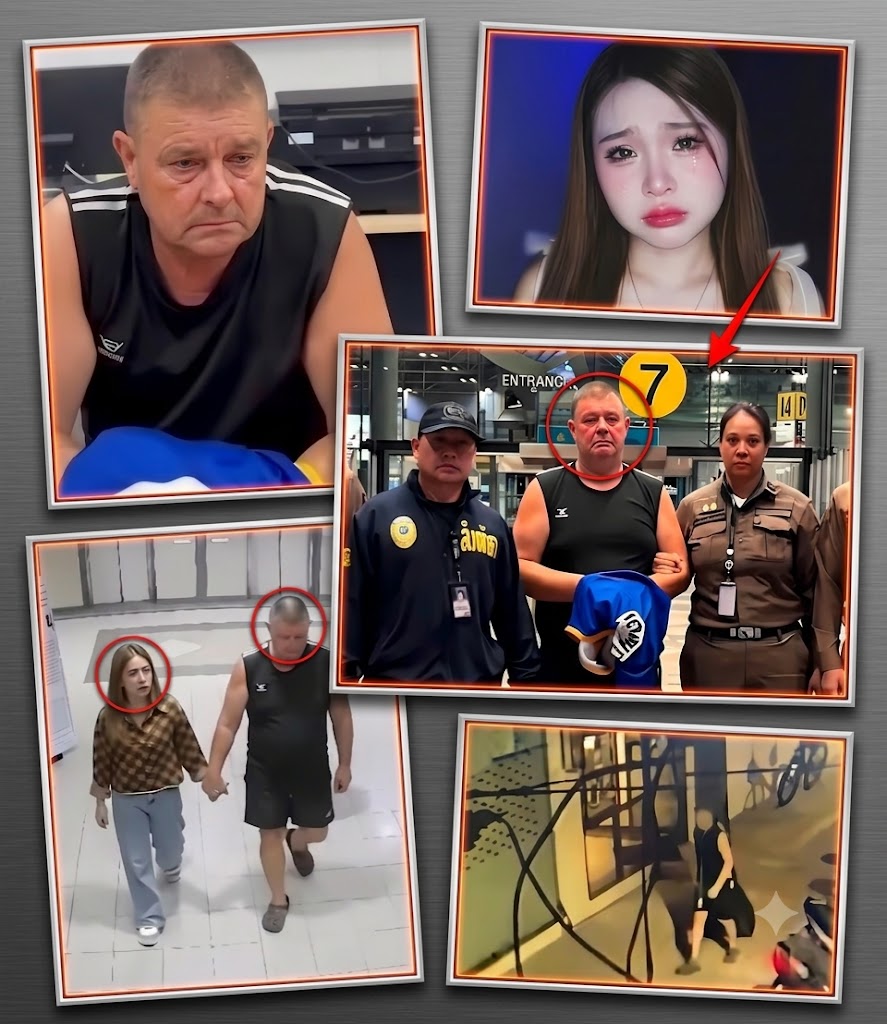
In the official brochures distributed by the Tourism Authority of Thailand, the coastal city of Pattaya is painted as a vibrant, sun-soaked paradise of international leisure. But following the horrific discovery of 17-year-old Thunchanok “Cake” Donhomla’s body—stripped naked and stuffed into a black travel suitcase abandoned near a desolate railway bypass—the international community is being forced to confront a far more sinister reality.
As the primary suspect, 46-year-old Australian national Simon Peter Carman, remains in heavy custody following his dramatic airport interception, a single, devastating detail from the police interrogation room has leaked to the press. According to local investigative sources, the fatal altercation that ended the life of the underage teenager erupted over a dispute involving exactly 500 Thai Baht.
Equivalent to roughly $20 Australian dollars, the triviality of the sum has transformed a localized homicide investigation into a global viral flashpoint. Across X, Reddit, and TikTok, the case has transcended the boundaries of standard true crime content, evolving into a fierce, highly charged social critique of predatory tourism, visa loopholes, and the stark economic disparities that turn vulnerable local youth into invisible targets.
THE ECONOMIC ASYMMETRY OF A TRAGEDY
┌────────────────────────────────────────────────────────┐
│             THE FOREIGN EXPAT (Simon Carman)           │
│  - Middle-aged national from a wealthy economy         │
│  - Utilizing easy long-term tourist/medical visas      │
│  - Possessing absolute financial leverage in local zone│
└───────────────────────────┬────────────────────────────┘
                            │ (The Fatal Collision)
                            ▼
                    [A 500-BAHT DISPUTE] ◄─── (The $20 Flashpoint)
                            ▲
                            │ (Systemic Vulnerability)
┌────────────────────────────────────────────────────────┐
│             THE LOCAL TEENAGER (Cake Donhomla)        │
│  - 17-year-old migrant from impoverished Kalasin       │
│  - Arrived in Pattaya just 7 days prior seeking income  │
│  - Lacking systemic protection or digital safety nets   │
└────────────────────────────────────────────────────────┘
The Disparity of Human Worth: The 500-Baht Shockwave
On the sub-reddit r/Thailand and within dedicated human rights forums on X, the sheer insignificance of the monetary dispute has provoked profound moral outrage. Commentators are pointing out the agonizing math of the crime scene: a young girl’s life, her future, and the devastating grief of a family from rural Kalasin, balanced against the price of a cheap dinner in a Western country.
“The $20 price tag is what’s breaking everyone’s heart,” wrote a prominent social commentator on X in a post that has been reshared tens of thousands of times. “It exposes the terrifying asymmetry of these entertainment hubs. To an expat from Perth, 500 Baht is loose change you leave on a bar counter. To an underage girl arriving from one of the poorest agricultural regions in the country, it represents a day’s livelihood. When those two realities collided in that Jomtien condo, the economic gap turned lethal.”
Leaked defense statements suggest that Carman attempted to frame the dispute as a robbery attempt, claiming the teenager “went wild” and pulled a knife when he refused to pay the additional 500 Baht fee. However, digital forensic sleuths on TikTok have fiercely rejected this narrative, arguing that the extreme post-mortem measures—the complete stripping of her clothes, the tight packing of her body into luggage, and the casual WhatsApp messages Carman sent about going for a swim—indicate an exercise of total domination rather than a panicked panic over a petty theft.
The Visa Shield: How “Bad Expats” Exploit the System
Beyond the immediate mechanics of the murder, the internet has turned its collective fury toward the institutional frameworks that allowed Simon Peter Carman to operate freely in Pattaya. On communities like r/Pattaya, users have launched extensive threads discussing the loophole-ridden reality of long-term tourist stays.
Carman, who had reportedly had his firearms license revoked in Western Australia following domestic disturbances, was able to enter Thailand and settle into a high-rise condominium with virtually zero screening regarding his violent background. Neighbors noted he frequently used a vague story about recovering from “brain surgery” to explain his erratic lifestyle and slow speech—a narrative that critics say allowed him to blend into the city’s vast, unregulated expat community without drawing the attention of immigration authorities.
“Pattaya has built a multi-billion dollar industry on asking no questions,” an investigative blogger noted on a popular Substack forum tracking Southeast Asian crime. “As long as a foreigner has foreign currency to inject into the local economy, the system turns a blind eye to their past. Carman was a flagged individual in Australia, but in Thailand, he was just another walking ATM until the suitcase was found.”
Activists are utilizing the viral momentum of the case to demand a complete overhaul of the “Elite” and long-term tourist visa verification processes, arguing that mandatory criminal background checks must be implemented for any foreign national seeking extended stays in high-risk tourist zones.
The Forgotten Migration: From Kalasin to the Neon Grid
The tragic trajectory of Thunchanok “Cake” Donhomla has also cast a harsh, unforgiving light on the domestic migration crisis within Thailand itself. True crime TikTokers have created highly emotional retrospective videos mapping her journey from the impoverished, drought-prone province of Kalasin to the neon grid of Pattaya.
Like thousands of teenagers before her, Donhomla moved to the coast during the school break to secure income to support her family back home. Having arrived in the city just seven days before her death, she possessed no local safety network, no understanding of the specialized dangers of the zone, and no structural protection.
“We focus so much on the monster who carried the suitcase, but we ignore the socioeconomic machine that fed her to him,” an online activist group posted on X. “The vulnerability of rural girls is systemic. They are pushed out by extreme poverty, pulled in by the promise of tourist cash, and left completely unprotected by a legal system that frequently criminalizes the victims of exploitation rather than the predators who exploit them.”
This perspective has generated a fierce counter-debate on international expat forums, where conservative legal commentators argue that labeling the entire city an exploitative trap is an oversimplification. They contend that Pattaya remains a highly secure destination for millions of legitimate travelers, and that attributing a horrific, isolated crime by an unstable individual to an entire national economy is intellectually dishonest.
The Demands of an Outraged Community
As Thai homicide prosecutors construct their final trial brief, the pressure from the digital sphere continues to mount. The victim’s family, supported by an army of online sympathizers, has explicitly rejected Carman’s televised media apologies, maintaining their demand for the absolute maximum penalty under Thai law: execution.
Under the Chonburi provincial court system, premeditated murder involving a minor carries the distinct possibility of the death penalty. Digital platforms are currently circulating petitions to ensure that international political pressure from the Australian government does not interfere with the local judiciary’s right to impose the ultimate sentence.
The 500-Baht suitcase murder has forever altered the digital discourse surrounding Thailand’s nightlife hubs. It remains a haunting, tragic case study in criminal economics—proving to a global audience that behind the flashing lights and cheap thrills of a tourist paradise, the true cost of systemic vulnerability is far higher than twenty dollars.