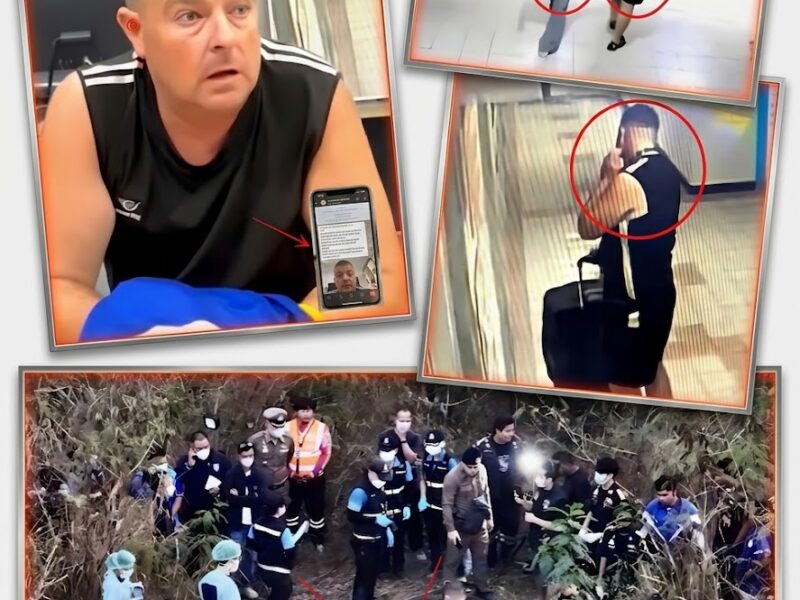
THE SUITCASE SERIAL KILLER: Pattaya Reopens Cold Cases as Australian Suspect’s Chilling Calamity Sparks Fears of a Predator
🚨 PATTAYA’S WORST NIGHTMARE CORES UNLOCKED: The “Suitcase Serial Killer” Theory.
When police opened that black suitcase by the Pattaya railway tracks and found a missing 17-year-old girl, they thought they were dealing with a tragic, isolated dispute. But the investigation just took a terrifying, dark turn. Pattaya’s Police Chief officially confirmed they are reopening two cold cases from the past few years—both involving bodies stuffed into suitcases and dumped in the exact same region.
True crime communities on Reddit and TikTok are going absolutely wild cross-referencing the Australian suspect’s entry dates with local missing persons reports. The terrifyingly calm way he went for a swim right after the crime points to one horrifying reality: This wasn’t his first time. Is a transnational serial killer finally unmasked, or is the internet connecting dots that aren’t there?
Dive into the bone-chilling evidence and the unsolved cold cases that are suddenly roaring back to life. 👇
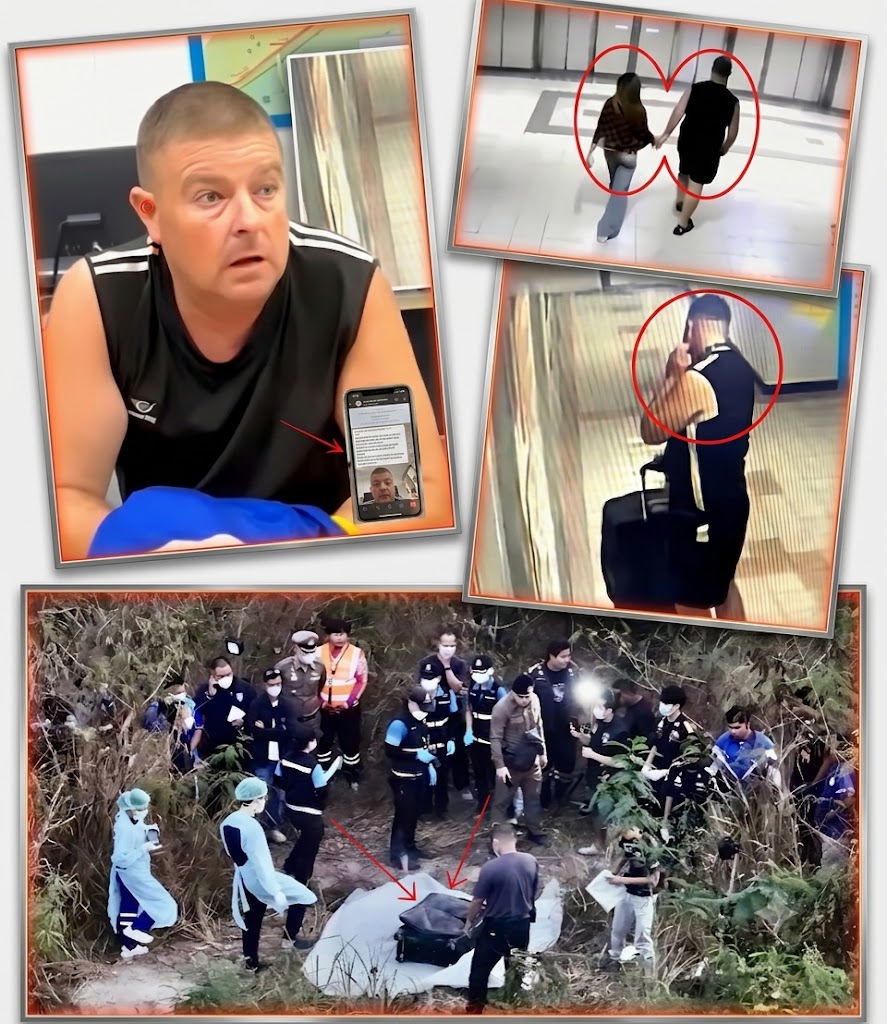
It is a well-established maxim in homicide investigation that amateurs panic, but professionals rely on a pattern. In the days following the gruesome discovery of 17-year-old Thunchanok “Cake” Donhomla—whose naked body was found stuffed inside a black travel suitcase near a desolate Pattaya railway bypass—the case has rapidly evolved. What local authorities initially treated as a localized, heat-of-passion dispute has morphed into an international hunt into a dark, potential serial profile.
The escalation occurred when the Pattaya Police Chief publicly confirmed that major case detectives are officially opening the archives on two unresolved cold cases within the Chonburi province. Both historical files involve young women whose bodies were discovered folded into suitcases and abandoned in remote locations over the last few years.
With 46-year-old Australian national Simon Peter Carman currently detained in a high-security Thai cell, digital true crime communities across X, Reddit, and Discord have launched an intensive, crowd-sourced investigation. The chilling, clockwork precision of Donhomla’s murder has convinced internet sleuths that Pattaya may have accidentally captured a transnational serial killer who was using the city’s chaotic nightlife as a hunting ground.
PATTAYA SUITCASE MURDER COLD CASES CROSS-REFERENCE
┌────────────────────────────────────────────────────────┐
│                   UNSOLVED COLD CASE #1                │
│  - Body discovered in luggage near highway bypass      │
│  - Victim profiles match vulnerable transient workers  │
└───────────────────────────┬────────────────────────────┘
                            │ (Shared Modus Operandi)
                            ▼
┌────────────────────────────────────────────────────────┐
│               THE JUNE 2026 CASE (Simon Carman)        │
│  - Victim: 17-year-old Thunchanok Donhomla             │
│  - Modus Operandi: Strangled, stripped naked, packed   │
│    into a black suitcase, dumped by railway tracks     │
└───────────────────────────┬────────────────────────────┘
                            │ (Shared Modus Operandi)
                            ▼
┌────────────────────────────────────────────────────────┐
│                   UNSOLVED COLD CASE #2                │
│  - Human remains found in abandoned luggage in ditch   │
│  - Jurisdictional overlap within Chonburi Province     │
└────────────────────────────────────────────────────────┘
The Anatomy of an Expert Signature
On the sub-reddit r/TrueCrime, criminal behavioral analysts have been dissecting what they call the suspect’s signature—the non-necessary behaviors a killer exhibits to satisfy a psychological need. In Carman’s case, the complete striping of the victim’s clothing, the meticulous folding of a body into a standard-sized 28-inch suitcase, and the selection of an unlit, camera-blind dumping ground all suggest a high level of criminal comfort.
“An amateur who kills someone by accident over a money dispute does not immediately think to pack the body into a suitcase and transport it on a motorbike,” argued an online criminal profiler on X. “They panic, they run, or they leave the body in the room and flee the country immediately. Packing a body tightly requires physical strength, emotional detachment, and a lack of a revulsion reflex. That kind of coldness is almost always learned behavior.”
Furthermore, the internet has focused heavily on Carman’s post-offense behavior. According to leaked digital logs, within an hour of allegedly dumping the suitcase by the railway tracks, Carman texted another woman via WhatsApp, casually mentioning he was “tired” and was “going down to the pool for a swim.”
On TikTok, true crime creators have drawn parallels between Carman and notorious historical serial killers who engaged in completely mundane, relaxing activities immediately after disposing of a victim. The absence of an adrenaline crash or visible panic in his subsequent interactions is being cited by online communities as primary evidence that this routine was deeply familiar to him.
Reopening the Chonburi Luggage Murders
The true turning point for the online community was the official announcement that Thai police are re-examining two past local murders. On regional expat forums like r/Pattaya and r/Thailand, users have begun digger deeper into local news archives to piece together the details of those unsolved cases.
The first cold case involves a young woman whose remains were found inside a discarded travel bag near a highway embankment in the Chonburi province. The second, occurring roughly eighteen months later, featured an identical modus operandi—a body packed into an inexpensive suitcase left in a rural ditch. Because both victims were transient workers with no immediate family in the area, their disappearances went unnoticed for weeks, severely compromising the initial forensic timelines.
“If you map the disposal locations of the two cold cases alongside the railway track location from this week, they form a highly specific geographical comfort zone,” an independent data analyst posted on X. “They all skirt the outer edges of Pattaya’s municipal surveillance grid. Whoever dumped those bags knew exactly where the city’s digital eyes ended.”
Armchair detectives are currently attempting to map Carman’s international travel records, visa extensions, and entry stamps to Thailand over the last three years to see if his presence in the country overlaps with the calculated windows of the past murders.
“He didn’t just stumble into this method,” a user wrote on a dedicated Discord server. “The suitcase is a mobile concealment tool. It allows a predator to walk through a busy apartment lobby without anyone realizing they are carrying a human being. It’s a specialized technique.”
The “Sleuth Trap”: Is the Internet Escalating Too Fast?
While the serial killer narrative continues to dominate social media algorithms, generating millions of views and intense public anxiety, a more cautious faction within legal and investigative forums urges moderation.
On sub-reddits dedicated to legal analysis, commentators warn against the dangers of “internet hysteria,” pointing out that matching a modus operandi does not automatically equal a single culprit.
“Dumping a body in a suitcase is, unfortunately, a relatively common criminal tactic in highly populated urban areas because it solves the immediate problem of transport,” a retired police investigator commented on a Facebook true crime roundtable. “In a transient tourist hub like Pattaya, multiple independent criminals could easily arrive at the same desperate solution. We can’t immediately label this man a serial killer until the DNA and forensic links from the old cases are processed in a certified lab.”
These skeptics argue that Carman’s sloppy attempt to flee via an international flight at Suvarnabhumi Airport just hours after the body was found points to a desperate man who knew his amateurish cover-up had failed, rather than an evasive, long-term serial offender.
Awaiting the Forensic Verdict
The ultimate resolution to the “Suitcase Serial Killer” theory lies in the hands of the Royal Thai Police Forensic Science Office. Technicians are currently cross-referencing DNA samples, hair fibers, and fingerprint lifts taken from Room 402 and the newly recovered suitcase against the evidence preserved from the two historical cold cases.
As the 84-day detention clock ticks down for Simon Peter Carman, investigators are also utilizing digital forensics to pull deleted location history from his seized mobile devices and the transponder data from his rented scooter.
For a global audience watching the case through the hyper-analytical lens of social media, the missing 23-minute timeline and the reopened cold cases have transformed this tragedy into an ominous puzzle. The world waits to see if the court will try a man for a single, heinous crime, or unmask an international monster who had been hiding in plain sight amidst the neon lights of Pattaya.