
THE 23-MINUTE BLINDSPOT: Chilling Timeline in Pattaya Suitcase Murder Sparks ‘Serial Killer’ Theories Online
🚨 23 MINUTES. THAT’S ALL IT TOOK.
A 17-year-old girl vanishes into a Pattaya apartment, and less than 24 hours later, her body is found stuffed inside a black suitcase by the dark, unlit railway tracks. But local investigators just pulled the CCTV logs from that night, and the chilling 23-minute timeline of the Australian suspect has left internet sleuths completely paralyzed with fear.
How did a foreigner navigate Pattaya’s blind spots with military precision in pitch black darkness, dump a massive suitcase from a moving motorbike, and return to his room before anyone even noticed she was gone? True crime forums are convinced this wasn’t his first time—and the terrifying secrets hidden in those missing 23 minutes change everything we know about this case.
Uncover the chilling, frame-by-frame timeline and the dark secrets the Pattaya railway tracks have been hiding. 👇
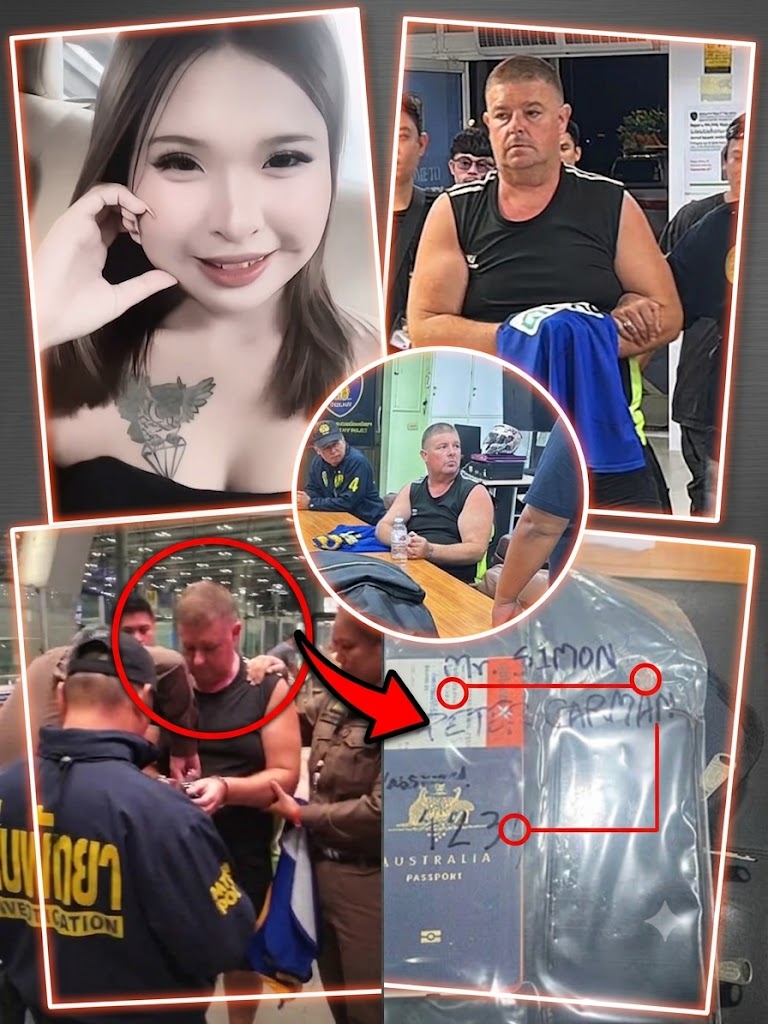
In the neon-drenched coastal city of Pattaya, where millions of tourists lose themselves in the chaotic nightlife every year, time is usually measured in hours of excess. But for homicide detectives and millions of true crime sleuths tracking the horrific murder of 17-year-old Thunchanok Donhomla, the entire case now hinges on a razor-thin, highly calculated window of exactly twenty-three minutes.
The discovery of the teenager’s body—stripped naked, folded into a fetal position, and stuffed inside a large black suitcase abandoned near a desolate stretch of the local railway tracks—has sent shockwaves through Southeast Asia. The swift arrest of 46-year-old Australian national Simon Peter Carman at Bangkok’s Suvarnabhumi Airport prevented an international escape. However, it is the chilling precision of the digital and physical evidence left behind that has set internet forums like Reddit, X, and TikTok ablaze.
As the official investigation enters its critical phase, the public is no longer just asking why she died. Instead, a deeply unsettling question has taken over the digital discourse: How did an expat tourist execute a flawless, high-risk body disposal in a foreign city in less time than it takes to order a pizza?
CHILLING TIMELINE: THE 23-MINUTE WINDOW
[9:25 PM] ─── Suspect seen dragging heavy suitcase to motorbike
               │
               ▼ (Calculated route through unlit blind spots)
               │
[9:36 PM] ─── Approximate time of disposal at remote railway track
               │
               ▼ (Flawless, high-speed return journey)
               │
[9:48 PM] ─── Suspect returns to apartment complex alone
The Geometry of a Disposal: Inside the Logistical Mystery
According to leaked Closed-Circuit Television (CCTV) logs corroborated by local Pattaya police, Simon Carman was captured on camera at precisely 9:25 PM dragging a bulky, visibly heavy black suitcase out of his Jomtien apartment complex. He awkwardly hoisted the luggage onto the rear rack of a small rented scooter, balancing the dead weight before speeding off into the night.
At precisely 9:48 PM, the exact same camera captured Carman returning to the complex. He was alone. The suitcase was gone. His demeanor, according to those who watched the raw footage, was unnervingly calm.
The total elapsed time: 23 minutes.
To the casual observer, the quick turnaround might look like the panicked, rushed actions of a desperate man. But to the geographical profilers on Reddit’s r/TrueCrime and r/Thailand communities, those 23 minutes represent a logistical impossibility for an amateur.
“Pattaya is a maze of one-way streets, traffic bottlenecks, and aggressive local drivers,” noted one prominent user on a dedicated Discord server tracking the case. “To ride a motorbike with a massive, unstable suitcase, travel from Jomtien to the dark side of the railway bypass, find a spot completely obscured from municipal cameras, dump the evidence, and return within 23 minutes? That requires a dry run. That requires knowing the exact blind spots of the city’s surveillance network.”
A digital mapping analysis quickly circulated on X (formerly Twitter), calculating the exact distance between Carman’s apartment and the grim discovery site near the tracks. Even under optimal traffic conditions, a round-trip scooter ride takes approximately 16 to 18 minutes. This leaves a terrifyingly narrow window of just 5 to 7 minutes for the suspect to pull over, drag the heavy suitcase down a steep embankment into the tall grass, conceal it, and mount his bike to flee.
“He didn’t hesitate. He didn’t get lost. He knew exactly where the cameras ended and where the darkness began,” wrote a TikTok creator whose breakdown of the crime scene geography has amassed over two million views.
The WhatsApp Alibi: A Chilling Display of Nonchalance
What has intensified the online outrage and fed the growing “serial killer” narrative is Carman’s behavior immediately following those 23 minutes. Digital forensic data leaked to local tabloids revealed that shortly after returning to his room—with the ga bedsheets stripped and the victim’s body lying by the tracks—Carman logged onto WhatsApp.
He reportedly messaged another local woman, casually stating that he was “exhausted” and was “going down to the pool for a swim.”
On TikTok and X, psychological profilers have seized on this detail as evidence of a classic psychopathic detachment. Experts and casual commentators alike point out that an accidental or impulsive killer—as Carman’s defense claims, alleging a dispute over a 500 Baht transaction turned violent—typically experiences a severe adrenaline crash. They panic, they hide, or they freeze. They do not go for a leisurely swim and send mundane text messages.
This chilling indifference has led to widespread speculation that Carman was relying on a deeply practiced routine. The theory gained massive traction when Pattaya’s Police Chief publicly confirmed that investigators are officially reviewing Carman’s potential ties to two other unresolved, historical cold cases involving bodies discovered in suitcases within the Chonburi province over the last few years.
“The Suitcase Serial Killer”: Forums Open Cold Cases
The internet has a well-documented obsession with amateur sleuthing, but the details of the Pattaya suitcase murder have provided unusually fertile ground for dark theories. On the sub-reddit r/Pattaya, users have begun cross-referencing Carman’s known entry dates into Thailand with local missing persons reports.
The prevailing theory on these forums suggests that Carman may be a predatory tourist who specifically chose Pattaya not for its beaches, but for its vulnerabilities. The city’s large population of transient workers, undocumented teenagers from rural provinces like Kalasin, and a constantly rotating door of foreign tourists create a perfect storm for a predator seeking invisible victims.
“When you look at the 23-minute timeline, it becomes obvious that the railway tracks weren’t a random choice,” an investigative blogger wrote on X. “The railway bypass area has been a known dumping ground for local crime syndicates for a decade because of the lack of municipal lighting. How does an Australian who has only been in the country for less than a year know the specific sociology of Pattaya’s criminal underbelly? He either studied it intensely, or he has used that spot before.”
Furthermore, internet sleuths have dug into Carman’s background in Rockingham, Western Australia. Unconfirmed reports floating around Australian Facebook groups allege that Carman left Perth abruptly following an intense domestic dispute and the subsequent revocation of his firearms license by Western Australian police. This has led to the online consensus that Carman did not move to Thailand for retirement or medical tourism—as he claimed to neighbors—but was rather an escalating violent offender fleeing legal scrutiny in his homeland.
The Counter-Narrative: Panicked Amateur or Cold Calculator?
While the dominant narrative across TikTok and X paints Carman as a calculated monster, a minority of commentators on legal and expat forums urge caution, presenting a counter-perspective. They argue that the 23-minute timeline could actually point to an incredibly sloppy, panicked amateur rather than a seasoned serial killer.
“If he were a meticulous serial killer, why would he carry a massive black suitcase out of his own apartment building right in front of the lobby CCTV?” argued a user on a legal analysis thread on Reddit. “Dumping a body along a highly trafficked railway line in broad proximity to his own residence isn’t genius—it’s desperate. He likely just drove until it got dark, threw the bag into the first ditch he saw, and ran. The 23 minutes wasn’t precision; it was sheer panic.”
This faction argues that Carman’s subsequent attempt to board a Jetstar flight to Perth just hours after the body was moved proves he knew his cover was blown. A seasoned killer, they argue, would have stayed put to avoid looking suspicious or would have disposed of the body in the vast ocean where it might never be found.
The Long Walk to Justice
As the digital world debates the minutiae of the 23-minute window, the grim reality of the case remains anchored in a Thai forensic laboratory. The family of the 17-year-old victim, having traveled from the impoverished northeastern province of Kalasin, has publicly refused Carman’s media-delivered apologies, demanding nothing less than the death penalty.
Under Thai law, premeditated murder and the concealment of a corpse carry punishments up to execution. Investigators have up to 84 days to hold Carman before formally presenting the complete indictment to the prosecutor, and they are reportedly using that time to extract every piece of data from Carman’s phone, GPS history, and scooter rental transponder.
Whether those fateful 23 minutes expose a panicked tourist who committed an atrocious act of passion or unmask a calculating, transnational serial killer remains to be seen. But on the streets of Pattaya and across the vast expanses of the internet, the clock is still ticking, and every second of that missing half-hour is being watched closely.