
Behaviorists Decode Aussie Suspect’s “Audacious” Televised Statement in Pattaya Suitcase Murder
🎙️ “TELL OTHER GIRLS TO BE CAREFUL”: THE AUDACITY OF A KILLER’S LAST WORDS 🎙️
Captured at the airport trying to flee the country, the Australian suspect turned to the cameras and delivered an apology that sent shockwaves of rage across TikTok. Criminal behaviorists are now warning that his words were not an expression of guilt, but a calculated legal weapon.
Why did he tell other women to be careful, and what sinister psychological tactic was he playing to escape execution?
The chilling breakdown of a psychopath’s televised manipulation tactics 👇 🔥
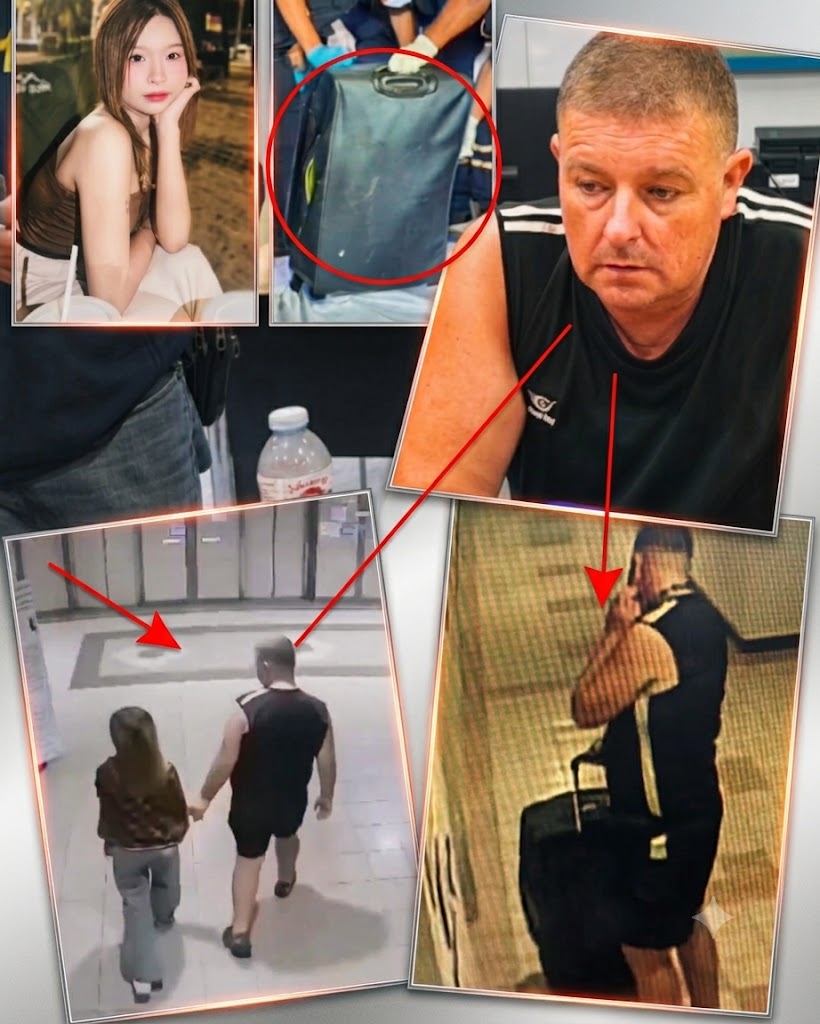
In the theater of high-profile criminal justice, the moments immediately following an arrest are critical. For a suspect facing the absolute maximum penalty under foreign law, every word muttered to a rolling news camera is rarely a mistake—it is a strategic choice. This reality was put on chilling display at Bangkok’s Suvarnabhumi Airport when 45-year-old Australian national Simon Peter Carman, handcuffed and cornered by Royal Thai Police for the brutal murder of 17-year-old Tunchanok “Cake” Donhomla, turned to face the media.
“I feel terrible,” Carman mumbled, his posture slouched and eyes downcast in a video clip that has since amassed tens of millions of views globally. “It just got out of hand… it was out of my control. Please tell other girls to be careful.”
The reaction across international social media platforms—particularly TikTok, X (formerly Twitter), and Reddit’s r/TrueCrime—was instantaneous and violently hostile. But beneath the raw public outrage lies a deeply disturbing psychological blueprint. Criminal behavioral analysts, forensic psychologists, and online sleuths are rapidly dismantling Carman’s televised “apology,” exposing it not as a genuine manifestation of remorse, but as a calculated, text-book weapon of psychological manipulation designed to accomplish one specific goal: dodging a Thai firing squad.
The Linchpin of Deflection: “It Got Out of My Control”
To understand the deceptive mechanics of Carman’s statement, behavioral experts are pointing to his specific choice of passive language. By claiming that the situation “got out of hand” and was “out of my control,” the Ballarat native was executing a classic psychological defense mechanism known as externalization.
“A psychopath or an organized predator will almost never say ‘I chose to do this,'” a prominent forensic psychologist explained during an exhaustive YouTube breakdown of the airport footage. “By stating that the crime was ‘out of control,’ Carman is subtly attempting to paint himself as a passive participant in a tragedy that simply happened to him. He is trying to strip away his own agency. In his narrative, the murder wasn’t a choice to apply overwhelming physical force to a minor’s throat; it was an unfortunate, chaotic accident that rolled over both of them.”
On Reddit’s r/TrueCrimeDiscussion, users have noted that this language is perfectly tailored to align with his broader legal defense. Carman is currently fighting a capital premeditated murder charge (Section 289 of the Thai Penal Code) by insisting he acted in sudden “self-defense” over a 500 Baht service fee dispute. If he can convince a panel of judges that he suffered a momentary loss of cognitive control due to a sudden panic or a perceived threat, he stands a chance of having his charges downgraded to manslaughter, effectively erasing the mandatory death penalty from his future.
The Audacity of Victim-Blaming: “Tell Other Girls to Be Careful”
The absolute lightning rod for public fury online, however, was Carman’s closing remark: “Please tell other girls to be careful.” On TikTok, the audio of this phrase has been repurposed by hundreds of creators who are using micro-expression analysis and linguistic breakdown to expose its staggering audacity.
“Think about the profound narcissism required to make that statement,” one viral TikToker noted in a video with over 1.5 million views. “He is a 45-year-old man who just strangled a 17-year-old child, jammed her body into a suitcase, dumped her like trash by a railway line, and tried to catch a flight to Australia. Yet, standing there in handcuffs, he assumes the role of a concerned, benevolent advisor. He isn’t telling other men not to be predators; he is telling young women that they need to be careful—implying that the victim did something reckless that led to her own demise.”
Linguistic analysts on X have branded this tactic as “malignant linguistic gaslighting.” By subtly shifting the burden of safety onto the local female population, Carman’s subconscious or highly calculated aim was to validate his defense kịch bản (script). The subtext of his warning is clear: Pattaya is dangerous, these situations are volatile, and if girls aren’t careful, tragedies happen. It relies entirely on the harmful cultural trope of the “dangerous local woman” to cast a shadow of doubt over a minor who weighed barely 45 kilograms and stood zero physical chance against him.
Decoding the Body Language of Flight vs. Guilt
True-crime investigators on Discord servers tracking the Pattaya suitcase horror have also zeroed in on the glaring contradiction between Carman’s spoken words and his physical actions. A man who truly believes an event was an “accidental tragedy out of his control” behaves in a manner consistent with immediate shock and horror. They call for medical aid; they surrender to authorities; they weep for the loss of life.
Carman’s body language and behavioral trail tell a entirely different story—one of cold, mechanical preservation.
“Look at the timeline immediately following those 18 hours of silence in his apartment,” a user posted in a heavily upvoted Reddit thread. “He didn’t panic and call an ambulance. He systematically packed her into a bag, strapped it to a bike, found a secluded ditch in the dark, and then went back to clean the crime scene. He then had the presence of mind to navigate traffic, book a premium international ticket, and walk through airport security. The only thing ‘out of control’ for Simon Peter Carman was the fact that the Thai police caught him at the departure gate before his plane took off.”
Behaviorists point out that during his televised address, Carman’s downcast eyes and slouched shoulders did not display the biological markers of deep grief or profound guilt. Instead, they exhibited the classic posture of “situational defeat”—the deflation of a predator who realized his escape plan had failed and was instantly shifting into a compliance script to garner sympathy from the public and leniency from the courts.
The Public Backlash: Demanding an End to the Theatre
The global true-crime community’s collective rejection of Carman’s apology highlights a significant cultural shift. Audiences are becoming highly sophisticated at recognizing the linguistic patterns of criminal deflection. The comment sections beneath his broadcasted apology are a unified wall of condemnation, with netizens fiercely defending the memory of the young victim from Kalasin province.
“We are done letting predators dictate the narrative of their crimes,” read a viral tweet on X that garnered tens of thousands of retweets. “He treated her like disposable garbage when he thought he could get away with it, but the minute the cuffs go on, he wants to play the remorseful, misunderstood traveler. Do not let his crocodile tears distract from the suitcase.”
The Prosecution’s Ultimate Counter
Fortunately for the family of Tunchanok “Cake” Donhomla, the Thai judiciary is notoriously unswayed by public relations maneuvers or televised grandstanding. Pattaya prosecutors are reportedly integrating behavioral analysis into their core brief, using Carman’s calculated actions during the 18-hour post-murder window to completely invalidate his claims of a “panicked accident.”
Under Thai law, a suspect’s conduct immediately following a crime is considered a primary indicator of their true intent. The elaborate deception of hiding the body, cleaning the forensic evidence, and attempting an international escape provides the state with an ironclad argument for premeditation and deep awareness of guilt.
As Simon Peter Carman’s 84-day pre-trial detention ticks away in the austere confines of the Pattaya Provincial Prison, his televised words are coming back to haunt him. The script he flipped at the airport gate has failed to fool the digital world, and it will certainly not fool the tribunal waiting to decide his ultimate fate. The manipulation has been exposed, leaving only the grim, undeniable reality of a calculated crime demanding the absolute highest price of justice.