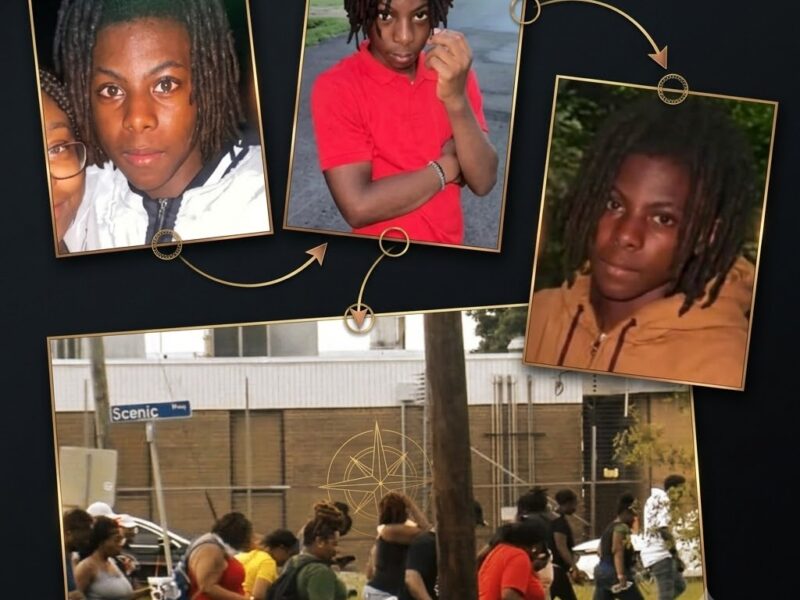
PARALYZED IN THE DARK: How an Eyewitness Listened to 15-Year-Old Ja’Derrius Minnieweather’s Final Pleas—And Did Nothing
“Please stop… just let me go.” A 15-year-old boy spends his final minutes begging for his life in the dark, while a witness stands by and listens.
The newest, highly classified leaks from the Ja’Derrius Minnieweather murder investigation in Baton Rouge have pulled back the curtain on a detail so devastating it’s sparking nationwide outrage online. True crime communities on X and Reddit are in a massive uproar over a newly identified eyewitness who admitted to watching a towering 51-year-old man brutally assault a defenseless teenager for several uninterrupted minutes. The terrifying question currently fracturing the internet isn’t just about the monster who committed the crime—it’s about the bone-chilling reason why the person watching chose absolute silence until it was entirely too late.
What stopped the witness from dialing 911, and how did this paralyzing hesitation seal a brave boy’s fate? 👇
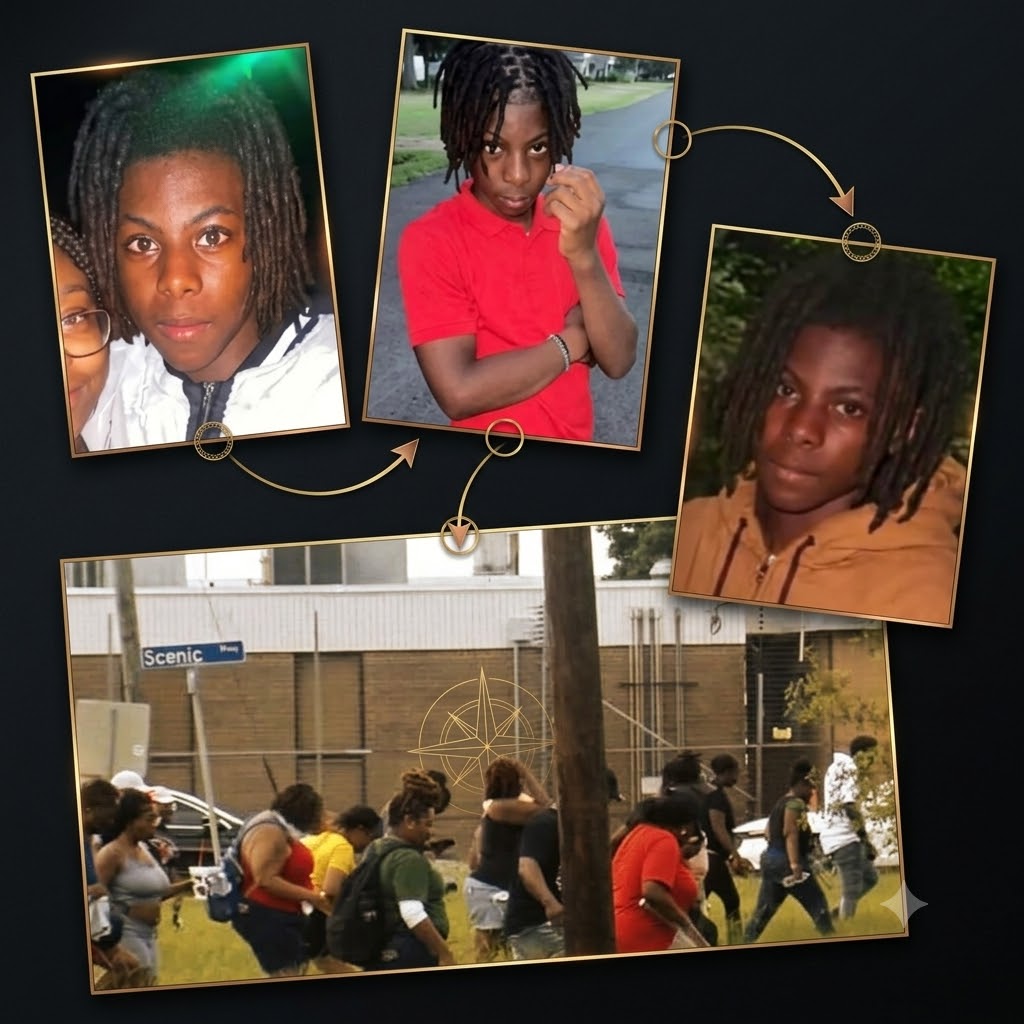
As the agonizing search for the remains of 15-year-old Ja’Derrius Minnieweather centers on a toxic, sprawling landfill in North Baton Rouge, a darker, deeply unsettling psychological horror story has emerged from the shadows of the crime scene. The legal framework supporting first-degree murder charges against 51-year-old Maurice Parms is undeniably robust, built on a foundation of DNA-matched bloodstains and forensic video tracking. However, it is a single, chilling revelation buried inside the police interrogation logs that has set internet forums on X, Reddit, and TikTok entirely ablaze.
A newly uncovered eyewitness saw the murder happen. For several long, agonizing minutes, this individual stood in the darkness on North 31st Street, watching a towering, massive grown man systematically beat a defenseless teenager. More horrifying still, the witness admitted to hearing the child’s faint, cracking voice repeatedly begging his attacker to stop.
Yet, no one intervened. No one yelled. And crucially, no one dialed 911 until the night had gone completely cold.
The Anatomy of a Midnight Assault
According to the probable cause affidavit compiled by Baton Rouge Police Department (BRPD) homicide detectives, the physical mismatch between the attacker and the victim was extreme. Maurice Parms is described as a physically imposing, exceptionally tall, heavy-set adult male. Ja’Derrius Minnieweather was a slender, 15-year-old high school sophomore.
The anonymous witness told investigators that shortly after midnight on June 4, 2026, a sudden, violent commotion drew their attention to a poorly lit patch of ground near a residential property. In the dim ambient light, the witness observed the towering figure of Parms pinning and violently assaulting the much smaller teenager.
The assault was not a sudden, fleeting burst of violence. The witness detailed a sustained, multi-minute beating. Throughout the physical trauma, Ja’Derrius did not fight back with anger; instead, the witness distinctly recalled hearing a “soft, youthful, and fading voice” crying out into the humid Louisiana night, pleading with Parms to spare him.
“I heard him whimpering,” the witness reportedly stated to detectives during a taped deposition leaked to local legal blogs. “He was saying, ‘Please stop, just let me go.’ But it was dark, and I didn’t know who had a gun. I was terrified. I just froze.”
The Bystander Effect Exploits the True Crime Community
The moment this specific transcript detail leaked onto X (formerly Twitter) and true crime subreddits like r/TrueCrimeDiscussion, public sympathy for the terrified witness dissolved into absolute fury. The case has transformed from a straightforward murder investigation into a fierce, nationwide ethical debate on the “Bystander Effect”—a psychological phenomenon where individuals fail to offer help to a victim when other people are present, or when fear completely paralyzes their civic duty.
[Social Media Outrage Index: Public Reaction to Witness Inaction]
▒▒▒░░░░░░░░░░░░░░░░░░░░░░░░░░░░░░ 10% Forgiveness due to Urban Fear
█████████████████████████████████ 90% Condemnation / Demand for Failure-to-Report Charges
On TikTok, true crime content creators have spent the last 48 hours dissecting the timeline, explicitly pointing out that a standard emergency response vehicle from the nearest Baton Rouge precinct could have arrived at North 31st Street in less than three minutes.
“Ja’Derrius wasn’t killed in an instant,” argued one viral TikTok video with over three million views. “He was given a death sentence over a span of five to ten minutes while an adult neighbor literally stood behind a window or a porch fence, listening to him beg for his life. A single three-digit phone call would have saved his life. The system didn’t just fail Ja’Derrius—his neighborhood’s basic humanity failed him.”
Legal Liabilities: Can a Silent Witness Be Prosecuted?
As public anger intensifies, local Discord servers dedicated to tracking East Baton Rouge Parish court filings have been flooded with demands for the witness to be criminally charged as an accessory to murder. However, legal experts pointing to Louisiana’s specific criminal statutes paint a much more complex, frustrating picture.
Unlike European legal frameworks that mandate a “duty to rescue,” standard American criminal law rarely prosecutes individuals for passive inaction unless a special relationship exists (such as a parent to a child).
Legal Concept
Application to Baton Rouge Case
Potential Charges
Misprision of a Felony
Concealing a known crime from authorities
Highly unlikely; witness eventually spoke to detectives
Duty to Assist
Legal obligation to intervene in an active violent crime
Non-existent under standard Louisiana revised statutes
Accessory After the Fact
Actively helping a suspect destroy evidence or evade arrest
No evidence suggests the witness aided Maurice Parms
“The public wants vengeance, and they want accountability for the cowardice that allowed a child to die,” noted a veteran Louisiana defense attorney during an analysis on a regional legal podcast. “But cowardice is not a felony. Unless the prosecution can prove this witness actively helped Maurice Parms wash the blood off his truck or hide the child’s bicycle, the witness is completely insulated from criminal liability. They will have to live with the psychological prison of their own conscience, but they won’t sit in a jail cell.”
The Echoes of Kitty Genovese in 2026
The haunting dynamics of Ja’Derrius’ final moments have forced sociological commentators to draw dark parallels to historical precedents, most notably the infamous 1964 murder of Kitty Genovese in New York, where dozens of neighbors allegedly heard her cries for help but failed to intervene. Criminologists on Reddit have noted that in modern, high-crime urban sectors, the fear of retaliatory violence often overrides the instinct to protect a stranger.
Baton Rouge detectives have subtly defended the witness’s anonymity, hinting that the neighborhood where the assault occurred has a history of gang-related intimidation. If the witness believed Maurice Parms was armed with a firearm—which was highly probable given his violent criminal history and grooming patterns—stepping out onto the lawn could have easily resulted in a double homicide.
Yet, this explanation does little to soothe the grief of Ja’Derrius’ family and friends. A high school classmate of the victim posted a devastating tribute on Facebook that has since been shared thousands of times: “Ja’Derrius rode his bike into danger to protect a 16-year-old girl he didn’t even share blood with. He had the courage of a grown man at 15. The grown-ups who heard him scream didn’t even have the courage to pick up a phone.”
A Haunting Legacy for the Prosecution
As East Baton Rouge Parish District Attorney Hillar Moore coordinates with the FBI to systematically excavate the North Baton Rouge Landfill for Ja’Derrius’ remains, the eyewitness testimony remains a devastating double-edged sword for the state’s prosecution.
On one hand, the witness provides the state with an ironclad, narrative-driven timeline. They can firmly place a man matching Maurice Parms’ exact, unique physical dimensions at the precise location where the massive blood pool was discovered. They can testify to the duration of the assault and the sheer malice of the attacker.
On the other hand, playing the audio recordings of this witness in front of a jury will expose a raw, systemic vulnerability that most communities prefer to ignore. When the trial commences in late 2026, the jury will not just be asked to look at photos of a blood-stained pickup truck or maps of a commercial waste site. They will be forced to listen to a graphic description of a child crying out for mercy in a neighborhood where the doors remained locked, the windows stayed shut, and the streets remained terrifyingly silent.