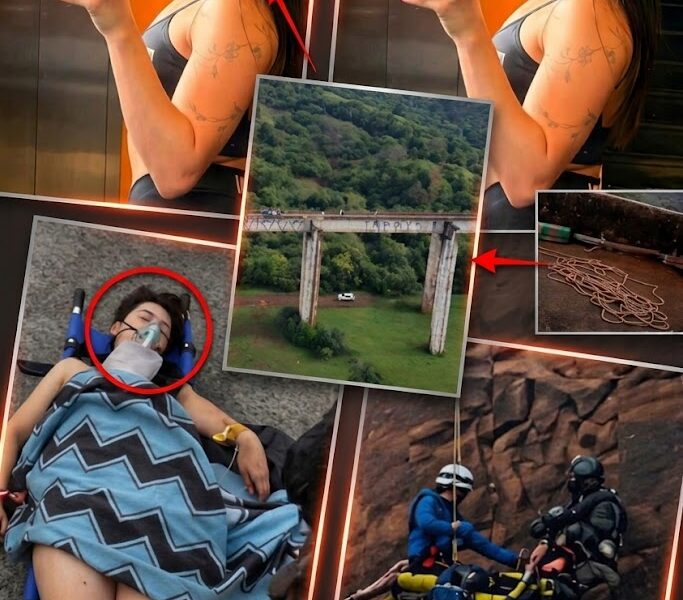
THE DIGITAL DEATH TRAP: How the Obsession with Viral Aesthetics Cost Maria Eduarda Her Life at the ‘Skeleton Bridge’
She didn’t just want to jump. She wanted the perfect horizontal “Airplane Launch” for the cameras. And that’s exactly where the nightmare began.
New insights into the tragedy at Brazil’s Skeleton Bridge reveal a disturbing modern culprit: the overwhelming pressure to create high-engagement, viral content. While the cameras were rolling and the aesthetics were being perfected, the fundamental law of survival was completely forgotten. What happens when our obsession with digital validation completely blinds us to reality—and turns a routine safety check into a fatal oversight?
The terrifying psychological trap of the “perfect shot,” the frantic final video frames, and the chilling price of going viral… 👇
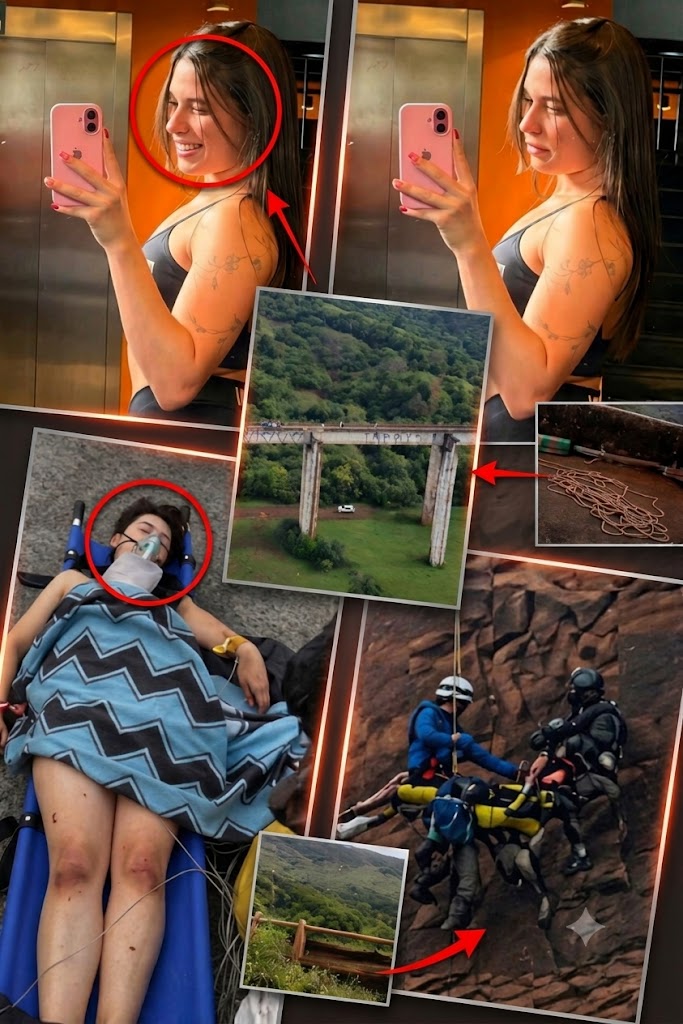
In the modern ecosystem of extreme tourism, an adventure does not truly happen unless it is documented, shared, and algorithmically rewarded. It is no longer enough to survive a 130-foot drop; the plunge must look effortless, aesthetically striking, and perfectly framed for a smartphone screen. But as international homicide investigators dig deeper into the tragic death of 21-year-old fitness coach Maria Eduarda Rodrigues de Freitas, a deeply unsettling cultural culprit is stepping into the crosshairs: the toxic, distracting pressure of viral validation.
Maria Eduarda fell to her death from the abandoned Ponte do Esqueleto (Skeleton Bridge) in São Paulo because the primary yellow safety cable was left completely unattached to her harness. As the Civil Police of São Paulo pursue charges of homicide with indirect intent (dolo eventual) against three instructors, and have arrested three additional accomplices for destroying digital evidence, analysts on X, Reddit, and TikTok are confronting an agonizing paradox. The very tools meant to capture life-affirming adrenaline rushes have instead created a psychological blind spot where safety protocols are sacrificed at the altar of the “perfect shot.”
The Mechanics of Distraction: The ‘Airplane Style’ Launch
Maria Eduarda was not a reckless thrill-seeker. She was a highly disciplined sports nutritionist and fitness coach who meticulously calculated her physical life. Yet, on June 13, 2026, she requested a highly complex, visually dramatic maneuver known in the rope-jumping community as the “Airplane Style” launch.
In a standard jump, a participant simply steps off the ledge. In the “Airplane” variation, the jumper stands horizontally while multiple instructors hoist them onto their shoulders, holding them like a glider before forcefully hurling them outward into the open air. The goal of this maneuver is entirely aesthetic: it creates a spectacular, sweeping cinematic arc that is custom-tailored to trigger high retention rates on short-form video algorithms.
According to deep-dive analyses across true-crime Discord servers, this specific request flipped a fatal switch in the minds of the operators.
“When you watch the slowed-down bystander footage, you can see the sheer amount of physical coordination required just to hold her up in that position,” one veteran jump master noted on a Reddit discussion thread. “The crew became hyper-focused on the choreography of the launch. They were adjusting her posture, checking the angle of the camera, and synchronizing their physical push. They were so consumed by managing the theatrical performance of the jump that they completely decoupled from the basic, boring, life-saving checklist.”
The bright yellow rope remained on the concrete deck because, in that critical three-minute window, the bridge was no longer an extreme sports platform operating under strict engineering principles—it was a film set.
The Algorithm Over the Carabiner
The tragedy highlights a broader, global shift in how adventure tourism companies operate in 2026. For unregulated, underground operations like the one at the Skeleton Bridge, viral videos are their primary source of marketing. They do not rely on safety certifications to draw crowds; they rely on high-definition “hype reels” shared across private WhatsApp and Instagram networks.
This reliance creates an environment where the staff is evaluated not on their rigorous adherence to safety double-checks, but on their ability to act as entertaining content creators. On TikTok, users have pointed out that the instructors frequently engaged in high-risk showmanship—performing flips, jumping without helmets, and encouraging clients to try increasingly bizarre, uncertified poses—simply to feed the insatiable demand for internet clout.
“We are seeing an alarming trend where the camera operator is treated as more important than the safety marshal,” argued a digital culture essayist on X. “The moment the priority shifts from ‘Is this person clipped in?’ to ‘How will this look on the feed?’, a fatal error becomes inevitable. The algorithm demands escalation, and escalation eventually leads to catastrophe.”
The Final Framerate: A Modern Horror Story
What makes Maria Eduarda’s case uniquely modern is that her final moments were captured from multiple angles by onlookers waiting for their turn. These videos, which have racked up tens of millions of views globally, have become a grim subject of morbid fascination.
Cyber-sleuths analyzing the audio tracks have noted the chaotic nature of the final seconds. Amidst the laughter, music, and countdowns, the essential silence required for a safety check was entirely absent. The atmospheric noise of a crowd cheering for a viral moment effectively drowned out any possibility of realizing that the life-saving tether was missing.
Criminologists studying the psychological behavior of the suspects note that even the immediate aftermath was dictated by digital panic. The instant realization that a catastrophic failure had occurred on camera triggered an immediate, multi-state digital scrub. WhatsApp groups were deleted and servers were wiped within 30 minutes, proving that the organizers knew the digital trail would be their undoing.
Reclaiming Reality from the Feed
For Maria Eduarda’s grieving family, the realization that her life was cut short for a fleeting digital trend is a source of profound rage. In their public statements, they have continuously called out the reckless culture of internet stunts, pleading with young people to stop risking their lives for temporary social media attention.
The legal fallout from the Skeleton Bridge tragedy is expected to set a massive precedent in Brazil and worldwide. Prosecutors are sending a clear message: prioritizing media production over human safety is a form of criminal intent.
As the digital dust settles, Maria Eduarda’s story remains a stark, terrifying parable for the internet age. It stands as a warning that when we view our lives entirely through the lens of a smartphone camera, we risk losing our grip on the physical realities that keep us alive—leaving our survival dangling by nothing more than an unattached, invisible thread.