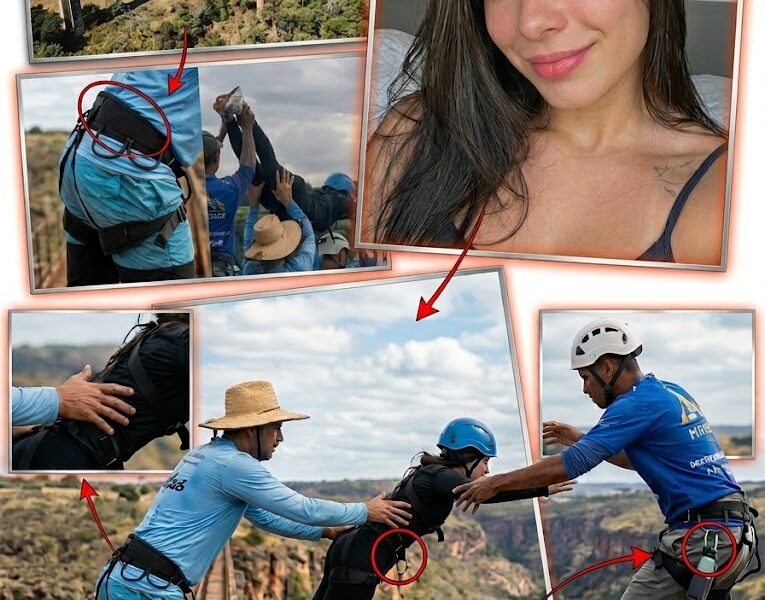
THE BOOTLEG SYNDICATE: Inside the Unregulated Underground Tourism That Turned Brazil’s ‘Skeleton Bridge’ Into a Death Trap
There is an abandoned railway bridge in Brazil where safety laws do not exist, and your life depends entirely on a WhatsApp group text.
Behind the viral clips of extreme rope jumping lies a lawless, dark underbelly of “pop-up” thrill syndicates. They use bootleg equipment, evade the police via encrypted apps, and operate completely in the shadows of the law—and on June 13, it cost a 21-year-old fitness coach her life. What happens when extreme tourism becomes a wild-west numbers game run by unregulated underground crews?
Discover the dark secrets of the Skeleton Bridge, the shadow operators hiding behind burner accounts, and the terrifying truth the industry tried to bury… 👇
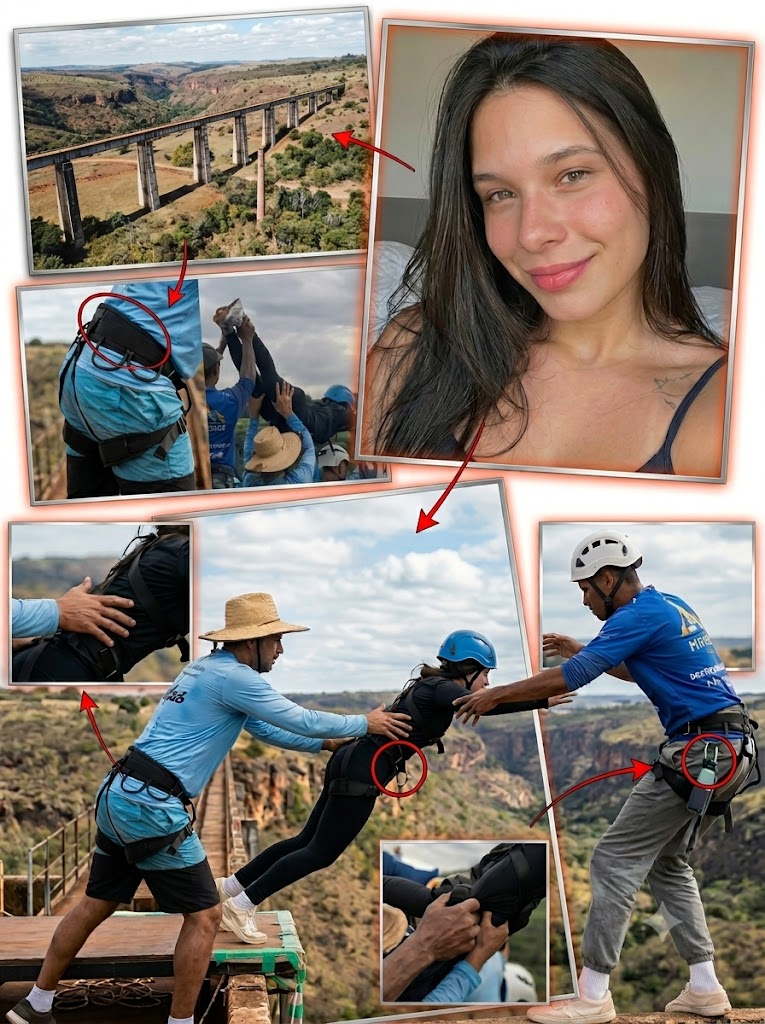
To the casual scroller on TikTok or Instagram, the videos look like the pinnacle of modern adventure: young thrill-seekers being launched into the open air from the rusted, towering heights of the abandoned Ponte do Esqueleto (Skeleton Bridge). But behind the high-energy soundtracks and gravity-defying aesthetics lies a lawless, multi-million dollar dark market of extreme tourism—one that operates entirely in the shadows of the law, and one that recently claimed the life of 21-year-old Maria Eduarda Rodrigues de Freitas.
As the Civil Police of São Paulo widen their criminal investigation, arresting six individuals across multiple states and upgrading charges to homicide with indirect intent (dolo eventual), the true villain of the story is emerging. It is not just individual negligence; it is a ghost industry. Investigators are pulling back the curtain on a deeply entrenched network of unregulated, pop-up extreme sports syndicates that use bootleg equipment, evade municipal authorities, and run highly dangerous operations entirely through encrypted messaging apps.
The WhatsApp Ghost Networks
The Ponte do Esqueleto, an old, bypassed railway crossing in the rural countryside of São Paulo, has long been abandoned by federal transport authorities. In the vacuum of state oversight, it became the headquarters for underground “rope jump” companies.
According to local reports and leaks from the cyber-forensics team handling the case, these companies do not exist on paper. They have no business licenses, no liability insurance, and no fixed addresses. Instead, they operate as digital ghosts. They market their events through temporary Instagram stories and coordinate entirely via private, invite-only WhatsApp groups.
On Reddit’s r/brazil and various true-crime subreddits, locals have begun exposing how these syndicates evade the police.
“You don’t buy a ticket from a website,” explained one user who previously visited the bridge. “You send a DM, get added to a hidden WhatsApp group, and pay via untraceable digital transfers. If the police show up, the group is deleted in seconds, the gear is packed into an unmarked van, and they vanish. They are playing a game of cat-and-mouse with the law, using human lives as the stakes.”
Bootleg Gear and Toxic Environments
When Maria Eduarda stepped onto the edge of the bridge on June 13, 2026, she trusted that the equipment holding her was industrial-grade, certified, and meticulously checked. The reality of the underground rope jump market is far more terrifying.
Legitimate bungee and rope jumping operations require dynamic, highly specialized cords that are retired after a strict number of jumps due to material fatigue. However, community whistleblowers on X (formerly Twitter) and local outdoor forums have revealed that underground syndicates frequently cut corners to maximize profit. They purchase secondhand climbing ropes, construct homemade harnesses, and use standard construction hardware rather than certified aviation or alpine carabiners.
Worse still are the allegations regarding the operational environment. Because these pop-up events last only a weekend before moving to a new location, the atmosphere at the bridge often mimics an unregulated party rather than a strict sporting event. Discusssions on Discord servers dedicated to investigating the case highlighted numerous accounts of operators drinking alcohol or using substances while actively managing the jump lines.
“It’s an open secret in Limeira,” a Discord user shared. “The staff treat it like a party. They get complacent because they’ve done it a hundred times without an accident. When you combine bootleg gear, a party atmosphere, and zero legal accountability, a catastrophe isn’t a possibility—it’s a mathematical certainty.”
The Business of Adrenaline: Profit Over Protocol
The financial incentives driving these shadow operators are massive. With dozens of eager tourists willing to pay high prices for a viral video, a single weekend of illegal jumps can generate tens of thousands of dollars in pure, untaxed cash.
Because they pay no corporate taxes, no permit fees, and no insurance premiums, their overhead is virtually nonexistent. This extreme profitability incentivizes operators to push the limits of safety, rushing jumpers off the platform as quickly as possible to increase turnover.
Criminologists argue that this financial model directly caused the death of Maria Eduarda. The instructors were so hyper-focused on executing a complex, highly marketable “airplane-style” launch for the cameras—and moving on to the next paying customer—that the fundamental, life-saving checklist was completely abandoned. The thick yellow safety rope was left lying unattached on the concrete deck simply because the rhythm of the profit machine prioritized speed over human life.
Shutting Down the Shadows
The death of Maria Eduarda has forced a massive reckoning within Brazil’s tourism and law enforcement sectors. The swift arrest of six individuals—including accomplices arrested in Rio de Janeiro who actively tried to wipe the company’s digital servers within 30 minutes of the fall—signals that the government is no longer treating this as an isolated accident. They are treating it as organized crime.
Legitimate, certified adventure sports organizations in South America are leading the outcry, demanding strict federal crackdowns on unregulated groups that tarnish the industry. They are calling for active police monitoring of social media coordination tags and physical blockades at abandoned infrastructure sites like the Skeleton Bridge.
But for the family of the young fitness coach, the crackdown comes far too late. Their public statements continue to demand not just the imprisonment of the three men who threw her off the bridge, but the total dismantling of the shadow network that allowed them to operate a death trap in broad daylight.
The tragedy at the Ponte do Esqueleto has exposed a terrifying reality of the digital age: when adventure tourism goes underground, the systems designed to protect you vanish, leaving your survival resting on nothing more than a broken checklist and a deleted group chat.