
THE ANTI-CHECKLIST REVOLUTION: How Crimson Desert Defied Launch-Week Skepticism and Cured Modern Open-World Fatigue Through Mechanical Chaos
CRIMSON DESERT IS OFFICIALLY BREAKING EVERY KNOWN RULE OF OPEN-WORLD DESIGN AND REVIEWS WERE COMPLETELY WRONG ABOUT IT! Bouncing between triple-A backlogs only to find every major release completely uninspiring? Hardcore gamers are mass-abandoning polished titles to return to Pywel after discovering hidden layers that reviewers failed to uncover during launch week. 🔥
Why are developers deliberately overwhelming players with 12 overlapping, unguided sandbox systems instead of using traditional quest markers? What is the secret engine driving this massive world that makes it feel like an ongoing live-service game without a single daily chore or battle pass, and why is the internet suddenly flooded with bizarre clips that look like three entirely different genres colliding into one? 👇
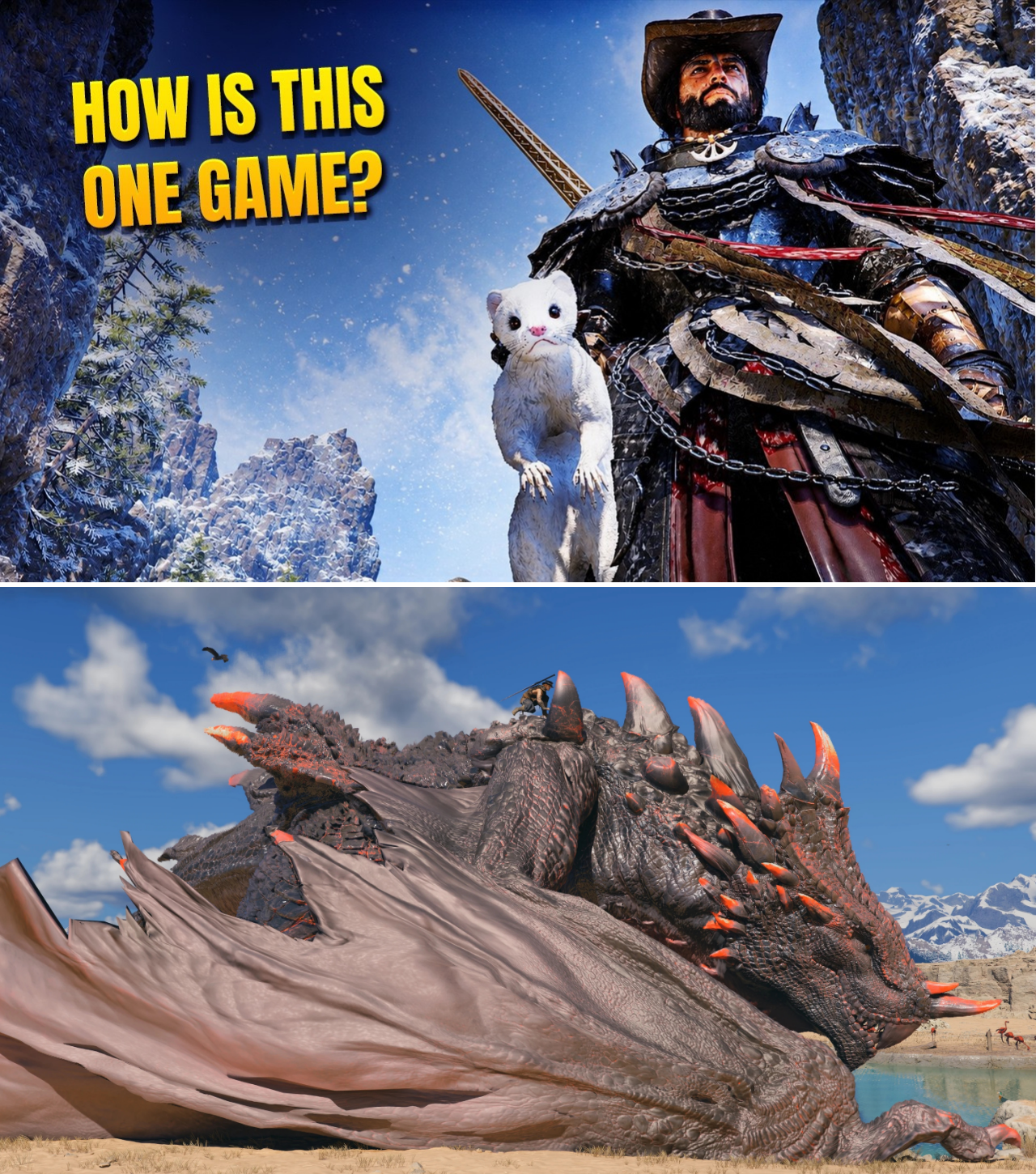
The modern triple-A gaming landscape has officially run into a wall of its own design: the dreaded checklist fatigue. For nearly a decade, massive open-world titles have operated on a highly predictable, clinical formula—flooding maps with thousands of identical icons, repetitive cave structures, and predictable NPC fetch quests that reduce exploration to a second chore-set. However, a major cultural shift erupted across gaming networks on June 22, 2026, as veteran sandbox theorists and community analysts began documenting an unprecedented phenomenon. Pearl Abyss’s dark fantasy epic, Crimson Desert, has done the seemingly impossible. By completely rejecting corporate hand-holding and embracing an aggressive, borderline chaotic overload of interlocking game mechanics, it has made open worlds fun to talk about again.
The Death of the 3-Day Hype Cycle
In the current era of digital consumerism, a prominent game typically launches, dominates the social media timeline on X and Reddit for roughly 72 hours, and is immediately discarded into the consumer’s backlog pile as reviews categorize it into neat, generalized boxes. Initially, Crimson Desert appeared susceptible to this exact cycle. Early reviews and launch-week streams slapped a wide array of mixed labels on the project. Players bounced off the experience due to its steep initial learning curve, complex and unconventional control schemes, and non-linear pacing.
“The game doesn’t guide you through its mechanics; it kicks the door open and dumps 12 different genres on your head simultaneously,” noted a veteran analyst on a popular Discord strategy hub.
Yet, instead of fading into obscurity, Crimson Desert’s community traction has grown exponentially over time. Unlike polished, linear releases that reveal their entire loop within 10 hours, Pywel behaves like a sprawling, volatile ecosystem where systems collide in entirely unplanned ways. The initial confusion has transformed into a profound cultural charm. Players are discovering that the game functions as a high-octane action RPG, a deep fantasy life-simulator, and a complex logistics management simulator all rolled into one, defying traditional labels and forcing communities to organically communicate to decode its secrets.
The “Skyrim-Elden Ring” Collision: Generating the Unplanned Narrative
According to data tracking the longevity of single-player open worlds, the games that survive long-term are those that provide players with personal, unscripted stories. Culturally, players are drawing heavy structural comparisons between Crimson Desert and legendary sandbox milestones:
The Skyrim Effect: Stumbling away from a primary roads system to chase an environmental trigger, only to discover an entirely unmapped, multi-layered underground network.
The Elden Ring Factor: Getting relentlessly pursued halfway across a hostile swamp land by a high-tier elite monster because you triggered an aggressive territorial boundary.
The Tears of the Kingdom Logic: Getting frustrated by a complex puzzle, attaching random interactive objects together in complete desperation, and accidentally generating a brilliant, physics-breaking solution.
Crimson Desert systematically thrives within this chaotic middle ground. The world does not exist simply to transport the mercenary from quest point A to quest point B. Instead, Pearl Abyss has populated Pywel with strange, interactive environmental pieces that collide under the hood. One minute an operator is engaging in a terrifying titan-class creature battle that demands flawless mechanical execution; the next, they are deep within a regional hub, managing camp supply configurations, adjusting worker networks, and realizing they are deeply invested in sandbox logistics they didn’t even know existed a few hours prior. This constant genre-shifting prevents the brain from entering the passive state of “checklist fatigue.”
Live-Service Energy Without the Corporate Chains
One of the most intense debates currently dominating Reddit strategy boards is how Crimson Desert manages to maintain the constant, evolving community discussion typically reserved for live-service giants—without implementing any of their anti-consumer traps.
Modern live-service game design relies heavily on psychological entrapment: demanding daily user logins, forcing players to grind repetitive “dailies,” dangling limited-time rotating storefront items, and locking progression behind commercialized battle passes. This design philosophy frequently turns video games into unpaid part-time jobs, causing massive consumer burnout.
Pearl Abyss has managed to capture the positive element of live service—the feeling of a living, breathing world that warrants constant check-ins—while anchoring it strictly within a traditional single-player framework. Pywel feels ongoing because it refuses to be fully read. Every update, hidden community clip, and documented glitch doesn’t just tweak numeric balance variables; it introduces entirely new experimental reasons to return to the sandbox. Players are returning to the game voluntarily out of pure, unadulterated curiosity rather than being dragged back by corporate timers or FOMO (Fear Of Missing Out).
The Peril of Excess: Surpassing the Horizon
While the overarching sentiment within core player circles remains immensely positive, industry analysts are warning that Pearl Abyss is walking an incredibly thin tightrope regarding player optimization. The sheer volume of overlapping content—where visceral real-time combat, complex survival lifecycles, massive trade economies, and environmental exploration mechanics constantly battle for user focus—can occasionally cross the line from a pleasant surprise into absolute visual and cognitive noise.
“There are moments where Pywel feels like an internet browser opening six new heavy tabs simultaneously while you’re already trying to read an exhaustive spreadsheet,” commented a prominent strategy writer on X. When a game throws too much data at an audience without structural intervals, players run the risk of shutting down their critical thinking and simply reacting to stimuli through pure muscle memory, weakening the game’s rich environmental mystery.
However, the consensus across major gaming subreddits remains definitive: the community will enthusiastically take a game that attempts to do way too much over a sterile, corporate release that runs completely out of creative ideas halfway through its campaign. Crimson Desert’s structural flaws are inherently tied to its overwhelming ambition.
Pywel’s Final Verdict
As Crimson Desert continues to circulate across global gaming timelines months after its initial rollout, it stands as a loud, defiant counter-argument to the predictable nature of modern game development. It has successfully proven that an open world does not need a pristine first impression or flawless, homogenized user interfaces to secure a permanent cultural footprint. It simply needs to trust the player’s intelligence and leave enough unresolved mystery within its code to spark human imagination.
The ongoing directive circulating through all elite sandbox guilds and strategy channels is clear: stop treating Pywel like a checklist, close your automated wiki spreadsheets, embrace the mechanical chaos of the 12 overlapping sandbox layers, and allow yourself to get completely lost in the mystery before future corporate copycats try to standardize Pearl Abyss’s beautiful, lawless frontier.