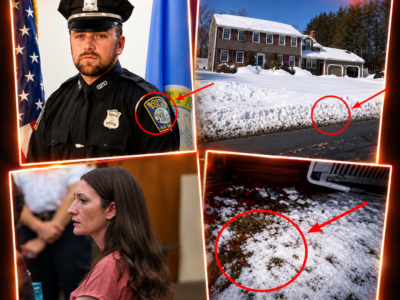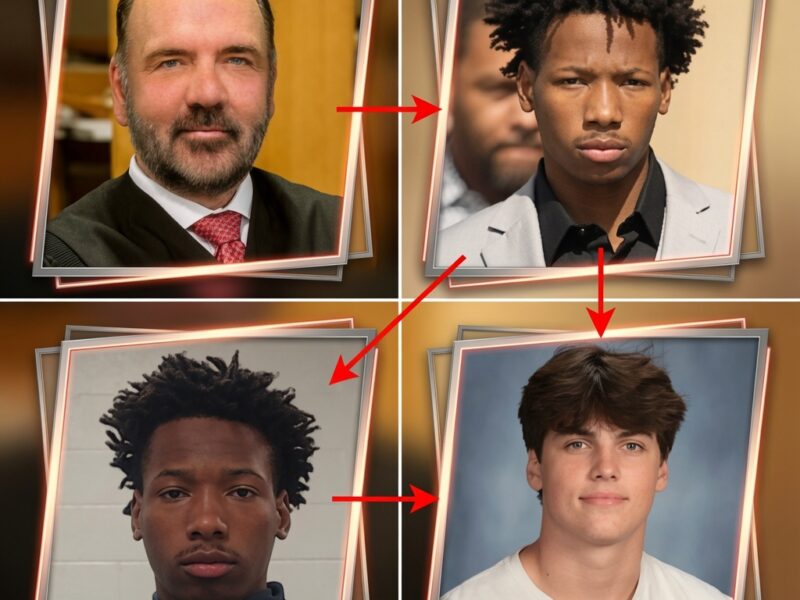
THE COLD COST OF IMPULSE: HOW THE KARMELO ANTHONY VERDICT SERVES AS A TRAGIC REFERENCE POINT FOR TEENAGE RAGE IN THE SOCIAL MEDIA AGE
From a high school sports stadium straight to a 35-year prison sentence. One single second of teenage impulse completely ruined two families forever. 💔
When 19-year-old sports captain Karmelo Anthony pulled out a knife during a heated argument at a Texas track meet, he thought he was just winning a schoolyard fight. Instead, 17-year-old Austin Metcalf lost his life, and Anthony essentially signed his own youth away to a cold prison cell. As Gen Z true-crime communities aggressively turn this heartbreaking tragedy into online entertainment, a devastating reality check is hitting parents and teenagers worldwide.
What actually triggered the fatal stadium confrontation, and why did a split-second mistake carry such an unforgiving, irreversible price tag under Texas law? ⚖️
Read the deep dive into the tragic anatomy of teenage rage, the legal warnings every student needs to hear, and the permanent destruction left in the wake of a single bad decision 👇
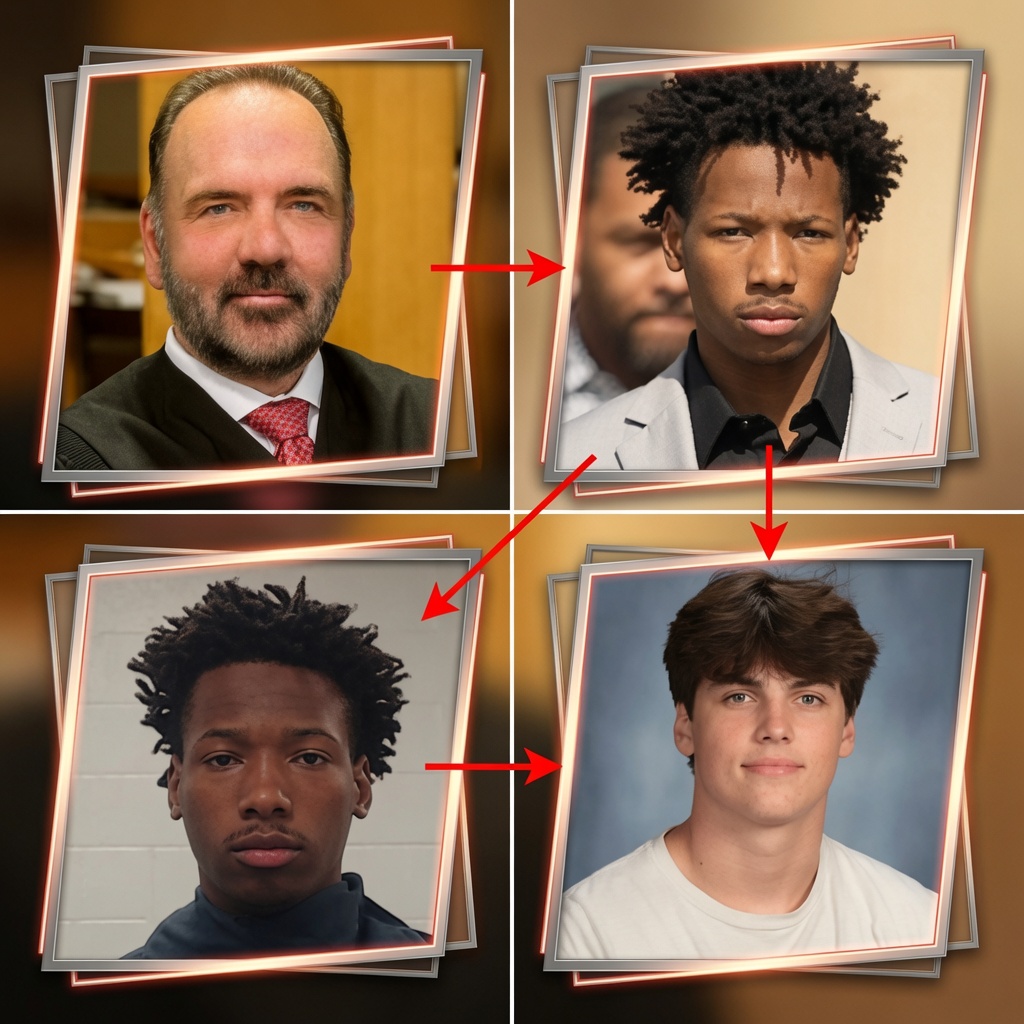
On June 9, 2026, the formal criminal proceedings against 19-year-old Karmelo Anthony concluded inside a Collin County courtroom with a heavy, somber thud. A jury officially rejected all arguments of self-defense, finding the teenage sports captain guilty of murder and sentencing him to 35 years in state prison for the fatal stabbing of 17-year-old student-athlete Austin Metcalf.
The incident, which took place during a crowded district track meet at David Kuykendall Stadium, has quickly expanded past the boundaries of a localized legal case. Across TikTok, X (formerly Twitter), and Reddit, the tragedy has transformed into a polarizing cultural case study. While online spaces actively debate the racial, legal, and systemic dimensions of the trial, a far more universal and devastating lesson has emerged from the wreckage: the catastrophic, irreversible cost of split-second teenage impulse in modern America.
A Schoolyard Altercation with a Fatal Product
The timeline established by prosecutors paints a chillingly mundane picture of how modern teenage friction can escalate into a lifetime of incarceration. Anthony, a prominent student athlete at Centennial High School, engaged in a verbal dispute with Metcalf during a rain delay at a high school athletic event. What began as standard peer-to-peer posturing quickly spiraled out of control.
According to court testimonies and eye-witness cell phone footage, the verbal confrontation turned physical near a stadium tent. In a moment driven by pure adrenaline and volatile emotion, Anthony brandished an Ozark Trail folding multi-tool knife—an object he had carried into the sports facility. With a single, aggressive motion, the blade pierced Metcalf’s chest, inflicting a fatal wound directly to his heart.
The immediate aftermath was captured on police body-camera footage. Upon being detained, a visibly shell-shocked Anthony interrupted responding officers, bluntly stating, “I know how this goes. I’m not ‘alleged.’ I did it.” This single sentence, born from the raw panic and sudden realization of what he had done, would later serve as a definitive anchor for his conviction, effectively neutralizing his legal team’s subsequent attempts to argue lower-tier manslaughter.
Two Worlds Permanently Destroyed
On subreddits such as r/TrueCrimeDiscussion and parenting forums on Facebook, the discourse surrounding the case has increasingly focused on the sheer totality of the devastation left behind. Overnight, two promising young lives were thoroughly erased.
For the family of Austin Metcalf, the loss is an absolute, non-negotiable life sentence of grief. During the emotional sentencing phase, his mother, Meghan Metcalf, delivered a heart-wrenching statement that reverberated across national news channels. “From the moment my boys were born, they were my world,” she stated, weeping openly. “Now my house is completely quiet… except for the terrifying sound of emergency sirens outside our door.” The victim’s twin brother, Hunter Metcalf, faced the defendant directly, offering a biting, stern rebuke by labeling Anthony a “very shallow man” before the court.
Concurrently, Anthony’s family has been thrust into a public nightmare. Once a young man with potential athletic collegiate prospects, Anthony has been scrubbed from community sports rosters and processed into the Texas Department of Criminal Justice. He is currently housed at the Pack Unit near Navasota—a maximum-security facility notorious for its rigid discipline and intense climate conditions. Under Texas statutes, he must serve a minimum of 17.5 years before even becoming eligible to apply for parole, meaning his entire youth and early adulthood will be spent behind concrete walls.
The Brain, The Blade, and The Algorithmic Void
The tragedy has prompted extensive commentary from behavioral psychologists and juvenile justice experts regarding the systemic nature of teenage decision-making. Neurological studies frequently cite that the human prefrontal cortex—the region of the brain responsible for risk assessment, impulse regulation, and long-term consequence planning—is not fully developed until a person reaches their mid-twenties.
In historical contexts, an impulsive teenage fight resulted in bruises, suspensions, or localized community intervention. However, the introduction of lethal weapons into everyday environments, combined with a hyper-stylized social media culture, has elevated the stakes to a lethal degree. On platforms like TikTok, armchair analysts have noted that modern teenagers are constantly exposed to digital media that romanticizes structural bravado, conflict, and aggressive posturing.
“Karmelo Anthony did not wake up that morning planning to destroy his life or kill a classmate,” one viral thread on X argued. “He reacted to a perceived insult with an immediate, volatile physical escalation. In the digital era, teenagers often forget that life doesn’t have a reset button. A single second of anger created a permanent, tragic reality that no amount of online advocacy or legal appeals can ever undo.”
The Dark Reality of True-Crime Voyeurism
Compounding the educational tragedy of the case is the manner in which digital culture has consumed the families’ real-world trauma. Following the verdict, internet subcultures have aggressively commercialized the incident.
Supporters of the defendant, led by his girlfriend Valeria Perez, established highly stylized “Fan Pages” like StandWithKarmeloAnthony on Instagram, turning the convicted felon into a digital icon complete with melancholic background music and aesthetic photo filters. Conversely, radicalized online trolls subjected the grieving Metcalf household to targeted harassment, including highly volatile “swatting” hoaxes that repeatedly brought armed tactical units to their residence.
Educational advocates argue that this digital voyeurism actively deters teenagers from learning the true lesson of the case. By turning real-world homicide and lifetime prison sentences into algorithmic trends, the digital space creates an illusion of detachment, making real violence seem no more permanent than a temporary block on a social media profile.
A Severe Warning for the Next Generation
As the legal community turns its attention toward Anthony’s newly submitted appellate brief, school districts across North Texas have quietly begun utilizing the case as a sobering cautionary tale. Student assemblies and adolescent counselors are highlighting the trial to demonstrate the absolute rigidity of the American legal system when weapons are involved.
The court of appeals may review the technicalities of the all-white jury selection or the specific parameters of the unsealed body-cam footage, but the physical reality remains concrete. Austin Metcalf is gone, and Karmelo Anthony is sitting in a cell at the Pack Unit. The Frisco stadium stabbing stands as an urgent, agonizing reminder for parents, educators, and teenagers alike: when impulse takes the driver’s seat, the destination is almost always total destruction.