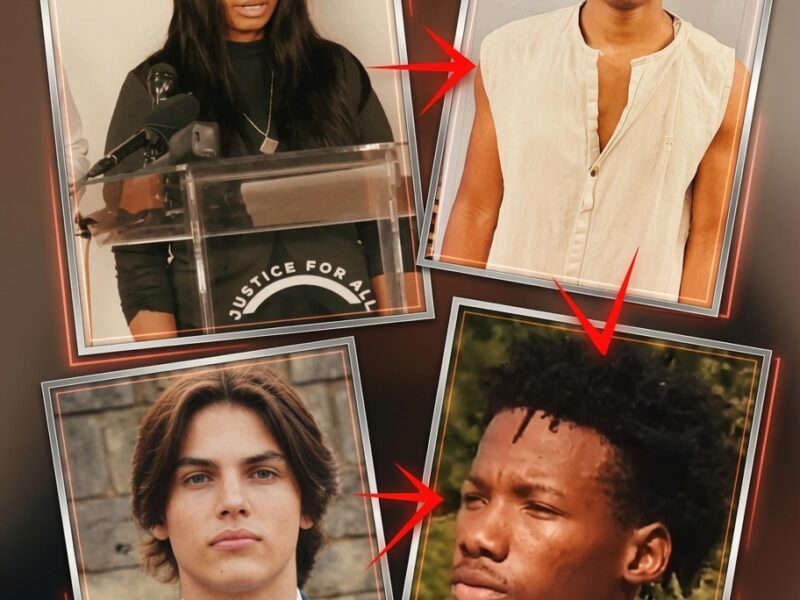
DIGITAL HOAXES AND HIGH-STAKES HOOLIGANISM: DEBUNKING THE DANGEROUS MISINFORMATION SURROUNDING THE KARMELO ANTHONY MURDER TRIAL
A $900,000 mansion bought with blood money? A leaked autopsy report from a “Sheriff” on X? 🛑
The viral trial of 19-year-old Karmelo Anthony just exposed the scariest reality of modern true crime: internet bots and engagement farmers are completely fabricating evidence to weaponize a real-world tragedy. Millions of people blindly shared a shocking “autopsy report” claiming victim Austin Metcalf was the true aggressor, alongside furious claims that Anthony’s family embezzled legal defense donations to fund a luxury lifestyle.
Now, independent auditors and federal investigators have stepped in, blowing the lid off a massive, highly coordinated network of fake accounts.
Who is the shadow figure behind the verified police chief account that fooled millions, and where did the GoFundMe money actually go? 🕵️♂️
Stop believing the algorithms. Read the full, definitive fact-check dismantling the top 3 conspiracy theories keeping Texas in a chokehold 👇
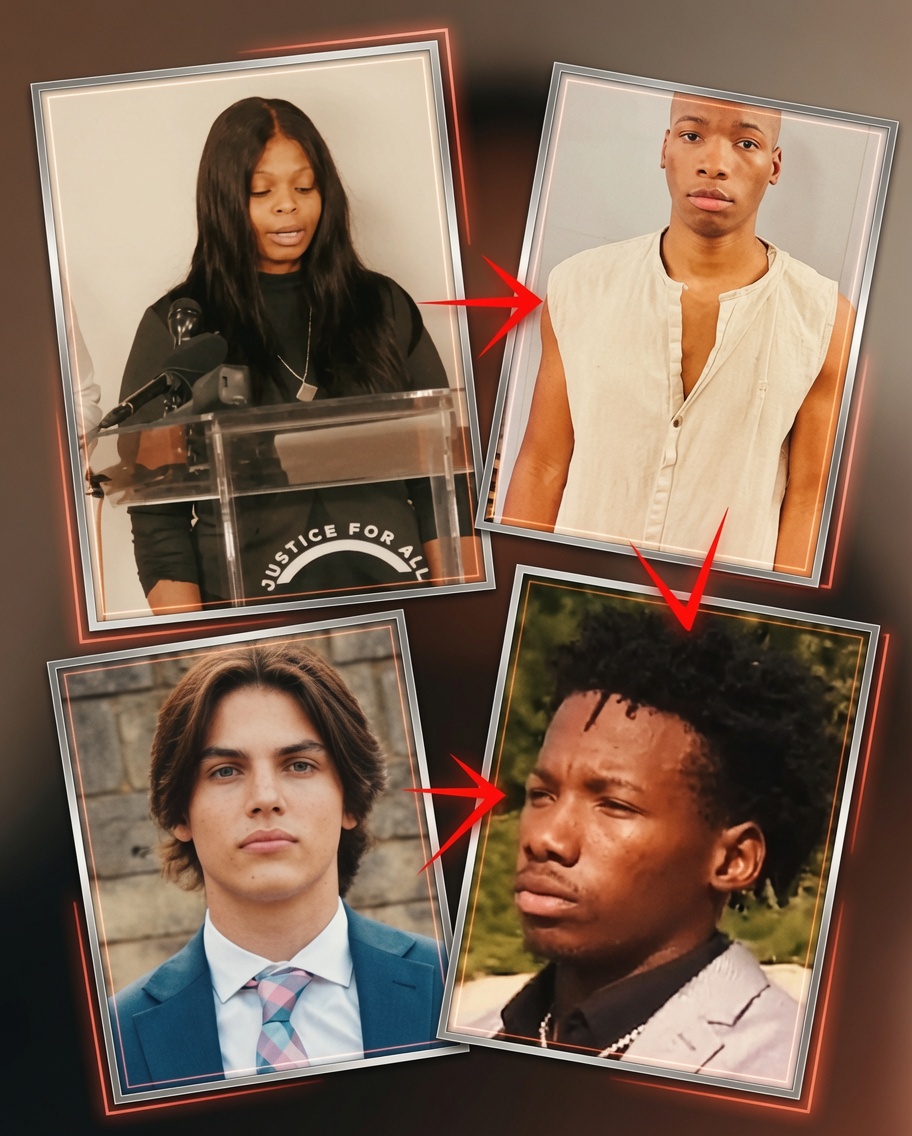
In the immediate aftermath of a high-profile courtroom verdict, the truth often becomes the first casualty of the internet’s attention economy. The trial of 19-year-old Karmelo Anthony—recently sentenced to 35 years in state prison for the fatal stabbing of 17-year-old high school track athlete Austin Metcalf—has not only exposed systemic racial and legal friction in Texas, but has also revealed a terrifying modern reality: the monetization of manufactured outrage.
As the 35-year sentence sparked heated debates across X (formerly Twitter), TikTok, and Reddit, an unprecedented wave of highly coordinated misinformation flooded the digital sphere. From completely fabricated autopsy findings to incendiary accusations of financial fraud, a swarm of digital provocateurs successfully hijacked a real-world tragedy to farm engagement, clicks, and advertising revenue. Independent auditors, platform integrity teams, and federal investigators have now stepped in to dissect the anatomy of these viral hoaxes, revealing how easily a gullible public can be manipulated by malicious internet actors.
The Blue-Check Impostor: The Fake Frisco Autopsy Report
The most sophisticated and legally disruptive hoax emerged on X just as jury deliberations were beginning in early June 2026. A verified account utilizing the official portrait and credentials of the Frisco Police Chief published a “leaked, confidential forensic autopsy report” allegedly detailing the physical condition of the victim, Austin Metcalf.
The fabricated document was meticulously formatted to mimic official Collin County medical examiner records. It included false anatomical diagrams suggesting that Metcalf had suffered extensive, defensive-type wounds on his knuckles, implying he had severely beaten Anthony prior to the knife being drawn. The post accumulated over 4.5 million views within six hours, with thousands of users demanding Anthony’s immediate release based on this “irrefutable proof of violent self-defense”.
The fallout was immediate. The Frisco Police Department was forced to issue an emergency press release condemning the account as a malicious spoof. In reality, the actual autopsy report presented to the jury confirmed that Metcalf had suffered clean, devastating stab wounds, including a fatal penetration of the heart, with zero evidence of offensive trauma on his hands or knuckles. Law enforcement officials have since confirmed that the FBI’s cybercrime division is actively tracing the digital footprint of the creator behind the fake police profile, which is suspected to be tied to a foreign engagement-farming network specializing in polarizing American social justice issues.
The $900,000 Mansion Myth: Weaponizing GoFundMe Donations
As public anger mounted among factions supporting the verdict, a parallel smear campaign was launched targeting Anthony’s immediate family. Viral TikTok videos, utilizing AI-generated voiceovers and stock imagery of luxury real estate, alleged that Anthony’s mother and legal defense team had abruptly closed their community crowdfunding campaign after embezzling hundreds of thousands of dollars.
The rumors asserted that the family had used the public legal-aid donations to purchase a luxury sports car and a sprawling $900,000 suburban mansion in an affluent Texas neighborhood. The claim triggered an avalanche of vitriol, with internet mobs doxxing several innocent real estate agents and flooding the family’s neighborhood with threats of violence.
The fact-checking organization Snopes, alongside independent financial auditors, launched an exhaustive review into the crowdfunding campaign’s transaction history to dispel the chaos. The official audit confirmed the rumor to be entirely false. At the time the viral videos peaked, the funds remained entirely locked in a heavily regulated, attorney-monitored escrow account dedicated solely to paying the retainer fees of the criminal defense and appellate lawyers. Not a single dollar had been withdrawn for personal use. Analysts pointed out that the hoax was explicitly designed to weaponize class anxieties and paint the working-class family as greedy grifters, stripping away any public sympathy for their son’s legal plight.
The “Hidden Crowd Video” Illusion
On TikTok, a third conspiracy theory gained massive traction under the guise of an “independent investigation.” Dozens of self-proclaimed “digital detectives” published highly edited, pixelated videos claiming to show unreleased, “hidden stadium camera” footage of the track meet altercation.
The creators claimed that the court and the local district attorney had deliberately suppressed a specific video angle that showed a larger mob of students cornering Anthony and racially taunting him before the fatal stabbing. These videos frequently utilized ominous background music and dramatic red circles over blurred shapes to convince viewers of a massive judicial cover-up.
A review of the official trial evidence index completely dismantles this narrative. The Frisco athletic complex did not possess operational, close-range surveillance cameras overlooking that specific segment of the facility during the off-season event. Every single piece of video evidence presented in the courtroom consisted entirely of public cell phone recordings captured by student bystanders and the transparent, unedited body-camera footage of the arriving first responders. The “hidden videos” promoted on TikTok were repeatedly revealed to be recycled footage from completely unrelated high school fights dating back to 2022 and 2023, intentionally mislabeled to capitalize on the search traffic of the Anthony case.
The Dangers of Algorithmic Amplification
Media literacy experts warn that the Anthony trial represents a dangerous turning point in how the public consumes judicial news. Because algorithms reward high-emotion content, sensational hoaxes that validate pre-existing biases are pushed to millions of screens far faster than dry, factual corrections from local authorities.
“The issue is no longer just about teenagers making mistakes; it’s about an information ecosystem that profits off turning a murder trial into an unverified reality show,” a digital media professor noted in a recent symposium analyzing the case. “People want to believe the conspiracy because it turns a complex, tragic situation into a black-and-white narrative where their preferred side is the ultimate victim.”
The Permanent Digital Stain
As Karmelo Anthony begins his 35-year sentence at the Pack Unit in Navasota, the internet’s attention is already beginning to drift toward the next viral controversy. Yet, the digital stain left by these hoaxes remains permanent. The family of Austin Metcalf continues to face online harassment from users convinced by the fake autopsy report, and Anthony’s family must navigate an appellate process overshadowed by false allegations of financial fraud. The trial of Karmelo Anthony will ultimately be remembered not just for the lives destroyed in a single moment of stadium violence, but as a stark warning of how easily digital lies can distort the pursuit of real-world justice.