ROMANTICIZING THE KNIFE: THE OUTRAGE OVER KARMELO ANTHONY’S SOCIAL MEDIA “FAN BASE” AND THE DARK RISE OF HYBRISTOPHILIA IN THE DIGITAL AGE
They called it an “Official Fan Page.” The internet called it pure depravity. 🤬
While a Texas family is mourning the brutal death of 17-year-old track star Austin Metcalf, a massive digital war has erupted. Immediately after Karmelo Anthony was slapped with a 35-year murder sentence, his girlfriend Valeria Perez launched a shocking public Instagram crusade under the banner StandWithKarmeloAnthony. It wasn’t just a legal fund—it was a full-blown glamour aesthetics page romanticizing a convicted killer, throwing true-crime communities into absolute chaos.
Why are thousands of teenagers actively defending a stadium knife attack, and how did this online obsession cross a horrific line for the victim’s family? 🚨
Uncover the psychological syndrome taking over TikTok, the secret internet “stan” culture, and the chilling fallout hitting the courtroom 👇
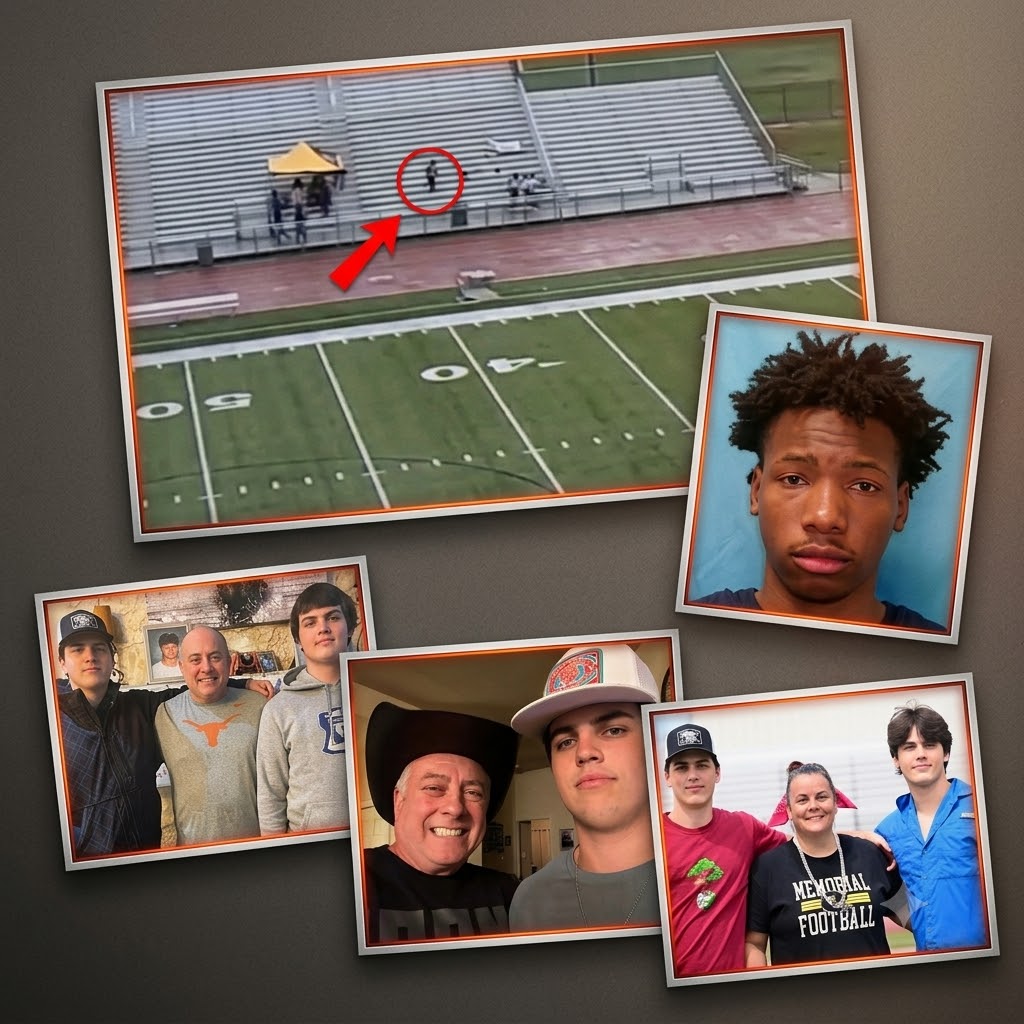
The intersection of horrific real-world violence and algorithmic social media curation has reached a toxic new milestone. Following the high-profile conviction of 19-year-old Karmelo Anthony—sentenced to 35 years in state prison for the fatal stabbing of 17-year-old student-athlete Austin Metcalf at a Frisco high school track meet—the digital battleground has shifted away from the legal specifics of the courtroom and into the deeply unsettling world of internet fandom.
At the center of this burgeoning controversy is an Instagram account that has ignited widespread public fury: StandWithKarmeloAnthony. Launched by Anthony’s girlfriend, Valeria Perez, and explicitly designated as an “Official Fan Page,” the digital hub has transformed a grim first-degree murder case into an arena of aesthetic curation, public advocacy, and romantic idolatry. The backlash across mainstream forums, Reddit’s r/TrueCrime, and X (formerly Twitter) has brought a long-standing psychological anomaly into the modern spotlight: hybristophilia—the clinical attraction to individuals who commit atrocious crimes.
The Birth of the “Official Fan Page”
For the family of Austin Metcalf, the conclusion of the June 2026 trial was supposed to offer a painful semblance of justice. Jurors swiftly rejected Anthony’s claim of self-defense, convicting him after reviewing overwhelming forensic evidence, including the Ozark Trail folding multi-tool knife used to pierce Metcalf’s heart. Yet, within hours of the 35-year sentence being handed down, the internet pushed back.
Valeria Perez launched the StandWithKarmeloAnthony account not merely as a dry, legally focused updates page, but as a lifestyle profile tailored to Gen Z aesthetics. The feed quickly populated with romanticized throwback photos, slow-motion videos of the couple set to melancholic pop music, and impassioned pleas declaring Anthony’s complete innocence. Mixed between these highly stylized posts were direct links to digital payment platforms, aggressively soliciting donations from the public to fund his newly lodged appellate campaign.
The page rapidly went viral, drawing an influx of young users who filled the comment sections with supportive emojis, hearts, and messages declaring solidarity. For critics, the transformation of a convicted murderer into a digital “idol” felt like an unprecedented distortion of justice. True-crime analysts on TikTok began documenting the phenomenon, drawing parallels to historical instances of infamous criminals receiving love letters, but noting that modern algorithms allow this dark romanticization to scale at a terrifying velocity.
The Psychology Behind the Phenomenon: Modern Hybristophilia
The intense digital fascination surrounding Anthony has forced psychologists and cultural commentators to weigh in on the underlying mental mechanisms driving his online defense league. Historically termed “Ted Bundy Syndrome,” hybristophilia has traditionally operated in the shadows—confined to private letters mailed directly to prison cells.
In the digital landscape of 2026, however, platforms like TikTok and Instagram have decentralized this fascination. Sociologists argue that highly polished fan pages allow young, impressionable users to disassociate the violent reality of the crime from the digital persona presented online. On X, cultural critics pointed out that Anthony’s youth, coupled with the tragic, emotionally charged nature of the high school setting, created a perfect storm for parasocial attachment.
“People are no longer looking at the bloodstained jacket or the autopsy photos presented to the jury,” one viral thread on r/TrueCrimeDiscussion noted. “They are looking at a curated 15-second reel on Instagram with a sad soundtrack. Social media strips away the visceral horror of a boy dying in a stadium tent and replaces it with a tragic anti-hero narrative.”
Cruelty in the Comments: The Impact on the Metcalf Family
The real-world consequences of this digital idolatry have been devastating for those left in the wake of the tragedy. During an emotional press conference on the steps of the Collin County Courthouse, Austin Metcalf’s family broke their silence regarding the digital torment they endured during the proceedings.
Jeff Metcalf, Austin’s father, revealed that the online frenzy surrounding Anthony’s supporters directly manifested as targeted harassment against his household. The family was subjected to multiple “swatting” attacks—malicious hoaxes where anonymous callers alerted tactical police units to nonexistent violent crises at the Metcalf home.
Furthermore, the family’s grief was repeatedly mocked across various Discord servers and TikTok comment chains attached to Anthony’s fan groups. Armchair detectives and fervent supporters aggressively sought out old social media posts belonging to Austin and his twin brother, Hunter, attempting to construct a counter-narrative to justify the fatal stabbing.
“They have turned my son’s violent murder into a trend,” Jeff Metcalf stated, visibly shaken. “While they get to post updates and collect money online, we are forced to live with a permanent void in our family.”
The Algorithmic Dilemma: Accountability of the Platforms
The explosion of the StandWithKarmeloAnthony campaign has reignited a fierce national debate over content moderation and the ethical responsibilities of major tech conglomerates. Thousands of users reportedly flagged the page for violating community guidelines regarding the glorification of violent crime and the harassment of crime victims.
However, because the page technically frames its messaging around legal fund solicitation and personal relationships, content moderation systems have struggled to swiftly handle it. Legal experts point out that raising funds for a criminal appeal is entirely protected by law, leaving platforms in a gray area when those funds are raised using the highly commercialized tactics of influencer culture.
The division within the true-crime community itself remains stark. One faction argues that publicizing these fan pages only provides the oxygen of publicity to toxic behaviors, while another insists that exposing these digital subcultures is necessary to understand how media consumption alters the public’s perception of right and wrong.
Behind Bars but Active Online
As Anthony begins adjusting to his new reality within the Texas Department of Criminal Justice’s Pack Unit near Navasota—where he faces a minimum of 17.5 years before any possibility of parole—his digital ghost remains highly active. Perez has vowed to keep the StandWithKarmeloAnthony page operational throughout the entirety of the lengthy appellate process.
The case stands as a stark warning of a fragmented media landscape. In a world where legal verdicts can be instantly re-edited into teenage melodrama, the line between justice and digital entertainment continues to blur, leaving the families of victims to fight not just for legal accountability, but for the basic dignity of their loved ones’ memories.