THE COST OF A VIEW: How the Pursuit of Social Media Clout Led to the Death of Maria Eduarda Rodrigues de Freitas
They didn’t just break the safety rules—they deleted their entire identity for a viral video. 📲🚨
The horrifying investigation into 21-year-old student Maria Eduarda Rodrigues de Freitas’ 40-meter fatal plunge in Brazil has exposed a toxic backstage reality. Behind the illegal rope-jumping company Entre Cordas was a relentless hunger for high-engagement social media content. To capture the ultimate, jaw-dropping “Aeroplane Style” footage for Instagram and TikTok, the operators completely bypassed standard safety checks to perform a dangerous, unauthorized stunt. But when the viral moment turned into a real-time nightmare, their 80,000-follower page vanished in seconds.
How far are these underground companies willing to push the boundaries of life and death just to chase an algorithm? 👇
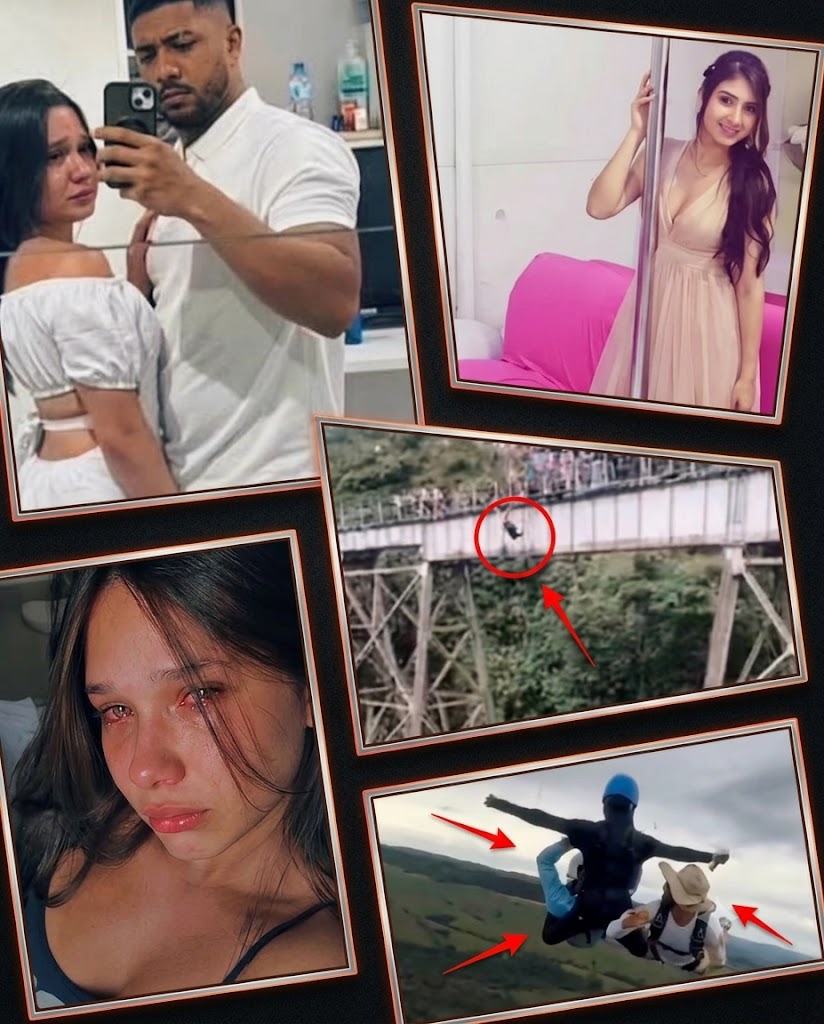
In the modern ecosystem of extreme sports, the line between a genuine thrill and a calculated piece of internet content has become dangerously blurred. As global authorities continue to investigate the catastrophic death of 21-year-old physical education student Maria Eduarda Rodrigues de Freitas, who plummeted 40 meters from the Ponte do Esqueleto (Skeleton Bridge), a predatory pattern has emerged. The investigation is no longer just looking at a mechanical or human error; it is dissecting a toxic subculture where underground adventure companies sacrifice basic human safety to feed the social media algorithm.
Across major true crime forums on Reddit, investigative threads on X, and media commentary channels on YouTube, a singular consensus is forming: Maria Eduarda was not just the victim of a faulty safety check—she was the victim of an unregulated industry obsessed with viral engagement.
The “Aeroplane Style” Trap
According to preliminary witness statements and structural breakdowns of the viral footage circulating online, Maria Eduarda did not execute a traditional, self-initiated jump. Instead, she requested—and the instructors eagerly agreed to perform—a highly stylized maneuver known in the extreme sports community as the “Aeroplane Style” launch.
In a standard rope-jump, the participant stands on the edge, conducts a personal countdown, and steps off vertically, allowing the safety equipment to engage naturally. The Aeroplane Style, however, is designed explicitly for the camera. It requires two or three operators to physically lift the participant horizontally, swinging or launching them face-first into the canyon like a human glider.
[The Anatomy of a Viral Stunt]
- Step 1: Maximize visual aesthetics by removing bulky, obstructive safety redundancies.
- Step 2: Utilize a multi-person horizontal launch ("Aeroplane Style") for cinematic impact.
- Step 3: Prioritize camera angles, framing, and immediate phone capture over rigorous check-lists.
- Result: Catastrophic oversight where the primary safety cable remains unattached on the deck.
True crime sleuths on X have pointed out that this specific launch style requires a chaotic amount of physical coordination on an incredibly narrow platform. In the rush to position the body for the perfect cinematic shot, the primary safety checklist—the sacred rule of extreme sports—was completely abandoned. The neon-colored safety cable, which should have been double-checked by multiple handlers, was left sitting completely unclipped on the concrete deck while the cameras rolled.
From 80,000 Followers to Absolute Zero
The commercial motivation behind these dangerous adaptations becomes obvious when looking at the digital profile of the event coordinator, Entre Cordas. Operating as a “chui” (unauthorized, black-market) entity without municipal permits, safety certifications, or liability insurance, the company relied entirely on social media visibility to recruit young, impressionable clients.
Their Instagram profile boasted over 80,000 followers, built on a highly curated aesthetic of slow-motion drops, euphoric post-jump reactions, and high-energy music tracks. To maintain this digital momentum and compete with other underground operators across the state of São Paulo, Entre Cordas constantly had to push the envelope, offering increasingly dramatic and cinematic jump styles.
The hypocrisy of this clout-chasing model was laid bare in the minutes following the tragedy. The moment the viral video transitioned from a marketing asset into definitive proof of criminal negligence, the company’s digital bravado collapsed. Within hours, the 80,000-follower page was deleted entirely. This swift erasure suggests a deeply calculated attempt to destroy their promotional history, masking a pattern of prior near-misses and unregulated stunts from forensic investigators.
The Algorithm and the Exploitation of Youth
The tragedy has sparked an intense philosophical debate on platforms like Reddit’s r/SocialMedia và r/TrueCrime regarding the ethics of the attention economy. Commentators argue that unregulated companies are actively exploiting the psychological desires of Gen Z and Millennial clients, who are often willing to take heightened physical risks if it guarantees an aesthetically pleasing, high-performing post for their personal feeds.
“Maria Eduarda was a young, active physical education student who loved movement and adventure,” noted a prominent cultural commentator on a YouTube investigative deep-dive. “An outfit like Entre Cordas targets exactly that demographic. They sell the illusion of safety wrapped in a high-production package. They treat life-or-death physics like a TikTok trend, and when the math inevitably catches up to them, they delete the app and leave a family shattered.”
State prosecutors are heavily focusing on this marketing angle to establish criminal intent or reckless indifference (dolo eventual). By proving that the operators knowingly modified safety environments to achieve better digital content, the prosecution aims to demonstrate that the company prioritized corporate profit and internet clout over human survival.
Current Legal and Regulatory Fallout
The three operators remain detained in a maximum-security facility, insulated from a highly volatile public demanding strict accountability. Digital forensic units are currently working alongside international tech platforms to recover the deleted Entre Cordas servers, aiming to retrieve the historical archive of their communications, booking logs, and prior video content.
Meanwhile, consumer advocacy groups in Brazil are using the tragedy to push for aggressive crackdowns on social media marketplaces, demanding that platforms implement artificial intelligence filters to automatically flag and ban accounts promoting unregulated, high-risk adventure tourism before another tragedy is broadcast to the world.