THE CLOUT-BLINDNESS EPIDEMIC: How the Obsession with “Perfect Content” Turned a Brazil Bridge Into a Site of Unfathomable Horror
THEY CHECKED THE LENS, BUT FORGOT THE ROPE: WAS THIS THE DEADLIEST STUNT EVER CAUGHT ON CAMERA? 📸🚫
It was the perfect shot. The sun was hitting the canyon just right, the GoPro was mounted, and Maria Eduarda was beaming, ready to deliver that “viral” moment for 80,000 followers. But as she stood on the edge of the Skeleton Bridge, the crew was so obsessed with the perfect “Superman” angle that they committed the most horrifying, unforgivable blunder in the history of extreme sports.
Millions of people are now watching the raw footage on a loop, and the math just doesn’t add up. How do three professional instructors—people who live and breathe adrenaline—look directly at a 40-meter drop and “forget” the one piece of equipment designed to keep someone alive?
The internet is calling it “Clout Blindness”—a dangerous new obsession where the vanity of a viral post outweighs the value of human life. But there’s a darker, more sinister theory brewing in the comment sections that suggests this wasn’t just a mistake… it was a calculated sacrifice for the algorithm.
The company is gone, their accounts are deleted, and the truth is buried in the jungle. Uncover the terrifying reality of what happens when the hunger for likes turns into a death sentence. 👇🔥
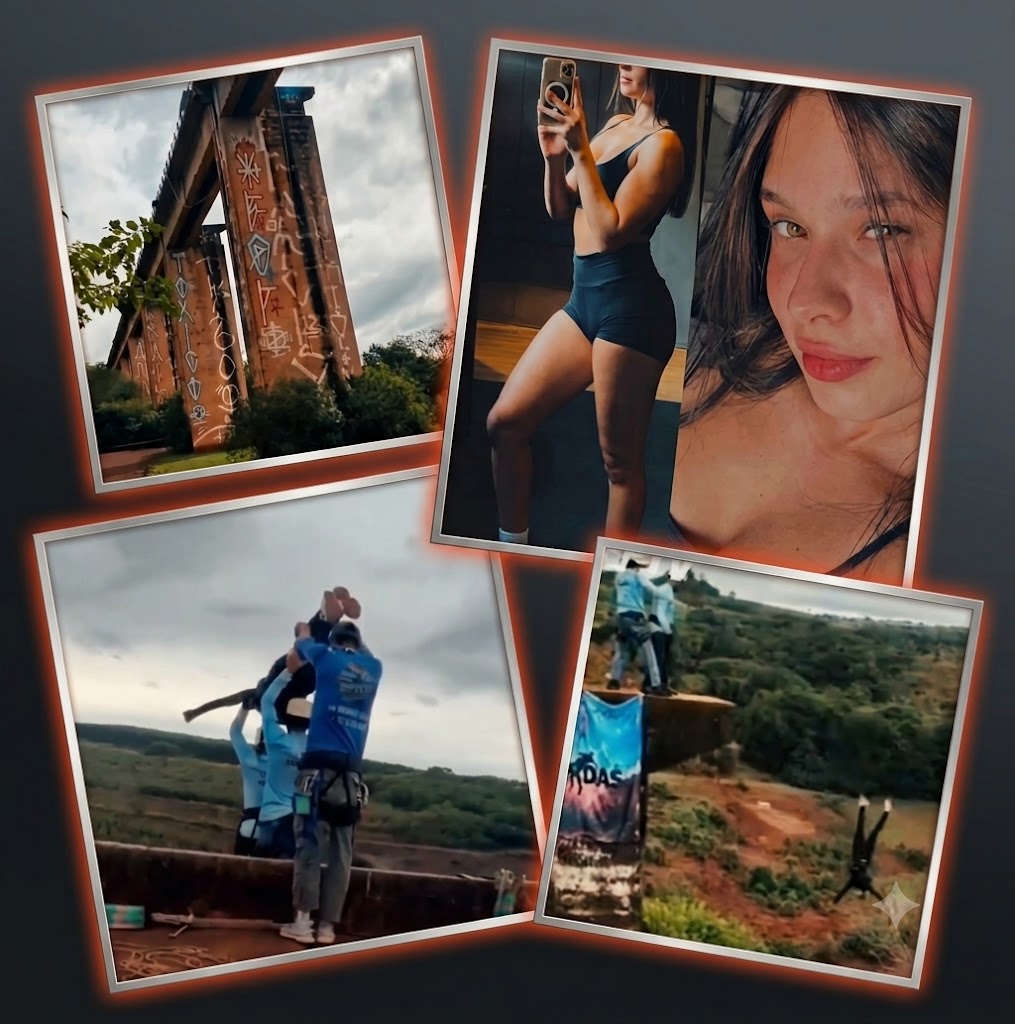
The screen shows a beautiful 21-year-old woman, Maria Eduarda Rodrigues de Freitas, standing on the edge of the abandoned, rusted Ponte do Esqueleto. She is smiling. She is excited. She is about to be the star of a viral reel for a popular extreme sports outfit called Entre Cordas.
Seconds later, she is gone.
As the raw, unedited footage of her death makes the rounds on X (formerly Twitter) and TikTok, a terrifying narrative is beginning to take shape: this was not a simple accident. It was the result of a modern, toxic phenomenon that experts are calling “Clout Blindness”—a pathological obsession with digital aesthetics that led a team of “professionals” to prioritize a camera angle over the most basic life-saving protocol on the planet.
The “Superman” Setup: A Lesson in Fatal Negligence
To understand the sheer magnitude of this tragedy, one must look at the minutes leading up to the jump. The video shows the three crew members from Entre Cordas—a rogue operation boasting over 80,000 followers—maneuvering Maria into a horizontal “Superman” pose.
They weren’t just prepping her for a jump; they were choreographing a performance. They adjusted her limbs, checked the camera placement, and ensured the lighting would make the video pop on a smartphone screen.
But as the camera pans downward for a fraction of a second, the visual evidence of their negligence is chilling: the heavy-duty yellow master lifeline, the vital link between Maria and the bridge, was sitting completely stationary on the wooden deck. It hadn’t been touched, let alone clipped.
“They were checking the frame, not the carabiner,” one distraught viewer wrote on a prominent true-crime forum. “They were blinded by the view count.”
The Anatomy of “Clout Blindness”
The term “Clout Blindness” is spreading through social media faster than the video itself. It describes a state of mind where the pursuit of online validation—likes, shares, and virality—creates a tunnel vision that masks reality.
In this case, the crew of Entre Cordas had built an entire business model on this blindness. Their Instagram feed was a curated gallery of high-definition, slow-motion jumps where young, attractive people performed death-defying stunts in cinematic, aesthetic environments. The business didn’t just sell an experience; they sold the “flex.”
When the focus of a business shifts from safety to aesthetics, protocols—once rigid and non-negotiable—begin to erode. The carabiner, the knot, the anchor point; these are “unsexy” details that don’t look good on a high-definition reel. They are the background noise to the main event.
Investigators from the São Paulo Civil Police have noted that the operators appeared overly relaxed, even casual, as they prepared Maria for her end. There was no intense, safety-focused pre-flight check. Instead, there was a performance-focused choreography. The “clout” became more important than the “cord.”
The Digital Vanishing Act: Guilt or Evidence Destruction?
If the mistake were truly an accident, one might expect a devastated company to provide transparency and cooperate with authorities. Instead, Entre Cordas did the exact opposite.
Within hours of Maria’s fatal fall, the company’s entire digital presence was scrubbed from the internet. Every Instagram post, every TikTok reel, every link to their “phantom” operation—all gone.
This digital blackout has sparked a firestorm of speculation on Discord and Reddit. If it was just a technical mistake, why delete the evidence? Internet sleuths are now arguing that the company knew their entire operation was an aesthetic house of cards built on illegal premises and negligent practices. By wiping the account, they weren’t just trying to escape the PR fallout; they were attempting to destroy the trail of evidence that showed exactly who was responsible for the systematic erosion of safety protocols.
The Jungle Manhunt: A Brutal Reality Check
The aftermath of the “Superman” jump saw a sudden shift from digital vanity to survival instinct. The moment Maria hit the canyon floor, the crew didn’t jump into rescue mode; they jumped into flight mode.
Two of the instructors allegedly handed their IDs to a nearby officer and vanished into the dense jungle surrounding Limeira. It took a high-stakes search, involving the elite Águia (Eagle) police helicopter unit, to flush them out of the brush and into custody.
The authorities were unimpressed by the “mistake” narrative. By charging the three detainees with homicide with implied malice (dolo eventualis), the judiciary is sending a message: they believe these men knew that by launching a person without a rope, death was a highly likely outcome. They didn’t care. They were “clout-blind,” and they were willing to risk another human’s life to keep the content machine running.
The Future of the “Viral” Industry
As the legal battle begins, the death of Maria Eduarda serves as a grim warning to the world of extreme tourism. The demand for “Instagrammable” danger is creating a black market of rogue operators who view safety inspections as an annoyance and a GoPro mount as a priority.
The Skeleton Bridge, once a backdrop for daring social media influencers, has now become a crime scene. The question remains: how many more “Superman” jumps are being organized in the shadows right now, where the person behind the camera is looking at the screen instead of the rope?
For Maria Eduarda, the screen will never light up again. But her story has sparked a global conversation about the cost of being “on brand.” In the age of social media, the most dangerous thing you can do is let the person filming your life be the person responsible for it.