The Ridgewood Armory smelled like every other veterans’ event I’d ever attended: floor wax, overcooked chicken, old coffee, and the faint metallic tang of too many American flags. Fluorescent lights buzzed overhead, casting a harsh glow on rows of folding tables and men in ill-fitting blazers trying to look like they still belonged in uniform.
I sat near the back wall, half-hidden behind a lukewarm plate of mashed potatoes I hadn’t touched. My name is Staff Sergeant Isa Fairburn, U.S. Army Explosive Ordnance Disposal — EOD. Two deployments to Iraq. Thirty-one confirmed IED neutralizations. Six devices rendered safe in a single brutal 72-hour stretch during a sandstorm that turned every road into a death trap. The medal they were about to talk about had been pinned on my chest at Fort Liberty in front of my entire team.
Tonight, it was pinned on my younger brother Todd’s lapel.
My father stood near the bar, bourbon in hand, holding court with two older men in VFW caps. His voice carried across the room with that familiar mix of pride and possession.
“My boy Todd is wearing a family medal tonight,” he announced, clapping a heavy hand on Todd’s shoulder. “It belonged to his uncle — a man who served so the rest of us didn’t have to. Real hero stuff. We’re just keeping the legacy alive.”
The lie landed so smoothly that a few people nearby nodded in respect. Todd smiled that practiced, empty smile he’d perfected over the years, adjusting the medal so the light caught it just right.
I didn’t move. In EOD, you learn early that panic gets people killed. Stillness is a weapon. So I sat there, hands folded in my lap, watching the man who had spent my entire life rewriting history to fit his narrative.
Fourteen months ago, I had walked out of my father’s house after yet another dinner where every question about my service was redirected back to Todd’s latest sales numbers. “How’s the Army treating you, Isa?” always became “Todd just closed that big regional account.” My deployments, my medals, my scars — they were inconvenient truths in a household that only celebrated one child.
Now here we were.
A distinguished Colonel with silver hair and a chest full of ribbons approached the head table. He leaned down toward Todd, eyes narrowing at the medal.
“That’s an impressive decoration, son,” the Colonel said warmly. “Defense Meritorious Service Medal. Can you tell me how you earned it? I’d love to hear the story.”
The color drained from Todd’s face so fast I almost felt sorry for him. His mouth opened, closed, then opened again. He shot a desperate glance at our father.
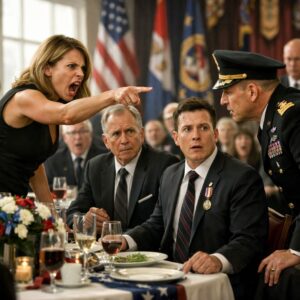
Dad didn’t even blink. He gave Todd’s shoulder another squeeze and jumped in smoothly.
“Oh, that old thing? It belonged to our late uncle. Family heirloom, really. Todd’s just honoring the legacy tonight.”
The Colonel’s expression shifted. He had spent decades reading people, and something in Todd’s panic didn’t sit right.
“Uncle?” the Colonel repeated, his voice quieter now but sharper. “Which uncle would that be? I don’t recall any Fairburns on the rolls with that medal.”
Todd swallowed hard. The room around the head table had gone quiet. Even the slideshow of old veterans’ photos clicking in the background seemed to slow down.
“He… he told me it was Uncle Raymond’s,” Todd finally stammered, pointing at our father. “Dad said it belonged to him.”
The uncle never existed.
A heavy silence fell over the nearby tables. Heads turned. Whispers started.
I stood up slowly, the chair scraping against the floor. My dress uniform — the one I rarely wore — felt heavier than any plate carrier I’d ever carried in Iraq. The brass on my chest caught the light as I walked forward through the aisle.
My father saw me first. His bourbon glass froze halfway to his lips.
I stopped at the edge of the head table and looked directly at the Colonel.
“Sir,” I said calmly, my voice carrying the steady tone of someone who had spoken over exploding ordnance, “that medal is mine. Defense Meritorious Service Medal, serial DMS-7714-F. Awarded for thirty-one IED neutralizations during two deployments with the 20th Engineer Brigade. The last cluster was earned clearing a convoy route outside Mosul when the weather turned to hell and every sensor was fighting us.”
I reached out and gently unfastened the medal from Todd’s lapel. He didn’t resist. He couldn’t even look at me.
Turning to my father, I held the medal up so the entire room could see it.
“This wasn’t earned by any uncle. It was earned by me — Staff Sergeant Isa Fairburn — while you were busy telling everyone at home that my job was ‘just maintenance work.’ While you were bragging about Todd’s sales numbers, I was disarming devices that would have killed dozens of American soldiers.”
The Colonel straightened, respect flashing in his eyes. “Staff Sergeant Fairburn,” he said, offering a crisp salute. “It’s an honor.”
I returned the salute, then turned back to my father and brother.
“I didn’t come here to embarrass anyone,” I said quietly. “I came because another soldier invited me. But I’m done letting my service be erased so someone else can feel important.”
My father opened his mouth, but for once, no smooth lie came out.
I pinned the medal back onto my own uniform where it belonged, the familiar weight settling against my chest like an old friend.
As I walked back toward my table, the room didn’t stay silent. A few veterans started clapping. Then more. Soon the entire armory filled with steady, respectful applause — not the loud, showy kind, but the kind that comes from people who understand exactly what that medal represents.
Later that night, as I was leaving, the Colonel caught up with me at the door.
“Fairburn,” he said, “if you ever need anything — a reference, a recommendation, anything — you call me. The Army needs more like you.”
I nodded, a small, tired smile finally breaking through.
“I just needed the truth to come out tonight, sir. The rest… I’ll keep earning on my own.”
Outside in the cool night air, I took a deep breath. The medal felt right again. Heavy with meaning. Heavy with memory.
Some legacies aren’t handed down.
Some are earned the hard way — one wire, one deployment, one silent stand at a time.
And tonight, for the first time in years, I felt like I had finally taken mine back.
News
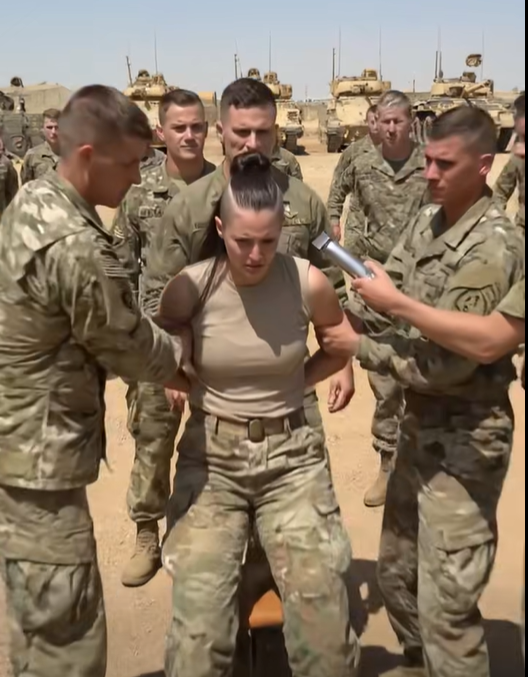
“Shave Her Head,” the Sergeant Ordered Coldly. “If Discipline Won’t Break Her, Maybe Humiliation Will.” But What They Didn’t Know Was That the Woman They Underestimated Would Bring Their Entire Base to Its Knees.
General Alexander Vance had heard the whispers for months: Fort Blackwood was rotting from within. Soldiers spoke in hushed tones of systematic humiliation disguised as “discipline,” falsified training records, missing supply funds that somehow vanished into private accounts, and a toxic command climate built on fear and intimidation. Every official inspection came back sparkling clean […]
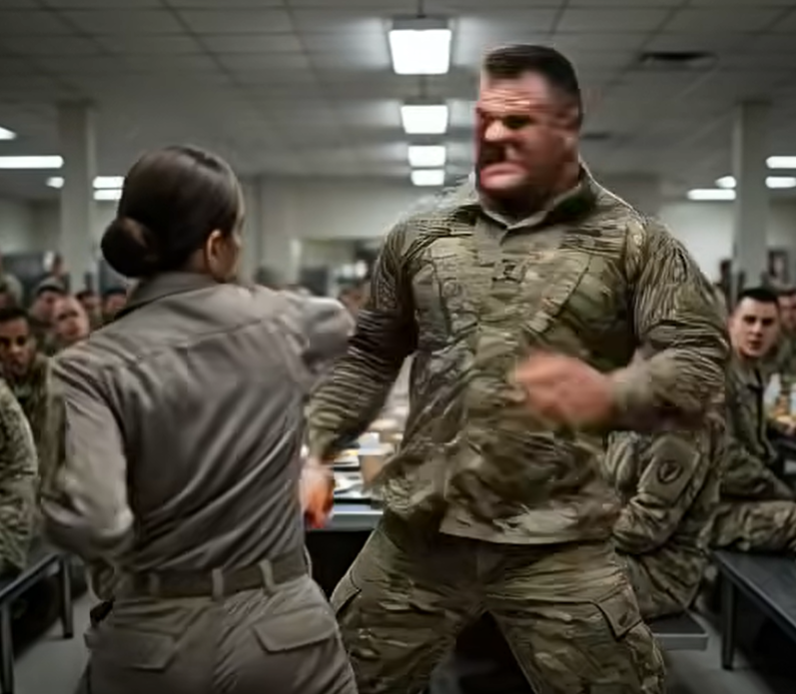
“Die, B*tch,” He Spat, Swinging a Massive Fist in the Mess Hall. He Thought I Was an Easy Target — He Had No Idea He Just Attacked a Classified SEAL Shadow Operative.
I was running on fumes. Seventy-two hours of off-the-books reconnaissance in the frozen Alaskan wilderness had left every muscle screaming. My joints ached from crawling through ice-crusted snow, my eyes burned from staring through night-vision gear, and the only thing keeping me upright was the promise of a hot meal and twelve hours of blackout […]
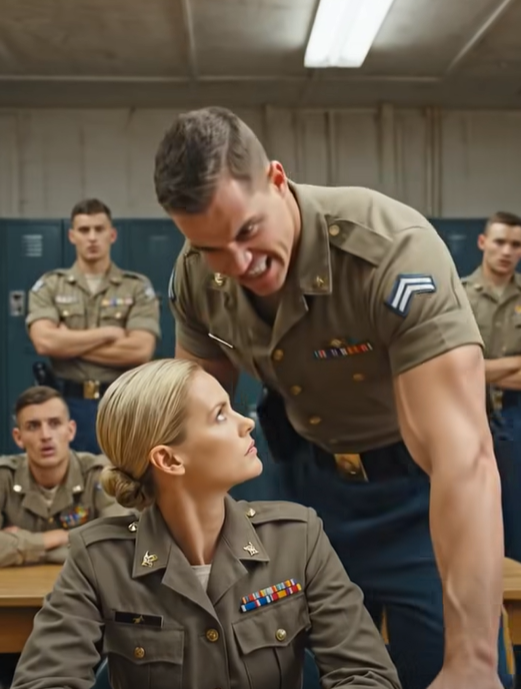
“Do You Know Who I Am?” He Pushed Her — Seconds Later, One ID Card Ended His Career
The dim lights of Rusty’s Bar flickered like dying stars just outside Camp Pendleton. It was a Friday night, the kind where Marines came to forget the sand and the screams they carried home from deployment. I had come here for the opposite reason — to disappear. My name is Commander Thalia Renwick. Highly decorated […]
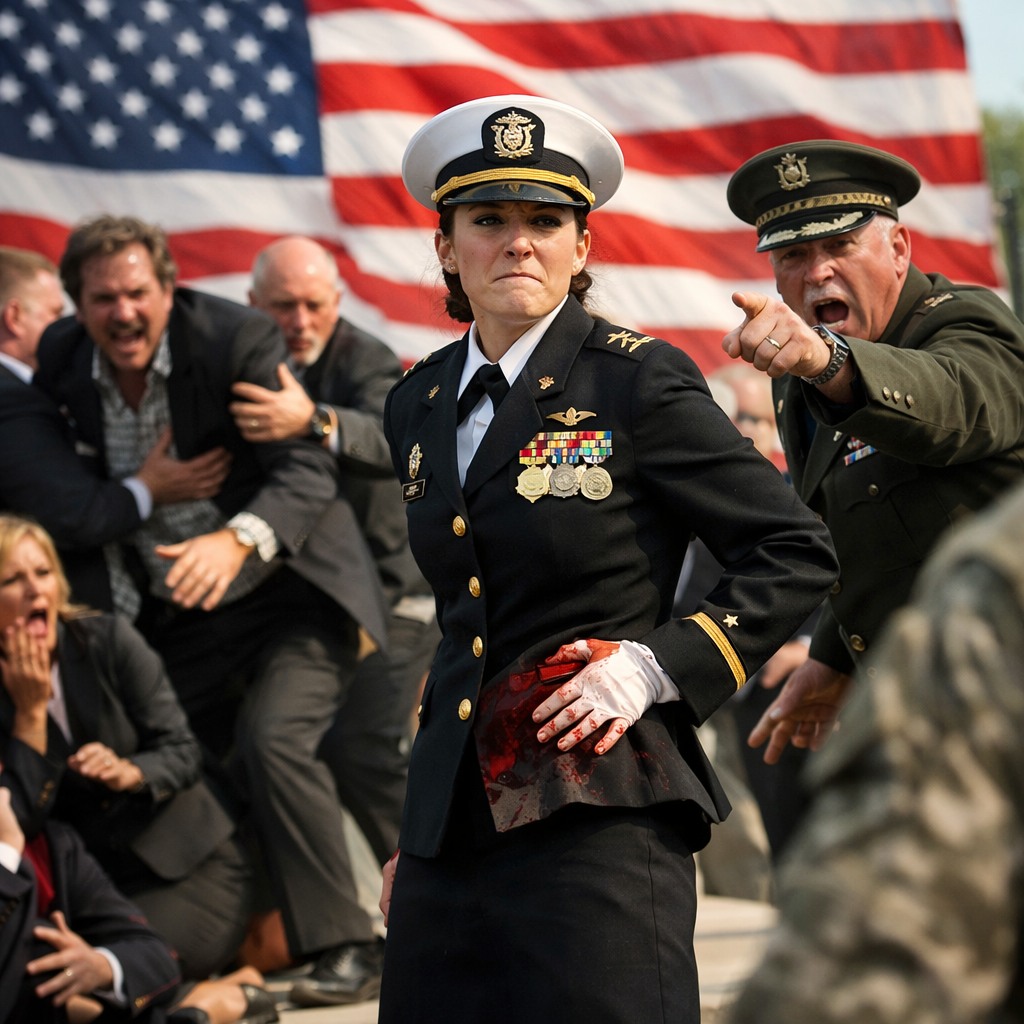
15 Years After My Dad Kicked Me Out, I Saw Him At My Sister’s Wedding. He Sneered: “If It Wasn’t For Pity, No One Would’ve Invited You.” I Just Smiled And Sipped My Wine. Then The Bride Took The Mic And Changed Everything.
The South Carolina sun was merciless that June afternoon, turning the outdoor wedding venue into a glittering oven. I stood near the back in my crisp Army dress uniform, the brass buttons and medals catching the light with every breath. At 34 years old, I had come home for my little sister’s wedding — the […]
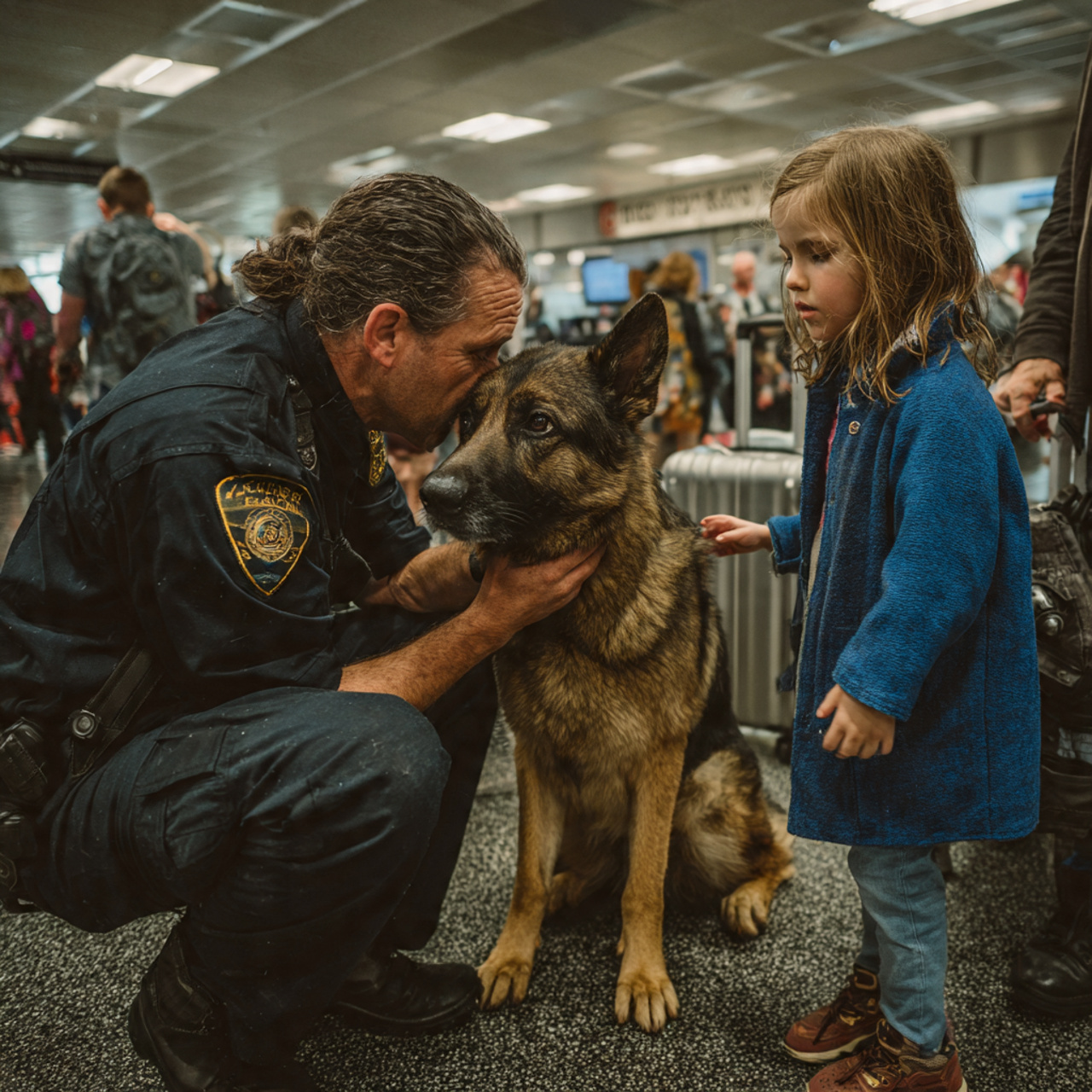
“A POLICE DOG FROZE IN THE AIRPORT. THEN A LITTLE GIRL TAPPED HIS HEAD. WHAT HAPPENED NEXT MADE EVERY TRAVELER STOP. HAVE YOU EVER WITNESSED A SILENT CRY FOR HELP?
The bustling international airport was a whirlwind of rolling suitcases, hurried announcements, and weary travelers rushing to their gates. Officer Liam Mercer patrolled the terminal with his loyal K9 partner, Rex — a highly trained German Shepherd known for his sharp instincts in detection and child safety operations. Everything seemed routine until Rex suddenly froze […]
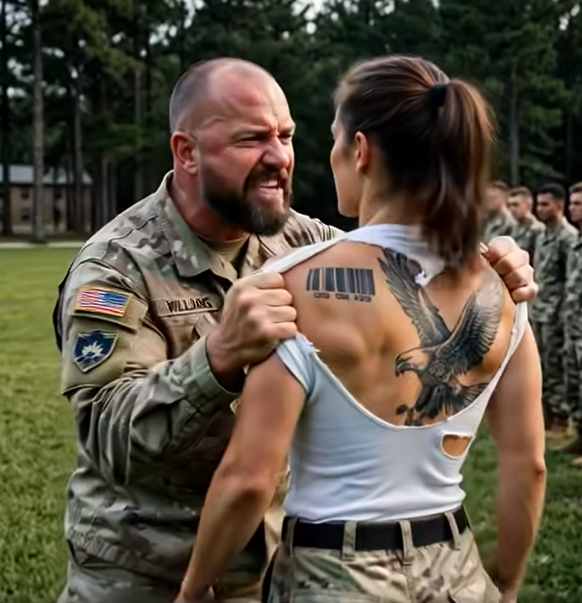
‘DEADWEIGHT?’ — THEY TORE THE SEAL GIRL’S SHIRT, AND THE GENERAL FROZE WHEN HE SAW HER KILL-CODE TATTOO
My name is Rebecca Kane. By the time I stepped off the Black Hawk at Fort Carson, Colorado, I already knew the first rule of special operations: men don’t fear a woman until she stops asking for permission. Twenty-eight years old. Special operations qualified. Transferred under sealed orders into the most brutal inter-branch advanced combat […]
End of content
No more pages to load