They Thought She Was Just a Passenger—Until the F-16 Pilots Whispered “Eagle One”… and the Plane Dropped to 200 Feet
“Pull up! Pull up!”
The warning screamed through the cockpit as the aircraft plunged, just 200 feet above the ground. Inside the cabin, panic erupted—children cried, passengers prayed, and flight attendants froze in place.
Then, from seat 14C, a woman stood up.
She moved calmly, unnervingly steady, as if chaos didn’t exist. Past the fear, past the noise, straight to the cockpit door.
“Move.”
The captain hesitated—then stepped aside.
Her hands touched the controls, precise and certain. This wasn’t luck. This was memory. Training. Instinct forged in something far beyond civilian skies.
Outside, two F-16s flanked the failing plane. Over the radio, a pilot’s voice cracked in terror.
“Mayday… I’m losing control—”
The woman grabbed the transmitter.
“Stabilize your pitch. Trust your training.”
Silence.
Then a whisper:
“…Eagle One?”
She was supposed to be dead.
Buried seven years ago.
But at that moment, with 187 lives hanging in the balance…
She was the only one who could bring them home….
The F-16 pilot’s voice cracked again, this time laced with disbelief.
“Eagle One… is that really you?”
Captain Elena Voss didn’t answer right away. Her hands were already moving across the controls of the crippled airliner, correcting the pitch and stabilizing the yaw with the calm precision of someone who had done this a hundred times in simulators that were never meant to be used in real life.
“Focus on your instruments,” she said into the radio, her voice low and steady. “I’ve got the civilian bird. You keep those fighters in tight formation and clear the airspace. We’re not losing anyone today.”
In the passenger cabin, the panic had reached a fever pitch. People were crying, praying, clutching seatbacks. A flight attendant stood frozen in the aisle, eyes wide with terror. But when Voss glanced back through the open cockpit door, her expression never wavered.
“Everyone stay seated and belted,” she called out, loud enough for the cabin to hear. “We’re going to be fine. I’ve flown worse.”
She had.
Seven years ago, Captain Elena Voss had been the best combat pilot in her squadron — callsign “Eagle One.” She had flown missions no one talked about, saved lives no one would ever know about, and then, during a classified operation over hostile territory, her F-35 had been shot down. The official report said she was killed in action. A funeral was held. A folded flag was given to her family. The military moved on.
But Elena Voss hadn’t died that day.
She had ejected at the last possible second, been captured, and spent two brutal years as a prisoner before a daring rescue operation brought her home in secret. The government had decided the world was safer if “Eagle One” remained dead. So they gave her a new identity, a quiet discharge, and told her to disappear.
She had tried. For five years she lived off the grid, working odd jobs, staying out of sight. Until today.
Until Flight 417 lost both engines at 35,000 feet due to a catastrophic bird strike combined with a suspected mechanical failure.
The two F-16s that had been scrambled to escort the failing airliner were now flying wingman to a ghost.
“Eagle One,” the lead fighter pilot said again, his voice tight with emotion. “It’s really you. Jesus Christ… we thought you were gone.”
“Not today,” Elena replied, her hands never leaving the controls. “Now listen. I need you to clear the runway at San Diego. Tell them we’re coming in hot, no engines, and we’re going to need every inch of that tarmac. And get the crash crews ready. This is going to be ugly.”
She glanced at the civilian captain, who was still standing behind her, pale but composed.
“You ever land a plane with no engines before?” she asked him.
He shook his head.
“Good,” she said. “Then stay out of my way and trust me.”
The next twelve minutes were some of the most intense in modern aviation history. Elena Voss flew the massive airliner like it was a fighter jet — using every trick she had learned in combat to manage altitude, speed, and glide ratio. She talked the two F-16 pilots through formation flying that kept them close enough to provide visual guidance while staying clear of her descent path.
Inside the cabin, the flight attendants had regained their composure and were preparing the passengers for a crash landing. Children were crying. Adults were praying. But the fear was no longer total chaos — it was focused. Directed. Because the woman in the cockpit had spoken with absolute authority, and somehow, people believed her.
When the runway finally came into view, Elena’s voice remained steady over the intercom.
“Brace. Brace. Brace.”
The plane touched down hard — harder than any landing should be — skidding, smoking, metal screaming against concrete. The left wing clipped a light pole, but the aircraft stayed upright. Emergency crews swarmed the scene as soon as it came to a stop.
When the doors finally opened and passengers began evacuating down the slides, the two F-16s circled overhead in a final protective pass before heading back to base.
On the tarmac, as medics checked her for injuries, Elena Voss finally allowed herself a moment to breathe. The civilian captain walked up to her, still shaking.
“Who the hell are you?” he asked.
She looked at him, then at the sky where the fighters had been.
“Just someone who refused to stay buried,” she said quietly.
Later that evening, as news helicopters circled the airport and the story began to break across every channel, the Pentagon released a short, carefully worded statement acknowledging that Captain Elena Voss, callsign “Eagle One,” had been listed as KIA seven years ago but had in fact survived and was now assisting in the investigation.
For the passengers of Flight 417, she wasn’t just a survivor.
She was the reason they were alive.
And for the two young F-16 pilots who had flown escort that day, the woman they once thought was a legend had just become something more.
A ghost who came back when they needed her most.
The next morning, Elena Voss stood on the tarmac again, watching the sun rise over San Diego Bay. Her hands still carried the faint tremor of adrenaline, but her eyes were clear.
She had spent seven years hiding.
Today, she had remembered who she was.
And the world was about to find out that some legends don’t stay dead.
They just wait for the right moment to fly again.
News
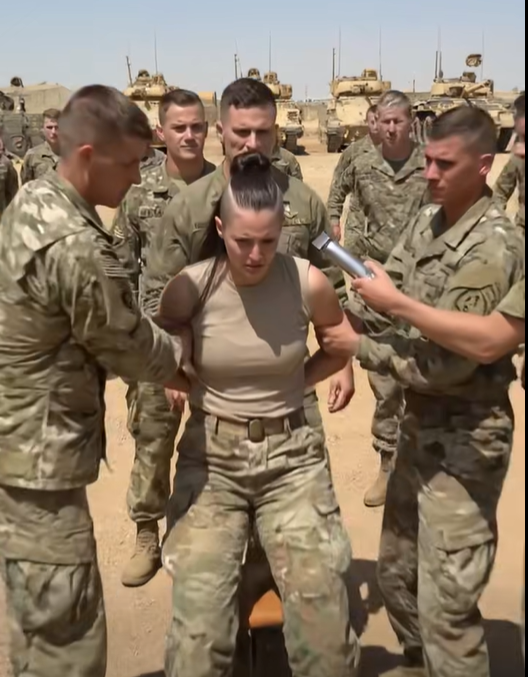
“Shave Her Head,” the Sergeant Ordered Coldly. “If Discipline Won’t Break Her, Maybe Humiliation Will.” But What They Didn’t Know Was That the Woman They Underestimated Would Bring Their Entire Base to Its Knees.
General Alexander Vance had heard the whispers for months: Fort Blackwood was rotting from within. Soldiers spoke in hushed tones of systematic humiliation disguised as “discipline,” falsified training records, missing supply funds that somehow vanished into private accounts, and a toxic command climate built on fear and intimidation. Every official inspection came back sparkling clean […]
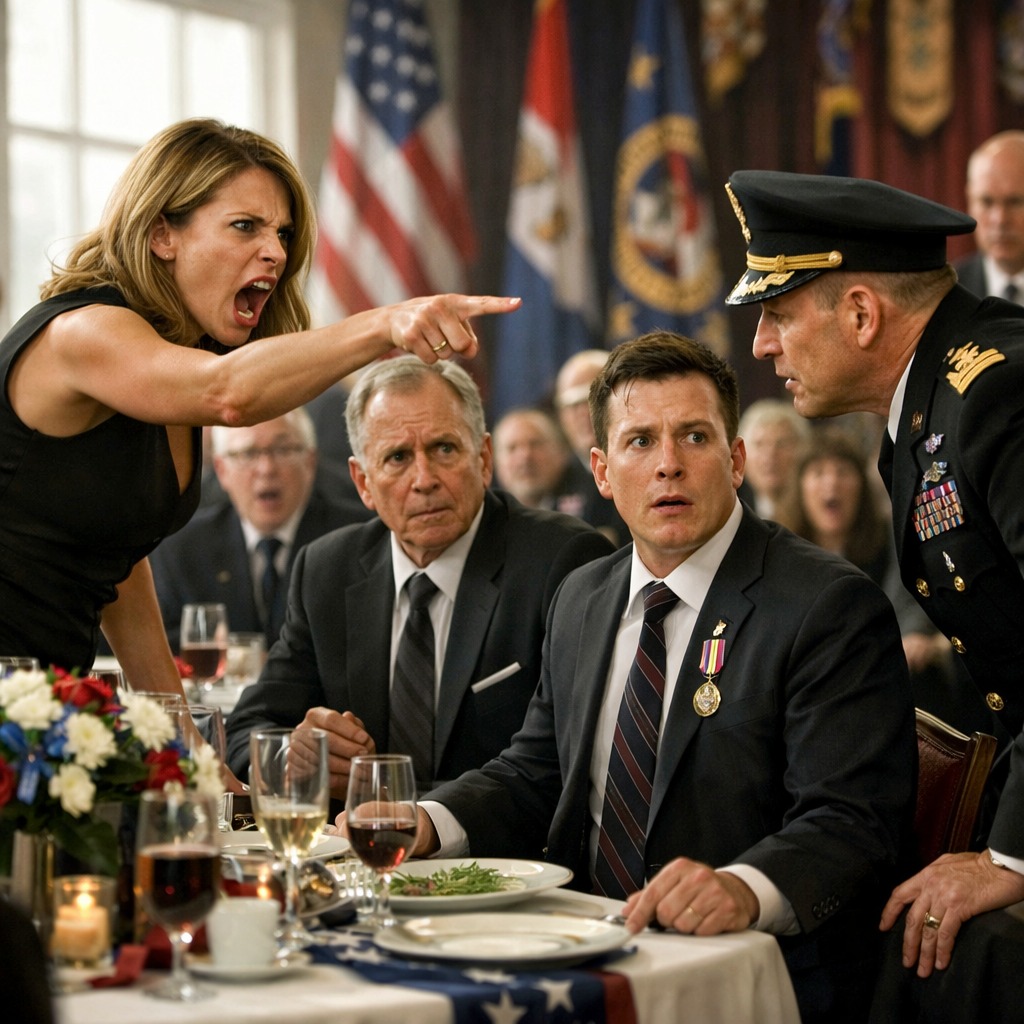
At A Veterans’ Dinner, The Colonel Leaned Toward My Brother And Asked One Simple Question: “Can You Tell Me How You Earned This Decoration, Son?” His Face Turned White. He Pointed At My Father And Said: “He Told Me It Belonged To Our Uncle.” The Uncle Never Existed.
The Ridgewood Armory smelled like every other veterans’ event I’d ever attended: floor wax, overcooked chicken, old coffee, and the faint metallic tang of too many American flags. Fluorescent lights buzzed overhead, casting a harsh glow on rows of folding tables and men in ill-fitting blazers trying to look like they still belonged in uniform. […]
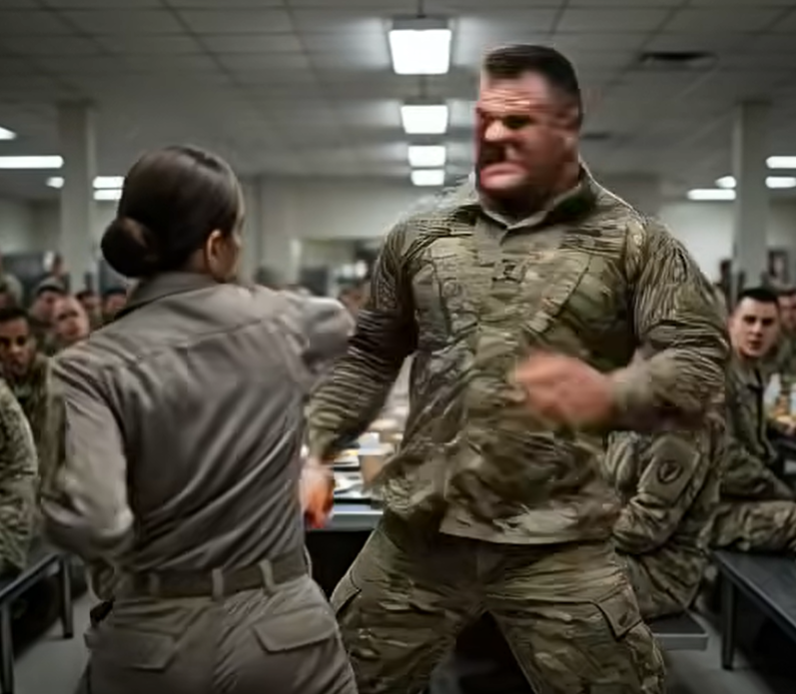
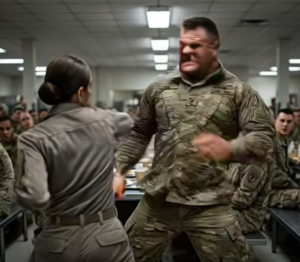
“Die, B*tch,” He Spat, Swinging a Massive Fist in the Mess Hall. He Thought I Was an Easy Target — He Had No Idea He Just Attacked a Classified SEAL Shadow Operative.
I was running on fumes. Seventy-two hours of off-the-books reconnaissance in the frozen Alaskan wilderness had left every muscle screaming. My joints ached from crawling through ice-crusted snow, my eyes burned from staring through night-vision gear, and the only thing keeping me upright was the promise of a hot meal and twelve hours of blackout […]
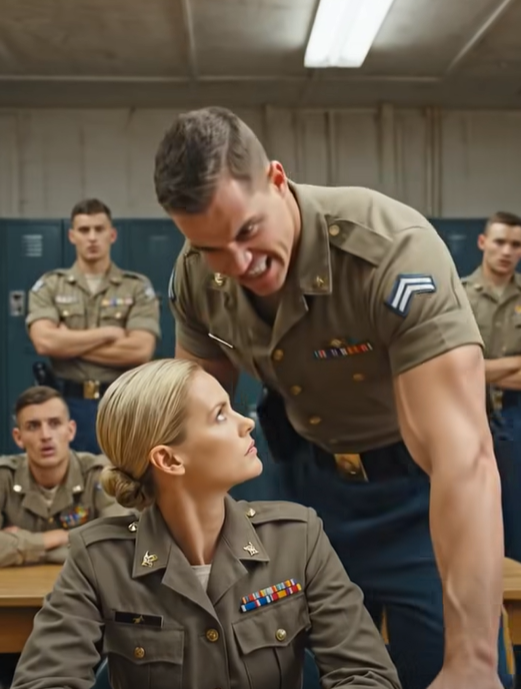
“Do You Know Who I Am?” He Pushed Her — Seconds Later, One ID Card Ended His Career
The dim lights of Rusty’s Bar flickered like dying stars just outside Camp Pendleton. It was a Friday night, the kind where Marines came to forget the sand and the screams they carried home from deployment. I had come here for the opposite reason — to disappear. My name is Commander Thalia Renwick. Highly decorated […]
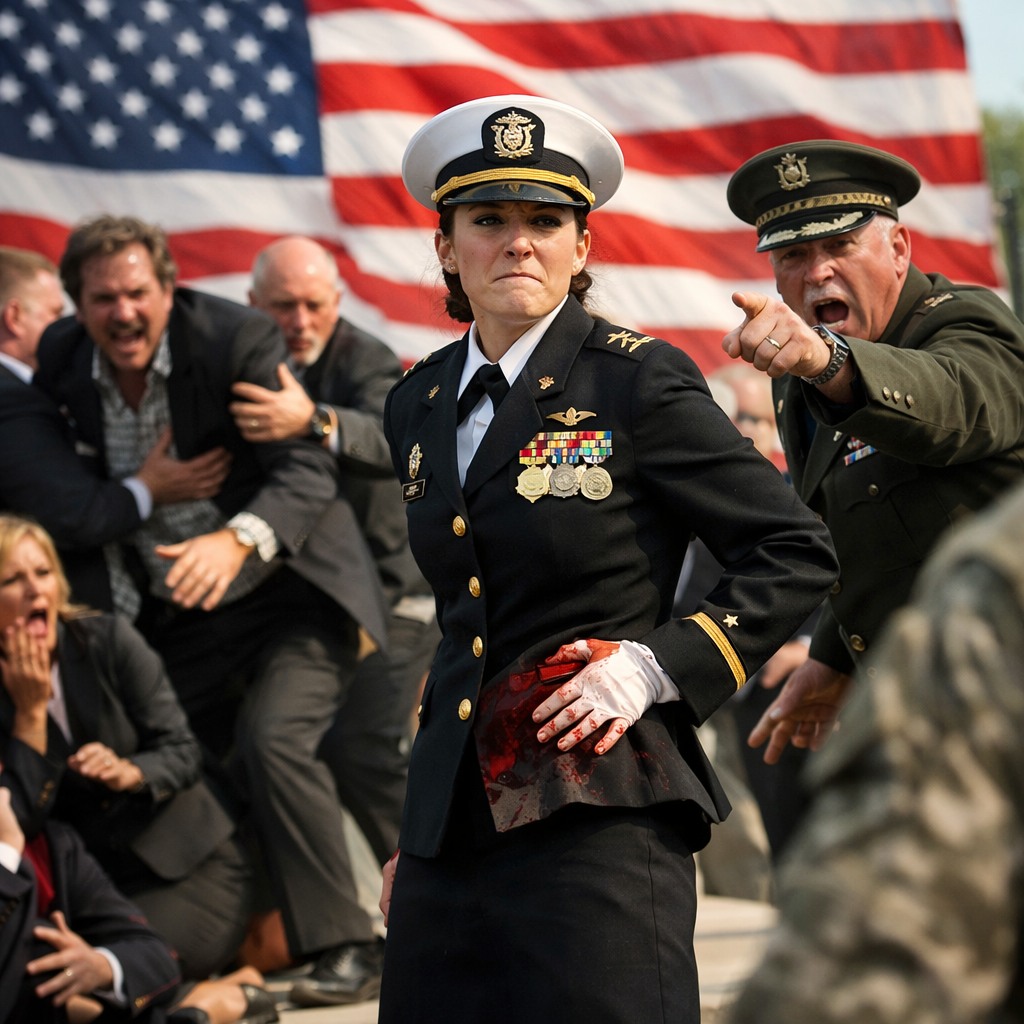
15 Years After My Dad Kicked Me Out, I Saw Him At My Sister’s Wedding. He Sneered: “If It Wasn’t For Pity, No One Would’ve Invited You.” I Just Smiled And Sipped My Wine. Then The Bride Took The Mic And Changed Everything.
The South Carolina sun was merciless that June afternoon, turning the outdoor wedding venue into a glittering oven. I stood near the back in my crisp Army dress uniform, the brass buttons and medals catching the light with every breath. At 34 years old, I had come home for my little sister’s wedding — the […]
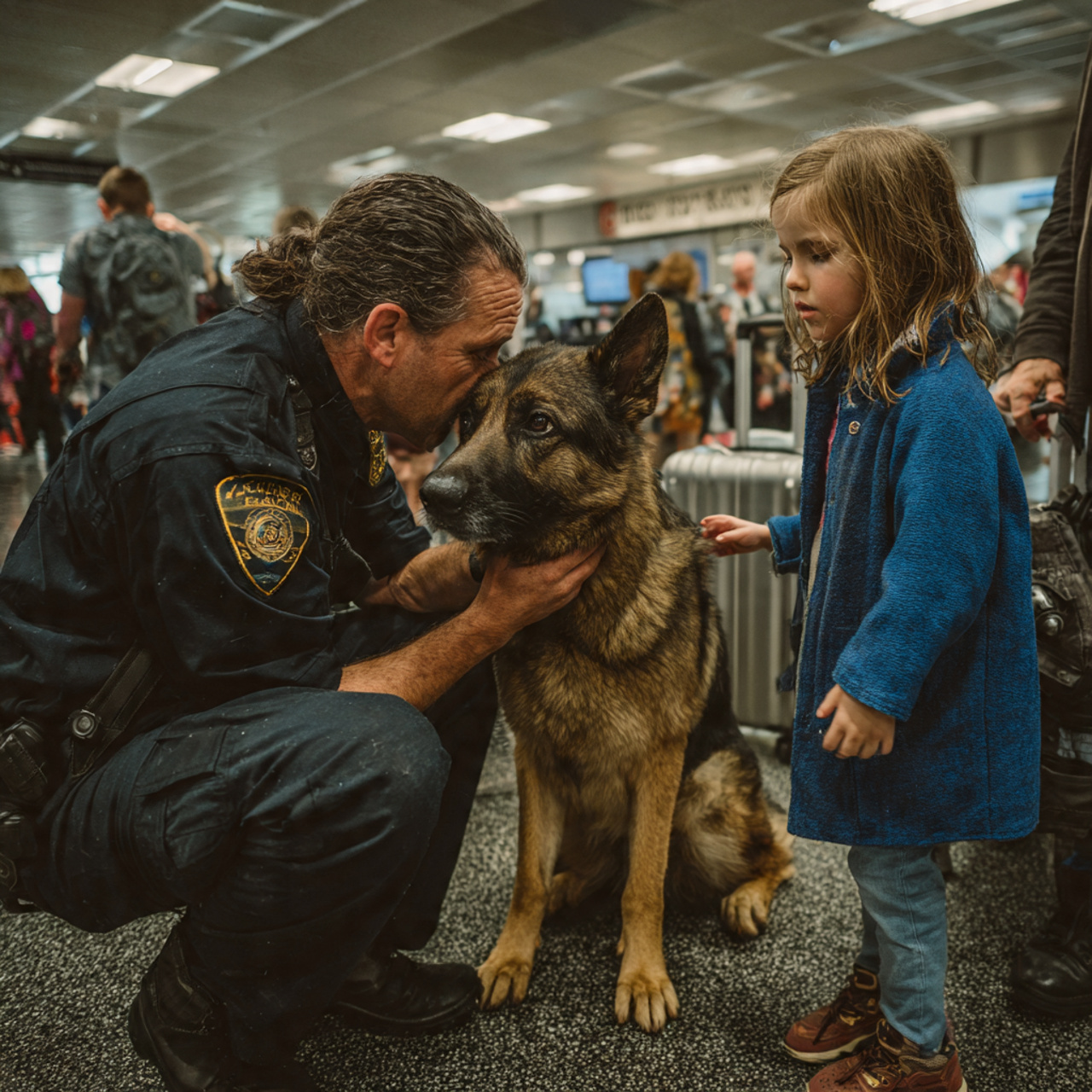
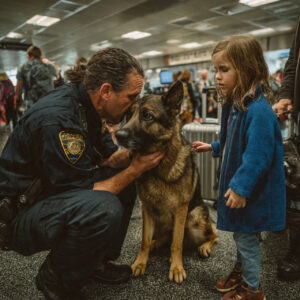
“A POLICE DOG FROZE IN THE AIRPORT. THEN A LITTLE GIRL TAPPED HIS HEAD. WHAT HAPPENED NEXT MADE EVERY TRAVELER STOP. HAVE YOU EVER WITNESSED A SILENT CRY FOR HELP?
The bustling international airport was a whirlwind of rolling suitcases, hurried announcements, and weary travelers rushing to their gates. Officer Liam Mercer patrolled the terminal with his loyal K9 partner, Rex — a highly trained German Shepherd known for his sharp instincts in detection and child safety operations. Everything seemed routine until Rex suddenly froze […]
End of content
No more pages to load