Prince Harry and Meghan Markle’s turbulent transition from royal life to Hollywood has hit yet another wall—this time in the form of a highly controversial security decision that one of the Duke’s closest allies has branded “spiteful” and “deliberately punitive.” The renewed row comes as the couple continues to face mounting challenges in establishing themselves as major players in the entertainment industry, with recent projects stalling, public appearances drawing mixed reactions, and persistent questions about their long-term viability in Los Angeles.
The latest flashpoint centers on the Home Office’s refusal to restore Harry’s publicly funded police protection during visits to the United Kingdom. Despite repeated legal challenges, court rulings, and personal appeals from the Duke himself, British authorities have maintained that Harry—having stepped back from royal duties in 2020—does not qualify for the automatic, taxpayer-funded security detail afforded to working members of the royal family. Instead, he must apply and pay for private protection on a case-by-case basis, a system his supporters argue is both impractical and unsafe given the level of threat he faces.
One of Harry’s most outspoken allies, royal commentator and author Omid Scobie, described the ongoing stance as “spiteful in the extreme.” In a widely shared statement, Scobie argued that the decision goes beyond legitimate security concerns and appears designed to punish Harry for his public criticisms of the royal family and his decision to leave royal life. “This isn’t about risk assessment,” Scobie wrote. “It’s about settling scores. Denying a man who served two tours in Afghanistan the basic protection his own family receives is not just unfair—it’s vindictive.”
The security dispute has dragged on for years. Harry lost automatic protection when he and Meghan relocated to California in 2020. A High Court challenge in 2023 partially succeeded, with a judge ruling that the Home Office’s initial handling of his case was “unlawful,” but the core decision—that he no’t entitled to full state-funded protection—was upheld. In late 2025, Harry attempted another appeal, citing specific threats including a neo-Nazi plot uncovered by U.S. authorities and ongoing harassment from paparazzi and online trolls. The court again sided with the government, leaving Harry to rely on private security funded entirely out of his own pocket.

Friends of the couple say the financial and logistical burden has been immense. Private security teams capable of matching the level of protection Harry received as a working royal cost hundreds of thousands of pounds per visit. The uncertainty around whether protection will be approved—and when—forces advance planning that is both expensive and restrictive. “It’s not just about money,” a source close to Harry told reporters. “It’s about peace of mind. He can’t simply hop on a plane to see family or attend an event without weeks of negotiations and significant cost. That’s not freedom—it’s restriction by another name.”
The security saga has coincided with mounting difficulties for Harry and Meghan in Hollywood. Their production company, Archewell Productions, has struggled to deliver major hits. The Netflix docuseries Harry & Meghan (2022) drew strong initial viewership but received mixed reviews and criticism for being overly self-serving. Their animated series Pearl was canceled before release, and other announced projects have either stalled or quietly disappeared from development slates. Meghan’s lifestyle brand American Riviera Orchard launched in 2025 with a limited product drop but has yet to scale into a major commercial success.
Public appearances have also drawn scrutiny. High-profile events—such as red carpets and charity galas—have often been overshadowed by questions about relevance, authenticity, and whether the couple still command the same level of public interest they did immediately after leaving royal duties. While they maintain a loyal fan base, particularly in the United States, many industry insiders note that Hollywood has moved on to newer stories and faces. “They arrived with enormous goodwill and a global platform,” one entertainment executive said. “But goodwill doesn’t automatically translate into box-office or streaming numbers. They’re still searching for the right project to re-establish themselves.”
Despite the setbacks, Harry and Meghan have continued their charitable work through the Archewell Foundation, focusing on mental health, women’s empowerment, and veterans’ issues. Harry remains deeply involved with the Invictus Games, and Meghan has quietly supported several women’s initiatives. Yet the narrative in much of the British press—and increasingly in some U.S. outlets—has centered on perceived struggles rather than achievements.
The security decision has become a lightning rod for these broader frustrations. Supporters argue that denying Harry adequate protection not only puts him and his family at risk but also symbolically punishes him for speaking out in his memoir Spare and in interviews about his experiences within the royal family. Critics counter that Harry’s choice to leave royal duties and publicly criticize the institution naturally removes him from the circle of automatic protection, and that taxpayers should not fund private security for non-working royals living abroad.
King Charles and Prince William have remained publicly silent on the matter, though sources close to the royal family insist the decision rests entirely with the Home Office and independent security advisors, not the monarch or the Prince of Wales. Nonetheless, the perception of family division lingers, with Harry’s allies frequently pointing to what they see as a lack of support from Buckingham Palace.
As the couple approaches their sixth year in California, the question remains whether they can pivot from royal-adjacent fame to standalone success in Hollywood. The security issue, while separate, has become emblematic of the broader challenges they face—logistical hurdles, public skepticism, and the difficulty of translating royal notoriety into sustainable entertainment industry influence.
For now, the “spiteful” label attached to the security decision by Harry’s supporters continues to fuel debate on both sides of the Atlantic. Whether it ultimately affects the couple’s long-term plans—or prompts a new legal challenge—remains to be seen. What is clear is that the story of Prince Harry and Meghan Markle is far from over, and the security row is only one chapter in a saga that shows no sign of concluding quietly.
News
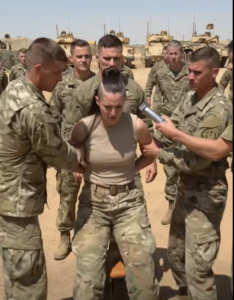
“Shave Her Head,” the Sergeant Ordered Coldly. “If Discipline Won’t Break Her, Maybe Humiliation Will.” But What They Didn’t Know Was That the Woman They Underestimated Would Bring Their Entire Base to Its Knees.
General Alexander Vance had heard the whispers for months: Fort Blackwood was rotting from within. Soldiers spoke in hushed tones of systematic humiliation disguised as “discipline,” falsified training records, missing supply funds that somehow vanished into private accounts, and a toxic command climate built on fear and intimidation. Every official inspection came back sparkling clean […]
At A Veterans’ Dinner, The Colonel Leaned Toward My Brother And Asked One Simple Question: “Can You Tell Me How You Earned This Decoration, Son?” His Face Turned White. He Pointed At My Father And Said: “He Told Me It Belonged To Our Uncle.” The Uncle Never Existed.
The Ridgewood Armory smelled like every other veterans’ event I’d ever attended: floor wax, overcooked chicken, old coffee, and the faint metallic tang of too many American flags. Fluorescent lights buzzed overhead, casting a harsh glow on rows of folding tables and men in ill-fitting blazers trying to look like they still belonged in uniform. […]
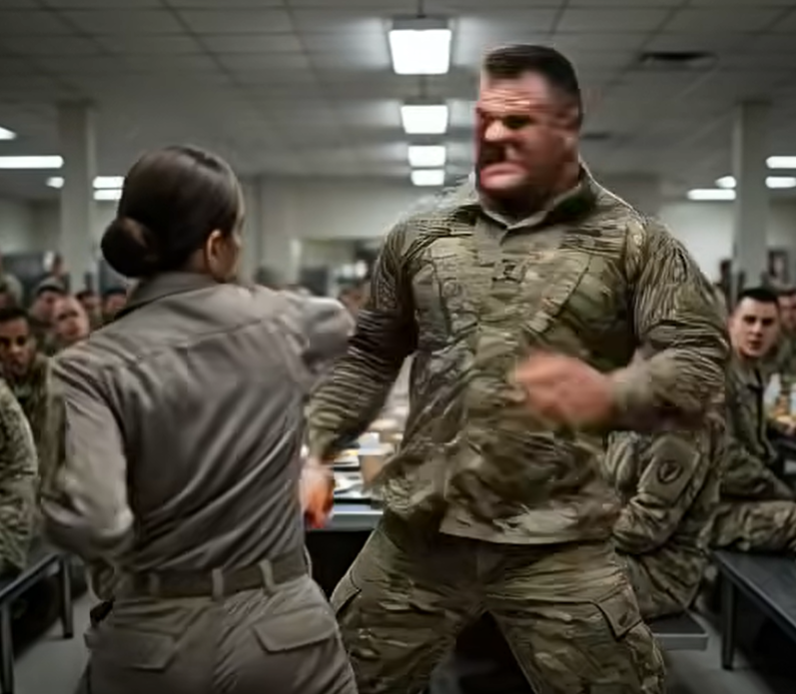
“Die, B*tch,” He Spat, Swinging a Massive Fist in the Mess Hall. He Thought I Was an Easy Target — He Had No Idea He Just Attacked a Classified SEAL Shadow Operative.
I was running on fumes. Seventy-two hours of off-the-books reconnaissance in the frozen Alaskan wilderness had left every muscle screaming. My joints ached from crawling through ice-crusted snow, my eyes burned from staring through night-vision gear, and the only thing keeping me upright was the promise of a hot meal and twelve hours of blackout […]
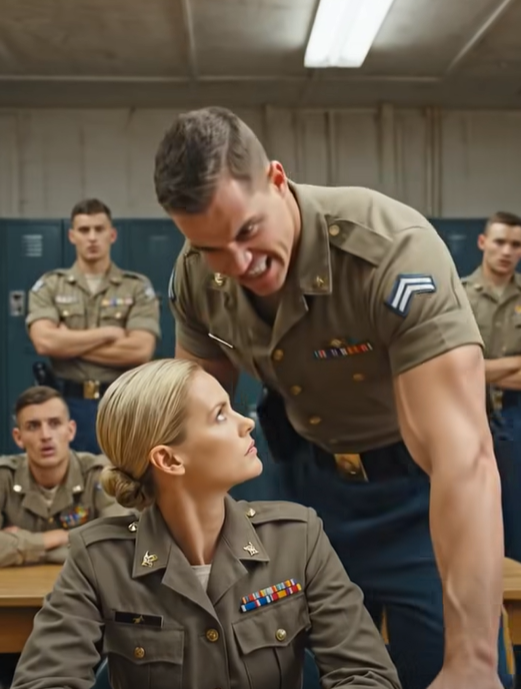
“Do You Know Who I Am?” He Pushed Her — Seconds Later, One ID Card Ended His Career
The dim lights of Rusty’s Bar flickered like dying stars just outside Camp Pendleton. It was a Friday night, the kind where Marines came to forget the sand and the screams they carried home from deployment. I had come here for the opposite reason — to disappear. My name is Commander Thalia Renwick. Highly decorated […]
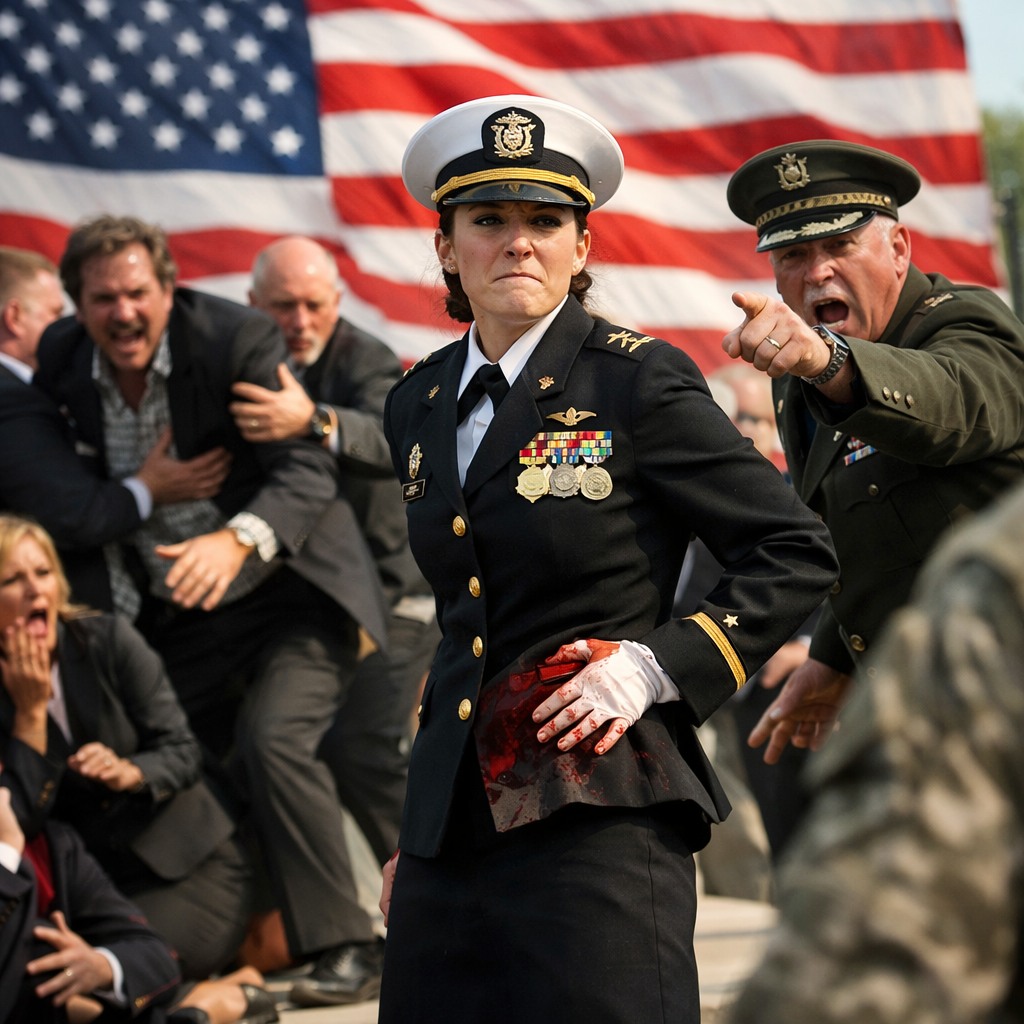
15 Years After My Dad Kicked Me Out, I Saw Him At My Sister’s Wedding. He Sneered: “If It Wasn’t For Pity, No One Would’ve Invited You.” I Just Smiled And Sipped My Wine. Then The Bride Took The Mic And Changed Everything.
The South Carolina sun was merciless that June afternoon, turning the outdoor wedding venue into a glittering oven. I stood near the back in my crisp Army dress uniform, the brass buttons and medals catching the light with every breath. At 34 years old, I had come home for my little sister’s wedding — the […]
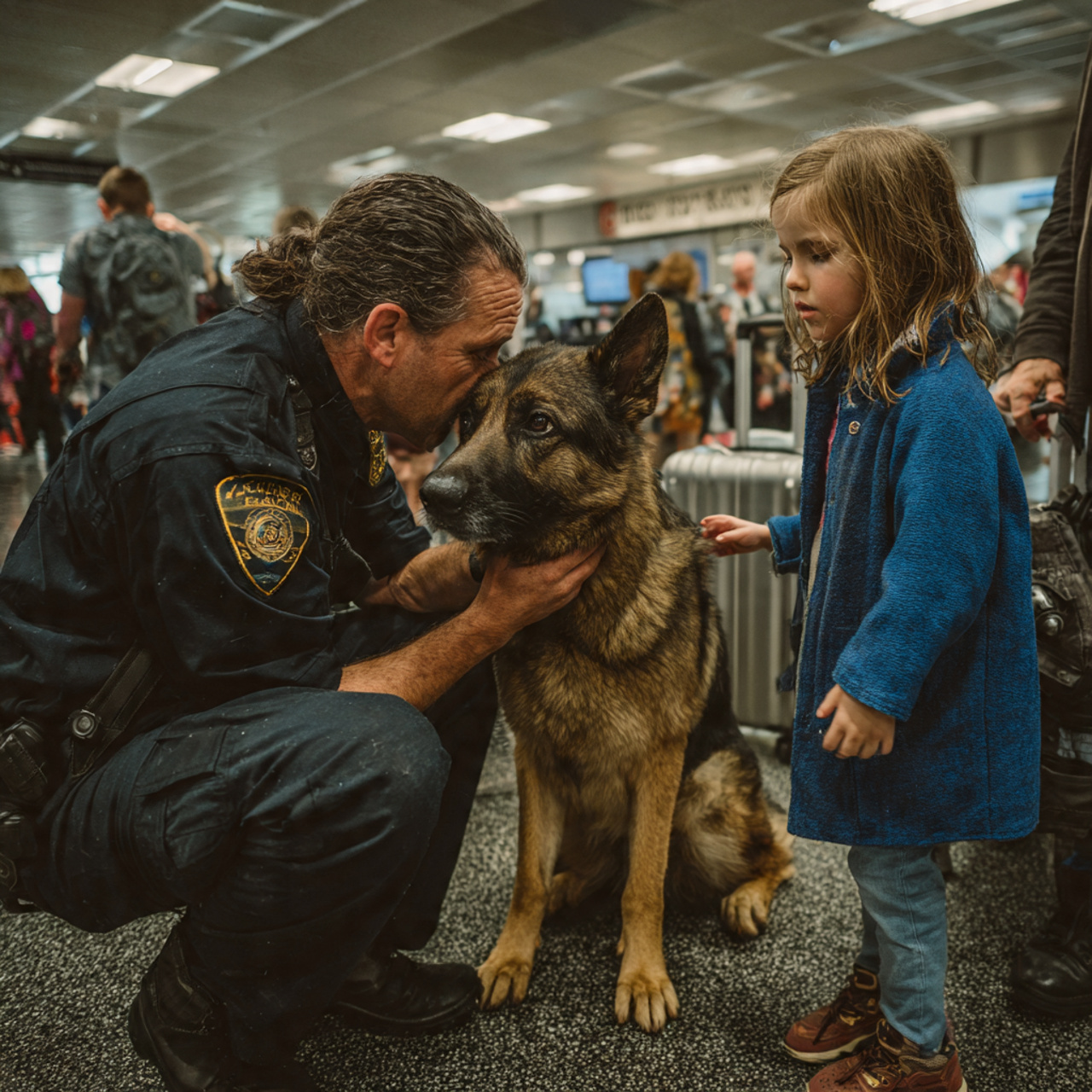
“A POLICE DOG FROZE IN THE AIRPORT. THEN A LITTLE GIRL TAPPED HIS HEAD. WHAT HAPPENED NEXT MADE EVERY TRAVELER STOP. HAVE YOU EVER WITNESSED A SILENT CRY FOR HELP?
The bustling international airport was a whirlwind of rolling suitcases, hurried announcements, and weary travelers rushing to their gates. Officer Liam Mercer patrolled the terminal with his loyal K9 partner, Rex — a highly trained German Shepherd known for his sharp instincts in detection and child safety operations. Everything seemed routine until Rex suddenly froze […]
End of content
No more pages to load