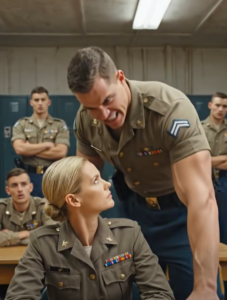
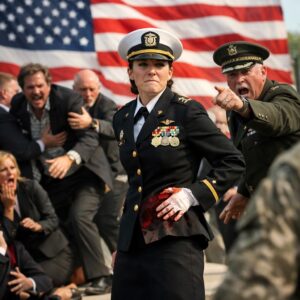
“Start with the toilets, new girl,” the colonel ordered, mocking her before the others. But when an admiral entered moments later and saluted her first, the entire room went still as everyone understood the ranks had just shifted…
The hallway outside Administrative Wing C at Atlantic Fleet Command Annex had the kind of artificial shine that came from decades of inspections. The floor smelled faintly of disinfectant and floor wax, and the overhead lights reflected off the tiles in a way that made the corridor look brighter than it actually felt. Sailors moved briskly between offices carrying folders and tablets, their steps echoing in practiced rhythm.
It was the sort of place where appearances mattered.
Uniforms were pressed. Shoes were polished. People spoke in short sentences and crisp “Yes, sir” replies.
But like many places where appearances mattered too much, what happened beneath the surface often went unexamined.
That was why Captain Douglas Whitaker enjoyed mornings like this.
He stood with his hands behind his back near the operations office doorway, surveying the corridor the way a landowner surveys property. Whitaker had built a reputation over twenty-seven years in uniform as a man who ran things “tight.” To some people, that meant disciplined. To others, it meant cruel.
Whitaker preferred the first interpretation.
But he rarely corrected the second.
And that morning he noticed something that gave him the perfect opportunity to remind everyone exactly who controlled this building.
A young officer stood near the far wall holding a sealed envelope.
She had arrived less than five minutes earlier.
No one recognized her.
Which meant she was perfect.
The New Arrival Her name was Commander Natalie Hart.
Although no one in the hallway knew that yet.
To them she was simply a young woman in a standard travel uniform with no ribbons displayed—just the quiet look of someone fresh off a transfer.
She carried a small duffel bag at her feet and a thick folder stamped RESTRICTED – COMMAND EYES ONLY.
Her expression was calm. Observant.
And oddly patient.
When Whitaker approached, he didn’t bother asking her name.
“Lost?” he said loudly enough for nearby officers to hear.
A few people turned their heads.
Natalie held the folder out politely.
“Reporting with sealed orders, sir.”
Whitaker didn’t even look at it.
Instead he glanced toward the restrooms down the hall, whose doors had been propped open for inspection cleaning.
The timing amused him.
“Orders can wait,” he said casually. “Inspection is in two hours.”
He pointed toward the restroom.
“And you’re going to make yourself useful.”
The hallway grew quieter.
Someone near the copier pretended to focus on paperwork.
Another officer leaned against a desk just to watch.
Whitaker smiled thinly.
“Grab a brush. I want those toilets shining before the Admiral arrives.”
The words hung in the air like a test.
Some people looked uncomfortable.
Others looked entertained.
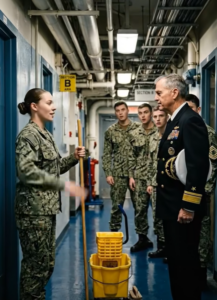
The hallway’s artificial brightness seemed to dim as Rear Admiral (Upper Half) Marcus Hale stepped through the double doors at the far end of Administrative Wing C. He was in service dress blues, gold sleeve stripes catching the light, his stride purposeful but unhurried. Behind him trailed his aide, a lieutenant commander clutching a briefcase, and two petty officers carrying briefing binders.
Captain Douglas Whitaker straightened instinctively. The corridor snapped to attention in waves—sailors freezing mid-step, officers squaring shoulders, hands rising in crisp salutes. Whitaker’s own hand came up sharp, the motion automatic after decades of practice.
But Admiral Hale did not return the salutes sweeping toward him.
His eyes—sharp, weathered from years on carrier bridges and Pentagon war rooms—locked immediately on the young commander standing near the restroom doors. Commander Natalie Hart. Still holding the sealed envelope. Still calm. Still patient.
Hale stopped three paces from her.
The hallway went still in a way that had nothing to do with protocol.
He raised his right hand in a perfect salute. Not the casual acknowledgment sometimes offered to juniors. This was full, deliberate, fingers aligned, palm facing out, held for the regulation two seconds.
Natalie returned it instantly—crisp, precise, eyes meeting his without flinching.
Only then did Hale drop his hand.
“Commander Hart,” he said, voice carrying clearly down the corridor. “Welcome to Atlantic Fleet Command. I’ve been expecting you.”
A ripple of confusion moved through the onlookers. Whitaker’s salute faltered halfway down. His mouth opened slightly, then closed.
Hale turned to face the assembled personnel. His gaze swept the hall like radar, lingering longest on Whitaker.
“At ease,” he said.
The room exhaled, but no one truly relaxed.
Hale addressed Whitaker directly. “Captain Whitaker. I understand you’ve been orienting our new arrival.”
Whitaker recovered quickly—too quickly. “Yes, sir. Just ensuring she understood the importance of readiness. Inspection standards—”
“Standards,” Hale repeated. He nodded once, as if agreeing. Then he reached into his briefcase and withdrew a single sheet of paper, still warm from the secure printer in his staff car. He handed it to his aide, who in turn passed it to Whitaker.
“Read it aloud, Captain. For the benefit of everyone present.”
Whitaker took the page. His eyes scanned the first line. Color drained from his face.
He cleared his throat. “From: Chief of Naval Operations. Subject: Immediate Assignment and Promotion. Effective this date, Commander Natalie Hart is promoted to the temporary grade of Rear Admiral (Lower Half) under the provisions of Title 10, U.S. Code, Section 601, for special assignment as Special Assistant to the Commander, U.S. Atlantic Fleet, with concurrent designation as Inspector General for Fleet Administrative and Operational Readiness. This promotion is in recognition of classified performance in forward-deployed intelligence operations and direct contribution to national security priorities.”
The hallway was silent enough to hear the hum of the fluorescent lights.
Whitaker’s hand trembled slightly as he lowered the paper.
Hale continued. “Admiral Hart arrives with sealed orders from SECNAV and CNO directing a no-notice, comprehensive review of administrative practices across Atlantic Fleet shore commands. Emphasis on leadership climate, hazing prevention, equal opportunity compliance, and misuse of authority in subordinate training or tasking.”
He turned back to Natalie. “Admiral, the command conference room is prepared. Your team from NCIS and the fleet IG office is already en route. Shall we begin?”
Natalie nodded once. “Yes, sir. But first—”
She turned to Whitaker.
“Captain,” she said quietly, “you gave me an order a few minutes ago. To clean the heads before inspection.”
Whitaker stood rigid. Sweat beaded at his hairline despite the air conditioning.
“I did, ma’am.”
She regarded him evenly. “Consider that order countermanded. And consider this: the next time you assign menial duties as a form of public humiliation, especially to someone you don’t recognize, you might want to check their orders first.”
She paused. “Or better yet—don’t do it at all.”
No one moved.
Hale gestured toward the conference room doors. “After you, Admiral.”
As Natalie walked past Whitaker, she paused just long enough for her voice to reach only him and the nearest officers.
“I didn’t come here to clean toilets, Captain. I came here to clean house.”
The words landed like depth charges.
Whitaker remained at attention as the admiral and his party moved down the corridor. The petty officers who had been watching from the sidelines now avoided his eyes. The lieutenant commander aide gave Whitaker a single, neutral glance before following.
Inside the conference room minutes later, Natalie stood at the head of the table while Hale took a seat to her right—a deliberate inversion of typical protocol that sent a clear signal to the staff filing in.
She opened the sealed envelope she had carried all morning. Inside were the classified findings from six months of covert observation: emails, witness statements, performance reports, and anonymous tip lines documenting a pattern of toxic leadership under Whitaker’s tenure. Favoritism. Retaliation against whistleblowers. Routine assignment of degrading tasks to new or junior personnel as “character building.”
She laid the documents out methodically.
“By the end of this week,” she announced, “every department head in this wing will sit for individual interviews. No exceptions. We will review every instance of non-standard tasking, every EO complaint filed in the last three years, and every fitness report that shows unexplained discrepancies.”
She looked up. “This is not a witch hunt. It is accountability. The Navy expects better. Atlantic Fleet will deliver better.”
Outside, word spread like fire through a carrier’s passageways. By lunch, the story had reached every deck: the “new girl” ordered to scrub toilets was actually a frocked rear admiral. Whitaker’s little power play had backfired spectacularly.
Whitaker was relieved of his duties that afternoon—temporarily, pending investigation. He was reassigned to administrative hold in a windowless office down the hall from the very restrooms he had pointed to earlier. No ceremony. No announcement. Just a quiet escort and a locked door.
Natalie—now Admiral Hart—spent the next three months turning Administrative Wing C inside out. She reinstated two officers who had been quietly forced out for reporting irregularities. She implemented mandatory leadership seminars focused on respect and dignity. She walked the halls herself, not to inspect toilets, but to talk to sailors—real conversations, no rank barrier.
When the official IG report was released, it praised the swift corrective actions and recommended Whitaker’s permanent reassignment to non-command billets. He retired six months later, quietly, with full benefits but no farewell ceremony.
Years afterward, long after Hart had moved on to higher flag billets, the story became legend in Norfolk corridors. Not as a tale of revenge, but as a reminder: appearances deceive. Authority isn’t loud or cruel. It’s quiet, patient, and earned.
And sometimes, the person you order to clean the head is the one who ends up cleaning up the entire command.
News
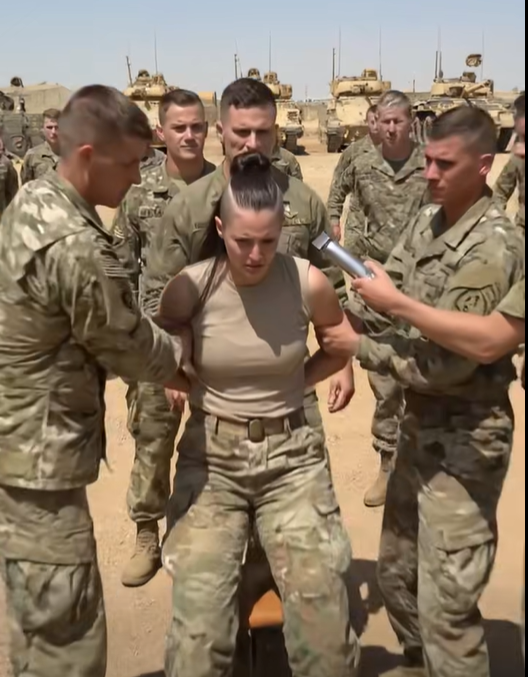
“Shave Her Head,” the Sergeant Ordered Coldly. “If Discipline Won’t Break Her, Maybe Humiliation Will.” But What They Didn’t Know Was That the Woman They Underestimated Would Bring Their Entire Base to Its Knees.
General Alexander Vance had heard the whispers for months: Fort Blackwood was rotting from within. Soldiers spoke in hushed tones of systematic humiliation disguised as “discipline,” falsified training records, missing supply funds that somehow vanished into private accounts, and a toxic command climate built on fear and intimidation. Every official inspection came back sparkling clean […]
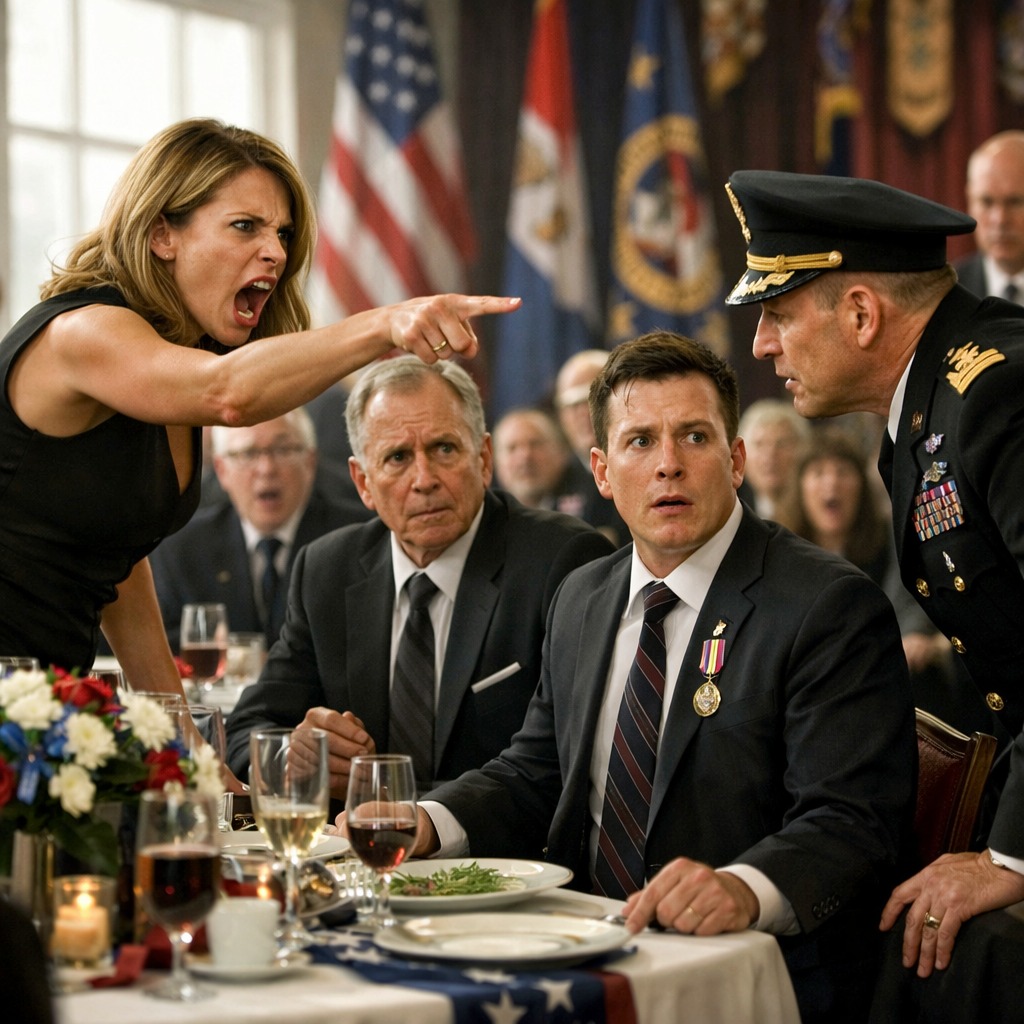
At A Veterans’ Dinner, The Colonel Leaned Toward My Brother And Asked One Simple Question: “Can You Tell Me How You Earned This Decoration, Son?” His Face Turned White. He Pointed At My Father And Said: “He Told Me It Belonged To Our Uncle.” The Uncle Never Existed.
The Ridgewood Armory smelled like every other veterans’ event I’d ever attended: floor wax, overcooked chicken, old coffee, and the faint metallic tang of too many American flags. Fluorescent lights buzzed overhead, casting a harsh glow on rows of folding tables and men in ill-fitting blazers trying to look like they still belonged in uniform. […]
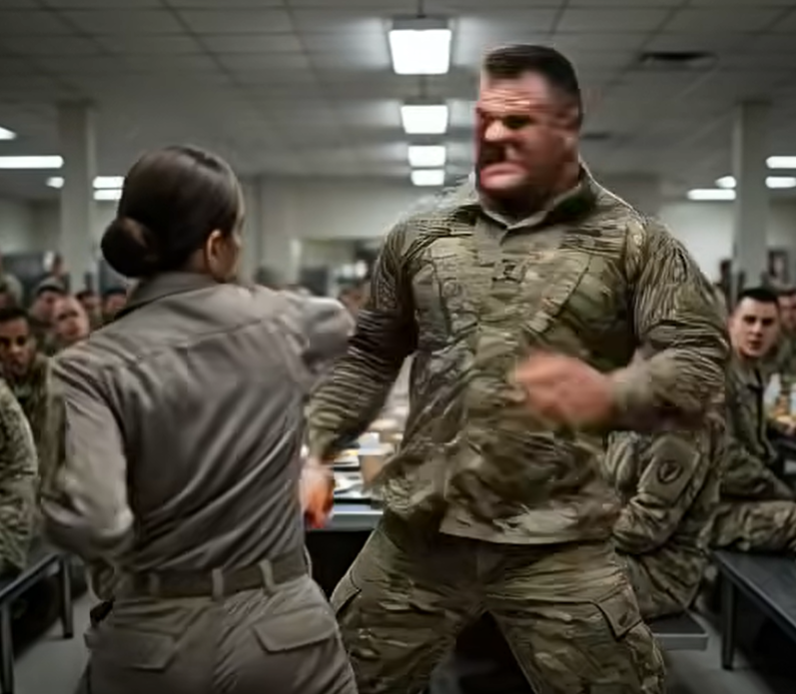
“Die, B*tch,” He Spat, Swinging a Massive Fist in the Mess Hall. He Thought I Was an Easy Target — He Had No Idea He Just Attacked a Classified SEAL Shadow Operative.
I was running on fumes. Seventy-two hours of off-the-books reconnaissance in the frozen Alaskan wilderness had left every muscle screaming. My joints ached from crawling through ice-crusted snow, my eyes burned from staring through night-vision gear, and the only thing keeping me upright was the promise of a hot meal and twelve hours of blackout […]
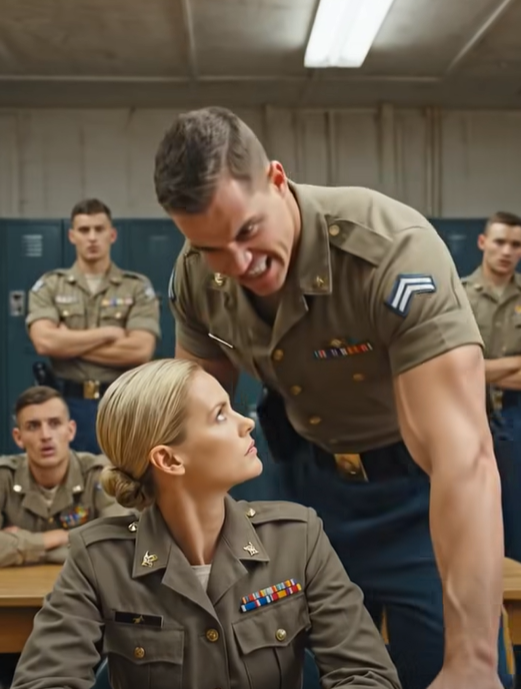
“Do You Know Who I Am?” He Pushed Her — Seconds Later, One ID Card Ended His Career
The dim lights of Rusty’s Bar flickered like dying stars just outside Camp Pendleton. It was a Friday night, the kind where Marines came to forget the sand and the screams they carried home from deployment. I had come here for the opposite reason — to disappear. My name is Commander Thalia Renwick. Highly decorated […]
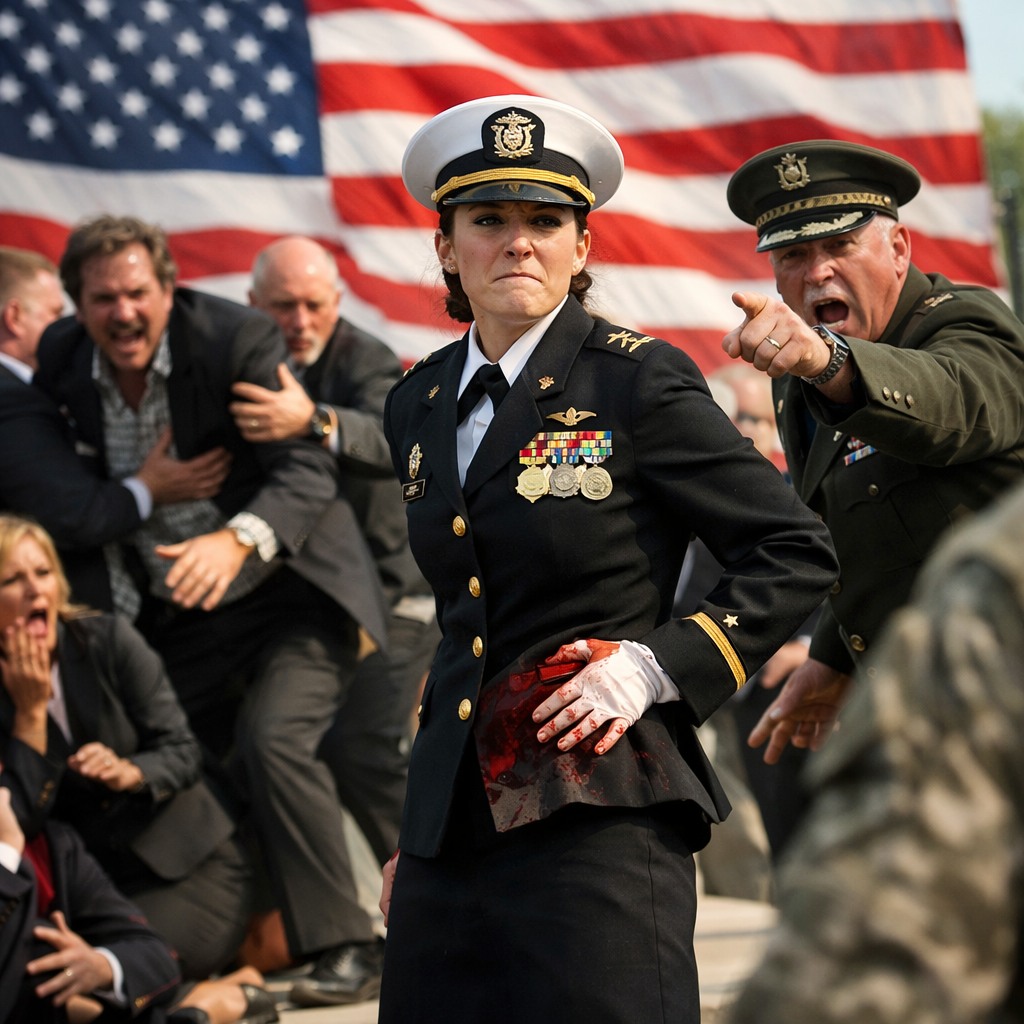
15 Years After My Dad Kicked Me Out, I Saw Him At My Sister’s Wedding. He Sneered: “If It Wasn’t For Pity, No One Would’ve Invited You.” I Just Smiled And Sipped My Wine. Then The Bride Took The Mic And Changed Everything.
The South Carolina sun was merciless that June afternoon, turning the outdoor wedding venue into a glittering oven. I stood near the back in my crisp Army dress uniform, the brass buttons and medals catching the light with every breath. At 34 years old, I had come home for my little sister’s wedding — the […]
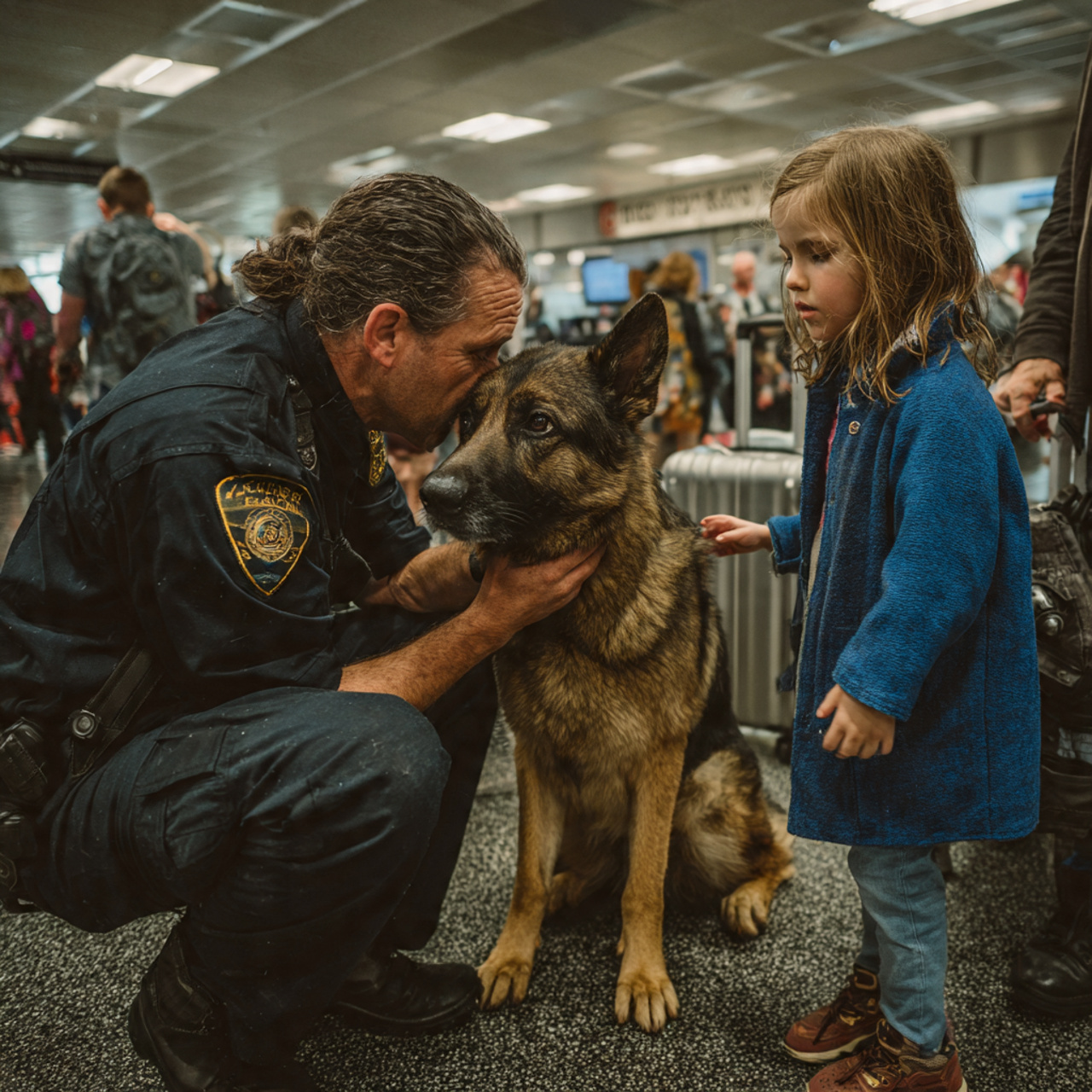
“A POLICE DOG FROZE IN THE AIRPORT. THEN A LITTLE GIRL TAPPED HIS HEAD. WHAT HAPPENED NEXT MADE EVERY TRAVELER STOP. HAVE YOU EVER WITNESSED A SILENT CRY FOR HELP?
The bustling international airport was a whirlwind of rolling suitcases, hurried announcements, and weary travelers rushing to their gates. Officer Liam Mercer patrolled the terminal with his loyal K9 partner, Rex — a highly trained German Shepherd known for his sharp instincts in detection and child safety operations. Everything seemed routine until Rex suddenly froze […]
End of content
No more pages to load