Echoes of Horror: Dog-Walker’s Grisly Find Unearths Two Young Lives Snuffed Out in Cleveland’s Shadowed Park
Twilight descended on Cleveland’s East Side like a shroud, casting long shadows over the overgrown field near Saranac Playground. It was March 2, 2026, a chilly Monday evening around 6 p.m., when Phillip Donaldson embarked on what should have been a routine stroll with his loyal dog. The air carried the faint scent of damp earth and distant traffic from East 162nd Street, a neighborhood in South Collinwood where families hustled through daily life amid the grit of urban decay. Donaldson’s dog, perhaps a curious mixed breed with an unerring nose for trouble, paused at a peculiar mound of dirt near the playground’s edge. The animal sniffed insistently, refusing to budge. Annoyed at first, Donaldson doubled back, his boots crunching on the uneven ground. What he uncovered would shatter the quiet of that ordinary walk and plunge the city into a vortex of grief, outrage, and unanswered questions.
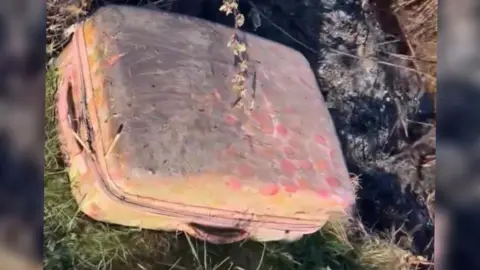
Tugging at the partially buried object, Donaldson realized it was a suitcase—worn, nondescript, half-submerged in the soil as if hastily concealed. Curiosity turned to horror as he pried it open. Inside, staring back at him with lifeless eyes, was a human head. The shock hit like a gut punch; he later recounted to local reporters, his voice trembling, “It was like a pile of dirt, and she stopped to sniff, and I usually just walk and she catches up with me, and she was taking too long. So I went back and looked, and it was a suitcase that was half-buried, and I pulled it up and looked in it, and it was a head. Somebody’s head in it.” Panic surged through him. He slammed the lid shut, fumbled for his phone, and dialed 911, his words tumbling out in a frantic blur. Little did he know, this gruesome discovery was just the tip of a nightmare iceberg—one that would reveal the bodies of two young girls, discarded like forgotten luggage in the heart of their own community.

Cleveland police swarmed the scene within minutes, their cruisers’ flashing lights piercing the gathering darkness. The area, a vacant lot adjacent to Ginn Academy—a school for at-risk youth—and the Saranac Playground, was cordoned off with yellow tape that fluttered ominously in the wind. Officers, clad in protective gear, carefully excavated the site. Nearby, another suitcase emerged from a shallow grave, its contents equally horrifying. Inside these makeshift tombs were the intact remains of two juvenile Black females, their young lives brutally cut short. Authorities confirmed the bodies were not dismembered, a small detail that offered no solace amid the brutality. The girls, estimated to be between 8-and-a-half and 13 years old for one, and 10-and-a-half to 14 for the other, showed no immediate signs of how they met their end. But the circumstances screamed homicide: dumped in suitcases, buried in haste, left to the elements in a public space where children played by day.
By the next morning, March 3, the story had exploded across local media, sending shockwaves through Cleveland and beyond. At a tense press conference held at police headquarters, Chief Dorothy Todd—sometimes referred to as Annie in hurried reports—faced a barrage of microphones, her expression a mask of grim determination. “At this time, we don’t know how long the juveniles had been at this location. It was some time,” she stated, her voice steady but laced with the weight of the tragedy. Todd emphasized that the victims were suspected homicide cases, with the Cuyahoga County Medical Examiner’s Office tasked with determining the cause and time of death. Autopsies were underway, probing for clues like toxicology reports or trauma evidence that might unlock the mystery. Disturbingly, no missing persons reports in the area matched the descriptions, raising chilling questions: How could two girls vanish without a trace? Were they locals, or had they been transported from afar? And most hauntingly, was there a predator lurking in the shadows, preying on the vulnerable?
The neighborhood, already scarred by Cleveland’s persistent struggles with poverty, violence, and underfunded services, reeled from the news. South Collinwood, a predominantly Black community on the city’s East Side, has long grappled with high crime rates—shootings, drug trafficking, and domestic disputes that often spill into the streets. But this? This was a new level of depravity. Residents gathered in hushed clusters outside corner stores and on stoops, sharing whispers of fear and fury. “It’s like something out of a horror movie,” one local mother told WOIO reporters, clutching her own child close. “These girls could have been playing here yesterday. Who does this to kids?” The proximity to Ginn Academy amplified the terror; students and staff were advised to stay vigilant, with counselors on hand to address the trauma rippling through classrooms. Parents double-checked locks, kept their children indoors after dark, and scanned the news for updates, their trust in the community’s safety shattered.
As investigators pieced together the puzzle, details trickled out, painting a picture of meticulous evil. The suitcases were generic—perhaps purchased from a big-box store or scavenged—offering few forensic leads at first glance. But experts know that even the mundane can yield secrets: fingerprints, DNA traces, fibers, or digital footprints from surveillance cameras nearby. Cleveland’s homicide unit, bolstered by FBI resources in child-related cases, canvassed the area door-to-door, interviewing witnesses and reviewing footage from traffic cams along East 162nd Street. “We’re leaving no stone unturned,” a department spokesperson assured the public, though the lack of immediate suspects fueled speculation. Online forums and social media erupted with theories: Was this linked to human trafficking, as one X user suggested in a post that garnered quick attention? “Teen Girls found in suitcases partially buried in Cleveland Park. Human Trafficking case?” queried @1Washeduplocal, linking to a WKYC article and sparking debates about the city’s underbelly.
Indeed, Cleveland’s location along major interstates like I-90 makes it a hub for illicit activities, including trafficking networks that exploit minors. According to the National Human Trafficking Hotline, Ohio ranks high in reported cases, with over 1,000 signals in 2025 alone. Could these girls have been victims of such a ring, abducted, abused, and discarded when they became liabilities? Or was it a domestic horror—perhaps a family member or guardian covering up abuse? The absence of dismemberment suggested the killer wanted to dispose of the bodies quickly, without the mess of further violation, but the suitcases implied premeditation, a cold calculation to conceal identities. Forensic psychologists weighed in on cable news segments, noting that such methods often point to perpetrators familiar with the victims, seeking to dehumanize them as mere “baggage.”
Public outrage swelled like a tidal wave. On X, posts flooded timelines with hashtags like #JusticeForClevelandGirls and #StopTheViolence. User @willwinforever lamented a perceived media blackout: “Yet anotha disgustin story dat nat’l lamestream media will def BLAKout! Bodies of 2 yung blak girls found stuffed inside suitcases n Cleveland park.” Another, @CarolynWRockey, shared the NY Post article with a poignant excerpt, urging awareness. Community leaders organized vigils at Saranac Playground, where candles flickered against the night sky, illuminating faces etched with sorrow. “These were somebody’s daughters, sisters, maybe even friends from school,” said James Buchanan, a local activist interviewed by News 5 Cleveland. “The fact that we’re talking about two young girls found in this manner, it is sparking a different level of anger from the community because of how heinous the crimes were.” Protests outside city hall demanded more resources for missing children cases, highlighting disparities in attention given to Black victims compared to others—a painful echo of national conversations around “missing white woman syndrome.”
To understand the depth of this tragedy, one must contextualize it within Cleveland’s broader epidemic of violence against youth. The city, once an industrial powerhouse, now battles rust-belt decline, with poverty rates hovering around 30% and youth homicide spiking in recent years. In 2025, Cleveland reported over 150 murders, many involving guns and gang disputes, but child victims add a layer of unspeakable cruelty. Similar cases haunt the archives: In 2019, the body of 5-year-old Alianna DeFreeze was found in an abandoned house after she vanished on her way to school, her killer later convicted. Or the 2022 discovery of a teenager’s remains in a dumpster, linked to a domestic dispute. These patterns suggest systemic failures—understaffed child protective services, overwhelmed police departments, and communities fractured by economic despair. Experts like Dr. Elena Vasquez, a criminologist at Case Western Reserve University, point to root causes: “When families are stressed by poverty, addiction, or mental health issues, children become collateral damage. But dumping bodies in a park? That’s a statement of utter disregard for human life.”
As the investigation intensified on March 4—the day after the press conference—tips poured into hotlines. Authorities released composite sketches based on the remains, hoping facial reconstructions would jog memories. Dental records and DNA samples were rushed to national databases, cross-referenced with missing children from neighboring states like Pennsylvania or Michigan. The girls’ clothing, if any was preserved, could provide clues—brands, sizes, or wear patterns indicating their backgrounds. Meanwhile, the medical examiner’s report loomed large: Would it reveal strangulation, poisoning, or something more sinister? Time of death estimates could narrow the window, perhaps aligning with recent abductions or unusual activity in the area.
The emotional toll extended beyond the immediate community. Nationwide, parents hugged their children tighter, educators incorporated safety talks into lessons, and advocates pushed for legislative changes. Ohio’s Amber Alert system, while effective, faces criticism for delays in non-custodial cases; this incident reignited calls for expansion. Social services agencies braced for increased reports, as the publicity often uncovers hidden abuses. “This isn’t just Cleveland’s problem,” noted a spokesperson for the National Center for Missing & Exploited Children. “Every year, thousands of kids go missing, and many never make headlines until it’s too late.”
Phillip Donaldson, the unwitting hero of this macabre tale, became a reluctant media figure. In interviews, he expressed haunting regret: “I wish I hadn’t looked, but I’m glad I did—for their sake.” His dog, now a symbol of serendipitous intervention, received treats from grateful neighbors. Yet, the discovery’s trauma lingered; Donaldson admitted to nightmares, the image of that head seared into his mind.
As days turned to weeks without arrests, the case risked fading into cold file oblivion, another statistic in America’s underbelly of unsolved crimes. But the girls—nameless for now—deserved better. Their story, a stark reminder of vulnerability in plain sight, galvanized a movement. Billboards sprang up along highways: “Know Something? Say Something.” Rewards were offered, anonymous tip lines buzzed. In vigils, poems were read, songs sung, tears shed for two souls robbed of futures—dance recitals, school graduations, first loves.
What drove someone to this abyss? Jealousy, rage, desperation? The suitcases, symbols of transience, mocked the permanence of loss. Cleveland, resilient yet weary, vowed not to forget. Justice, elusive but pursued, hung in the balance. For in the quiet of Saranac Playground, where laughter once echoed, silence now whispered a demand: Find the monster. Bring peace to the innocents.
This horror unfolded not in isolation but as a clarion call. Urban parks, meant for joy, became crime scenes too often. Statistics from the FBI’s Uniform Crime Report paint a grim picture: Child homicides rose 15% nationally in the post-pandemic era, fueled by isolation and stress. In Black communities, the disparity is stark—higher victimization rates, lower resolution rates. Activists like those from Black Lives Matter Cleveland linked the case to broader injustices, demanding equitable investigations.
Speculation swirled: Were the girls sisters, their bond severed by violence? Or strangers united in tragedy? The shallow graves suggested a killer unfamiliar with deep concealment, perhaps panicked after the act. Forensic entomology—studying insects on the remains—could pinpoint exposure time, while soil analysis might trace origins.
Community responses varied: Some volunteered for searches, others donated to victim funds. Schools held assemblies on stranger danger, emphasizing apps like Life360 for tracking. Yet, fear bred division—rumors of gangs or outsiders stoked xenophobia.
On a national scale, the story drew parallels to infamous cases like the 1996 JonBenét Ramsey mystery or the 2018 Turpin family horrors, where children suffered in secrecy. Media coverage, while intense, faced accusations of sensationalism, as seen in X posts decrying “lamestream” neglect.
As March wore on, hope flickered. A breakthrough—a DNA match, a witness—could crack it wide open. Until then, the girls remained enigmas, their stories untold, their killer free.
In the end, this is more than a crime; it’s a mirror to society’s fractures. Two suitcases, two lives, infinite questions. Cleveland waits, watches, and weeps—demanding answers before darkness claims another.
News
Mum Went to Wake Her 12-Year-Old for School… Instead Found Amelia Dead After Relentless Snapchat Torment 😭 Last Night She Was Happy & Laughing – The Devastating Details Inside
A cheerful 12-year-old girl with a smile that warmed every room spent her final evening wrapped in the simple joys of family life, laughing freely while sharing fish and chips at her grandparents’ house. No one could have predicted that the next morning would bring the kind of silence no parent should ever endure. On […]

👀 American Idol Judges Stunned by Braden Rumfelt’s Voice After Two Major Surgeries Destroyed His Baseball Career — His Comeback Story Is Unbelievable! 😱
The spotlights in the American Idol audition room pulsed with that familiar electric hum as 22-year-old Braden Rumfelt stepped forward, guitar slung over his shoulder, his twin brother Kellen right beside him with fingers poised on the strings. Murphy, North Carolina, felt a world away in that moment—the small-town life of substitute teaching, quiet family […]

😲 She Wrote “String Cheese” While Battling Postpartum Depression… Now Hannah Harper Is Stealing American Idol! Her Incredible Journey Will Inspire You ❤️
The Hawaiian stage lights bathed the Aulani Resort in a golden glow as 25-year-old Hannah Harper, a stay-at-home mom from the tiny town of Bunker, Missouri, gripped the microphone with the same quiet determination she once used to wrangle three rambunctious boys through a long day of laundry and snacks. Her homemade patchwork dress shimmered […]

😱 American Idol Top 20 Poll SHOCK: Hannah Harper & Keyla Richardson Dominate… But Who’s Going HOME Next? 😭 Who’s in Danger?
Hawaii’s sun-drenched shores at Disney’s Aulani Resort became the unlikely battlefield where American Idol Season 24’s Top 20 delivered heart-stopping performances that have left fans divided, judges stunned, and Gold Derby readers casting their clearest verdict yet on who might not survive America’s vote. With the first live results episode looming on March 30, the […]

😱💔 Kimmie Standing On The Rooftop With That USB Drive Has Fans Terrified — Is She About To Destroy The Entire Bellarie Empire? 👀
The first explosive trailer for Beauty in Black Season 2 Part 2 is here — and everything shifts fast. The new footage shows Kimmie stepping fully into her power with zero hesitation, but one bold move has fans in total shock. Is she protecting herself… or setting something much bigger in motion? The stakes feel […]

💥 “Is The Baby Okay?” — Virgin River Season 7 Finale Left One Devastating Clue About Mel & Jack’s Child That Changes Everything 😭
Netflix just dropped the news everyone has been waiting for: Virgin River is officially returning for Season 7 — and fans are already bracing for another emotional chapter. The release date and exact drop time are now confirmed, meaning the next wave of romance, heartbreak, and small-town secrets is closer than expected. But one storyline […]
End of content
No more pages to load