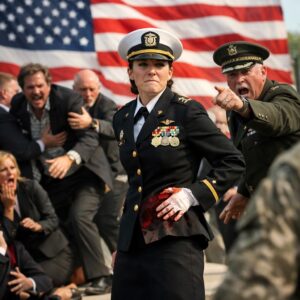
My father didn’t break me on a battlefield.
He did it under crystal chandeliers, with a microphone in his hand and a room full of smiling faces ready to laugh at whatever he decided was funny.
The reception was one of those carefully curated affairs where everything looked soft and expensive. White linens so bright they almost glowed. Roses stacked in tall glass vases like the air itself had been dressed for the occasion. A string band tucked into a corner, playing something romantic enough to make strangers believe in love again. The kind of night my sister, Casey, had dreamed about since she was ten and used to braid yarn into her dolls’ hair like it was a bridal veil.
Casey looked perfect. Not perfect in a magazine way, but perfect in the way she smiled at Dylan like the whole world was finally safe. She wore satin and calm, the kind of calm you can only wear when you trust the person standing next to you.
Dylan Reeves stood beside her in dress uniform, tall and steady, his posture so precise it looked effortless. People whispered about him like he was a myth that had walked into the room and learned how to hold a wine glass.
Navy SEAL.
Those words followed him like perfume all night. Guests leaned in close to ask where he’d deployed, what it was like, how much of it was like the movies. Dylan answered politely, with the practiced restraint of someone who had learned that the truth is rarely entertaining and never owed to strangers.
I stayed near the edge of the crowd because edges were familiar. In the military, edges keep you useful. On the edge of a map, you keep the picture clear. On the edge of a crisis, you keep your voice steady. On the edge of a family gathering, you keep yourself small enough not to get stepped on.
I was in a navy-blue dress because Casey asked me to wear something “soft,” and I loved her enough to try. My hair was pinned back, my makeup done by a friend who insisted I deserved to look like I belonged in photos. I held a water glass between my palms like it was a grounding tool.
My father, Richard Wells, moved through the room like he owned it. He wasn’t loud by accident. He was loud like a skilled musician is loud, because he knew exactly how to control a crowd.
He didn’t look like a man who’d ever struggled. He looked like a man who had always been comfortable telling people what the story was, then watching them nod like it was the truth. His suit was tailored, his smile bright, his handshake firm. In photos, he could pass for the kind of dad people wrote Father’s Day cards about.
Most people didn’t know how sharp his voice could get when there weren’t witnesses.
Or maybe they knew, but they had decided it wasn’t their business.
My father never raised a hand to hurt me. That would’ve been too obvious. Too easy to call wrong. He used humor instead, the kind of humor that sounded harmless if you weren’t the target. Little comments. Tiny corrections. Jokes that came wrapped in charm so no one would notice the sting.
Growing up on the Wells Ranch, I learned early that attention was dangerous. If my father noticed you, it meant you were about to become a lesson. My sister had learned how to flatter his ego. I learned how to disappear.
When I told him I’d enlisted, he laughed like I’d announced I was joining a circus.
“Dakota, honey,” he’d said, leaning back on the porch swing with his coffee. “You’re not built for that. You’ll be miserable. Why don’t you do something safer?”
Safer was always his favorite word. Safe. Small. Quiet. Nearby. Useful.
I went anyway.
I became the thing he didn’t know how to talk about. An Air Force officer who worked with radios and coordination and decisions that didn’t look heroic on camera, but still decided whether people came home.
My callsign, Echo-7, came from the job I did: making myself a steady voice when everything else was noise. My father liked to use it as a joke, like it was a nickname he’d invented.
“Echo-7,” he’d say at family dinners, grinning. “Always talking. Always on the radio. Like she’s a DJ for the government.”
People laughed because he was charming and I was trained to smile.
Tonight was supposed to be different. Tonight was Casey’s night. I told myself I only had to survive a few hours. Smile. Nod. Raise a glass. Leave early.
Then my father took the microphone.
He stood at the center of the dance floor, lights catching the silver in his hair, smile wide enough to fill the room.
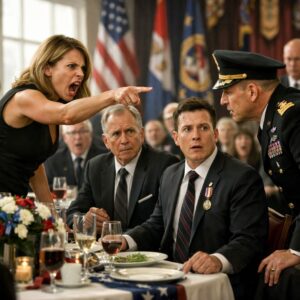
“Ladies and gentlemen,” he began, voice smooth as bourbon, “I want to thank everyone for coming to celebrate my beautiful daughter Casey and her new husband, Dylan. A Navy SEAL—can you believe it? We’re honored.”
Polite applause.
He turned slightly, eyes scanning the crowd until they landed on me.
“And of course, we can’t forget my other daughter, Dakota. Echo-7 herself.” He chuckled, the sound practiced and light. “She’s just another vet looking for pity, right? Always has to make everything about her service. But tonight’s about Casey, so let’s keep the spotlight where it belongs.”
The laughter came fast—reflexive, comfortable. A few people glanced at me, then away, embarrassed but not enough to stop smiling.
I felt the old heat rise in my chest, the familiar burn of being reduced to a punchline. I kept my face neutral. Years of training had taught me how to look like nothing hurt.
Dylan, standing beside Casey, went still.
His head turned slowly. His eyes found mine across the room.
He froze.
The microphone slipped from my father’s hand.
It hit the floor with a dull thud, feedback screeching through the speakers.
Dylan’s face had changed. The polite, newlywed smile was gone. In its place was something raw—shock, recognition, shame.
He stepped forward, voice low but carrying in the sudden quiet.
“Sir…”
My father blinked, confused. “What’s wrong, son?”
Dylan looked at me again, then back at my father.
“This woman saved my life in Helmand.”
The room went silent.
Not the polite silence of a toast. The kind of silence that happens when oxygen leaves a space.
Dylan kept going, voice steady now, like he was reciting something he’d carried for years.
“August 14, 2018. Firebase Restrepo. Ambush at 0300. My platoon was pinned down on the ridge. Air support was twenty minutes out. Radio went dead. We were bleeding out. Then we heard her voice—Echo-7. Clear. Calm. No panic. She rerouted a Reaper drone, called in coordinates I didn’t even know how to give, talked us through the exfil while taking indirect fire herself. She stayed on the line until the last bird was wheels-up.”
He looked straight at me.
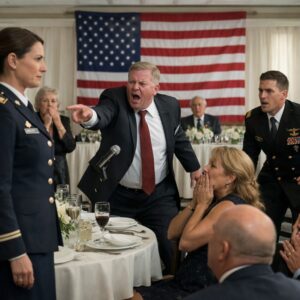
“I never knew her name. Just the callsign. Echo-7. But I heard her breathing. I heard her say, ‘You’re coming home, boys. Stay with me.’”
He turned back to my father.
“That’s who you’re calling a pity case. That’s who you just humiliated in front of your own daughter’s wedding.”
My father’s face drained of color. The microphone lay forgotten on the floor.
Casey stepped forward, eyes wide, hand covering her mouth.
“Dakota?” she whispered.
I didn’t answer. I couldn’t. The room was spinning.
Dylan walked toward me. Not fast. Not dramatic. Just steady.
When he reached me he stopped, came to attention, and rendered a perfect salute.
“Ma’am,” he said quietly. “Thank you. Again.”
Then he turned to the crowd.
“This woman isn’t looking for pity. She’s the reason some of us are still breathing. If anyone in this room wants to laugh at her service, they can laugh at me too.”
Silence held for another heartbeat.
Then Casey moved. She crossed the floor in three quick steps and wrapped her arms around me so tightly I felt her heartbeat against mine.
“I’m sorry,” she whispered. “I didn’t know.”
I hugged her back. For the first time in years, I didn’t feel small.
My father stood frozen, microphone at his feet, face gray.
No one laughed now.
The string quartet had stopped playing. The guests stood motionless, caught between shock and sudden understanding.
Dylan looked at me one more time.
“You ever need anything,” he said, “you call me. Day or night.”
I nodded once.
He turned, offered Casey his arm, and they walked back toward the head table together.
I stayed where I was.
The room slowly exhaled. Conversations restarted—quiet, hesitant. Some people looked at me differently. Some looked away, ashamed.
My father didn’t move.
Eventually Harold—my stepfather—walked over to him, put a hand on his shoulder, and guided him toward the side door without a word.
I watched them go.
Then I looked down at my dress—still navy blue, still soft, still mine.
I straightened my shoulders.
Picked up my glass.
Took a slow sip of water.
And for the first time in my life, I didn’t feel like I had to disappear.
I felt like I belonged exactly where I stood.
Because sometimes the truth doesn’t need a microphone.
It just needs to be spoken once—loud enough for everyone to hear.
And loud enough for the people who tried to silence you to finally understand they never really could.
News
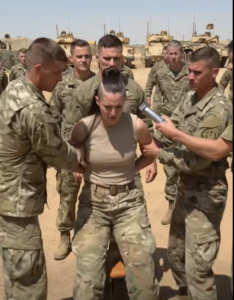
“Shave Her Head,” the Sergeant Ordered Coldly. “If Discipline Won’t Break Her, Maybe Humiliation Will.” But What They Didn’t Know Was That the Woman They Underestimated Would Bring Their Entire Base to Its Knees.
General Alexander Vance had heard the whispers for months: Fort Blackwood was rotting from within. Soldiers spoke in hushed tones of systematic humiliation disguised as “discipline,” falsified training records, missing supply funds that somehow vanished into private accounts, and a toxic command climate built on fear and intimidation. Every official inspection came back sparkling clean […]
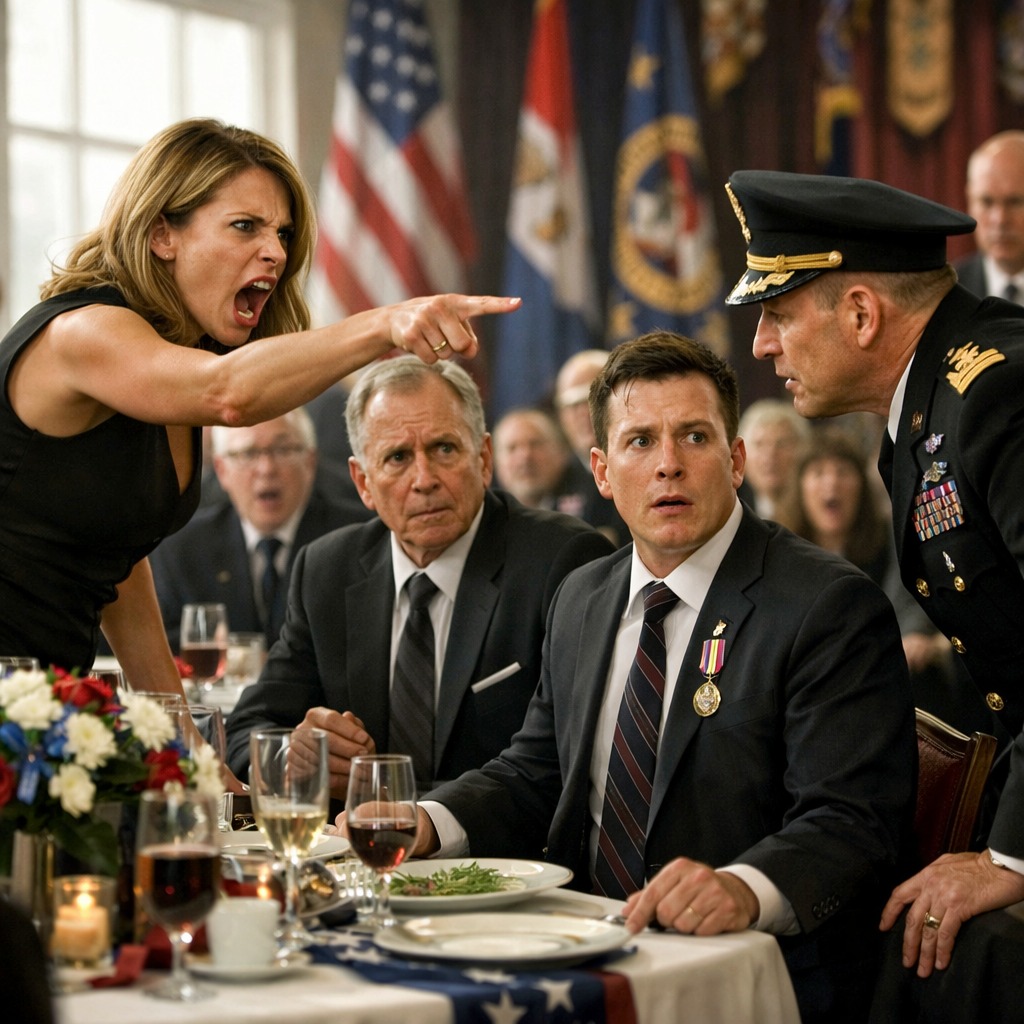
At A Veterans’ Dinner, The Colonel Leaned Toward My Brother And Asked One Simple Question: “Can You Tell Me How You Earned This Decoration, Son?” His Face Turned White. He Pointed At My Father And Said: “He Told Me It Belonged To Our Uncle.” The Uncle Never Existed.
The Ridgewood Armory smelled like every other veterans’ event I’d ever attended: floor wax, overcooked chicken, old coffee, and the faint metallic tang of too many American flags. Fluorescent lights buzzed overhead, casting a harsh glow on rows of folding tables and men in ill-fitting blazers trying to look like they still belonged in uniform. […]
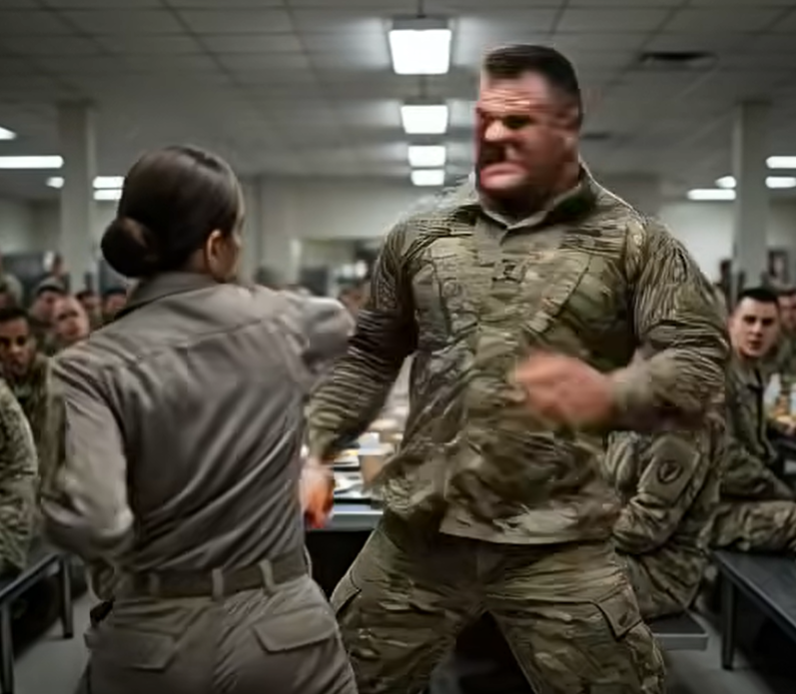
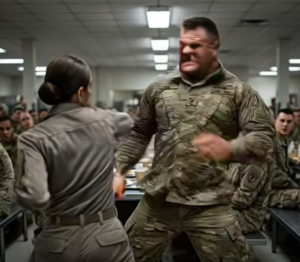
“Die, B*tch,” He Spat, Swinging a Massive Fist in the Mess Hall. He Thought I Was an Easy Target — He Had No Idea He Just Attacked a Classified SEAL Shadow Operative.
I was running on fumes. Seventy-two hours of off-the-books reconnaissance in the frozen Alaskan wilderness had left every muscle screaming. My joints ached from crawling through ice-crusted snow, my eyes burned from staring through night-vision gear, and the only thing keeping me upright was the promise of a hot meal and twelve hours of blackout […]
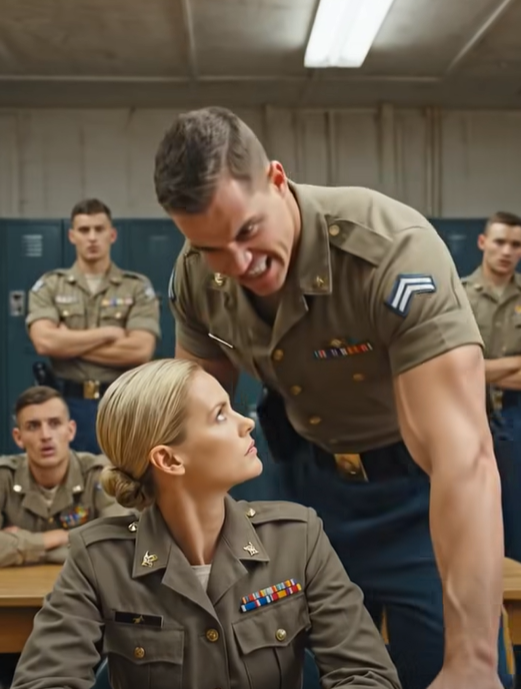
“Do You Know Who I Am?” He Pushed Her — Seconds Later, One ID Card Ended His Career
The dim lights of Rusty’s Bar flickered like dying stars just outside Camp Pendleton. It was a Friday night, the kind where Marines came to forget the sand and the screams they carried home from deployment. I had come here for the opposite reason — to disappear. My name is Commander Thalia Renwick. Highly decorated […]
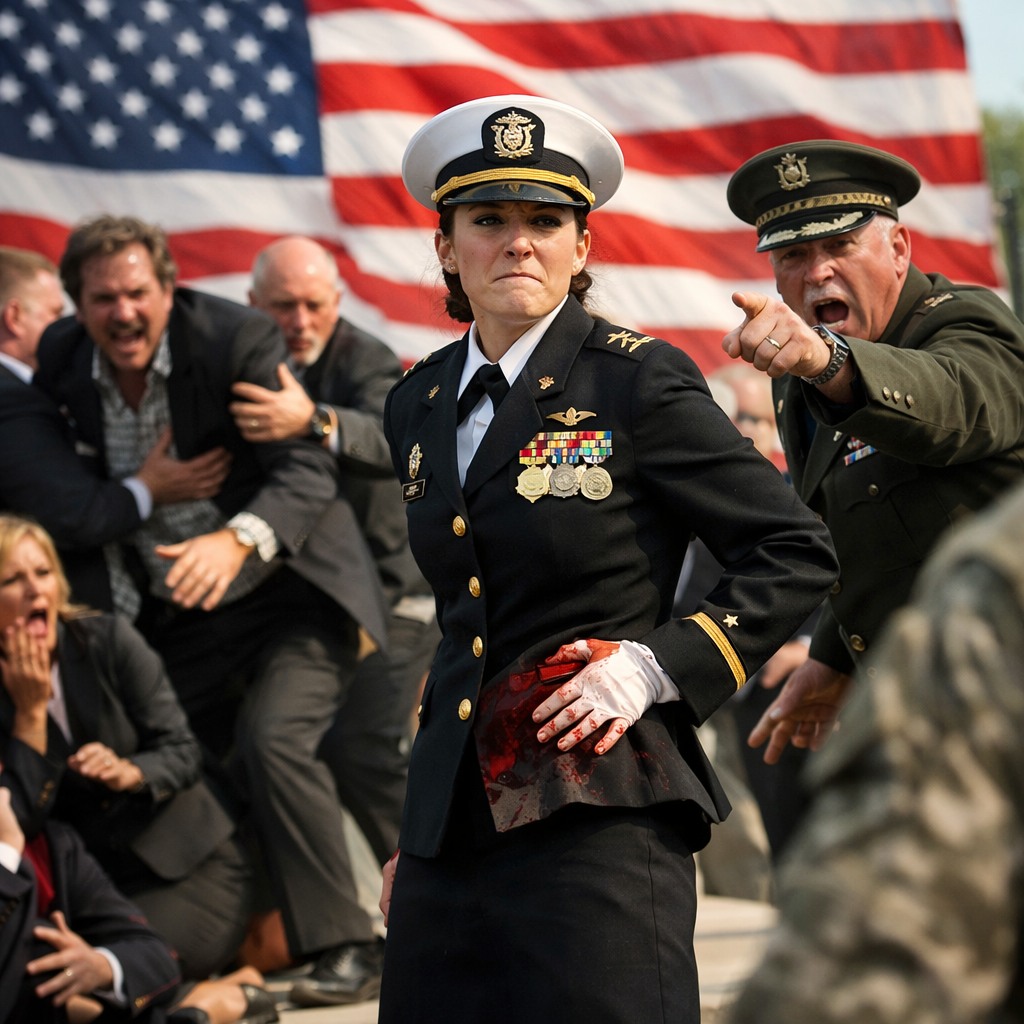
15 Years After My Dad Kicked Me Out, I Saw Him At My Sister’s Wedding. He Sneered: “If It Wasn’t For Pity, No One Would’ve Invited You.” I Just Smiled And Sipped My Wine. Then The Bride Took The Mic And Changed Everything.
The South Carolina sun was merciless that June afternoon, turning the outdoor wedding venue into a glittering oven. I stood near the back in my crisp Army dress uniform, the brass buttons and medals catching the light with every breath. At 34 years old, I had come home for my little sister’s wedding — the […]
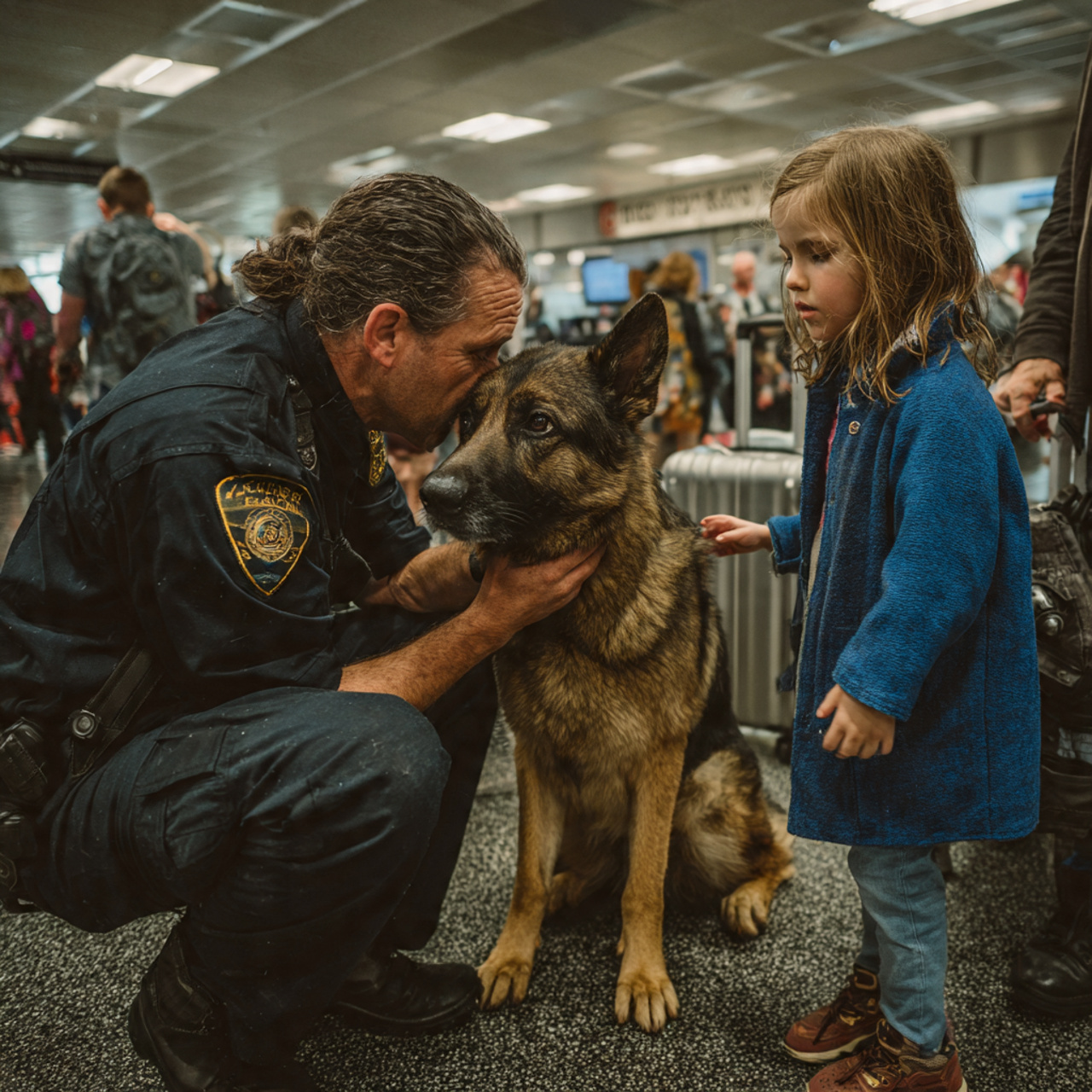
“A POLICE DOG FROZE IN THE AIRPORT. THEN A LITTLE GIRL TAPPED HIS HEAD. WHAT HAPPENED NEXT MADE EVERY TRAVELER STOP. HAVE YOU EVER WITNESSED A SILENT CRY FOR HELP?
The bustling international airport was a whirlwind of rolling suitcases, hurried announcements, and weary travelers rushing to their gates. Officer Liam Mercer patrolled the terminal with his loyal K9 partner, Rex — a highly trained German Shepherd known for his sharp instincts in detection and child safety operations. Everything seemed routine until Rex suddenly froze […]
End of content
No more pages to load