As the British monarchy reels from its most explosive crisis in decades, whispers from inside Buckingham Palace reveal a calculated, behind-the-scenes masterplan orchestrated by Prince William to prop up his ailing father, King Charles III, and claw back public faith hammered by the bombshell arrest of Andrew Mountbatten-Windsor—once known as Prince Andrew—on suspicion of misconduct in public office tied to the Jeffrey Epstein scandal.
The drama exploded on February 19, 2026, when Andrew—King Charles’s younger brother—was dramatically arrested on his 66th birthday at his Sandringham residence. Thames Valley Police swooped in amid fresh revelations from unsealed Epstein files suggesting the former royal had shared confidential government trade documents with the convicted sex offender back in 2010, during his stint as a UK trade envoy. Detained for over 11 hours and grilled intensely, Andrew was released under ongoing investigation—no charges yet, but the damage is catastrophic. Searches continue at his former Royal Lodge home in Windsor and other properties, with officers even appealing to his old protection detail for any “what they saw or heard” that could crack the case wide open.
This marks the first arrest of a senior British royal in centuries—the kind of headline that shatters the aura of untouchability the Firm has clung to for generations. Public outrage boils over: questions about past leniencies, taxpayer-funded settlements, and why Andrew’s Epstein ties were ever tolerated. Polls show dipping approval for the monarchy at a time when King Charles—battling his own health issues—needs stability more than ever.
Enter Prince William, the poised heir apparent who’s long positioned himself as the modern face of the crown. Palace insiders tell a clear story: William isn’t panicking—he’s planning. Sources describe a “united willingness” across the family to confront the trust deficit head-on, with William at the forefront, determined to “help the King in any way he can to restore that trust with the public and long term.”
The strategy? A multi-pronged push toward transparency, accountability, and modernization—elements William has championed for years through his Earthshot Prize, mental health advocacy, and homelessness initiatives. Insiders say he’s pushing for a “corporate-like structure” within the monarchy: clearer governance rules, defined responsibilities, stricter oversight on finances and public engagements. No more opaque decisions or family scandals dragging the institution down. The goal: prove the monarchy serves a purpose in a skeptical modern Britain.
Public appearances remain key. Just days after the arrest, William and Kate Middleton stepped out at the BAFTAs—ignoring a heckler shouting “Is the monarchy in peril?”—signaling “business as usual” amid chaos. Their calm carry-on demeanor contrasts sharply with the turmoil, reinforcing William’s image as steady leadership. Behind closed doors, though, reforms brew: potential slimming of royal roles, greater openness about funding, and a sharper focus on duty over drama.
William’s frustration runs deep. He’s reportedly “incensed” by how Andrew’s endless controversies sabotage the good work the Waleses do. Experts note William has long advocated distancing the family from his uncle—pushing for Andrew’s titles and honors stripped in 2022—and now sees the arrest as a painful but necessary wake-up call. “William’s head is screwed on,” one royal observer said. “He realizes just how potentially damaging this could be for the wider royal family.” The plan prioritizes the institution over blood ties: support the investigation fully (as King Charles vowed, insisting “the law must take its course” with “full and wholehearted” cooperation), but use the moment to accelerate change.
King Charles’s response has been measured—his statement emphasizing a “full, fair and proper process” while pledging cooperation—marking a shift from Queen Elizabeth II’s protective instincts. Yet with Charles’s health fragile, William’s role as future king looms larger. Sources say he’s extending every support to his father during this “turbulent moment,” from private counsel to public bolstering.
Critics question if any plan can fully repair the damage. Andrew’s arrest revives ghosts of Epstein associations, Virginia Giuffre settlements, and public fury over privileges. Some speculate government moves to remove him from the line of succession entirely—a symbolic gut-punch. But optimists point to William and Kate’s enduring popularity: their focus on service, youth, and relevance could steer the ship through the storm.
The stakes couldn’t be higher. The monarchy faces its gravest threat since Diana’s death—trust eroded, relevance questioned. William’s quiet strategy isn’t just crisis management; it’s a blueprint for survival. Transparency over secrecy, accountability over entitlement, duty over drama.
As investigations drag on—potentially lengthy, with no quick resolution—the palace works feverishly behind the scenes. Will William’s bold shake-up restore faith? Or will the Epstein shadow prove too dark to escape? The coming months will tell. For now, one thing is clear: the heir isn’t waiting for the storm to pass—he’s reshaping the crown to weather it.
The Firm stands at a crossroads. William’s plan may be the lifeline it desperately needs—or the final test of whether the monarchy can evolve before it’s too late.
News
“Shave Her Head,” the Sergeant Ordered Coldly. “If Discipline Won’t Break Her, Maybe Humiliation Will.” But What They Didn’t Know Was That the Woman They Underestimated Would Bring Their Entire Base to Its Knees.
General Alexander Vance had heard the whispers for months: Fort Blackwood was rotting from within. Soldiers spoke in hushed tones of systematic humiliation disguised as “discipline,” falsified training records, missing supply funds that somehow vanished into private accounts, and a toxic command climate built on fear and intimidation. Every official inspection came back sparkling clean […]
At A Veterans’ Dinner, The Colonel Leaned Toward My Brother And Asked One Simple Question: “Can You Tell Me How You Earned This Decoration, Son?” His Face Turned White. He Pointed At My Father And Said: “He Told Me It Belonged To Our Uncle.” The Uncle Never Existed.
The Ridgewood Armory smelled like every other veterans’ event I’d ever attended: floor wax, overcooked chicken, old coffee, and the faint metallic tang of too many American flags. Fluorescent lights buzzed overhead, casting a harsh glow on rows of folding tables and men in ill-fitting blazers trying to look like they still belonged in uniform. […]
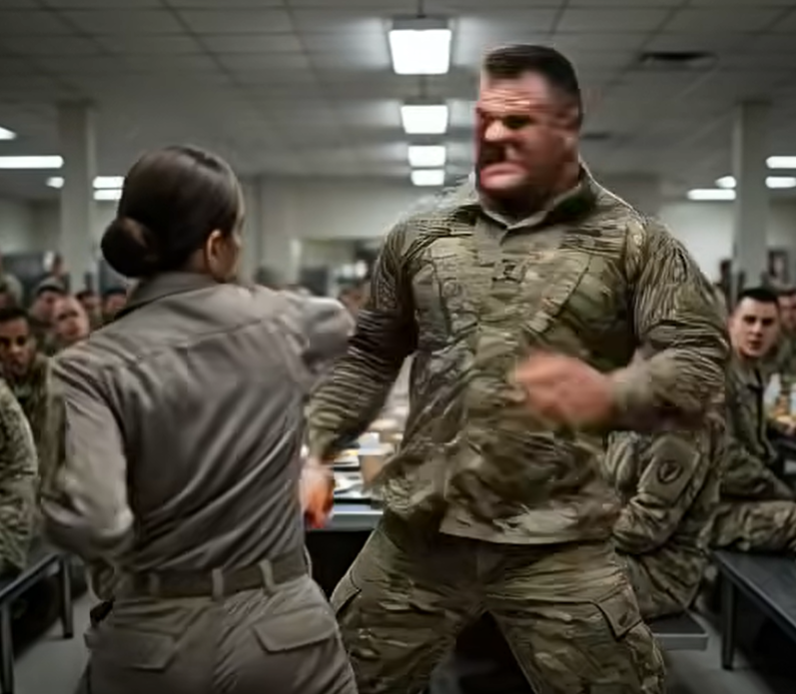
“Die, B*tch,” He Spat, Swinging a Massive Fist in the Mess Hall. He Thought I Was an Easy Target — He Had No Idea He Just Attacked a Classified SEAL Shadow Operative.
I was running on fumes. Seventy-two hours of off-the-books reconnaissance in the frozen Alaskan wilderness had left every muscle screaming. My joints ached from crawling through ice-crusted snow, my eyes burned from staring through night-vision gear, and the only thing keeping me upright was the promise of a hot meal and twelve hours of blackout […]
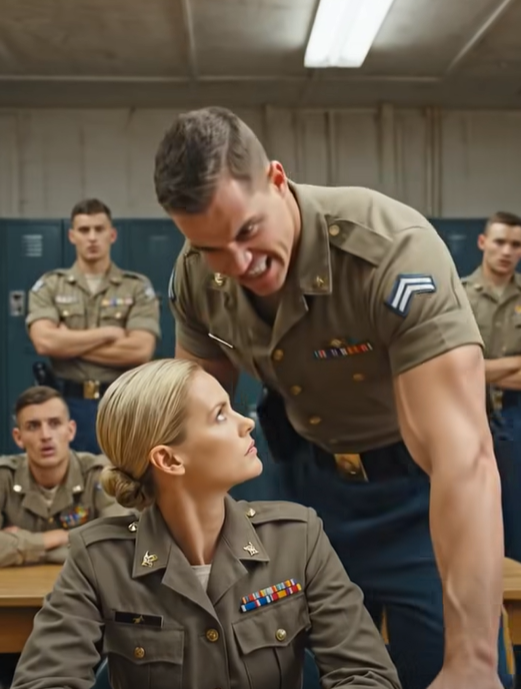
“Do You Know Who I Am?” He Pushed Her — Seconds Later, One ID Card Ended His Career
The dim lights of Rusty’s Bar flickered like dying stars just outside Camp Pendleton. It was a Friday night, the kind where Marines came to forget the sand and the screams they carried home from deployment. I had come here for the opposite reason — to disappear. My name is Commander Thalia Renwick. Highly decorated […]
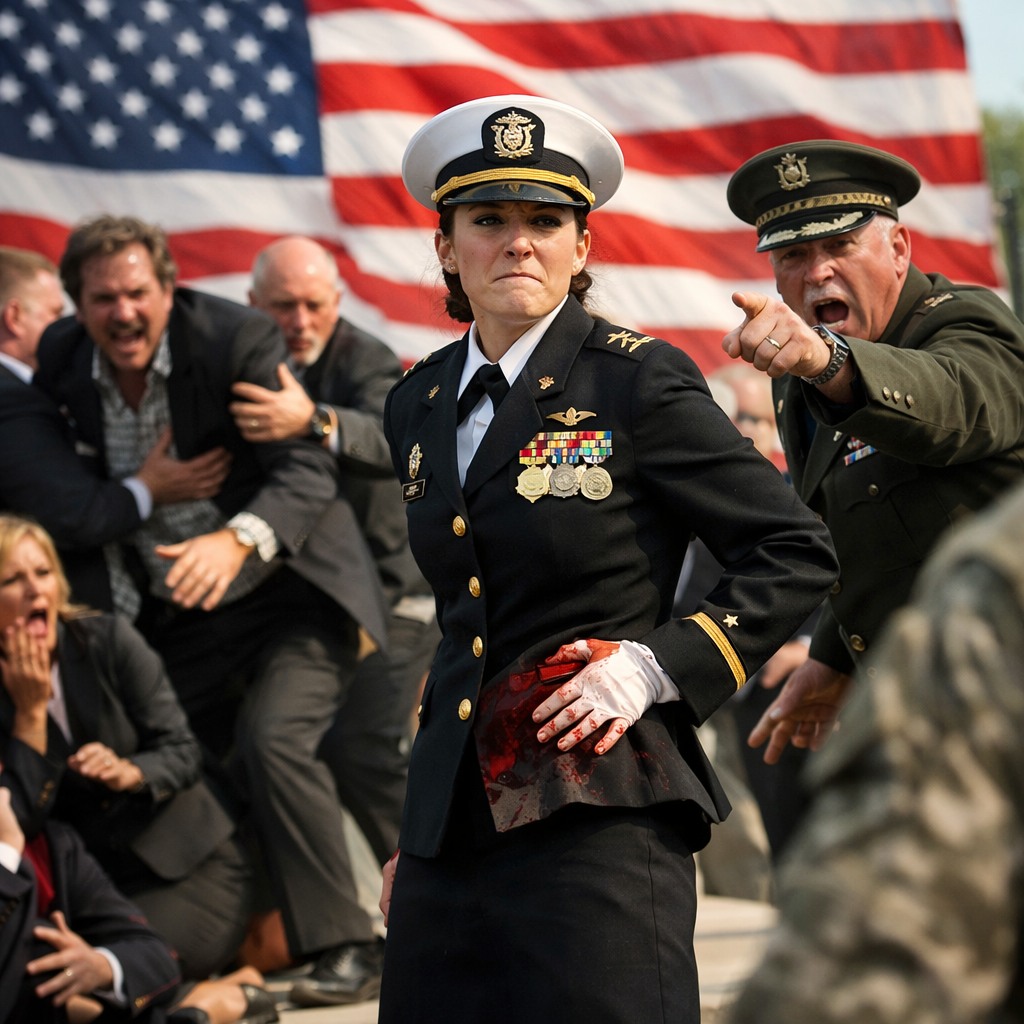
15 Years After My Dad Kicked Me Out, I Saw Him At My Sister’s Wedding. He Sneered: “If It Wasn’t For Pity, No One Would’ve Invited You.” I Just Smiled And Sipped My Wine. Then The Bride Took The Mic And Changed Everything.
The South Carolina sun was merciless that June afternoon, turning the outdoor wedding venue into a glittering oven. I stood near the back in my crisp Army dress uniform, the brass buttons and medals catching the light with every breath. At 34 years old, I had come home for my little sister’s wedding — the […]
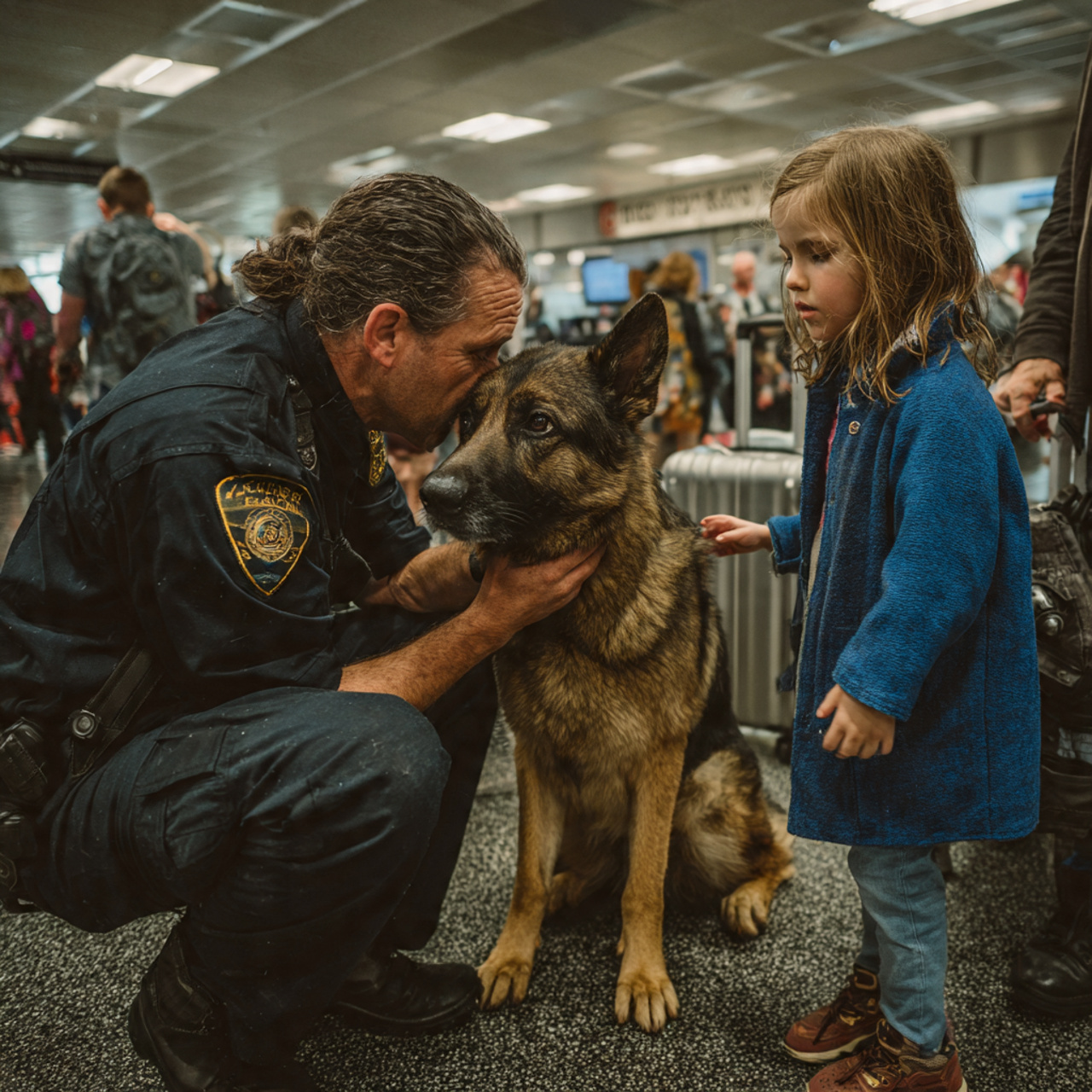
“A POLICE DOG FROZE IN THE AIRPORT. THEN A LITTLE GIRL TAPPED HIS HEAD. WHAT HAPPENED NEXT MADE EVERY TRAVELER STOP. HAVE YOU EVER WITNESSED A SILENT CRY FOR HELP?
The bustling international airport was a whirlwind of rolling suitcases, hurried announcements, and weary travelers rushing to their gates. Officer Liam Mercer patrolled the terminal with his loyal K9 partner, Rex — a highly trained German Shepherd known for his sharp instincts in detection and child safety operations. Everything seemed routine until Rex suddenly froze […]
End of content
No more pages to load