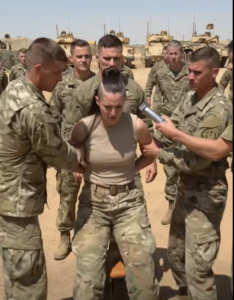
The arrogant SEAL team saw a dog handler. They laughed when she warned them, calling her the “babysitter.” What they couldn’t see was the battle-hardened ghost standing in their ranks—a legend whose deadly past was the only thing that could save them from their own fatal mistake.
The sound was low, a vibration that started deep in the earth and rumbled up through the soles of my boots. It was 4:30 a.m. in the Arizona desert, a time when the world holds its breath, caught between the deep, star-dusted black of night and the first pale wash of dawn. The growl came again, this time from its true source: deep in the chest of the Belgian Malinois standing beside me. Ryder, my partner, a veteran of four years of this grinding, dusty work, was a statue carved from shadow and tension. His eyes, fixed on the patrol route that dissolved into the darkness ahead, saw something my own couldn’t.
Lieutenant Silas Morrison, however, saw only an annoyance. He didn’t turn, didn’t even break the rhythm of his gear check. He just let his voice, cold and sharp as a shard of obsidian, cut through the pre-dawn quiet. “Keep the dog quiet, Fletcher.”
Behind him, seven shadows detached themselves from the larger gloom, chuckling. They were SEALs, part of a special operations task force hunting cartel scouts in this godforsaken corner of the border, and they moved with the liquid arrogance of men who believe they’re apex predators. Petty Officer Hugo Bennett, whose call sign was “Hammer” for reasons that were immediately obvious, shook his head with a theatrical disgust that was meant for me to see.
“Support personnel,” he muttered, just loud enough to carry. “Why are we dragging a babysitter along?” My hand, already firm on Ryder’s leash, tightened. A reflex. The leather was worn smooth, a familiar texture in a world that had become brutally unfamiliar. I said nothing. Two weeks. That’s how long I’d been attached to Morrison’s team. Two weeks of learning that silence was my only armor. Every time I opened my mouth, they found a new way to shove me back into the box they’d built for me: small woman, oversized uniform, dog handler. Irrelevant.
Ryder growled again, the sound more insistent now. A sharp tug on the leash. It wasn’t aggression; it was a warning. A desperate, urgent signal I had learned to read like a second language. I could feel it in the taut line of the leash, in the subtle shift of his weight from his haunches to his forelegs, ready to spring. Something was wrong.
The warning was given. Their judgment was passed. Now, in the silence between worlds, a terrible clock began to tick.
The terrible clock kept ticking.
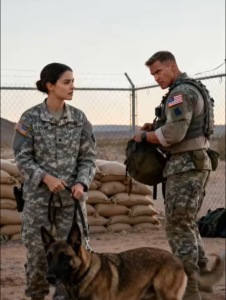
Ryder’s growl deepened into a low, rolling snarl that vibrated through the leash into my palm. I felt the shift in his posture—the way his hackles rose in a perfect ridge along his spine, ears pinned forward, every muscle coiled like a spring under tension. He wasn’t barking yet. He didn’t need to. Belgian Malinois don’t waste breath on theatrics when death is close.
I stepped forward, voice quiet but carrying the edge that had once cleared rooms in Fallujah. “Lieutenant Morrison. Halt the patrol. Now.”
Morrison finally turned, irritation flashing across his face like heat lightning. “Fletcher, I told you—”
“Ambush ahead,” I cut in. “Ryder’s locked on scent. Multiple bodies, explosives, maybe thirty meters out. They’re waiting for us to cross the dry wash.”
Bennett—Hammer—laughed outright, the sound sharp and brittle in the pre-dawn chill. “The babysitter’s dog smells something. Cute. Probably a jackrabbit. Or your imagination.”
The rest of the team chuckled on cue, a low ripple of agreement. They shifted weight, checked weapons, but no one stopped moving. Morrison waved a hand dismissively. “We’re on schedule. Keep up or fall back to the rear with the gear.”
They started forward again.
Ryder lunged—once, hard—testing the leash. I held firm, planting my boots. “Stop!” Louder this time. “You walk into that wash, you’re walking into a kill zone. IED belt across the choke point, shooters on the high ground left and right. They’ve had time to dig in. Ryder’s alerting on ammonium nitrate and human scent. He’s not wrong. He’s never wrong.”
Silence for two heartbeats. Then Morrison’s voice, colder now. “You questioning my call, Specialist?”
“I’m telling you facts.” I met his eyes without blinking. “I’ve run point on over four hundred combat patrols. Ryder and I cleared routes in Ramadi, Helmand, Mosul. We’ve found more buried threats than your entire platoon combined in the last six months. You ignore this, people die.”
Bennett snorted. “Four hundred patrols? With a dog? That’s support. Not operator work.”
I didn’t answer him. I didn’t have to. The past spoke for itself.
Morrison studied me—really looked—for the first time since I’d joined the task force. His gaze dropped to the faded scars on my forearms, the way I stood balanced despite the old shrapnel in my hip, the quiet certainty in my posture that no amount of mockery could shake. Something flickered behind his arrogance. Doubt, maybe. Or recognition.
Ryder whined once—sharp, urgent.
The lieutenant exhaled through his nose. “Fine. We sweep left, flank the wash. Slow and quiet. If your mutt’s crying wolf, Fletcher, you’re on point cleanup for a month.”
They adjusted. Not because they believed me. Because procedure allowed it, and no one wanted the paperwork if things went south.
We moved west, skirting the dry riverbed, using the low ridge for cover. Ryder stayed glued to my leg, head low, working the wind. Fifty meters in, he froze—tail rigid, nose locked forward.
I raised a closed fist. The team halted without command.
Then we heard it: the faint metallic click of a safety disengaging. Followed by the soft rustle of boots on gravel above us.
Bennett’s smirk vanished. Morrison’s hand went to his radio.
Too late.
The first shots cracked from the ridge—suppressed, precise. Tracers stitched the ground where we would have been standing if we’d crossed the wash. Dirt exploded in geysers. A round snapped past my ear close enough to feel the heat.
“Contact high!” Morrison shouted. “Return fire!”
The team dropped into cover, weapons up, laying down disciplined bursts. But the cartel scouts had the advantage—elevated positions, pre-sighted lanes of fire, and the element of surprise they’d almost kept.
Almost.
Ryder exploded forward on my release command. He didn’t hesitate. He launched up the slope like black lightning, a shadow with teeth. The lead shooter never saw him coming. Ryder hit him center mass, jaws clamping on the rifle arm, dragging the man down in a tangle of limbs and screams. Another cartel gunman swung toward the disruption—Ryder released, pivoted, lunged again. Teeth met throat. The second man went down gurgling.
I was already moving.
Muscle memory took over. I flanked right, low crawl to a boulder, M4 up. Two controlled pairs into the ridge line—center mass, head shot follow-up. One shooter slumped. Another tried to reposition; I tagged him in the leg, then finished with a double-tap when he exposed himself.
The SEALs recovered fast—training kicked in. Morrison directed fire, bounding overwatch, grenades arcing into the enemy positions. Bennett, for once silent, poured accurate fire from cover. Within ninety seconds the ridge was theirs. Bodies littered the high ground. Silence returned, broken only by labored breathing and the low growl still rumbling in Ryder’s throat as he circled back to me, blood on his muzzle, ears up, waiting for the next command.
Morrison approached, weapon lowered, eyes wide. He looked at Ryder—then at me. Really looked.
“You said four hundred patrols,” he said quietly.
“Four hundred and twelve,” I corrected. “Before the IED in ’19 took half my squad and left me with pins in my hip. Ryder pulled me out. Carried my vest in his jaws until the medevac landed. They retired him after that. I fought to keep him with me. Civilian contract now. But the work doesn’t change.”
Bennett stepped up beside his lieutenant, face pale. No smirk left. “We… we called you babysitter.”
“You did.”
Morrison swallowed. “You just saved our asses. All of us.”
I knelt, running a hand over Ryder’s head, checking for wounds. Clean. He leaned into me, tail giving one slow wag—the only sign he was proud.
“I don’t need thanks,” I said. “I need you to listen next time a dog handler warns you. Because the next time might not have a happy ending.”
Morrison nodded once—sharp, respectful. “Understood, ma’am.”
The word hung there. Ma’am. Not Fletcher. Not babysitter.
The team gathered around, silent now. No jokes. No posturing. Just eight operators looking at the woman—and the dog—they’d dismissed, and seeing what they’d missed: scars earned in places they hadn’t been, instincts honed sharper than any operator pipeline could teach, a partnership forged in blood and sand that had just pulled them back from the edge.
Ryder sat at my heel, ears forward, watching the horizon as dawn finally broke—gold bleeding across the desert like forgiveness.
The patrol moved out again. This time, I walked point. Ryder at my side. The SEALs fell in behind us without a word.
No more laughter.
No more underestimation.
Just the quiet rhythm of boots on gravel, a low canine pant, and the unspoken promise that some ghosts don’t haunt—they save.
And when they do, even the apex predators learn to follow
News
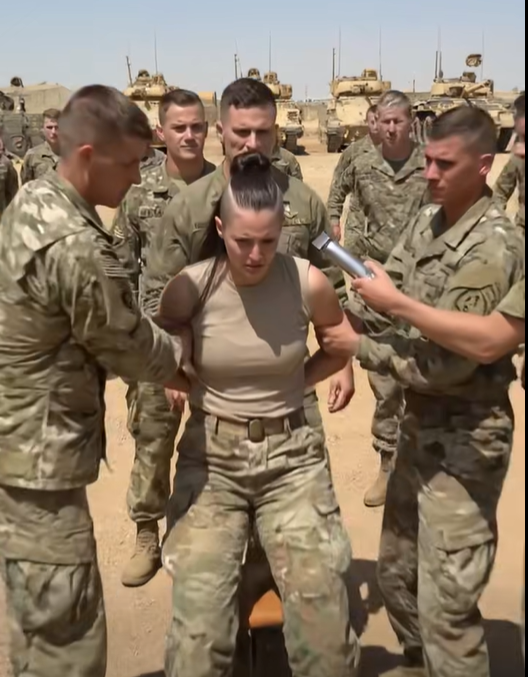
“Shave Her Head,” the Sergeant Ordered Coldly. “If Discipline Won’t Break Her, Maybe Humiliation Will.” But What They Didn’t Know Was That the Woman They Underestimated Would Bring Their Entire Base to Its Knees.
General Alexander Vance had heard the whispers for months: Fort Blackwood was rotting from within. Soldiers spoke in hushed tones of systematic humiliation disguised as “discipline,” falsified training records, missing supply funds that somehow vanished into private accounts, and a toxic command climate built on fear and intimidation. Every official inspection came back sparkling clean […]
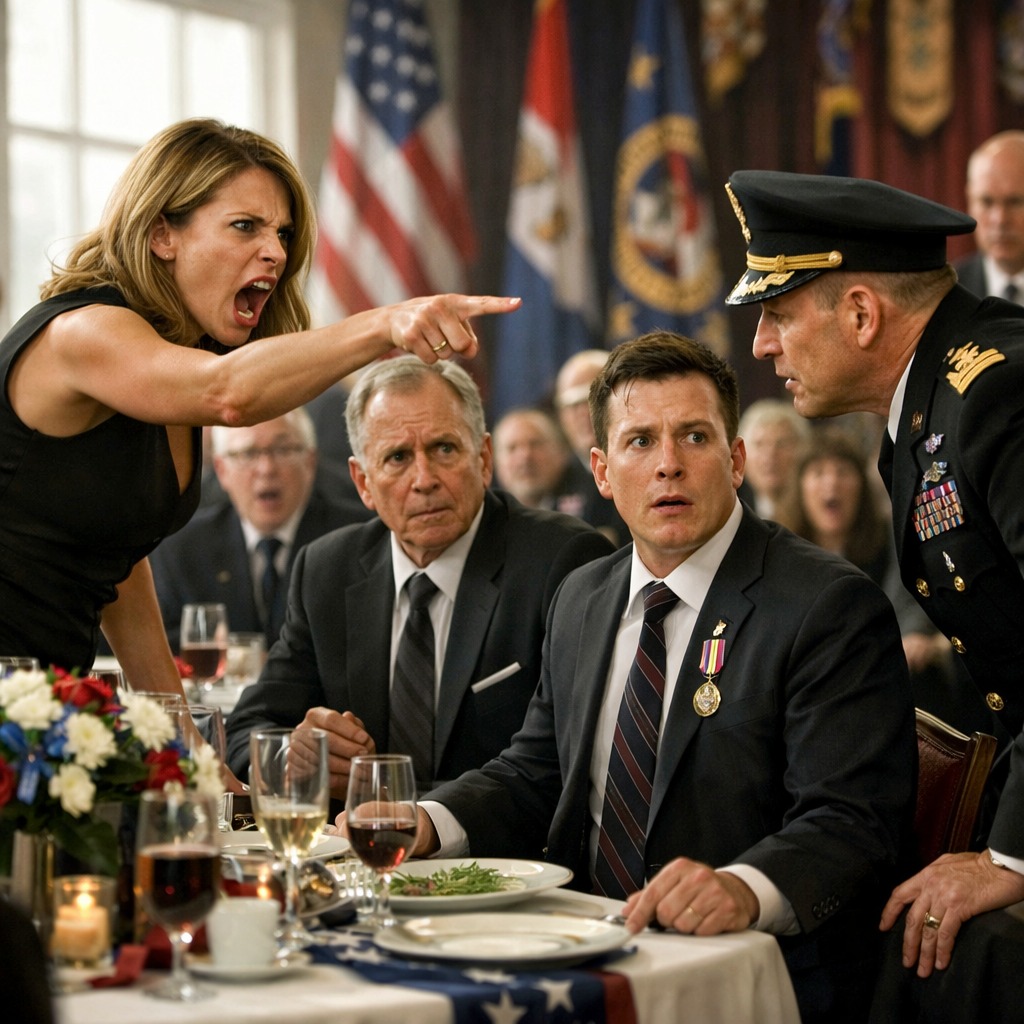
At A Veterans’ Dinner, The Colonel Leaned Toward My Brother And Asked One Simple Question: “Can You Tell Me How You Earned This Decoration, Son?” His Face Turned White. He Pointed At My Father And Said: “He Told Me It Belonged To Our Uncle.” The Uncle Never Existed.
The Ridgewood Armory smelled like every other veterans’ event I’d ever attended: floor wax, overcooked chicken, old coffee, and the faint metallic tang of too many American flags. Fluorescent lights buzzed overhead, casting a harsh glow on rows of folding tables and men in ill-fitting blazers trying to look like they still belonged in uniform. […]
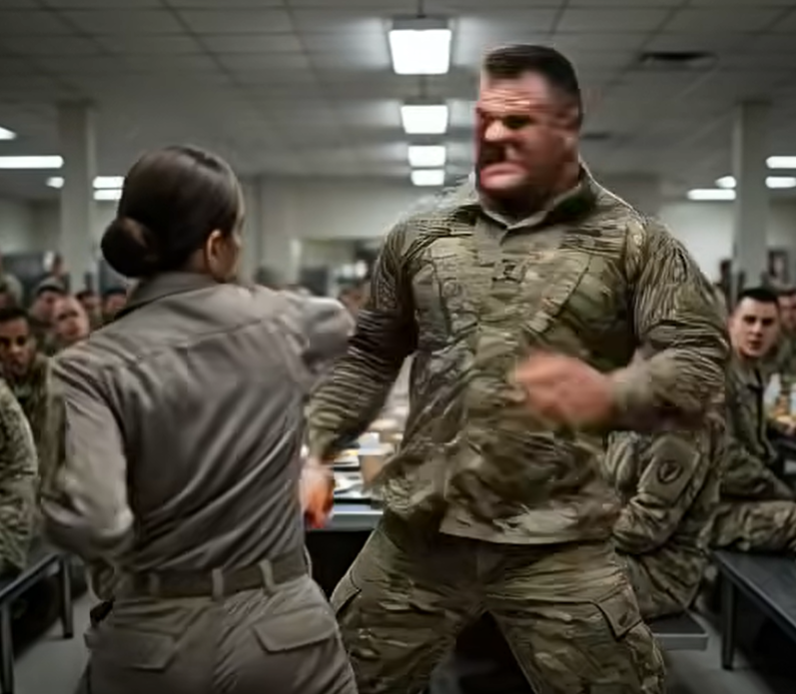
“Die, B*tch,” He Spat, Swinging a Massive Fist in the Mess Hall. He Thought I Was an Easy Target — He Had No Idea He Just Attacked a Classified SEAL Shadow Operative.
I was running on fumes. Seventy-two hours of off-the-books reconnaissance in the frozen Alaskan wilderness had left every muscle screaming. My joints ached from crawling through ice-crusted snow, my eyes burned from staring through night-vision gear, and the only thing keeping me upright was the promise of a hot meal and twelve hours of blackout […]
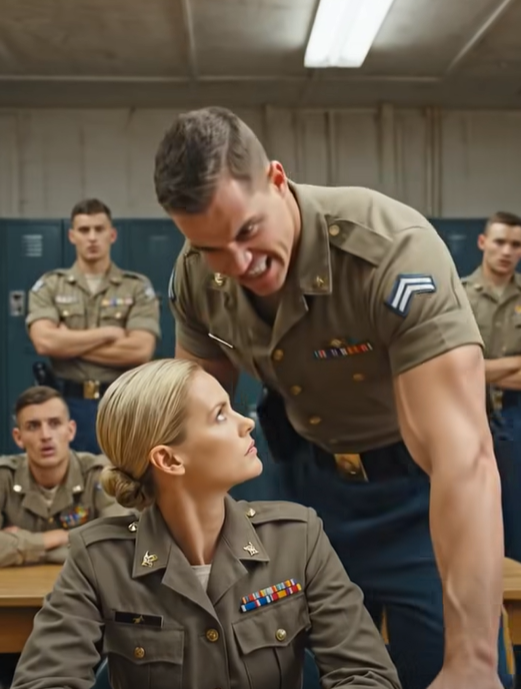
“Do You Know Who I Am?” He Pushed Her — Seconds Later, One ID Card Ended His Career
The dim lights of Rusty’s Bar flickered like dying stars just outside Camp Pendleton. It was a Friday night, the kind where Marines came to forget the sand and the screams they carried home from deployment. I had come here for the opposite reason — to disappear. My name is Commander Thalia Renwick. Highly decorated […]
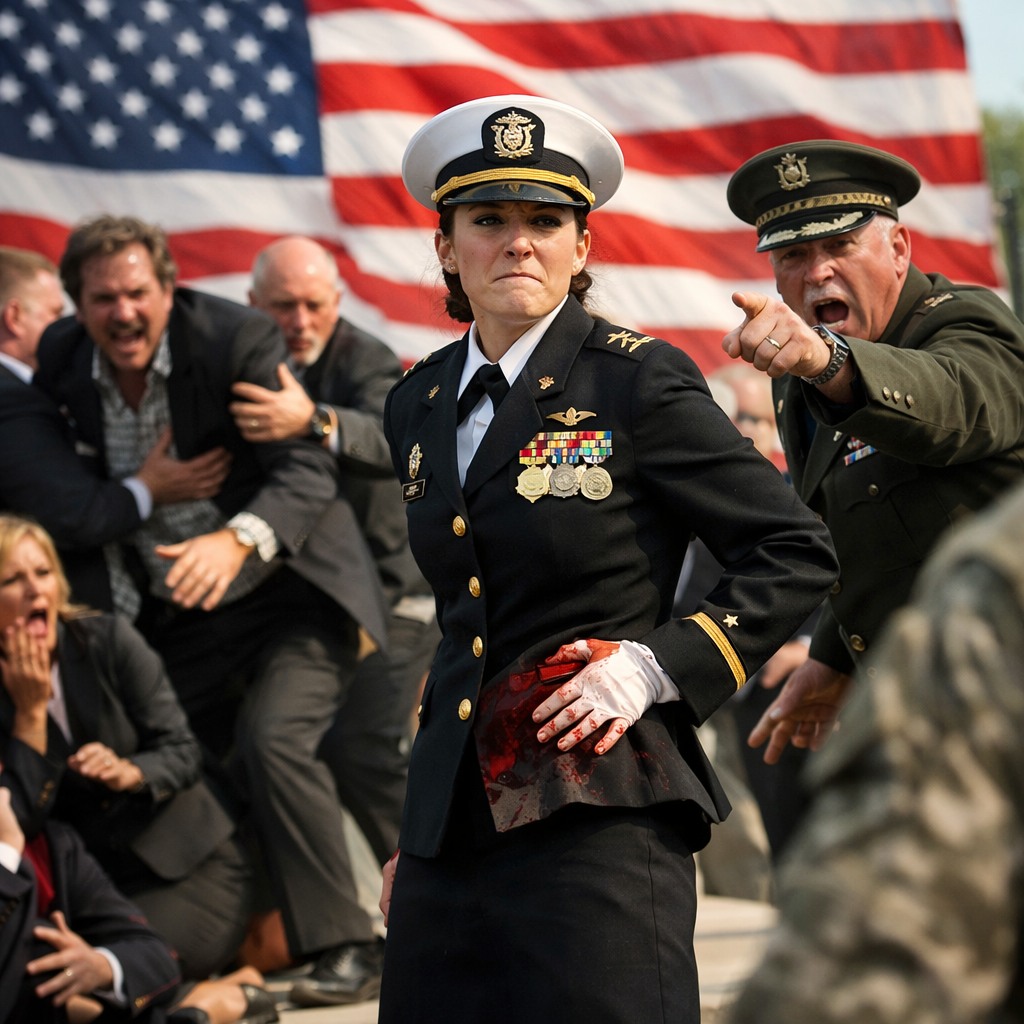
15 Years After My Dad Kicked Me Out, I Saw Him At My Sister’s Wedding. He Sneered: “If It Wasn’t For Pity, No One Would’ve Invited You.” I Just Smiled And Sipped My Wine. Then The Bride Took The Mic And Changed Everything.
The South Carolina sun was merciless that June afternoon, turning the outdoor wedding venue into a glittering oven. I stood near the back in my crisp Army dress uniform, the brass buttons and medals catching the light with every breath. At 34 years old, I had come home for my little sister’s wedding — the […]
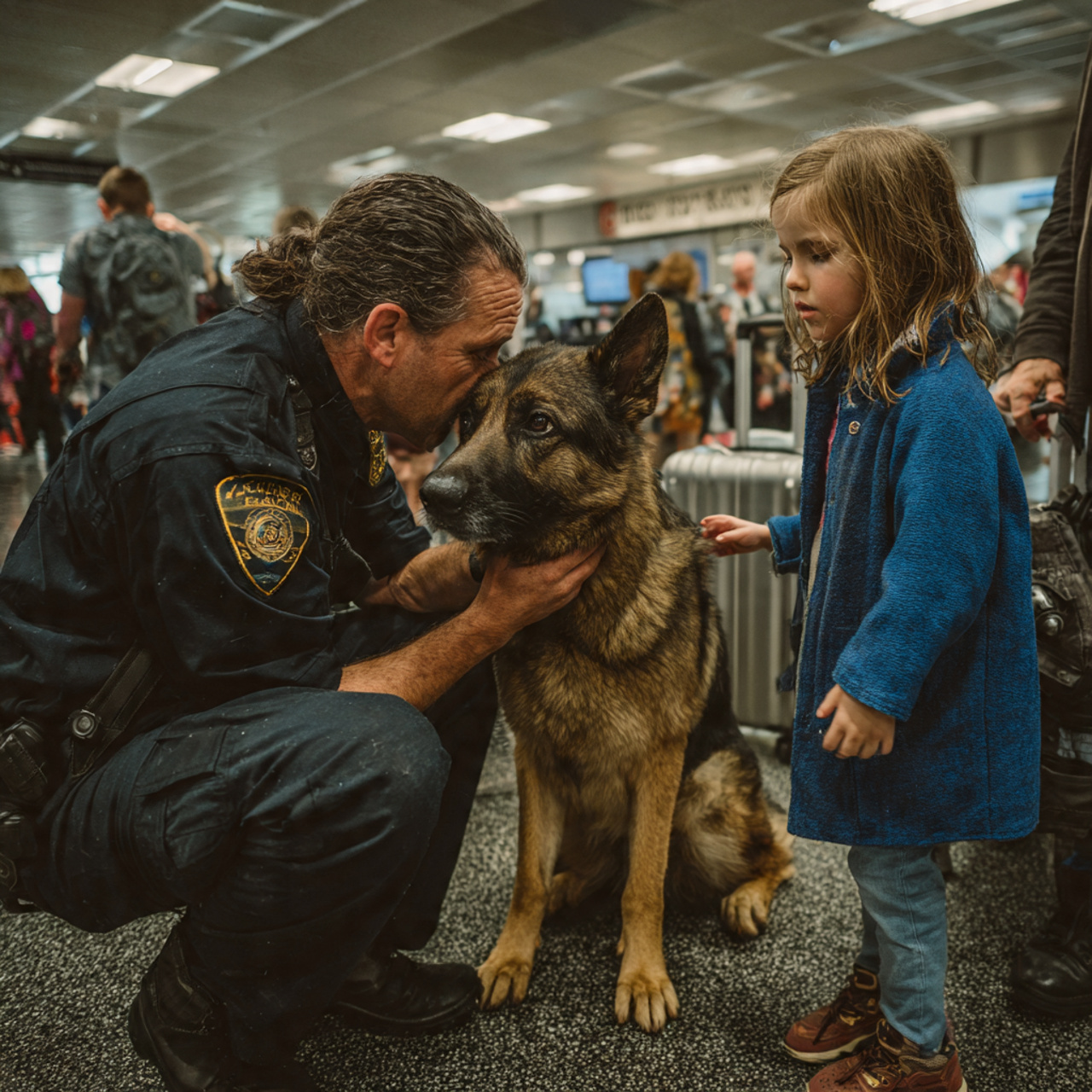
“A POLICE DOG FROZE IN THE AIRPORT. THEN A LITTLE GIRL TAPPED HIS HEAD. WHAT HAPPENED NEXT MADE EVERY TRAVELER STOP. HAVE YOU EVER WITNESSED A SILENT CRY FOR HELP?
The bustling international airport was a whirlwind of rolling suitcases, hurried announcements, and weary travelers rushing to their gates. Officer Liam Mercer patrolled the terminal with his loyal K9 partner, Rex — a highly trained German Shepherd known for his sharp instincts in detection and child safety operations. Everything seemed routine until Rex suddenly froze […]
End of content
No more pages to load