Horror Unfolded Over the Waves: The Devastating Plane Crash That Claimed a Fearless Trainee Pilot and Two Others in a Split-Second Tragedy
Shockwaves rippled through the tight-knit aviation community and beyond when a small Cessna aircraft plummeted into the churning ocean off Goolwa South in Southern Australia, snuffing out three lives in an instant. On that fateful Friday afternoon, what began as a routine flight turned into a nightmare of spiraling metal and crashing waves, leaving families shattered and investigators scrambling for answers. Among the victims was 20-year-old trainee pilot Lucas Di Biase, a young man whose passion for the skies had defined his short but vibrant life—only to learn from his grieving mother that he wasn’t even supposed to be on board. As the wreckage was hauled from the sea and tributes poured in, the story emerged as a poignant reminder of the razor-thin line between adventure and catastrophe in the world of flight.

The crash site, Long Bay near Goolwa South, is a picturesque stretch of coastline beloved by locals and tourists alike for its golden sands and summer vibes. But on this day, the idyllic scene transformed into a theater of terror. Eyewitnesses, including beachgoers soaking up the sun and a lone fisherman casting his line, described the horrifying sequence with chilling clarity. The plane, a single-engine Cessna often used for training, appeared to be executing what looked like stunt maneuvers—looping and twisting in the air before something went catastrophically wrong. “It looked like it was doing some sort of stunt movements,” the fisherman recounted to reporters, his voice laced with disbelief. “And then, thing you know, it just keeps coming down and down and down and not going back up. Before you know it, it hit the water. A massive splash happened. I noticed both of the wings sort of fell apart from the plane in the crash.”
Shocking video footage, captured by horrified onlookers and later circulated by media outlets like 7 News and 9 News, immortalized the final moments. The aircraft rolled sharply to the left in a steep nose-down trajectory, hurtling toward the ocean just a couple of hundred meters offshore. The impact was brutal: a thunderous splash that sent spray skyward, followed by the sickening sight of the wings shearing off as the fuselage crumpled against the relentless waves. The rough sea conditions—swells pounding the shore—made the scene even more chaotic, with debris bobbing in the foam like broken promises.
Emergency services sprang into action with commendable speed, but the odds were stacked against them from the start. Multiple helicopters buzzed overhead, their rotors chopping the air in a desperate search pattern. A jet ski zipped across the water, while boats from local rescue teams battled the swells to reach the site. Beachgoers, frozen in shock just moments before, now dialed emergency lines, their voices trembling as they reported the unfolding disaster. The fisherman, feeling “pretty helpless” amid the vast ocean, did what he could by alerting authorities immediately. Yet, despite the valiant efforts, the three occupants—Lucas Di Biase, 18-year-old Tristan Scheffers, and experienced pilot Leo Howard, 53—were pronounced dead at the scene. Their bodies were recovered amid the wreckage, a grim task that underscored the unforgiving nature of such accidents.
Lucas Di Biase’s story is one that tugs at the heartstrings, a tale of unbridled ambition cut tragically short. Born with an innate love for aviation, Lucas had dreamed of piloting since he was a toddler, his eyes lighting up at the sight of planes streaking across the sky. He pursued that passion with relentless drive, graduating at the top of his class in flight training and even taking on mentoring roles for fellow student pilots. His mother, Koula Di Biase, painted a vivid picture of her son in a heartfelt tribute: “All you ever wanted to do since you were a toddler was to become a pilot. You were so passionate about flying. You worked so hard, graduated at the top of your class, was mentoring student pilots and booked to fly to Darwin on Monday to follow your dreams.” But in a cruel twist of fate, Lucas wasn’t scheduled for that ill-fated flight. “Lucas was not meant to be on the flight on Friday but never hesitated to jump in the back seat of another flight as he’s done many times before,” Koula revealed, her words heavy with the weight of what-ifs.
Described by those who knew him as “funny, smart, fearless and loved by everyone who met you including everyone in the aviation community,” Lucas was on the cusp of a bright future. He had plans to relocate to Darwin just days after the crash, ready to chase his dreams in the vast Australian outback. Instead, his family is left grappling with an “unimaginable tragedy,” as Koula put it. “We don’t know how we are supposed to carry on without you. We’ll miss your daily calls, your conversations, your laughter and the joy you brought to us. We’ll try to stay strong for your sister. We love you so much. Forever in our hearts. Forever 20. Fly high our beautiful boy.” Photos supplied by the family show a young man with a infectious smile, often captured in the cockpit or beside aircraft, his red hair tousled by the wind—a symbol of the freedom he so cherished.

Tristan Scheffers, at just 18, was another rising star in the aviation world, his life brimming with potential. Having recently wrapped up his final year of high school (Year 12), Tristan was laser-focused on earning his commercial pilot license. Flying wasn’t just a hobby for him; it was his everything. His father, Bas Scheffers, captured this essence in a poignant statement: “Our beautiful boy who loved flying more than anything else spread his wings one last time on Friday.” Images of Tristan, shared in media reports, depict a determined teenager with a quiet confidence, perhaps dreaming of soaring over distant horizons. Like Lucas, he was part of a generation inspired by the thrill of flight, but their shared journey ended in the cold embrace of the sea.
At the controls was Leo Howard, a 53-year-old veteran pilot whose experience made him a pillar in the community. His sister remembered him as “a highly respected and experienced pilot, as well as a loved family man, son, father, and brother.” Leo’s steady hand had guided countless flights, but on this day, something unforeseen overpowered even his expertise. Photos from 7 News show a man with a kind face, weathered by years in the air, now forever linked to this heartbreaking event.

The Australian Transport Safety Bureau (ATSB) wasted no time launching a thorough investigation, deploying four specialists to the scene. Acting Chief Commissioner Colin McNamara emphasized the critical role of eyewitness videos: “Crucially, we are aware there are a number of video recordings of the accident sequence, some of which have been shown in media. That footage captured the aircraft rolling to the left in a very steep nose down trajectory a couple of hundred metres offshore. Analysis of those video recordings will be instrumental to the investigation, and we do ask that anyone with video footage of the aircraft at any stage of its flight, and of the accident sequence, to make contact with the ATSB via the witness form on our website at their earliest opportunity.” The wreckage, mangled and salt-encrusted, was painstakingly recovered and brought ashore, where it now serves as a puzzle for experts to piece together. Factors like mechanical failure, weather conditions, or human error are all on the table, though no conclusions have been drawn yet.
Goolwa South, with its scenic beaches and proximity to Adelaide, is no stranger to aviation activity. The area hosts flight schools and recreational flying, drawing enthusiasts from across the region. But incidents like this cast a long shadow over the hobby, reminding participants of the inherent risks. Light aircraft, such as the Cessna involved, are staples in training programs due to their reliability and ease of handling. Yet, as aviation experts note, even routine flights can turn deadly if variables like wind shear, engine malfunction, or spatial disorientation come into play. The rough seas that day amplified the danger, turning a potential survivable ditching into a fatal plunge.
In the broader context of Australian aviation safety, this crash joins a somber list of recent incidents that have prompted calls for enhanced regulations. The ATSB’s involvement ensures a meticulous review, potentially leading to recommendations that could prevent future tragedies. For now, the focus remains on supporting the bereaved families, who have united in their grief. Tributes have flooded social media, with fellow pilots, friends, and even strangers sharing stories of Lucas’s mentorship, Tristan’s enthusiasm, and Leo’s wisdom. Aviation forums buzz with condolences, many users reflecting on their own close calls in the sky.
The emotional toll is palpable. Koula Di Biase’s words resonate deeply, evoking the universal pain of losing a child: a boy who brought joy through his laughter and daily calls, now silenced forever. Bas Scheffers’s metaphor of spreading wings one last time captures the poetic irony of a life dedicated to flight ending in freefall. Leo’s family, too, mourns a man who was more than a pilot—he was the glue holding them together.
As the sun sets on Long Bay, the waves continue their eternal rhythm, indifferent to the lives they claimed. But for those left behind, the healing process begins with remembrance. Lucas, Tristan, and Leo didn’t just fly; they inspired others to reach for the stars. Their legacy, though born from tragedy, might just save lives by highlighting the need for vigilance in the skies.
Communities rally around such events, often leading to fundraisers for flight safety education or memorials at local airfields. In Goolwa South, plans are already whispered for a plaque or annual flyover to honor the fallen. The fisherman’s helplessness mirrors that of many witnesses, but their quick actions ensured the bodies were recovered with dignity.
Aviation, at its core, is about defying gravity—pushing boundaries and embracing the unknown. Lucas embodied that spirit: fearless, funny, and forever young. Tristan’s passion burned bright, a flame extinguished too soon. Leo’s experience grounded them, yet fate intervened. This crash isn’t just a news story; it’s a human drama of dreams deferred, families fractured, and a community forever changed.
Investigators pore over footage, dissecting every frame for clues. The public, moved by the raw footage from 7 News—showing the plane’s desperate spiral and the ensuing splash—grapples with the fragility of life. Rescue crews, hailed as heroes, recount the challenging conditions: helicopters hovering low, jet skis dodging waves, boats cutting through foam.
In the end, this tragedy underscores a timeless truth: the sky, for all its allure, demands respect. As Koula urged, “Fly high our beautiful boy”—words that echo for all three souls lost that day.
News
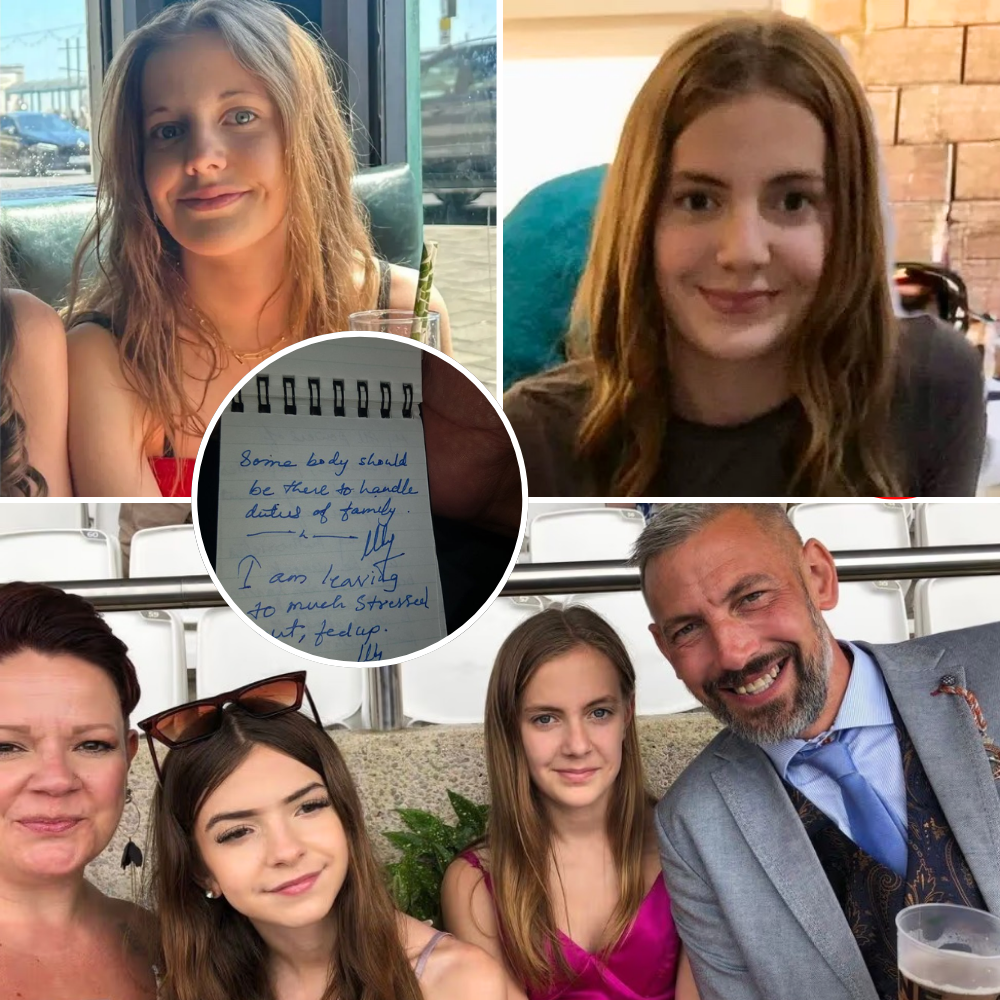
Mum Went to Wake Her 12-Year-Old for School… Instead Found Amelia Dead After Relentless Snapchat Torment 😭 Last Night She Was Happy & Laughing – The Devastating Details Inside
A cheerful 12-year-old girl with a smile that warmed every room spent her final evening wrapped in the simple joys of family life, laughing freely while sharing fish and chips at her grandparents’ house. No one could have predicted that the next morning would bring the kind of silence no parent should ever endure. On […]

👀 American Idol Judges Stunned by Braden Rumfelt’s Voice After Two Major Surgeries Destroyed His Baseball Career — His Comeback Story Is Unbelievable! 😱
The spotlights in the American Idol audition room pulsed with that familiar electric hum as 22-year-old Braden Rumfelt stepped forward, guitar slung over his shoulder, his twin brother Kellen right beside him with fingers poised on the strings. Murphy, North Carolina, felt a world away in that moment—the small-town life of substitute teaching, quiet family […]

😲 She Wrote “String Cheese” While Battling Postpartum Depression… Now Hannah Harper Is Stealing American Idol! Her Incredible Journey Will Inspire You ❤️
The Hawaiian stage lights bathed the Aulani Resort in a golden glow as 25-year-old Hannah Harper, a stay-at-home mom from the tiny town of Bunker, Missouri, gripped the microphone with the same quiet determination she once used to wrangle three rambunctious boys through a long day of laundry and snacks. Her homemade patchwork dress shimmered […]

😱 American Idol Top 20 Poll SHOCK: Hannah Harper & Keyla Richardson Dominate… But Who’s Going HOME Next? 😭 Who’s in Danger?
Hawaii’s sun-drenched shores at Disney’s Aulani Resort became the unlikely battlefield where American Idol Season 24’s Top 20 delivered heart-stopping performances that have left fans divided, judges stunned, and Gold Derby readers casting their clearest verdict yet on who might not survive America’s vote. With the first live results episode looming on March 30, the […]

😱💔 Kimmie Standing On The Rooftop With That USB Drive Has Fans Terrified — Is She About To Destroy The Entire Bellarie Empire? 👀
The first explosive trailer for Beauty in Black Season 2 Part 2 is here — and everything shifts fast. The new footage shows Kimmie stepping fully into her power with zero hesitation, but one bold move has fans in total shock. Is she protecting herself… or setting something much bigger in motion? The stakes feel […]

💥 “Is The Baby Okay?” — Virgin River Season 7 Finale Left One Devastating Clue About Mel & Jack’s Child That Changes Everything 😭
Netflix just dropped the news everyone has been waiting for: Virgin River is officially returning for Season 7 — and fans are already bracing for another emotional chapter. The release date and exact drop time are now confirmed, meaning the next wave of romance, heartbreak, and small-town secrets is closer than expected. But one storyline […]
End of content
No more pages to load