On September 6, 1997, the world stood still in collective grief. Princess Diana, the People’s Princess, had died in a tragic car crash in Paris just a week earlier, on August 31. Her sudden death at age 36 sent shockwaves across the globe, plunging Britain—and much of the international community—into profound mourning. Streets outside Kensington Palace overflowed with floral tributes, candles flickered in makeshift memorials, and millions lined the route to Westminster Abbey for her funeral. Inside the historic abbey, packed with world leaders, presidents, queens, celebrities, and members of the royal family, an atmosphere of hushed reverence prevailed. Then came the moment no one could have fully anticipated: a lone piano was wheeled forward, and Sir Elton John, pale and visibly trembling, took his seat.
The gravity of the occasion nearly overwhelmed him. John, a close friend of Diana’s, had been asked by her family to perform a tribute. He and his longtime lyricist Bernie Taupin hastily reworked their 1973 classic “Candle in the Wind”—originally a poignant homage to Marilyn Monroe—into a new version tailored to honor Diana. The revised lyrics, starting with the unforgettable line “Goodbye England’s rose,” transformed the song into a personal eulogy. Elton had insisted on performing it live, accompanied only by his piano, stripping away any band or orchestral embellishments to keep the focus on raw emotion.
As the abbey fell into absolute silence, John began. His fingers hovered over the keys before pressing down on the first gentle chords. His voice, usually so commanding and theatrical, emerged fragile and restrained. “Goodbye England’s rose / May you ever grow in our hearts,” he sang, the words carrying the weight of a nation’s sorrow. The performance was intimate, almost confessional. John’s face showed the strain—he appeared on the verge of tears, his composure tested by the enormity of the loss. He later admitted the moment was one of the most surreal and difficult of his life: “I had to call on all my years of professionalism… My heart was beating quite a lot. I didn’t want to break down and become emotional.” Yet he held it together, delivering each line with deliberate care, letting the melody breathe in the vast space.

The congregation watched in stunned silence. Princes William and Harry, then teenagers, sat nearby with their father, Prince Charles, and grandmother Queen Elizabeth II. The young princes, who had lost their mother so suddenly, listened as the song spoke directly to her legacy: her compassion, her beauty, her humanity. “Your footsteps will always fall here / Among England’s greenest hills / Your candle’s burned out long before / Your legend ever will.” Those closing words hung in the air, encapsulating the tragedy of a life cut short while its impact endured.
Outside the abbey, the nation—and the world—watched on television. An estimated 2.5 billion people tuned in globally, making it one of the most-watched broadcasts in history. Tears streamed down faces in living rooms from London to Los Angeles. The performance became a shared catharsis for a public still reeling from the shock. Diana’s death had exposed raw emotions in a Britain often reserved; Elton’s song gave voice to that grief, allowing millions to mourn openly.
The choice of “Candle in the Wind” was both inspired and controversial. Originally about Monroe’s tragic glamour and vulnerability, the melody’s wistful tone fit Diana’s story perfectly—another icon whose light burned brightly but briefly. Taupin rewrote the lyrics in days, shifting from Norma Jean to “England’s rose.” Buckingham Palace initially resisted the idea, concerned about protocol and the song’s secular nature in a religious setting. The Dean of Westminster Abbey argued forcefully for its inclusion, noting its widespread play on radio and its resonance with the public. Ultimately, the royals relented, and the performance went ahead.
John’s delivery was flawless yet profoundly human. He sang without a safety net—no retakes, no hiding behind production. The single piano underscored the intimacy, making the abbey feel smaller, more personal. When the final note faded, a profound hush followed before polite applause broke out. John rose slowly, bowed slightly, and left the stage, the weight of the moment etched on his face.
The impact extended far beyond that day. Immediately after the funeral, John rushed to the studio to record the song with producer George Martin. Released as “Candle in the Wind 1997” on September 13, it became the fastest-selling single ever, shifting millions in days. It topped charts worldwide, eventually selling over 33 million copies globally—the best-selling physical single in music history. All proceeds went to the Diana, Princess of Wales Memorial Fund, raising tens of millions for charity. The song earned a Diamond certification in the US, a rare honor, and spent years dominating airwaves.
Yet John has never performed the revised version publicly again. He vowed it would remain tied to that singular moment, refusing requests even at the 2007 Concert for Diana. He continues to play the original “Candle in the Wind” in concerts, but the Diana tribute stays sacred, performed only once—at her funeral.
The legacy endures. The performance symbolized a turning point: a nation allowing itself to grieve publicly, a celebrity using art to bridge personal loss with collective sorrow. It captured Diana’s essence—her warmth, her vulnerability, her ability to connect across divides. For Elton, a friend who had comforted her in tough times (and whom she had supported after Gianni Versace’s death weeks earlier), it was an act of love and farewell.
Nearly three decades later, footage of that day still evokes tears. The quiet push of the piano, Elton’s trembling hands, the stillness of Westminster Abbey—it remains one of the most poignant farewells in modern history. The day the music cried, the world cried with it. And in those chords, a legend was forever etched into memory.
News
“Shave Her Head,” the Sergeant Ordered Coldly. “If Discipline Won’t Break Her, Maybe Humiliation Will.” But What They Didn’t Know Was That the Woman They Underestimated Would Bring Their Entire Base to Its Knees.
General Alexander Vance had heard the whispers for months: Fort Blackwood was rotting from within. Soldiers spoke in hushed tones of systematic humiliation disguised as “discipline,” falsified training records, missing supply funds that somehow vanished into private accounts, and a toxic command climate built on fear and intimidation. Every official inspection came back sparkling clean […]
At A Veterans’ Dinner, The Colonel Leaned Toward My Brother And Asked One Simple Question: “Can You Tell Me How You Earned This Decoration, Son?” His Face Turned White. He Pointed At My Father And Said: “He Told Me It Belonged To Our Uncle.” The Uncle Never Existed.
The Ridgewood Armory smelled like every other veterans’ event I’d ever attended: floor wax, overcooked chicken, old coffee, and the faint metallic tang of too many American flags. Fluorescent lights buzzed overhead, casting a harsh glow on rows of folding tables and men in ill-fitting blazers trying to look like they still belonged in uniform. […]
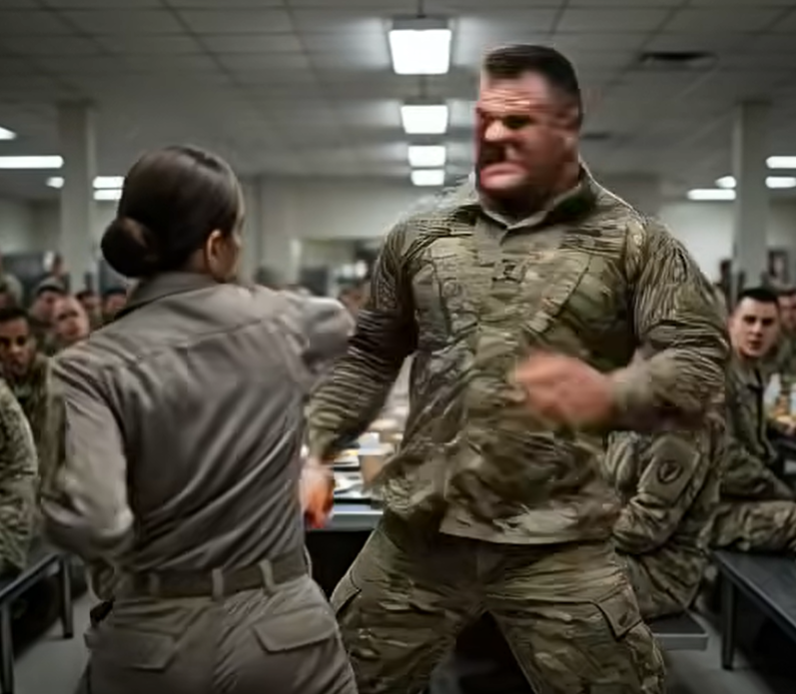
“Die, B*tch,” He Spat, Swinging a Massive Fist in the Mess Hall. He Thought I Was an Easy Target — He Had No Idea He Just Attacked a Classified SEAL Shadow Operative.
I was running on fumes. Seventy-two hours of off-the-books reconnaissance in the frozen Alaskan wilderness had left every muscle screaming. My joints ached from crawling through ice-crusted snow, my eyes burned from staring through night-vision gear, and the only thing keeping me upright was the promise of a hot meal and twelve hours of blackout […]
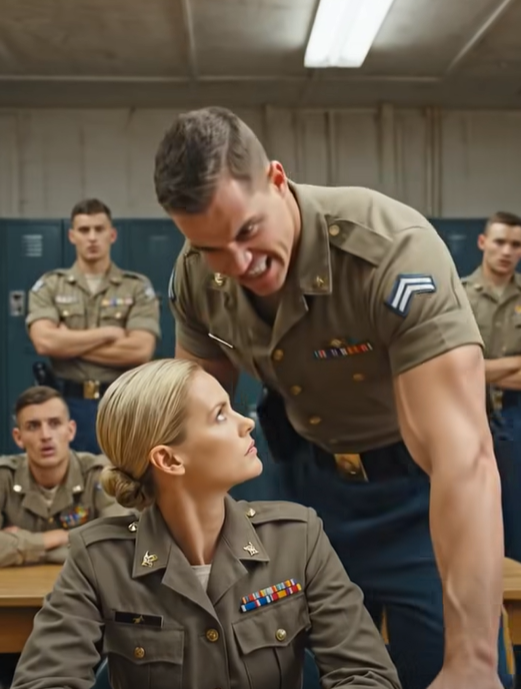
“Do You Know Who I Am?” He Pushed Her — Seconds Later, One ID Card Ended His Career
The dim lights of Rusty’s Bar flickered like dying stars just outside Camp Pendleton. It was a Friday night, the kind where Marines came to forget the sand and the screams they carried home from deployment. I had come here for the opposite reason — to disappear. My name is Commander Thalia Renwick. Highly decorated […]
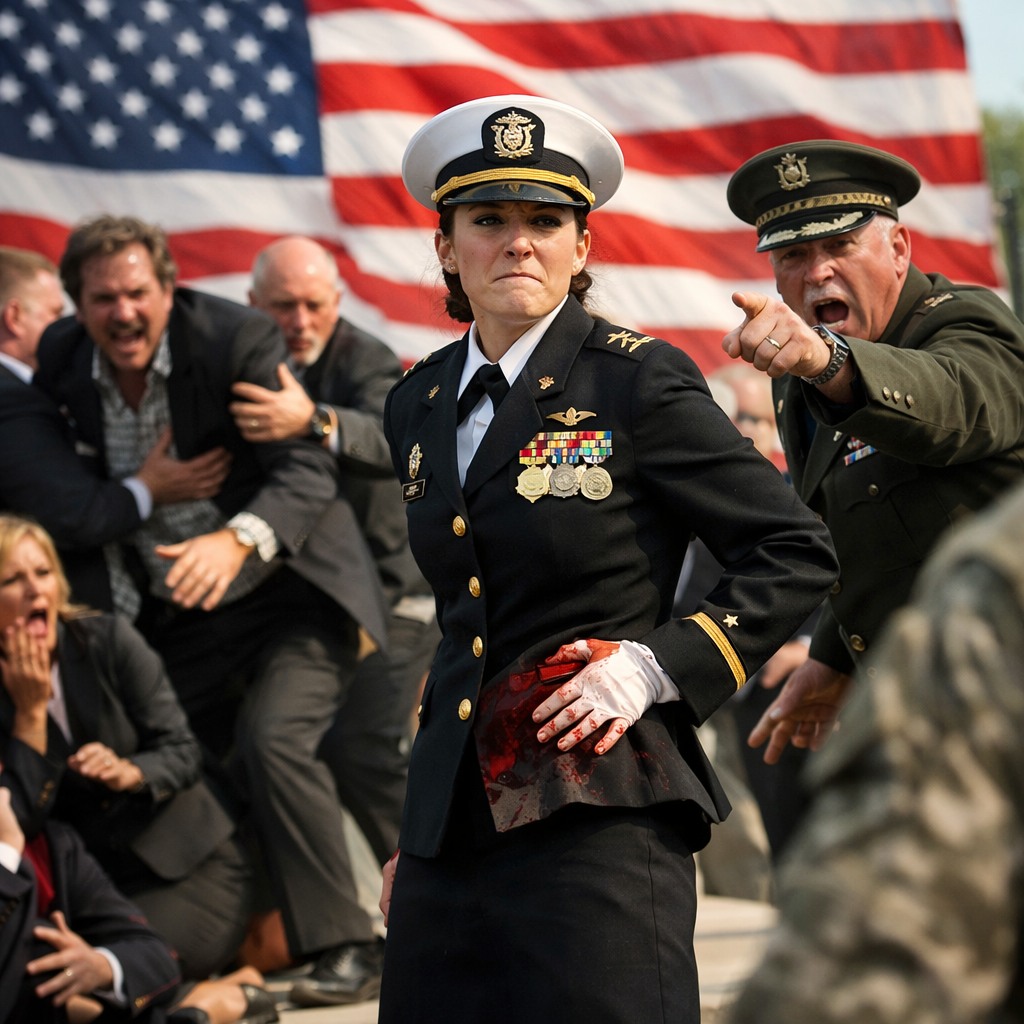
15 Years After My Dad Kicked Me Out, I Saw Him At My Sister’s Wedding. He Sneered: “If It Wasn’t For Pity, No One Would’ve Invited You.” I Just Smiled And Sipped My Wine. Then The Bride Took The Mic And Changed Everything.
The South Carolina sun was merciless that June afternoon, turning the outdoor wedding venue into a glittering oven. I stood near the back in my crisp Army dress uniform, the brass buttons and medals catching the light with every breath. At 34 years old, I had come home for my little sister’s wedding — the […]
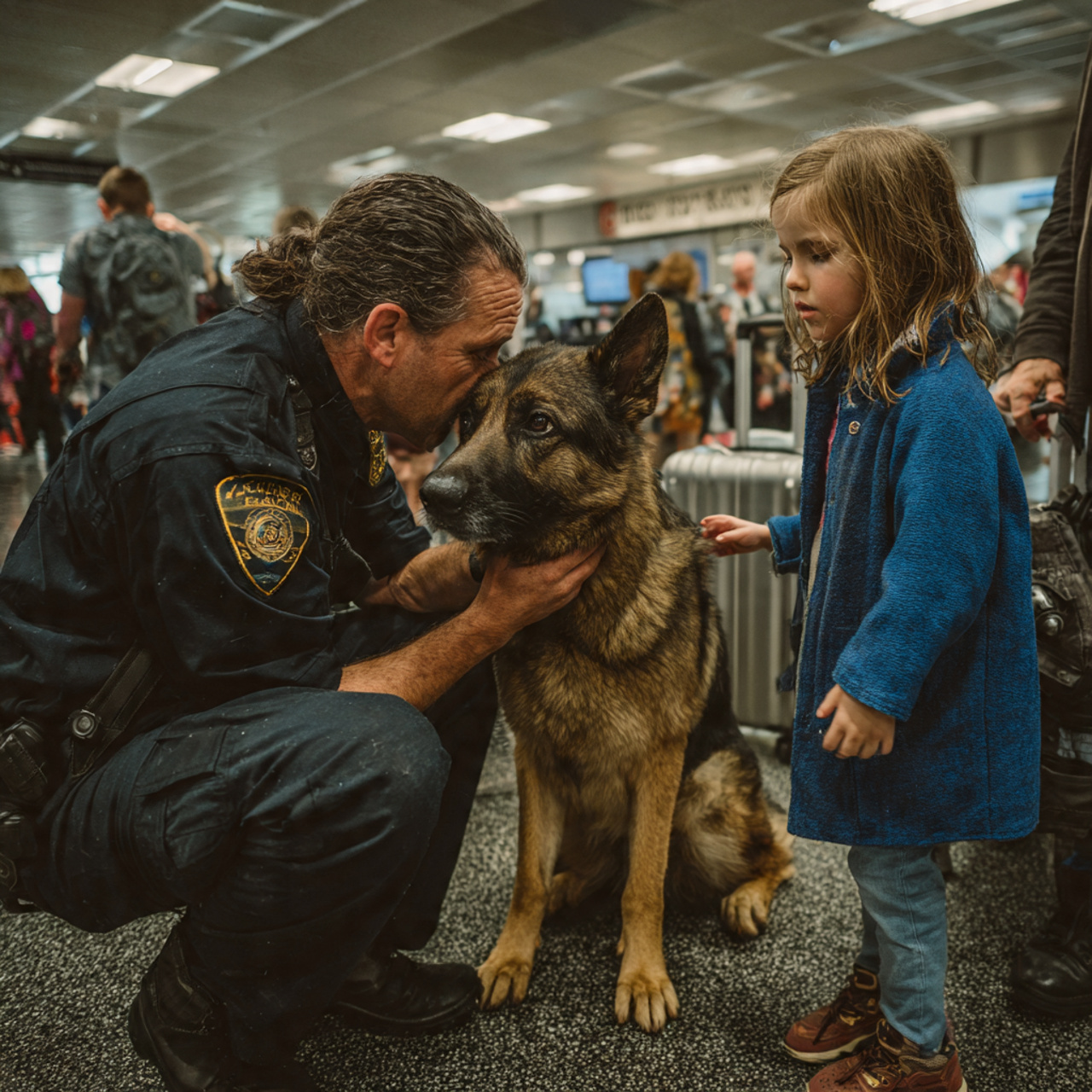
“A POLICE DOG FROZE IN THE AIRPORT. THEN A LITTLE GIRL TAPPED HIS HEAD. WHAT HAPPENED NEXT MADE EVERY TRAVELER STOP. HAVE YOU EVER WITNESSED A SILENT CRY FOR HELP?
The bustling international airport was a whirlwind of rolling suitcases, hurried announcements, and weary travelers rushing to their gates. Officer Liam Mercer patrolled the terminal with his loyal K9 partner, Rex — a highly trained German Shepherd known for his sharp instincts in detection and child safety operations. Everything seemed routine until Rex suddenly froze […]
End of content
No more pages to load