In early February 2026, the Musicians Hall of Fame officially announced its Class of 2026 — and among the names etched into music history this year is Keith Urban. The Australian-born, Nashville-based superstar will be inducted later in 2026 during a ceremony that promises to celebrate not only his commercial dominance but the profound influence he has had on songwriting, guitar playing, production, and the very sound of contemporary country.
The Musicians Hall of Fame, located in Nashville, honors instrumentalists, vocalists, songwriters, producers, and other behind-the-scenes creators who have shaped popular music. Unlike some awards that focus on chart positions or sales, this institution emphasizes musicianship, innovation, and lasting impact on the craft itself. Keith Urban’s inclusion feels almost inevitable once you look at the breadth of his work: more than 20 No. 1 singles on the Billboard Country Airplay chart, four Grammy Awards, 15 Academy of Country Music Awards, multiple CMA Entertainer of the Year wins, and a reputation as one of the most dynamic live performers of his generation.
Urban’s journey began far from Nashville. Born in New Zealand and raised in Caboolture, Queensland, Australia, he grew up listening to his father’s country records — Merle Haggard, George Jones, Glen Campbell — while teaching himself guitar at age six. By his early teens he was already winning local talent contests and playing in bands. At 17 he moved to Nashville with little more than a guitar, a suitcase, and a stubborn belief that he belonged in the city that had produced his heroes.
The early years were lean. He worked odd jobs, played every bar and honky-tonk that would have him, and slowly built a reputation as a session guitarist and songwriter. His first major break came when he co-wrote “Walkin’ the Country” for the band Scooter Lee in 1990, but it was his 1999 self-titled Capitol Records debut — featuring the breakthrough single “It’s a Love Thing” — that finally put him on the map. Even then, it was his live shows that turned heads: blistering guitar solos, an ability to read a room, and a genuine joy in performance that made audiences feel like they were part of something intimate.
The 2000s saw Urban become a defining voice of modern country. Albums like Golden Road (2002), Be Here (2004), and Love, Pain & the Whole Crazy Thing (2006) delivered a string of No. 1 hits — “Somebody Like You,” “Days Go By,” “Better Life,” “Stupid Boy” — that blended traditional country instrumentation with rock energy, pop hooks, and personal storytelling. He became known for songs that felt both timeless and contemporary, speaking to love, heartbreak, small-town values, and the search for meaning in everyday life.
What truly set him apart was his musicianship. Urban is one of the few country artists who plays nearly every instrument on his records — electric and acoustic guitar, mandolin, dobro, banjo, keys — and produces or co-produces much of his material. His live performances are legendary: marathon sets that blend virtuosic guitar work, crowd interaction, and emotional vulnerability. Fans routinely describe seeing him live as a spiritual experience, a rare combination of technical mastery and raw sincerity.
His personal life has also shaped his public image. After overcoming well-documented struggles with addiction in the mid-2000s, Urban married actress Nicole Kidman in 2006 and built a family life that has grounded him through fame’s pressures. He and Kidman have two daughters, Sunday Rose and Faith Margaret, and Urban has often spoken about how fatherhood changed his priorities and deepened his songwriting. Tracks like “My Little Girl,” “Raining on Sunday,” and “Blue Ain’t Your Color” carry a maturity and tenderness that resonate far beyond the radio.
The Musicians Hall of Fame induction recognizes not just chart success but the breadth of his contributions. He has collaborated across genres — from a Grammy-winning duet with Carrie Underwood to work with Rolling Stones guitarist Keith Richards, from producing for other artists to mentoring younger talents on American Idol and The Voice Australia. His guitar tone — a blend of Telecaster bite, Stratocaster chime, and Les Paul warmth — is instantly recognizable, and his live rig (a mix of vintage and modern gear run through a carefully curated pedalboard) is studied by players worldwide.
The Class of 2026 induction ceremony is expected to feature a special tribute performance, likely with several of Urban’s peers joining him onstage for a medley of his biggest hits. Past inductees have included legends like Chet Atkins, James Burton, and Harold Bradley, so Urban’s inclusion places him in elite company — a testament to how far the once-unknown Australian kid has come.
For fans, the news feels like validation. Urban has spent his career quietly proving that country music can evolve without losing its soul. He has embraced technology (early adopter of digital recording and live-looping pedalboards), pushed boundaries (collaborations with rock and hip-hop artists), and stayed fiercely loyal to traditional country values — storytelling, musicianship, and respect for the audience.
His acceptance speech — whenever it is delivered — is already anticipated. Urban has a history of gracious, heartfelt remarks that never feel rehearsed. Expect gratitude to his family, his band (the same core group that has toured with him for more than two decades), his fans, and the songwriters and musicians who came before him. Expect humility. Expect a reminder that success is never solo — it’s built on the shoulders of those who taught you, believed in you, and stood beside you on countless stages.
As the music world prepares to honor him later in 2026, Keith Urban’s legacy is already secure. He has sold more than 20 million albums, earned more than 40 million RIAA-certified units, headlined stadiums and arenas around the globe, and inspired a generation of artists who grew up listening to his records. But perhaps his greatest achievement is simpler: he has never stopped loving the music, never stopped respecting the audience, and never stopped showing up with a guitar and a story.
For a kid from Queensland who once dreamed of playing guitar like his heroes, that’s more than enough.
It’s everything.
News
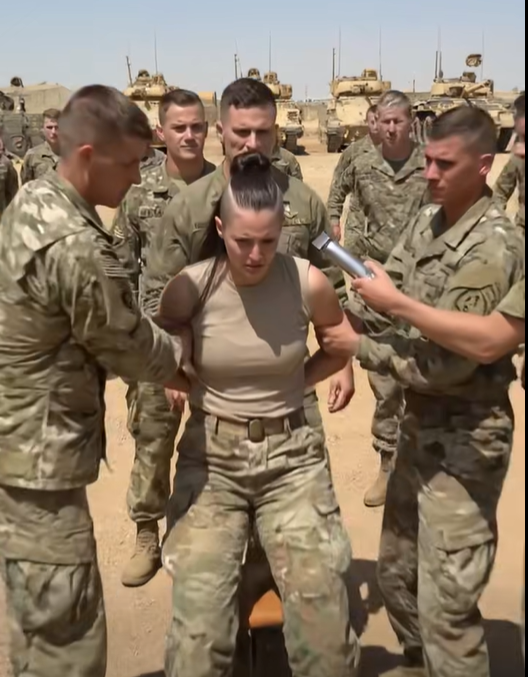
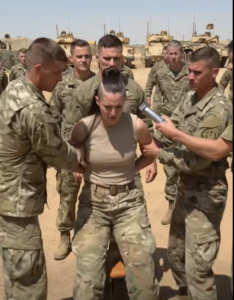
“Shave Her Head,” the Sergeant Ordered Coldly. “If Discipline Won’t Break Her, Maybe Humiliation Will.” But What They Didn’t Know Was That the Woman They Underestimated Would Bring Their Entire Base to Its Knees.
General Alexander Vance had heard the whispers for months: Fort Blackwood was rotting from within. Soldiers spoke in hushed tones of systematic humiliation disguised as “discipline,” falsified training records, missing supply funds that somehow vanished into private accounts, and a toxic command climate built on fear and intimidation. Every official inspection came back sparkling clean […]
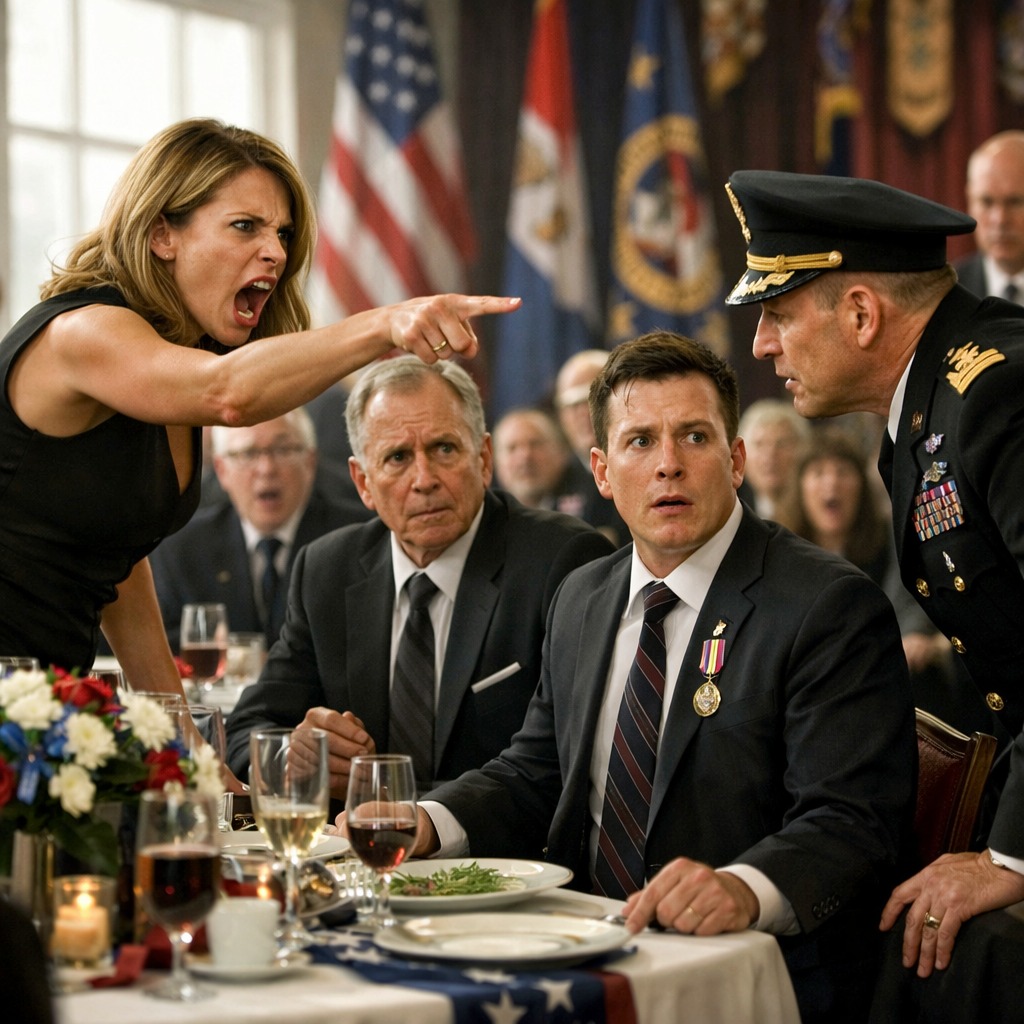
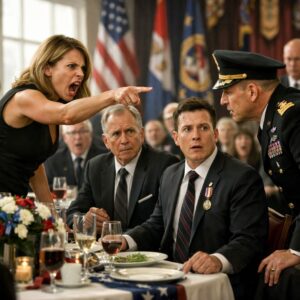
At A Veterans’ Dinner, The Colonel Leaned Toward My Brother And Asked One Simple Question: “Can You Tell Me How You Earned This Decoration, Son?” His Face Turned White. He Pointed At My Father And Said: “He Told Me It Belonged To Our Uncle.” The Uncle Never Existed.
The Ridgewood Armory smelled like every other veterans’ event I’d ever attended: floor wax, overcooked chicken, old coffee, and the faint metallic tang of too many American flags. Fluorescent lights buzzed overhead, casting a harsh glow on rows of folding tables and men in ill-fitting blazers trying to look like they still belonged in uniform. […]
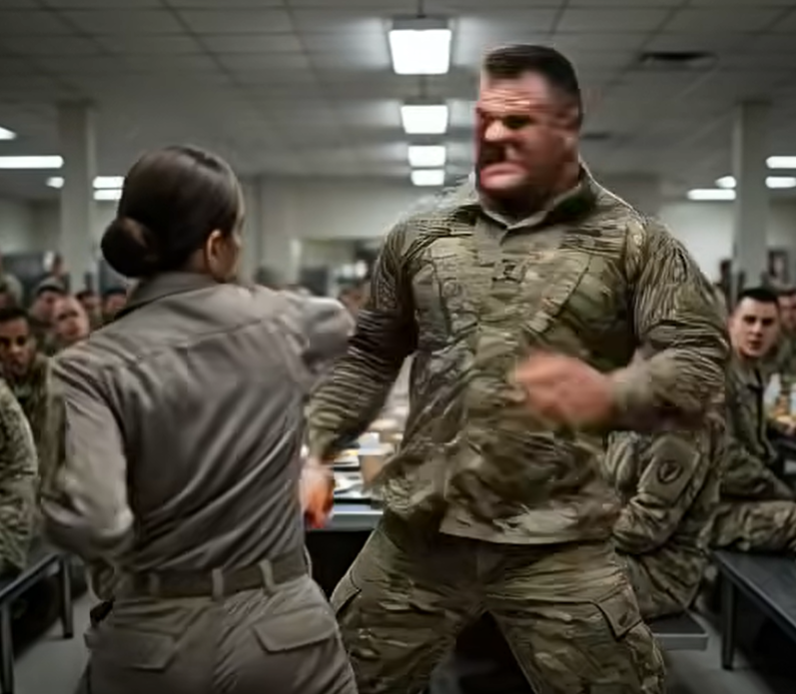
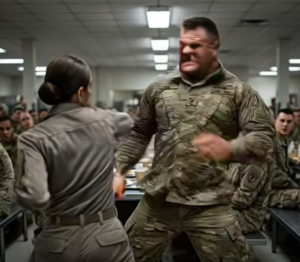
“Die, B*tch,” He Spat, Swinging a Massive Fist in the Mess Hall. He Thought I Was an Easy Target — He Had No Idea He Just Attacked a Classified SEAL Shadow Operative.
I was running on fumes. Seventy-two hours of off-the-books reconnaissance in the frozen Alaskan wilderness had left every muscle screaming. My joints ached from crawling through ice-crusted snow, my eyes burned from staring through night-vision gear, and the only thing keeping me upright was the promise of a hot meal and twelve hours of blackout […]
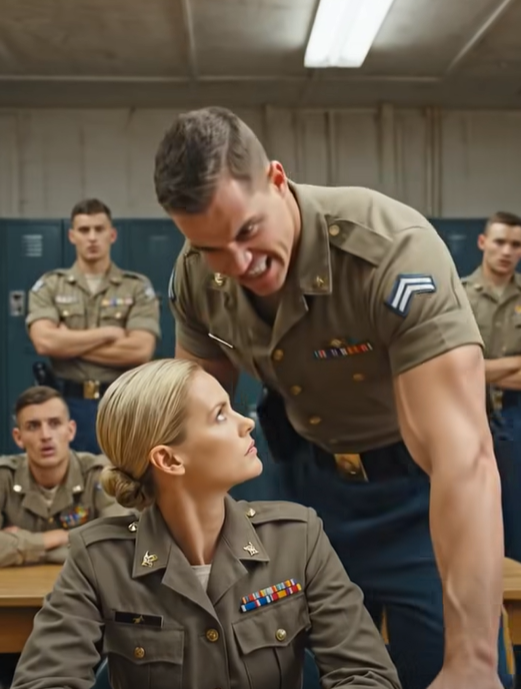
“Do You Know Who I Am?” He Pushed Her — Seconds Later, One ID Card Ended His Career
The dim lights of Rusty’s Bar flickered like dying stars just outside Camp Pendleton. It was a Friday night, the kind where Marines came to forget the sand and the screams they carried home from deployment. I had come here for the opposite reason — to disappear. My name is Commander Thalia Renwick. Highly decorated […]
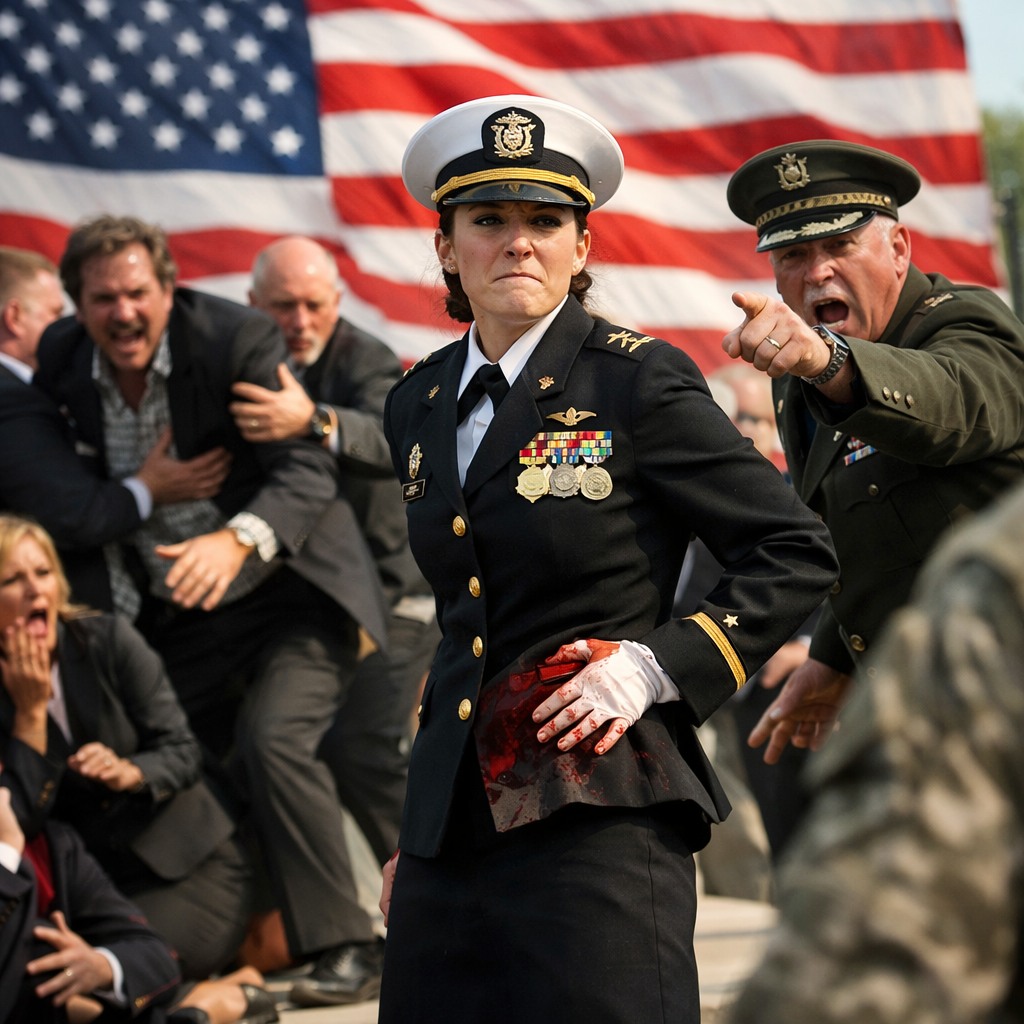
15 Years After My Dad Kicked Me Out, I Saw Him At My Sister’s Wedding. He Sneered: “If It Wasn’t For Pity, No One Would’ve Invited You.” I Just Smiled And Sipped My Wine. Then The Bride Took The Mic And Changed Everything.
The South Carolina sun was merciless that June afternoon, turning the outdoor wedding venue into a glittering oven. I stood near the back in my crisp Army dress uniform, the brass buttons and medals catching the light with every breath. At 34 years old, I had come home for my little sister’s wedding — the […]
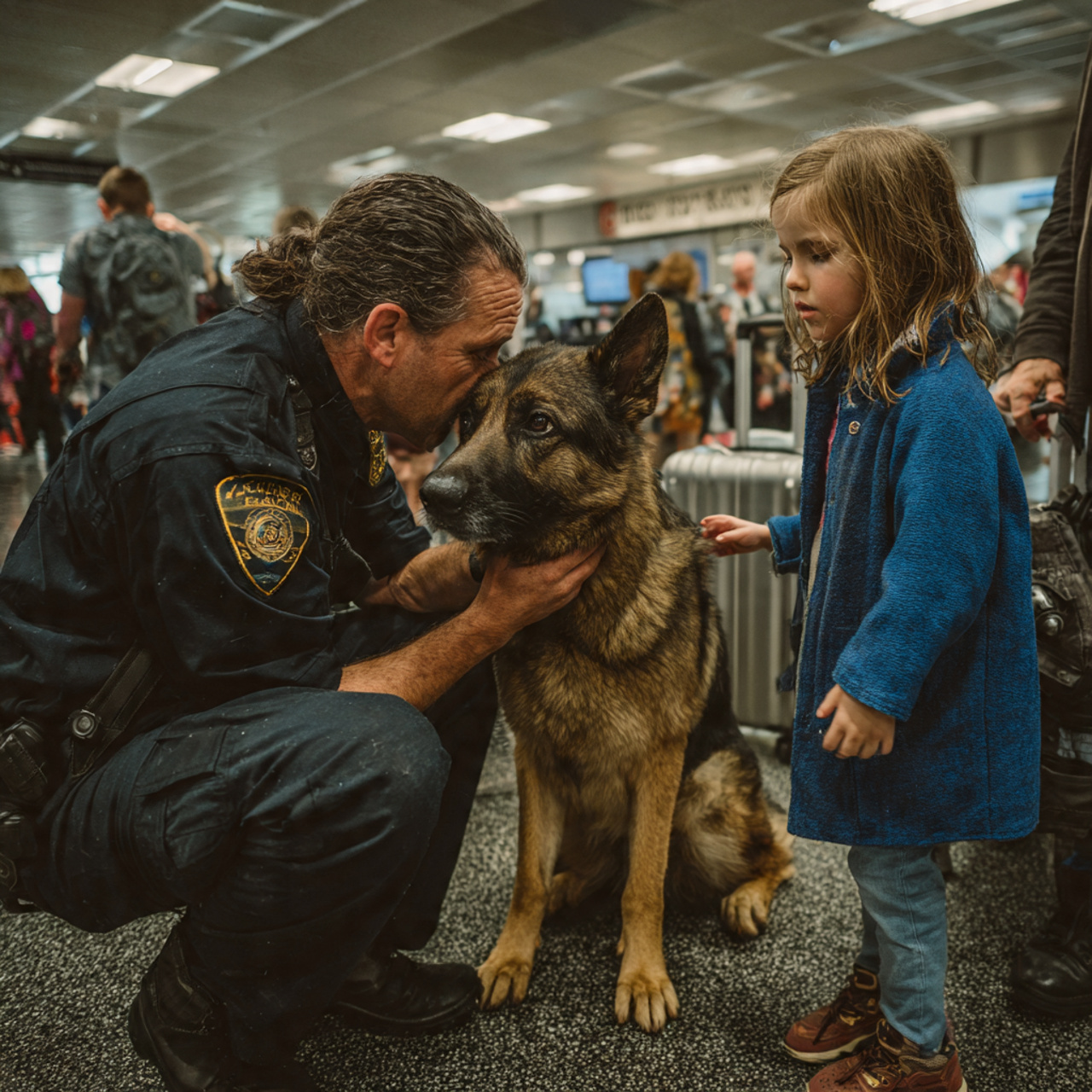
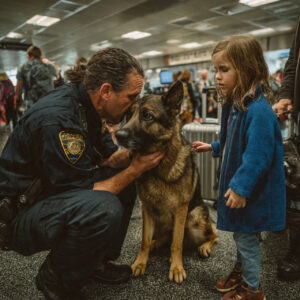
“A POLICE DOG FROZE IN THE AIRPORT. THEN A LITTLE GIRL TAPPED HIS HEAD. WHAT HAPPENED NEXT MADE EVERY TRAVELER STOP. HAVE YOU EVER WITNESSED A SILENT CRY FOR HELP?
The bustling international airport was a whirlwind of rolling suitcases, hurried announcements, and weary travelers rushing to their gates. Officer Liam Mercer patrolled the terminal with his loyal K9 partner, Rex — a highly trained German Shepherd known for his sharp instincts in detection and child safety operations. Everything seemed routine until Rex suddenly froze […]
End of content
No more pages to load