In the middle of an otherwise quiet February 2026 week, Netflix uploaded all six episodes of His and Hers without trailers, teasers, press releases or even a social-media announcement. Within 72 hours the limited series had rocketed to #1 in 42 countries, generated over 320 million viewing minutes in its first full day of availability, and turned into the platform’s most obsessively discussed new title of the year. Viewers who clicked “play” expecting “just one episode” routinely report finishing the entire run between midnight and dawn, then immediately restarting episode one to hunt for clues they missed.
His and Hers is a taut, six-part psychological crime thriller created by British writer-director Sarah Polley and Danish showrunner Søren Sveistrup (the mind behind The Killing). The story opens in the fictional coastal town of Blackwater Bay, Maine, where Detective Mara Voss (Tessa Thompson) is called to the scene of a grisly double homicide: a married couple found stabbed in their bedroom, the murder weapon—a kitchen knife—still clutched in the wife’s hand. The case appears to be a murder-suicide until Mara notices inconsistencies: no defensive wounds on the husband, a strange pattern of blood spatter, and a single cryptic note left on the nightstand reading “His and Hers.”
The investigation pulls Mara back into the orbit of Elena Reyes (Gina Rodriguez), a nationally known true-crime journalist and former high-school classmate who now hosts the hit podcast Buried Truths. Elena has already begun covering the case from afar; when she learns Mara is the lead detective, she returns to Blackwater Bay for the first time in fifteen years. What begins as a reluctant professional reunion quickly becomes something far more dangerous: two women who once shared everything now circling the same crime from opposite sides of the truth.
The series’ genius lies in its structure. Each episode is told through dual, interwoven timelines—one following Mara’s present-day investigation, the other flashing back to the senior year of high school when Mara and Elena were inseparable best friends. Those flashbacks are not mere exposition; they slowly reveal a third, hidden narrative: a secret the two women have buried since graduation night, a secret that appears to be connected to the current murders. As the present-day case deepens, the past begins to bleed into it. Old wounds reopen. Half-remembered conversations take on new meaning. And every time viewers believe they understand who did what to whom, the show delivers a subtle recalibration that forces a complete re-evaluation of everything seen so far.
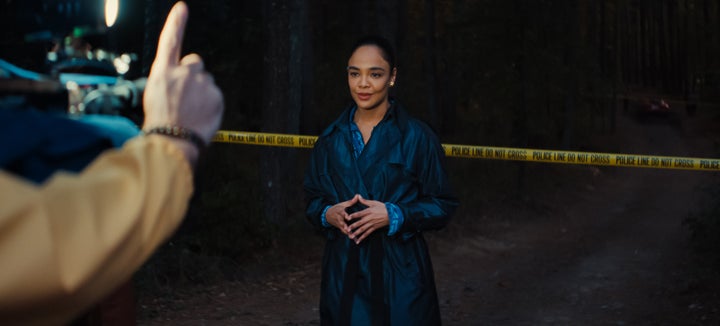
Thompson and Rodriguez are electric together. Mara is guarded, methodical, haunted by the unsolved disappearance of her younger sister when they were teenagers. Elena is charismatic, relentless, and carries a polished public persona that conceals a private reservoir of guilt. Their chemistry crackles whether they’re arguing in a diner, silently staring at each other across a crime scene, or sharing a late-night drink that neither wants to end. The supporting cast is equally strong: Paul Sparks as Mara’s quietly suspicious partner, Merritt Wever as Elena’s increasingly worried producer, and Colman Domingo in a standout turn as the town’s retired sheriff who knows far more than he admits.
The visual language is deliberately cold and claustrophobic. Blackwater Bay is perpetually overcast; interiors are lit with harsh fluorescents or dim table lamps. The color palette leans toward steel grays, bruised blues, and the occasional violent splash of red. Sound design is masterful — distant foghorns, creaking floorboards, the low hum of Elena’s podcast recording equipment — creating a constant undercurrent of unease. There are no jump scares; the dread builds through silence, lingering shots, and the slow realization that almost no one is telling the full truth.
The twists arrive like quiet knife thrusts rather than explosive shocks. A seemingly throwaway line in episode 2 becomes devastating evidence in episode 5. A character’s alibi collapses not through dramatic confrontation but through a single photograph discovered in a drawer. The final episode’s revelation — delivered in a single, unbroken seven-minute take inside a parked car — has already spawned thousands of reaction videos and frame-by-frame breakdowns online. Without spoiling it, the ending recontextualizes every previous scene, forcing viewers to mentally replay the entire series with new eyes.
Social media has been consumed by His and Hers since launch. Fans post nightly recaps titled “I was wrong about everything” or “Episode 4 just ruined me.” Many admit to pausing the show at 2 or 3 a.m. simply to catch their breath. Others report rewatching immediately after finishing, hunting for foreshadowing they missed. The series has sparked real-world conversations about memory, guilt, female friendship, and the unreliability of personal testimony — topics rarely explored with such subtlety in mainstream thrillers.
Critics have been equally captivated. The show holds a 96% on Rotten Tomatoes (critics) and 94% audience score, with reviewers praising its “surgical precision,” “uncompromising emotional honesty,” and “refusal to spoon-feed answers.” It has been called everything from “the thinking person’s binge” to “the most quietly terrifying thriller since The Undoing.”
What makes His and Hers truly addictive is its refusal to let viewers stay comfortable. It never lets you fully trust any character — not even the ones you want to root for. It never rushes to resolution. It trusts the audience to sit with ambiguity, discomfort, and moral gray areas. And when the final piece clicks into place, the satisfaction is enormous — but so is the ache.
If you haven’t started yet, clear your schedule. This is not background viewing. This is the kind of series that demands your full attention, steals your sleep, and stays in your head long after you’ve finished. Six episodes. One story. No escape.
Once you press play, stopping simply isn’t an option.
News

“Shave Her Head,” the Sergeant Ordered Coldly. “If Discipline Won’t Break Her, Maybe Humiliation Will.” But What They Didn’t Know Was That the Woman They Underestimated Would Bring Their Entire Base to Its Knees.
General Alexander Vance had heard the whispers for months: Fort Blackwood was rotting from within. Soldiers spoke in hushed tones of systematic humiliation disguised as “discipline,” falsified training records, missing supply funds that somehow vanished into private accounts, and a toxic command climate built on fear and intimidation. Every official inspection came back sparkling clean […]

At A Veterans’ Dinner, The Colonel Leaned Toward My Brother And Asked One Simple Question: “Can You Tell Me How You Earned This Decoration, Son?” His Face Turned White. He Pointed At My Father And Said: “He Told Me It Belonged To Our Uncle.” The Uncle Never Existed.
The Ridgewood Armory smelled like every other veterans’ event I’d ever attended: floor wax, overcooked chicken, old coffee, and the faint metallic tang of too many American flags. Fluorescent lights buzzed overhead, casting a harsh glow on rows of folding tables and men in ill-fitting blazers trying to look like they still belonged in uniform. […]

“Die, B*tch,” He Spat, Swinging a Massive Fist in the Mess Hall. He Thought I Was an Easy Target — He Had No Idea He Just Attacked a Classified SEAL Shadow Operative.
I was running on fumes. Seventy-two hours of off-the-books reconnaissance in the frozen Alaskan wilderness had left every muscle screaming. My joints ached from crawling through ice-crusted snow, my eyes burned from staring through night-vision gear, and the only thing keeping me upright was the promise of a hot meal and twelve hours of blackout […]
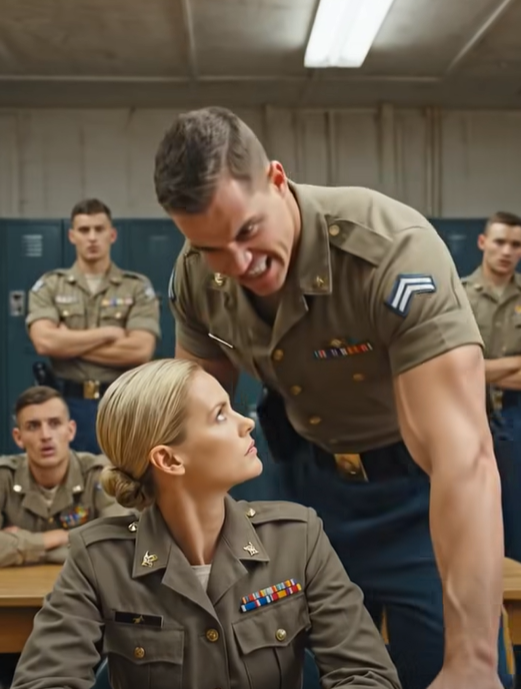
“Do You Know Who I Am?” He Pushed Her — Seconds Later, One ID Card Ended His Career
The dim lights of Rusty’s Bar flickered like dying stars just outside Camp Pendleton. It was a Friday night, the kind where Marines came to forget the sand and the screams they carried home from deployment. I had come here for the opposite reason — to disappear. My name is Commander Thalia Renwick. Highly decorated […]

15 Years After My Dad Kicked Me Out, I Saw Him At My Sister’s Wedding. He Sneered: “If It Wasn’t For Pity, No One Would’ve Invited You.” I Just Smiled And Sipped My Wine. Then The Bride Took The Mic And Changed Everything.
The South Carolina sun was merciless that June afternoon, turning the outdoor wedding venue into a glittering oven. I stood near the back in my crisp Army dress uniform, the brass buttons and medals catching the light with every breath. At 34 years old, I had come home for my little sister’s wedding — the […]
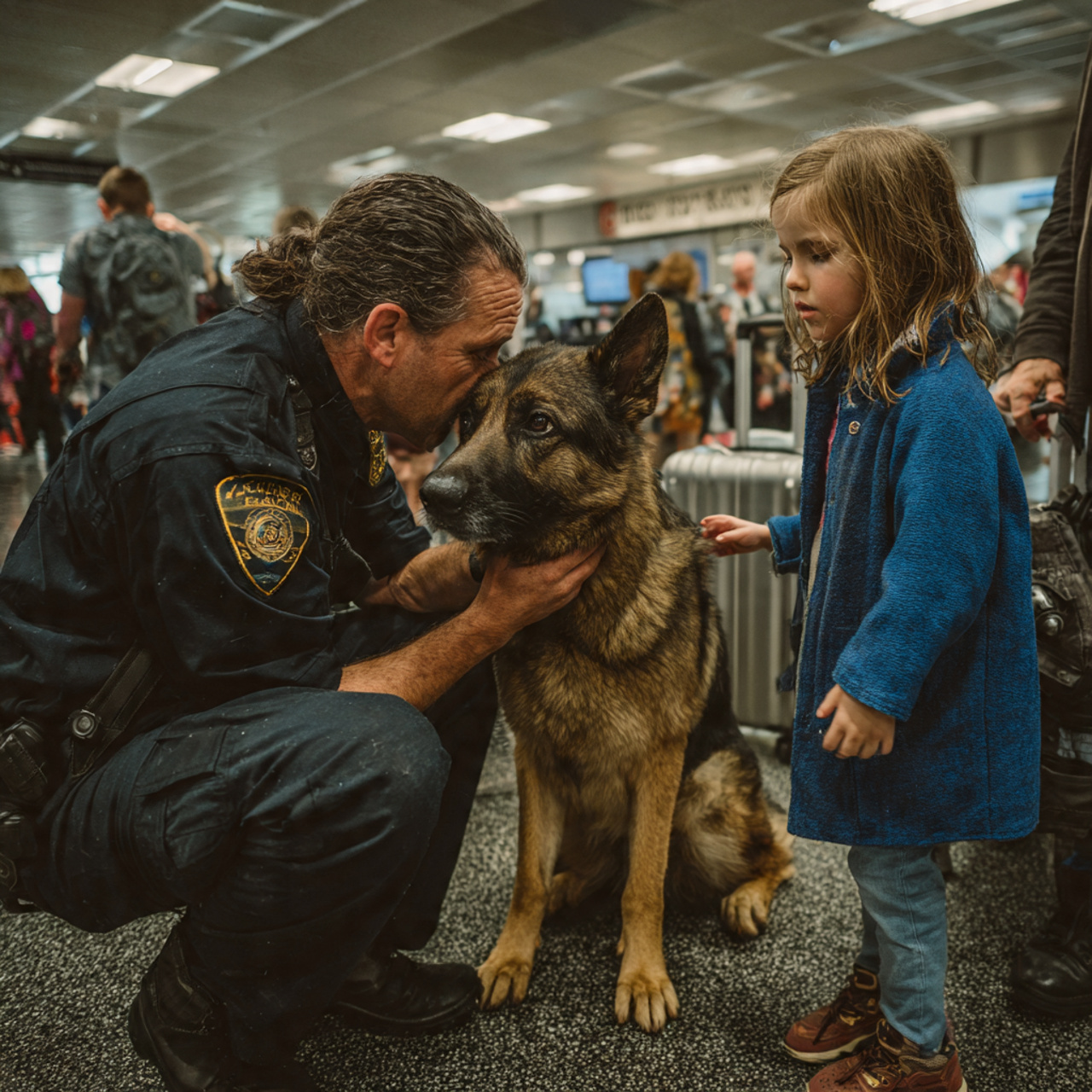
“A POLICE DOG FROZE IN THE AIRPORT. THEN A LITTLE GIRL TAPPED HIS HEAD. WHAT HAPPENED NEXT MADE EVERY TRAVELER STOP. HAVE YOU EVER WITNESSED A SILENT CRY FOR HELP?
The bustling international airport was a whirlwind of rolling suitcases, hurried announcements, and weary travelers rushing to their gates. Officer Liam Mercer patrolled the terminal with his loyal K9 partner, Rex — a highly trained German Shepherd known for his sharp instincts in detection and child safety operations. Everything seemed routine until Rex suddenly froze […]
End of content
No more pages to load