Russell Crowe has spent decades building a reputation as one of cinema’s most commanding physical presences — the roaring gladiator, the relentless whistle-blower, the battered boxer who refuses to stay down. In Nuremberg, however, he discards every ounce of that larger-than-life persona and delivers something far more terrifying: a performance so internal, so suffocatingly restrained, and so psychologically merciless that many who have seen the film say they were “emotionally annihilated within the first twenty minutes.”
Directed by James Vanderbilt and released in limited theaters on February 6, 2026, before its global streaming debut on Prime Video two weeks later, Nuremberg is not a conventional war movie. There are no sweeping battle sequences, no heroic charges, no triumphant flag-raisings. Instead, the film confines itself almost entirely to the cold, wood-paneled courtroom of the Palace of Justice in 1945–46, where the surviving leaders of the Nazi regime face trial for crimes against humanity. Crowe plays Hermann Göring — Reichsmarschall, Luftwaffe commander, Reichstag fire conspirator, architect of the Gestapo, and the highest-ranking defendant still alive after Hitler’s suicide.
What makes the portrayal so shattering is how completely Crowe disappears into Göring. The actor gained significant weight, adopted the Reichsmarschall’s slouched posture and deliberate hand gestures, softened his naturally booming voice into a deceptively calm, almost avuncular drawl, and spent months studying archival footage, psychiatric evaluations, and courtroom transcripts. The result is a man who is at once charismatic, cunning, monstrous, and — most disturbingly — recognizably human. Göring laughs at defense counsel jokes, banters with his American guards, quotes Goethe, complains about prison food, and occasionally flashes genuine charm. Yet every smile conceals the architect of the Holocaust; every witty remark is delivered by someone who signed death warrants by the tens of thousands.
The film’s power lies in its refusal to look away from that contradiction. Vanderbilt’s direction is austere: long, unbroken takes, minimal score, harsh overhead lighting that casts deep shadows across the defendants’ faces. The camera rarely leaves the courtroom. When it does, it follows Göring through the prison corridors or into his cell, where he scribbles notes, reads history books, and talks to himself in a tone that veers between self-pity and defiant arrogance. There is no cathartic confrontation, no heroic prosecutor moment that makes the evil feel safely distant. Instead, the audience is forced to sit in the same room with Göring for two hours and fourteen minutes, watching him charm, deflect, justify, and — in the film’s most devastating sequence — break down alone in his cell after learning of the full scale of the death camps he helped orchestrate.
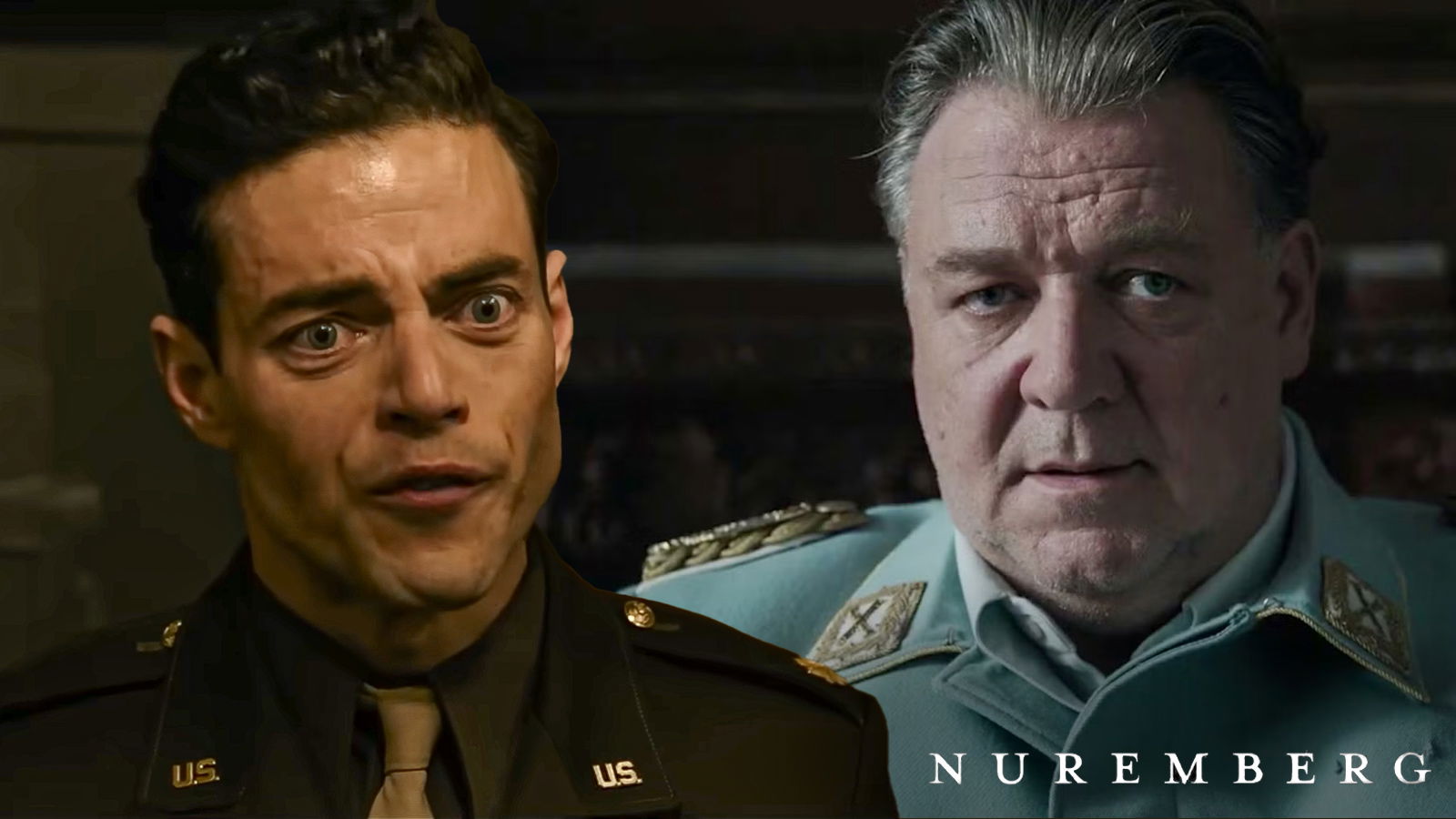
Crowe’s transformation is so complete that early test audiences reportedly did not recognize him until several minutes into the film. He does not rely on prosthetics or exaggerated makeup; the change comes from posture, voice modulation, gesture, and — most crucially — an unflinching commitment to showing Göring’s mind at work. The Reichsmarschall is not portrayed as a cartoonish monster but as a highly intelligent, cultured man who chose evil every single day of his adult life. That choice makes the character more horrifying than any snarling villain could ever be.
The supporting cast is equally formidable. Michael Shannon plays chief U.S. prosecutor Robert H. Jackson with weary, righteous fury; Stanley Tucci is a coldly efficient Rudolf Hess; and a largely unknown German actor, Lukas Haas in a chilling turn, portrays Adolf Eichmann in flashback testimony that feels like a descent into pure bureaucratic evil. Yet no one overshadows Crowe. His Göring dominates every scene he is in, turning the courtroom into a psychological pressure chamber.
Critics and early audiences have described the experience as “unbearable” yet “impossible to look away from.” Many report physical reactions — clenched fists, shallow breathing, tears that arrive without warning. The film does not offer easy catharsis. There is no triumphant “gotcha” moment, no final speech that restores moral order. Göring is convicted, sentenced to hang, and cheats the gallows by taking cyanide the night before his execution. The film ends on that act — a quiet, defiant theft of justice that leaves the audience sitting in stunned silence as the screen fades to black.
The choice to focus almost exclusively on Göring rather than the full roster of defendants is deliberate. Vanderbilt and Crowe wanted to examine the mind of one man who helped build the machinery of genocide, not to catalogue every horror. The result is a film that feels less like a historical epic and more like a psychological horror story — a slow, suffocating plunge into a single consciousness that is brilliant, charming, cultured, and utterly depraved.
Early box-office numbers and streaming data (after the Prime Video release) suggest Nuremberg is on track to become one of the most discussed films of 2026. It has already sparked renewed interest in the original Nuremberg trials, increased traffic to Holocaust-education sites, and prompted difficult but necessary conversations about complicity, charisma, and the seductive danger of intelligent evil.
Crowe has described the role as “the hardest thing I’ve ever done — and the most necessary.” He spent months reading Göring’s prison writings, listening to courtroom audio, and working with historians and psychologists to understand how a man could orchestrate mass murder while still seeing himself as cultured and even likable. The performance has already been called his best since A Beautiful Mind, with many predicting an Oscar nomination — though Crowe himself has said awards are the last thing on his mind.
For audiences, the film is a different kind of reckoning. It does not let viewers hide behind distance or moral superiority. It forces them to sit in the same room with Göring, to hear his jokes, to watch him charm the guards, to witness his mind justify the unjustifiable — and then to confront the uncomfortable truth that evil rarely announces itself with horns and red skin. Sometimes it arrives wearing a tailored uniform, quoting poetry, and smiling like an old friend.
Nuremberg is not entertainment in the conventional sense. It is a confrontation. It is a warning. And it is — in Crowe’s hands — one of the most devastating portraits of human evil ever put on screen.
If you see only one film this year that refuses to look away, let it be this one. You will not forget it. You may wish you could.
News

“Shave Her Head,” the Sergeant Ordered Coldly. “If Discipline Won’t Break Her, Maybe Humiliation Will.” But What They Didn’t Know Was That the Woman They Underestimated Would Bring Their Entire Base to Its Knees.
General Alexander Vance had heard the whispers for months: Fort Blackwood was rotting from within. Soldiers spoke in hushed tones of systematic humiliation disguised as “discipline,” falsified training records, missing supply funds that somehow vanished into private accounts, and a toxic command climate built on fear and intimidation. Every official inspection came back sparkling clean […]
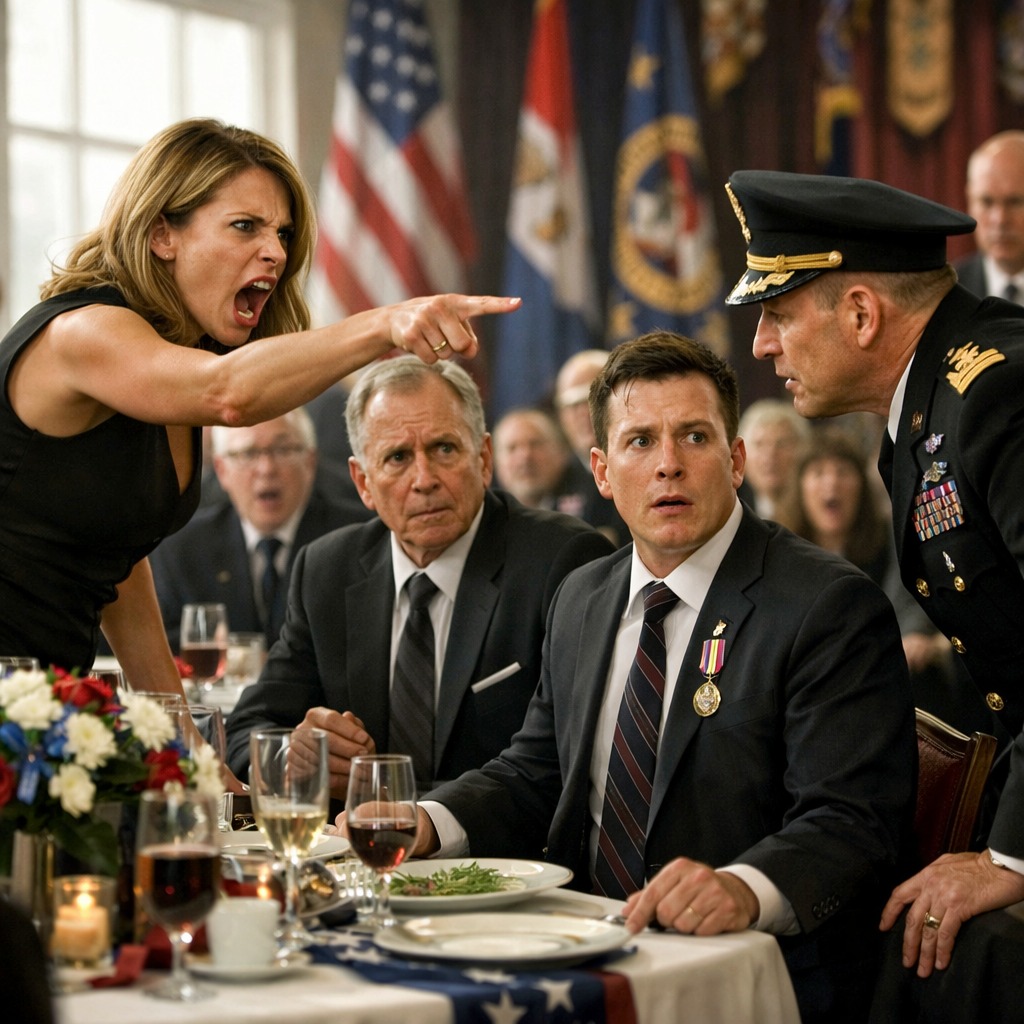
At A Veterans’ Dinner, The Colonel Leaned Toward My Brother And Asked One Simple Question: “Can You Tell Me How You Earned This Decoration, Son?” His Face Turned White. He Pointed At My Father And Said: “He Told Me It Belonged To Our Uncle.” The Uncle Never Existed.
The Ridgewood Armory smelled like every other veterans’ event I’d ever attended: floor wax, overcooked chicken, old coffee, and the faint metallic tang of too many American flags. Fluorescent lights buzzed overhead, casting a harsh glow on rows of folding tables and men in ill-fitting blazers trying to look like they still belonged in uniform. […]
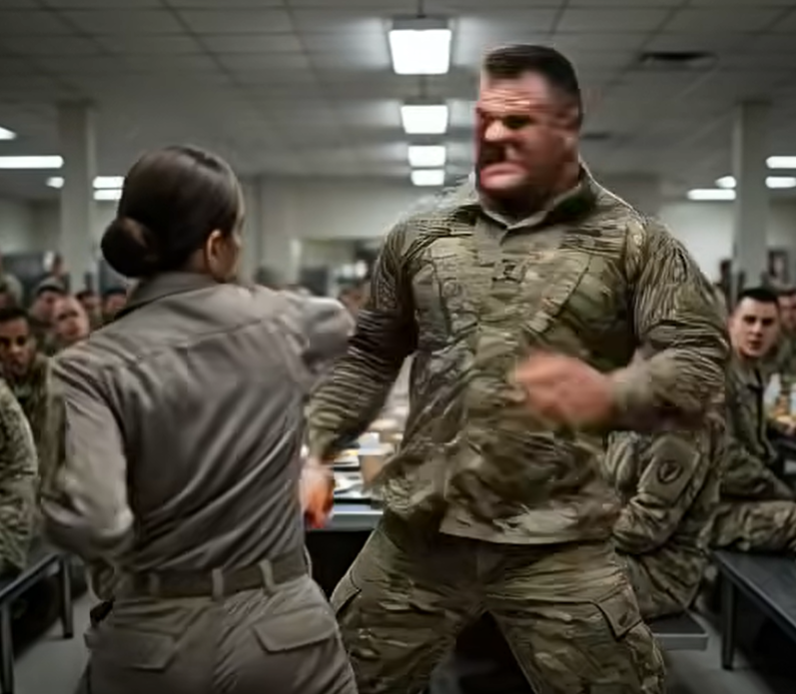
“Die, B*tch,” He Spat, Swinging a Massive Fist in the Mess Hall. He Thought I Was an Easy Target — He Had No Idea He Just Attacked a Classified SEAL Shadow Operative.
I was running on fumes. Seventy-two hours of off-the-books reconnaissance in the frozen Alaskan wilderness had left every muscle screaming. My joints ached from crawling through ice-crusted snow, my eyes burned from staring through night-vision gear, and the only thing keeping me upright was the promise of a hot meal and twelve hours of blackout […]
“Do You Know Who I Am?” He Pushed Her — Seconds Later, One ID Card Ended His Career
The dim lights of Rusty’s Bar flickered like dying stars just outside Camp Pendleton. It was a Friday night, the kind where Marines came to forget the sand and the screams they carried home from deployment. I had come here for the opposite reason — to disappear. My name is Commander Thalia Renwick. Highly decorated […]

15 Years After My Dad Kicked Me Out, I Saw Him At My Sister’s Wedding. He Sneered: “If It Wasn’t For Pity, No One Would’ve Invited You.” I Just Smiled And Sipped My Wine. Then The Bride Took The Mic And Changed Everything.
The South Carolina sun was merciless that June afternoon, turning the outdoor wedding venue into a glittering oven. I stood near the back in my crisp Army dress uniform, the brass buttons and medals catching the light with every breath. At 34 years old, I had come home for my little sister’s wedding — the […]

“A POLICE DOG FROZE IN THE AIRPORT. THEN A LITTLE GIRL TAPPED HIS HEAD. WHAT HAPPENED NEXT MADE EVERY TRAVELER STOP. HAVE YOU EVER WITNESSED A SILENT CRY FOR HELP?
The bustling international airport was a whirlwind of rolling suitcases, hurried announcements, and weary travelers rushing to their gates. Officer Liam Mercer patrolled the terminal with his loyal K9 partner, Rex — a highly trained German Shepherd known for his sharp instincts in detection and child safety operations. Everything seemed routine until Rex suddenly froze […]
End of content
No more pages to load