The night of September 19, 1999, began like any other carefree evening for a teenager in a quiet Suffolk town—dancing under disco lights, sharing laughs with friends, and a late-night snack to cap off the fun. But for 17-year-old Victoria Hall, that ordinary outing in Felixstowe spiraled into a nightmare that would haunt her family and the community for over two decades. As the first hints of dawn crept over the horizon, Victoria vanished mere yards from her front door, her screams echoing faintly in the distance before silence swallowed them whole. What followed was a chilling tale of abduction, murder, and a predator who lurked in the shadows, only to be unmasked years later through relentless detective work and cutting-edge science. Steve Wright, the infamous Suffolk Strangler, has finally confessed to her killing, closing a chapter on one of Britain’s most enduring cold cases and ensuring he will die behind bars.
Victoria Hall was the epitome of youthful promise, a bright-eyed schoolgirl from the village of Trimley St Mary whose life brimmed with potential. Born into a loving family, she was the cherished daughter of Graham and Lorinda Hall, a doting sister to her brother Steven, and a source of joy for her extended relatives. Friends described her as vibrant and kind, with a passion for dancing that lit up any room. On that fateful Saturday night, Victoria headed out with her best friend, Gemma Algar, to the Bandbox nightclub in Bent Hill, Felixstowe. It was a typical weekend escape for two young women enjoying their freedom—music pulsing, laughter flowing, and the thrill of youth insulating them from the world’s darker corners. After the club closed around 1 a.m., the pair stopped at the Bodrum Grill on Undercliff Road West for a bag of chips, savoring the simple pleasure of greasy comfort food under the streetlights.

Their paths diverged around 2:20 a.m. at the junction of High Road and Faulkeners Way. Victoria bid Gemma goodnight with a casual promise: “I’ll ring you when I get up tomorrow.” It was a throwaway line, the kind exchanged countless times among friends, but one that would echo with heartbreaking irony. Gemma later recounted hearing screams and the screech of tires shortly after parting ways, dismissing it at the time as rowdy teenagers fooling around. In reality, those sounds marked the moment Victoria was snatched from the street, just 300 meters from the safety of her home. Prosecutors would later paint a vivid picture of her terror: a young girl overpowered by a man twice her size, dragged into a waiting car, her cries lost to the indifferent night.
The man behind the wheel was Steve Wright, a 41-year-old forklift driver at the time, whose unassuming exterior masked a monstrous appetite for violence. Known later as the Suffolk Strangler for his string of murders in 2006, Wright had already begun honing his predatory instincts by 1999. Driving his burgundy Ford Granada Scorpio—a vehicle that would become a key piece of evidence—he cruised the quiet streets of Felixstowe like a shark circling prey. The night before Victoria’s abduction, on September 18, Wright had attempted to kidnap 22-year-old Emily Doherty, who had become separated from her friends after a night out. Emily described a harrowing encounter: a man in a dark car pulling up beside her, offering a ride she refused. When he persisted, she fled to a nearby house, pounding on the door until the residents let her in. Shaken, she reported the incident to police, but felt dismissed—officers questioned her sobriety and treated her like a “silly little girl,” failing to take her description of the car seriously.
Undeterred by the close call, Wright struck again the following night. Victoria, walking alone after parting with Gemma, stood no chance against his calculated ambush. According to court details, he abducted her in a sexually motivated attack, violating her before strangling her to death. For five agonizing days, her family clung to hope as a massive search operation unfolded. Her parents, alarmed by her uncharacteristic absence, alerted authorities when she didn’t return home or call Gemma. Posters blanketed the area, volunteers combed fields and woodlands, and the community rallied in a desperate bid to find the missing teen. But on September 24, a dog walker made a grim discovery: Victoria’s naked body, stripped of all clothing and possessions except her jewelry, discarded like refuse in a water-filled ditch beside a field in Creeting St Peter, near Stowmarket—25 miles from where she was last seen alive.
The disposal of her body in such a callous manner became a focal point of the family’s anguish. Graham Hall later spoke of the “particular distress” it caused, imagining his daughter’s final moments and the indignity of her remains being left to the elements. None of her clothes—a denim skirt, white blouse, black jacket, and boots—were ever recovered, adding layers of mystery and pain to the case. Forensic examination confirmed she had been sexually assaulted, her death ruled as asphyxiation, consistent with Wright’s later modus operandi.
Wright’s life at the time seemed mundane, a facade that allowed him to evade suspicion. He lived locally, worked at Felixstowe docks, and blended into the background. The day after Victoria’s murder, he casually returned to his job, even joking with colleagues about the disappearance. When one coworker probed him about what might have happened to the girl, Wright’s chilling response was: “You do not want to know.” It was a slip that hinted at his dark secret, but one that went unnoticed amid the chaos of the investigation.
The initial probe, dubbed Operation Sumac, was exhaustive but flawed. Police interviewed hundreds, including Wright as one of 56 owners of similar vehicles based on Emily Doherty’s description. However, Detective Sergeant Duncan Sheppherd marked him as “no further action,” citing discrepancies in the stalking patterns and overlooking a partial registration number that could have narrowed suspects to just 10. Instead, attention turned to local businessman Adrian Bradshaw, who was charged but acquitted in under 90 minutes after a trial exposed the weakness of the evidence against him. Wright was never even questioned, a oversight that allowed him to continue his predatory existence unchecked.
Years passed, and the case grew cold, a file gathering dust while Victoria’s family endured unimaginable grief. Graham and Lorinda Hall never stopped seeking answers, their lives forever altered. Lorinda, in particular, suffered profoundly, passing away in December 2025 without seeing justice served. Their son Steven described the ordeal as a “life sentence,” robbed of his sister at 12 and his mother later, haunted daily by memories of Victoria’s infectious smile and the void her absence created. Friend Gemma Algar echoed this sentiment, her life “turned upside down” by survivor’s guilt and lingering fear, transforming her from a carefree young woman into someone perpetually on guard.
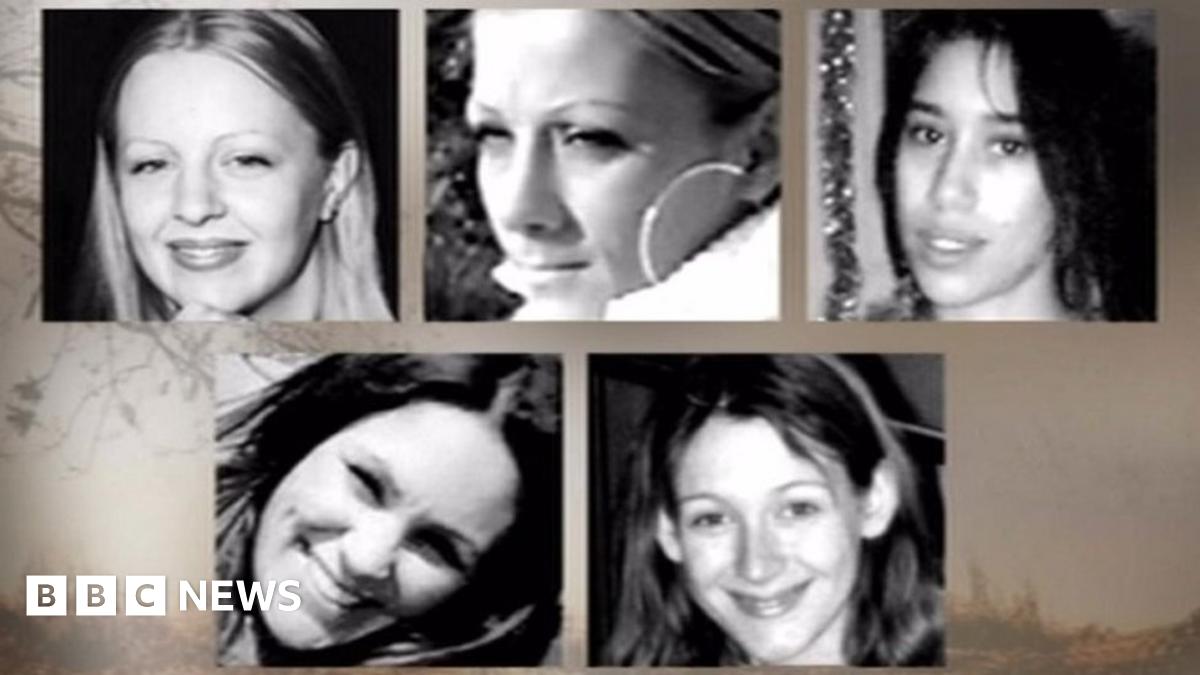
Wright’s crimes escalated dramatically in 2006, when he murdered five women in Ipswich over a 10-day spree: Gemma Adams, Tania Nicol, Anneli Alderton, Paula Clennell, and Annette Nicholls. All were sex workers he targeted, luring them into his car, strangling them, and dumping their naked bodies in remote locations—two in a stream, three in woodlands, with some posed in crucifix-like positions. The killings terrorized the region, prompting one of Britain’s largest manhunts. Wright was arrested after DNA evidence linked him to the scenes, convicted in 2008, and sentenced to whole-life imprisonment. During his trial, he admitted to sexual encounters with the victims but denied murder, claiming they died accidentally during rough sex—a defense that crumbled under scrutiny.
The parallels between the Ipswich murders and Victoria’s case were striking: the strangulation, the stripping of bodies, the remote dumping sites. Yet it took advances in forensic technology to bridge the gap. In 2019, on the 20th anniversary of Victoria’s death, Suffolk Police reopened the investigation as Operation Avon, appealing for new information. “Significant” witness tips emerged, leading to Wright’s arrest in 2021. But it wasn’t until May 2024 that charges were filed, bolstered by “pioneering new forensic techniques” that matched his DNA to evidence from Victoria’s body.
The courtroom drama unfolded at Ipswich Crown Court, where Wright, now 66 and appearing via video link from HMP Long Lartin, pleaded guilty to kidnapping and murdering Victoria, as well as attempting to abduct Emily Doherty. It marked the first time he had confessed to any of his crimes, a stunning admission after years of denial. Prosecutor Jocelyn Ledward KC delivered a searing narrative: Wright “did not allow Victoria Hall… to escape his predatory clutches,” treating her as a “disposable commodity.” Victim impact statements laid bare the devastation: Graham Hall spoke of “26 years of hell,” a torment that would persist forever. Steven Hall lamented the compounded losses, while Gemma Algar detailed her shattered sense of security. Emily Doherty, reflecting on her narrow escape, expressed fury at the initial police dismissal but relief at the case’s resolution, though haunted by “what if” scenarios for 25 years.

Judge Martyn Levett sentenced Wright to life imprisonment with a minimum term of 40 years, effectively ensuring he dies in prison. He condemned the “cold-blooded” nature of the crimes, noting Wright’s lack of remorse and the profound suffering inflicted. Crown Prosecution Service prosecutor Samantha Woolley hailed the outcome as justice achieved after 26 years, underscoring the commitment to pursuing non-recent offenses through modern science.
The case’s resolution has broader implications, shining a light on cold case investigations and the power of DNA advancements. Suffolk Police have appealed for information on Wright’s “possible previous offending,” amid whispers of links to unsolved murders of sex workers in 1992 and two missing prostitutes whose bodies were never found. Communities in Suffolk and beyond breathe a collective sigh of relief, but for Victoria’s loved ones, closure is bittersweet—a reminder of what was stolen.
In the end, Victoria Hall’s story is one of tragedy transcended by tenacity. Her memory endures not in the horror of her death, but in the lives she touched and the justice that, though delayed, was ultimately delivered. As Graham Hall poignantly stated, she had “a whole life before her,” one cruelly cut short by a monster now forever confined. Yet in the pursuit of truth, her legacy inspires hope that no case is truly unsolvable, no victim forgotten.
News
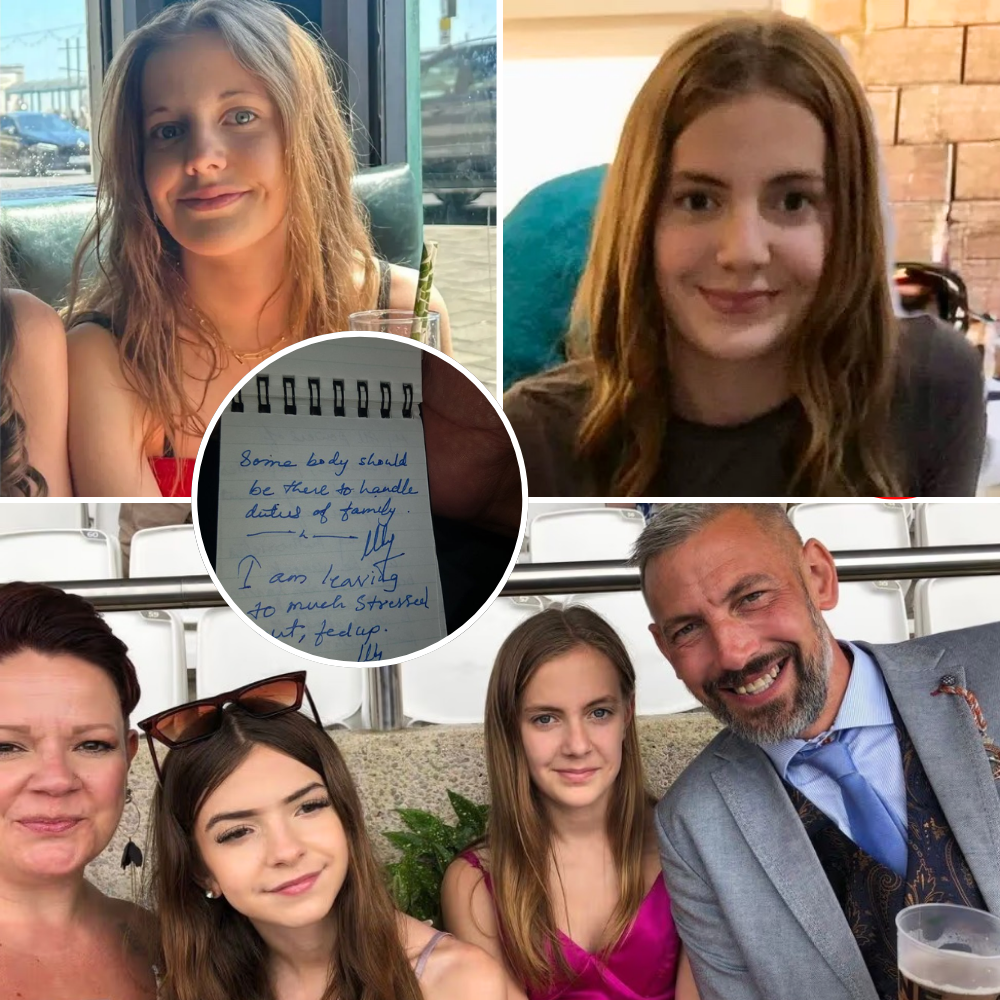
Mum Went to Wake Her 12-Year-Old for School… Instead Found Amelia Dead After Relentless Snapchat Torment 😭 Last Night She Was Happy & Laughing – The Devastating Details Inside
A cheerful 12-year-old girl with a smile that warmed every room spent her final evening wrapped in the simple joys of family life, laughing freely while sharing fish and chips at her grandparents’ house. No one could have predicted that the next morning would bring the kind of silence no parent should ever endure. On […]

👀 American Idol Judges Stunned by Braden Rumfelt’s Voice After Two Major Surgeries Destroyed His Baseball Career — His Comeback Story Is Unbelievable! 😱
The spotlights in the American Idol audition room pulsed with that familiar electric hum as 22-year-old Braden Rumfelt stepped forward, guitar slung over his shoulder, his twin brother Kellen right beside him with fingers poised on the strings. Murphy, North Carolina, felt a world away in that moment—the small-town life of substitute teaching, quiet family […]

😲 She Wrote “String Cheese” While Battling Postpartum Depression… Now Hannah Harper Is Stealing American Idol! Her Incredible Journey Will Inspire You ❤️
The Hawaiian stage lights bathed the Aulani Resort in a golden glow as 25-year-old Hannah Harper, a stay-at-home mom from the tiny town of Bunker, Missouri, gripped the microphone with the same quiet determination she once used to wrangle three rambunctious boys through a long day of laundry and snacks. Her homemade patchwork dress shimmered […]

😱 American Idol Top 20 Poll SHOCK: Hannah Harper & Keyla Richardson Dominate… But Who’s Going HOME Next? 😭 Who’s in Danger?
Hawaii’s sun-drenched shores at Disney’s Aulani Resort became the unlikely battlefield where American Idol Season 24’s Top 20 delivered heart-stopping performances that have left fans divided, judges stunned, and Gold Derby readers casting their clearest verdict yet on who might not survive America’s vote. With the first live results episode looming on March 30, the […]

😱💔 Kimmie Standing On The Rooftop With That USB Drive Has Fans Terrified — Is She About To Destroy The Entire Bellarie Empire? 👀
The first explosive trailer for Beauty in Black Season 2 Part 2 is here — and everything shifts fast. The new footage shows Kimmie stepping fully into her power with zero hesitation, but one bold move has fans in total shock. Is she protecting herself… or setting something much bigger in motion? The stakes feel […]

💥 “Is The Baby Okay?” — Virgin River Season 7 Finale Left One Devastating Clue About Mel & Jack’s Child That Changes Everything 😭
Netflix just dropped the news everyone has been waiting for: Virgin River is officially returning for Season 7 — and fans are already bracing for another emotional chapter. The release date and exact drop time are now confirmed, meaning the next wave of romance, heartbreak, and small-town secrets is closer than expected. But one storyline […]
End of content
No more pages to load