The 68th Grammy Awards on February 1, 2026, at Crypto.com Arena in Los Angeles were already electric—historic wins, genre-crossing collaborations, and moments of raw emotion that reminded everyone why music still matters. But when Jelly Roll (real name Jason DeFord) took the stage for his third win of the night, clutching the golden gramophone for Best Contemporary Country Album for his 2024 release Beautifully Broken, the room fell into a stunned hush. What followed wasn’t a polished acceptance speech. It was a confession—a gut-wrenching, tear-soaked testimony that silenced a star-studded audience and sent shockwaves across social media.
Jelly Roll, the genre-bending rapper-turned-country powerhouse, had already claimed two Grammys earlier in the evening: Best Country Duo/Group Performance for his collaboration with Shaboozey on “Amen” and Best Contemporary Christian Music Performance/Song for “Hard Fought Hallelujah” with Brandon Lake. But the third win—for Beautifully Broken, an album that chronicled his journey from addiction, incarceration, and self-destruction to sobriety, family, and faith—hit different. As his name was called, the 41-year-old visibly staggered, nearly dropping to his knees in disbelief before making his way to the stage.
Clutching the trophy with both hands, Jelly Roll’s voice cracked almost immediately. “First of all, Jesus, I hear you, and I’m listening,” he began, eyes already glistening. “Lord, I’m listening.” The crowd, filled with industry titans and fellow nominees, leaned in. What came next was a moment of profound vulnerability.
“Second of all, I want to thank my beautiful wife,” he said, turning toward Bunnie Xo (Alisa DeFord), seated in the audience. Bunnie, his partner of nearly a decade, stood and formed a heart with her hands as tears streamed down her face. “I would’ve never changed my life without you. I’d have ended up dead or in jail. I’d have killed myself if it wasn’t for you and Jesus. I thank you for that.”

The words hung in the air, heavy with truth. Jelly Roll didn’t gloss over his past—he owned it. He spoke of a time when he was “broken,” when the weight of addiction, legal troubles, and self-loathing nearly ended him. He credited Bunnie not just with love, but with salvation—pulling him back from the edge when he had no reason left to fight. “Imagine being one of the few people in the world from the very beginning who believed in this just overweight, white trash kid from Tennessee, that he was going to figure it out one day,” he told reporters backstage. But on stage, the message was simpler, more piercing: “This award belongs to the woman who saved my life.”
The room was silent except for the occasional sniffle and soft applause that grew into a wave. Even the cameras seemed to linger longer than usual, capturing the rawness of a man who had once been written off as a novelty—now standing as a three-time Grammy winner.
Jelly Roll’s path to this moment was anything but conventional. Born in Nashville, he spent his early years immersed in hip-hop and trap, rapping under the name Jelly Roll about street life, pain, and survival. Prison stints, addiction, and loss shaped his lyrics. But it was Bunnie—whom he met in 2015—who became the turning point. She believed in him when few others did, pushing him toward sobriety and a new sound that blended country storytelling with rap’s raw honesty. Albums like Whitsitt Chapel and Beautifully Broken reflected that transformation—songs about redemption, family, and faith that resonated far beyond Nashville.
His Grammy wins in 2026 marked a pinnacle. Beautifully Broken beat out strong contenders like Miranda Lambert’s Postcards From Texas, Tyler Childers’ Snipe Hunter, Eric Church’s Evangeline vs. the Machine, and Kelsea Ballerini’s Patterns in the Best Contemporary Country Album category—an inaugural award that celebrated the genre’s evolving boundaries. The album’s success wasn’t just commercial; it was personal. Tracks like “Liar” and “I Am Not Okay” laid bare his struggles with mental health, addiction, and the fear of relapse. Winning for it felt like validation—not just of his music, but of his survival.
Backstage, Jelly Roll spoke with reporters about the weight of the moment. “There was a moment in my life when I was broken,” he said. “I thank God for second chances, for grace, and for a woman who never gave up on me.” Bunnie, watching from the audience, later shared her own emotional reaction on social media, posting a video of herself wiping tears and mouthing “I love you” as he spoke.
The speech resonated far beyond the arena. Social media exploded with clips of the moment, fans praising Jelly Roll for his honesty. “This is what country music is supposed to be—real life, real pain, real redemption,” one viewer wrote. Others highlighted the faith element: “Jesus is for everybody,” Jelly Roll had said earlier in the night, a line that echoed through his entire acceptance. For many, it was a reminder that recovery and grace are universal, no matter one’s background.
The night also underscored Jelly Roll’s crossover appeal. From underground rap battles to sold-out arenas, from prison to the Grammy stage—he embodied the American underdog story. His wins weren’t just personal triumphs; they signaled country music’s continued expansion, embracing artists who bring lived experience rather than polished perfection.
As the ceremony closed and the after-parties began, Jelly Roll and Bunnie slipped away quietly—two people who had walked through fire together and come out the other side. The trophy might sit on a shelf, but the real prize was the life they rebuilt, one day, one song, one act of grace at a time.
In an industry often criticized for glossing over pain, Jelly Roll refused to. He clutched the Grammy, looked at his wife, and spoke the truth: some awards belong to the people who save us when we can’t save ourselves.
And on February 1, 2026, the world heard it loud and clear.
News
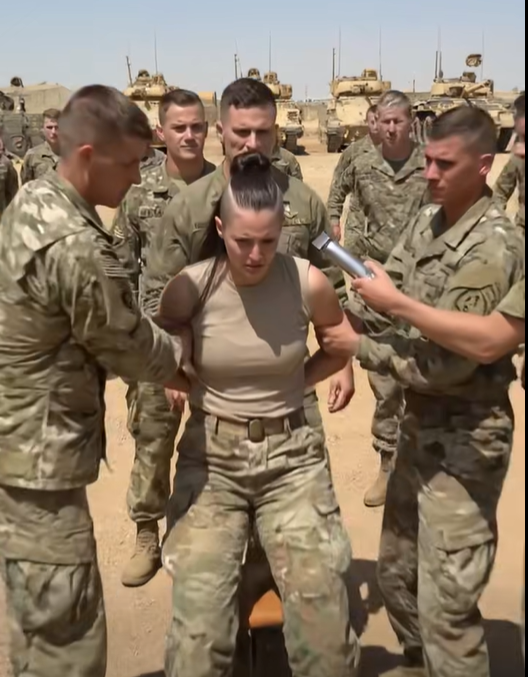
“Shave Her Head,” the Sergeant Ordered Coldly. “If Discipline Won’t Break Her, Maybe Humiliation Will.” But What They Didn’t Know Was That the Woman They Underestimated Would Bring Their Entire Base to Its Knees.
General Alexander Vance had heard the whispers for months: Fort Blackwood was rotting from within. Soldiers spoke in hushed tones of systematic humiliation disguised as “discipline,” falsified training records, missing supply funds that somehow vanished into private accounts, and a toxic command climate built on fear and intimidation. Every official inspection came back sparkling clean […]
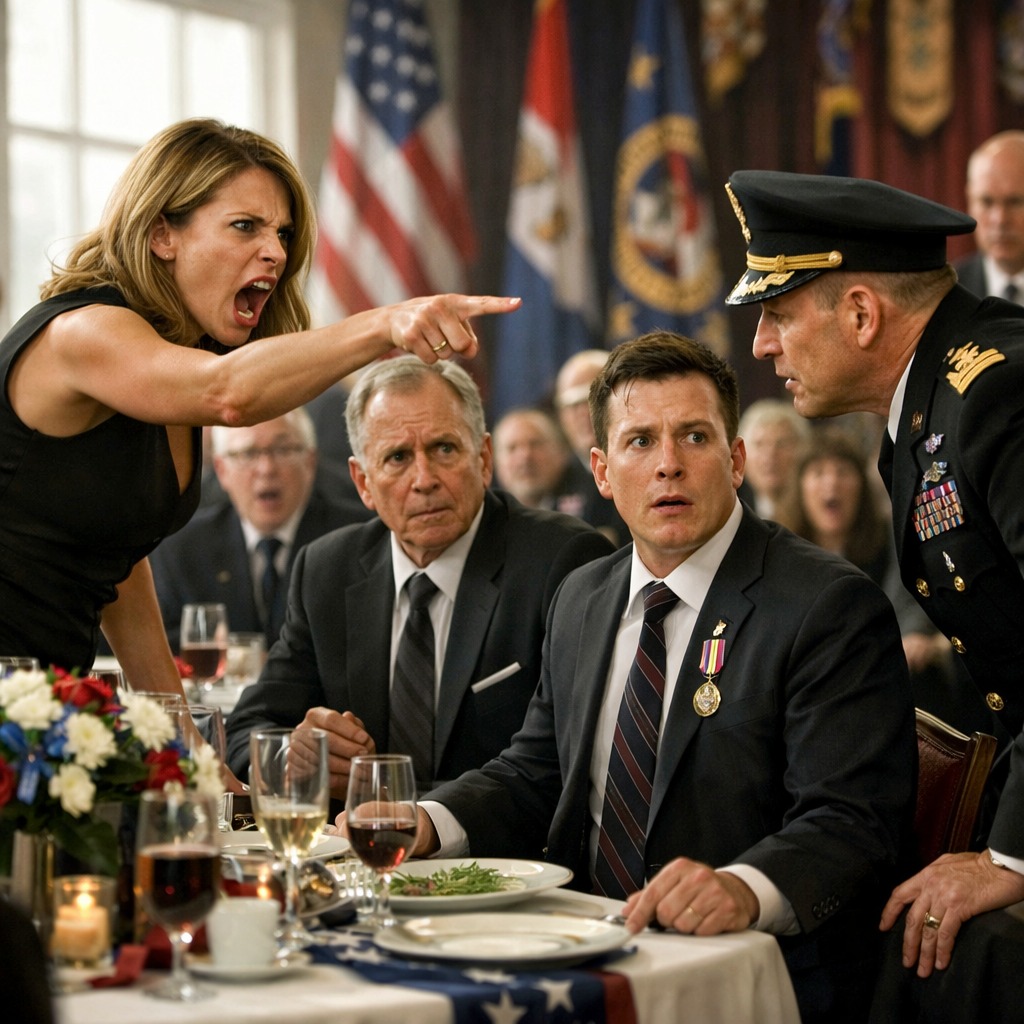
At A Veterans’ Dinner, The Colonel Leaned Toward My Brother And Asked One Simple Question: “Can You Tell Me How You Earned This Decoration, Son?” His Face Turned White. He Pointed At My Father And Said: “He Told Me It Belonged To Our Uncle.” The Uncle Never Existed.
The Ridgewood Armory smelled like every other veterans’ event I’d ever attended: floor wax, overcooked chicken, old coffee, and the faint metallic tang of too many American flags. Fluorescent lights buzzed overhead, casting a harsh glow on rows of folding tables and men in ill-fitting blazers trying to look like they still belonged in uniform. […]
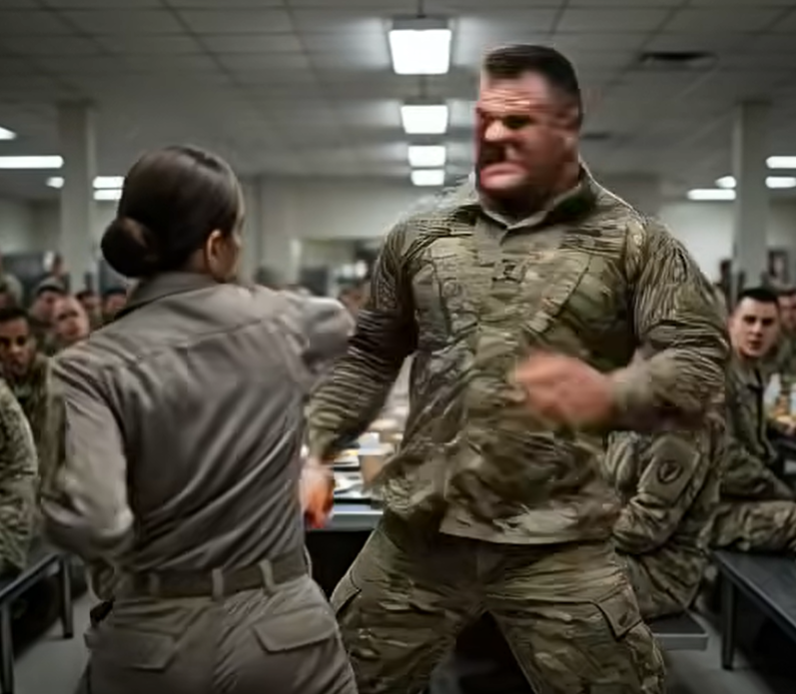
“Die, B*tch,” He Spat, Swinging a Massive Fist in the Mess Hall. He Thought I Was an Easy Target — He Had No Idea He Just Attacked a Classified SEAL Shadow Operative.
I was running on fumes. Seventy-two hours of off-the-books reconnaissance in the frozen Alaskan wilderness had left every muscle screaming. My joints ached from crawling through ice-crusted snow, my eyes burned from staring through night-vision gear, and the only thing keeping me upright was the promise of a hot meal and twelve hours of blackout […]
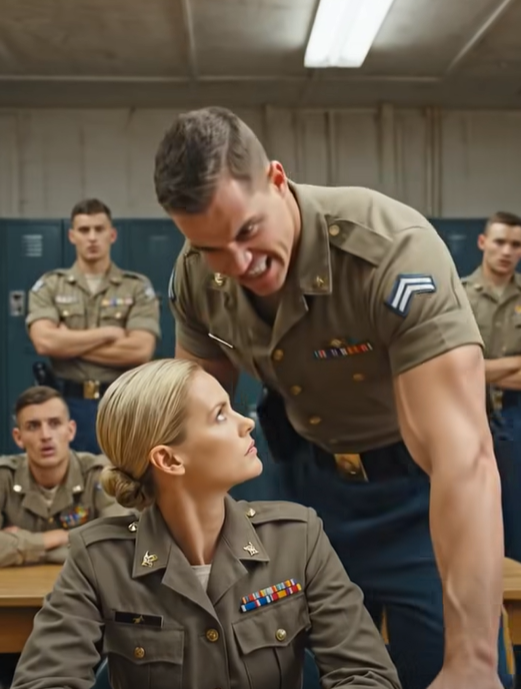
“Do You Know Who I Am?” He Pushed Her — Seconds Later, One ID Card Ended His Career
The dim lights of Rusty’s Bar flickered like dying stars just outside Camp Pendleton. It was a Friday night, the kind where Marines came to forget the sand and the screams they carried home from deployment. I had come here for the opposite reason — to disappear. My name is Commander Thalia Renwick. Highly decorated […]
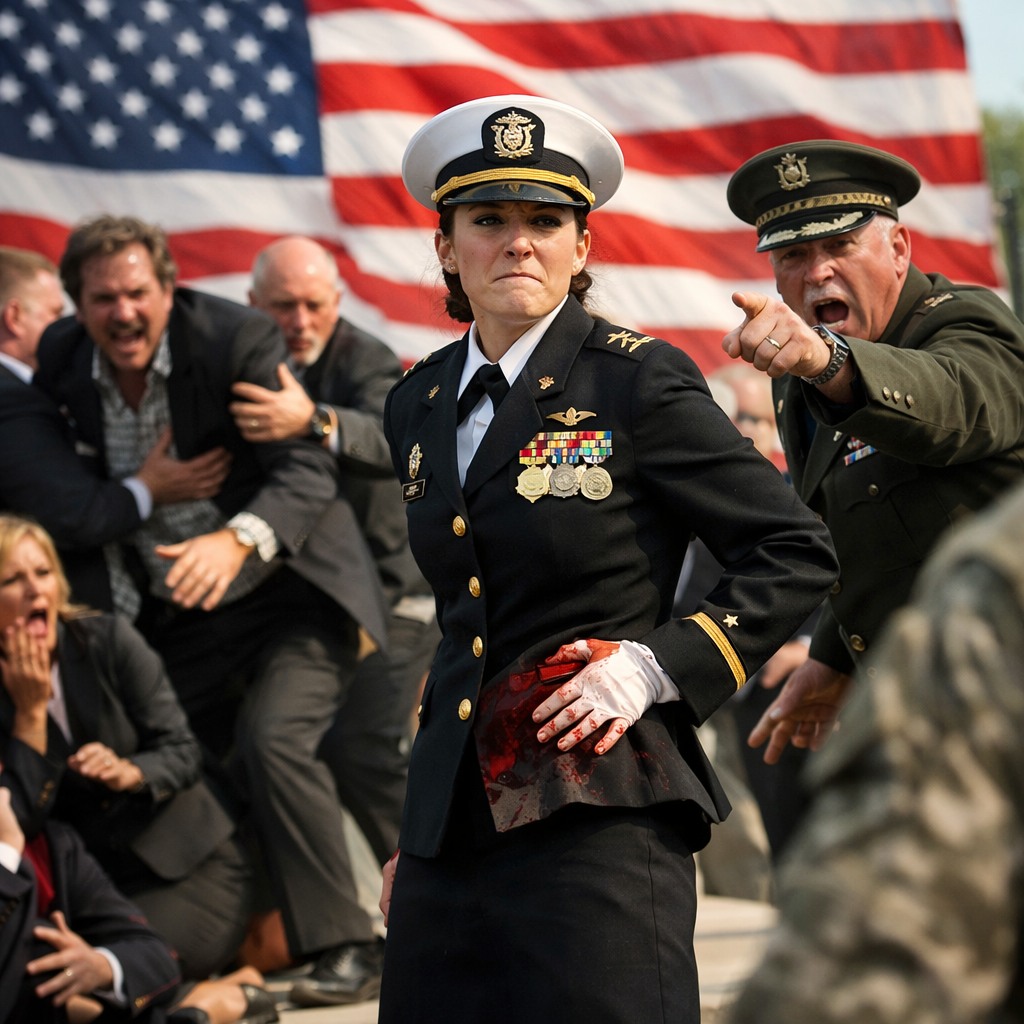
15 Years After My Dad Kicked Me Out, I Saw Him At My Sister’s Wedding. He Sneered: “If It Wasn’t For Pity, No One Would’ve Invited You.” I Just Smiled And Sipped My Wine. Then The Bride Took The Mic And Changed Everything.
The South Carolina sun was merciless that June afternoon, turning the outdoor wedding venue into a glittering oven. I stood near the back in my crisp Army dress uniform, the brass buttons and medals catching the light with every breath. At 34 years old, I had come home for my little sister’s wedding — the […]
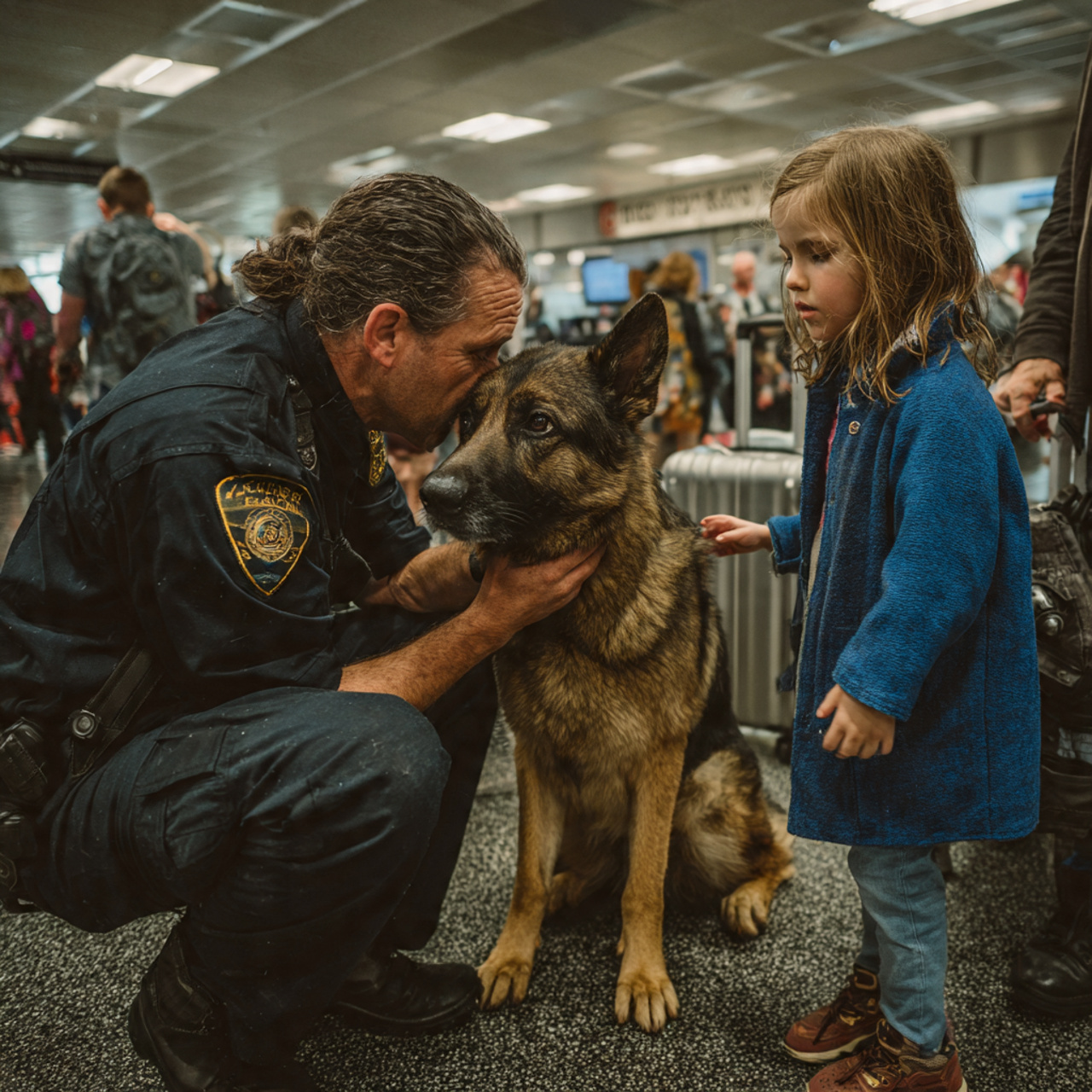
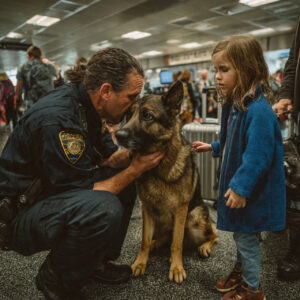
“A POLICE DOG FROZE IN THE AIRPORT. THEN A LITTLE GIRL TAPPED HIS HEAD. WHAT HAPPENED NEXT MADE EVERY TRAVELER STOP. HAVE YOU EVER WITNESSED A SILENT CRY FOR HELP?
The bustling international airport was a whirlwind of rolling suitcases, hurried announcements, and weary travelers rushing to their gates. Officer Liam Mercer patrolled the terminal with his loyal K9 partner, Rex — a highly trained German Shepherd known for his sharp instincts in detection and child safety operations. Everything seemed routine until Rex suddenly froze […]
End of content
No more pages to load