After more than a decade of teases, near-misses, and development limbo, the long-dormant sequel to Edge of Tomorrow is showing genuine signs of life—and the studio won’t stop talking about it. Director Doug Liman has confirmed that Warner Bros. executives are “constantly bringing up” the project, repeatedly asking when he and star Tom Cruise will finally get the follow-up off the ground. With Cruise’s recent high-profile partnership with the studio now in play, the pieces are aligning for what could be one of the most anticipated sci-fi returns in years. Momentum is building, schedules are clearing, and the time-loop adventure fans have waited for since 2014 might finally materialize—with filming potentially kicking off as early as late 2026.
The original Edge of Tomorrow (released in some markets as Live Die Repeat) remains a cult classic and one of Cruise’s most underrated gems. The 2014 film blended high-concept science fiction with relentless action, following publicity officer Major William Cage (Cruise) who gets trapped in a repeating 24-hour loop during a disastrous invasion by an alien race known as Mimics. Each death resets the day, allowing Cage to learn, adapt, and grow from invincible soldier to humanity’s last hope. Emily Blunt co-starred as Sergeant Rita Vrataski—the battle-hardened “Full Metal Bitch”—whose own time-loop experience makes her Cage’s reluctant mentor. Directed by Doug Liman with a sharp script by Christopher McQuarrie and others, the movie earned widespread praise for its clever premise, innovative editing, and Cruise’s fearless commitment to physicality. Despite a modest $370 million worldwide gross against a $178 million budget, its home-video sales, streaming longevity, and enduring fan passion have kept sequel talk alive.
Development on a follow-up—often referred to as Live Die Repeat and Repeat—began almost immediately after the first film’s release. Warner Bros. announced it in 2016, with Liman returning to direct and McQuarrie penning the script. Early concepts teased a revolutionary structure: a “sequel that’s a prequel,” exploring Rita’s experiences during the original Verdun battle while expanding the lore of the Mimics and the Omega. Liman has called it a chance to “revolutionize how people make sequels,” promising something bolder than a simple continuation. Emily Blunt has repeatedly expressed enthusiasm, confirming in interviews that the script was “amazing” and that she’d love to return—though she once noted the project might be “too expensive” given the high production costs and time passed since the original.
Years of delays followed. Cruise’s relentless Mission: Impossible schedule, Liman’s commitments to other projects like Chaos Walking and the now-canceled Deeper with Ana de Armas, and Blunt’s busy career kept pushing the timeline back. By 2023, Blunt admitted she wasn’t sure it would ever happen, citing the decade-long gap and the challenge of recapturing the magic. Liman himself has been candid: the passion never faded—he and Cruise rewatched the original together in recent years, reigniting their excitement—but scheduling and budget concerns kept the sequel grounded.

Everything changed with Cruise’s new strategic partnership with Warner Bros. Discovery. Announced in early 2024, the non-exclusive deal allows Cruise to develop, produce, and star in original and franchise films for the studio. Warner Bros. now owns the Edge of Tomorrow IP—the only major Cruise-led property under their banner post-Mission: Impossible ties to Paramount—and executives David Zaslav, Michael De Luca, and Pam Abdy have made it a priority. Liman has described the studio’s persistence as the “best compliment” a filmmaker can receive: “Warner Bros. constantly bringing up, ‘Will you go and make another one of these?’” It’s clear the pressure from the top has shifted the project from “maybe someday” to “let’s make it happen.”
Recent reports indicate the sequel is eyeing a late 2026 start date for principal photography. Production Weekly and other industry trackers have listed it as gearing up, with Cruise and Blunt both expected to return. Liman is attached to direct, McQuarrie’s script remains the foundation, and the creative team is reportedly refining the story to balance the original’s time-loop mechanics with new stakes. The follow-up could explore Rita’s past more deeply while bringing Cage back into the loop for a larger war against the Mimics—or introduce fresh threats that force both characters to confront the psychological toll of endless resets. Whatever the plot, the promise is a film that pushes boundaries: more ambitious action, deeper emotional layers, and a structure that challenges conventional sequel formulas.
The timing couldn’t be better. Cruise is transitioning out of the Mission: Impossible era—Mission: Impossible 8 wrapped production in 2025—and has wrapped other commitments like Alejandro González Iñárritu’s upcoming drama. Blunt, too, has expressed ongoing interest and remains in touch with Liman. With Cruise’s Warner deal providing the financial and creative push, the biggest hurdles—scheduling and studio commitment—have finally cleared.
Fans have waited patiently. Edge of Tomorrow has only grown in stature over the years, its clever premise and Cruise’s all-in performance earning it cult status. Social media buzzes with excitement at the prospect: mock posters, fan theories about Rita’s full backstory, and calls for IMAX screenings to capture the epic scope. Liman has teased that the sequel could “revolutionize” the genre, much like the original redefined time-loop storytelling.
As late 2026 approaches, the excitement is palpable. If everything aligns, audiences could see Cage and Vrataski back in the exosuits, reliving the fight to save humanity. After years of “maybe next year,” the time loop may finally break. Warner Bros. keeps asking, and now the answer might be yes.
News
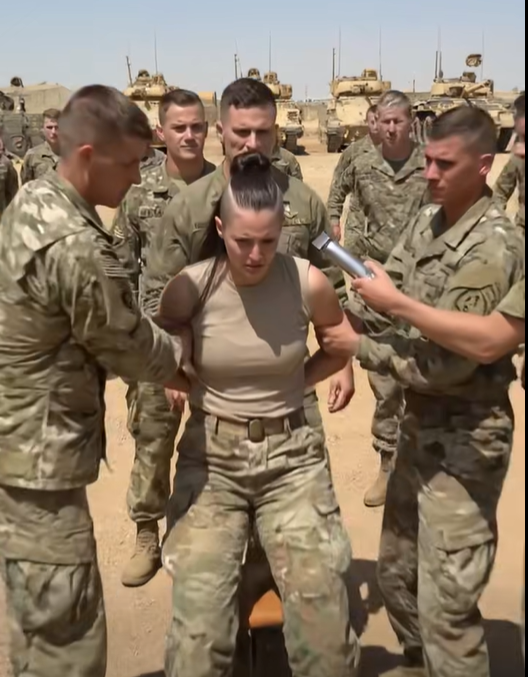
“Shave Her Head,” the Sergeant Ordered Coldly. “If Discipline Won’t Break Her, Maybe Humiliation Will.” But What They Didn’t Know Was That the Woman They Underestimated Would Bring Their Entire Base to Its Knees.
General Alexander Vance had heard the whispers for months: Fort Blackwood was rotting from within. Soldiers spoke in hushed tones of systematic humiliation disguised as “discipline,” falsified training records, missing supply funds that somehow vanished into private accounts, and a toxic command climate built on fear and intimidation. Every official inspection came back sparkling clean […]

At A Veterans’ Dinner, The Colonel Leaned Toward My Brother And Asked One Simple Question: “Can You Tell Me How You Earned This Decoration, Son?” His Face Turned White. He Pointed At My Father And Said: “He Told Me It Belonged To Our Uncle.” The Uncle Never Existed.
The Ridgewood Armory smelled like every other veterans’ event I’d ever attended: floor wax, overcooked chicken, old coffee, and the faint metallic tang of too many American flags. Fluorescent lights buzzed overhead, casting a harsh glow on rows of folding tables and men in ill-fitting blazers trying to look like they still belonged in uniform. […]
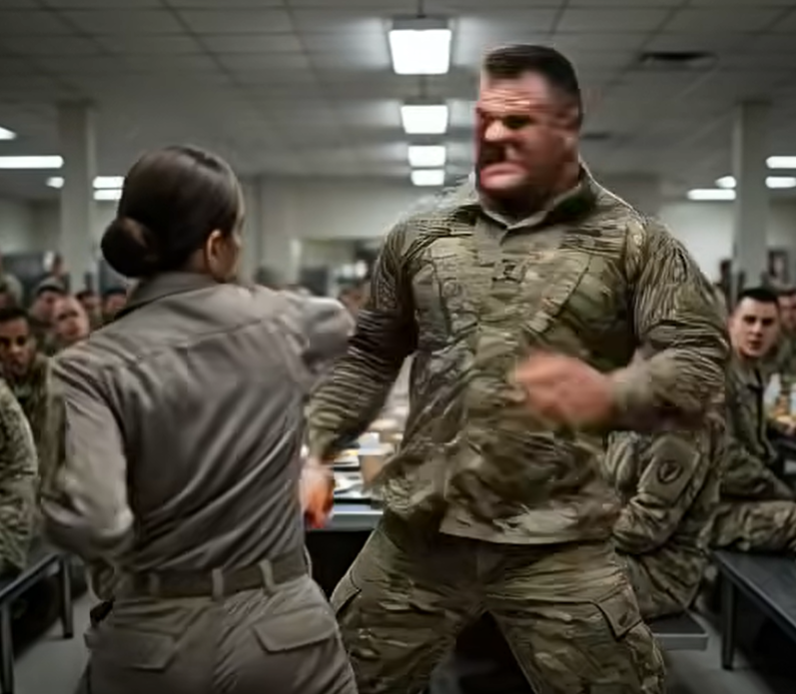
“Die, B*tch,” He Spat, Swinging a Massive Fist in the Mess Hall. He Thought I Was an Easy Target — He Had No Idea He Just Attacked a Classified SEAL Shadow Operative.
I was running on fumes. Seventy-two hours of off-the-books reconnaissance in the frozen Alaskan wilderness had left every muscle screaming. My joints ached from crawling through ice-crusted snow, my eyes burned from staring through night-vision gear, and the only thing keeping me upright was the promise of a hot meal and twelve hours of blackout […]
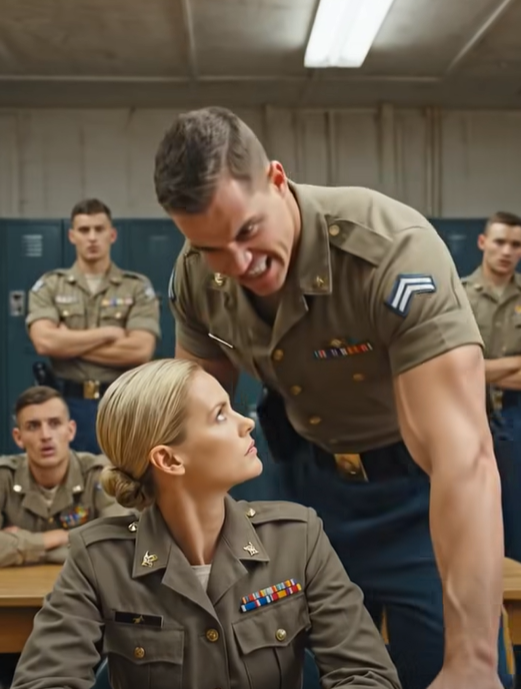
“Do You Know Who I Am?” He Pushed Her — Seconds Later, One ID Card Ended His Career
The dim lights of Rusty’s Bar flickered like dying stars just outside Camp Pendleton. It was a Friday night, the kind where Marines came to forget the sand and the screams they carried home from deployment. I had come here for the opposite reason — to disappear. My name is Commander Thalia Renwick. Highly decorated […]

15 Years After My Dad Kicked Me Out, I Saw Him At My Sister’s Wedding. He Sneered: “If It Wasn’t For Pity, No One Would’ve Invited You.” I Just Smiled And Sipped My Wine. Then The Bride Took The Mic And Changed Everything.
The South Carolina sun was merciless that June afternoon, turning the outdoor wedding venue into a glittering oven. I stood near the back in my crisp Army dress uniform, the brass buttons and medals catching the light with every breath. At 34 years old, I had come home for my little sister’s wedding — the […]

“A POLICE DOG FROZE IN THE AIRPORT. THEN A LITTLE GIRL TAPPED HIS HEAD. WHAT HAPPENED NEXT MADE EVERY TRAVELER STOP. HAVE YOU EVER WITNESSED A SILENT CRY FOR HELP?
The bustling international airport was a whirlwind of rolling suitcases, hurried announcements, and weary travelers rushing to their gates. Officer Liam Mercer patrolled the terminal with his loyal K9 partner, Rex — a highly trained German Shepherd known for his sharp instincts in detection and child safety operations. Everything seemed routine until Rex suddenly froze […]
End of content
No more pages to load