Prime Video has unleashed a sleeper sensation that’s rewriting the rules of modern war cinema. The Tank (originally titled Der Tiger in Germany), a gritty, German-language WWII thriller, exploded onto global streaming charts in early January 2026, claiming the No. 1 spot in dozens of countries and shattering records as the platform’s most-streamed German-language film ever. What started as a modest theatrical run in Germany in September 2025 has morphed into a worldwide phenomenon, with viewers flooding social media and review sites in stunned disbelief. “Mind-blowing,” “masterpiece,” “get off your phone and watch this on the big screen”—the pleas are everywhere. This isn’t just a war movie; it’s a psychological descent into hell that hooks you from the opening salvo and refuses to let go until its devastating, divisive finale.
Set in the frozen hell of the Eastern Front in autumn 1943—months after the catastrophe at Stalingrad—the story follows the five-man crew of a mighty German Tiger I tank. The Wehrmacht is in full retreat, morale shattered, resources dwindling. Amid this chaos, the crew—led by a battle-hardened commander—receives a secret, near-suicidal order: penetrate deep behind Soviet lines to rescue a high-ranking officer, Colonel Paul von Hardenburg, trapped in a hidden bunker with critical intelligence. The mission is code-named something ominous—“Operation Labyrinth”—and the men know the odds are grim. They’re fueled not just by duty but by Pervitin, the methamphetamine issued to Wehrmacht troops to combat exhaustion. As the tank rumbles through no-man’s-land, the drug-fueled journey becomes a slow, claustrophobic spiral into madness.

Director Dennis Gansel (The Wave, Valkyrie-adjacent projects) crafts a film that feels both intimate and overwhelming. The Tiger tank itself is the sixth character—its cramped interior, roaring Maybach engine, and thick armor become a pressure cooker for the crew’s fraying psyches. David Schütter anchors the cast as the commander, a man clinging to discipline amid growing doubt. Laurence Rupp, Leonard Kunz, Sebastian Urzendowsky, and Yoran Leicher round out the ensemble, each bringing raw authenticity to their roles: the idealistic loader, the cynical driver, the terrified radio operator, and the gunner haunted by what he’s seen. Supporting turns from Tilman Strauß and André M. Hennicke add layers of moral ambiguity, as the mission’s true purpose unravels.
The film opens with a breathtaking sequence: the Tiger survives a devastating Soviet air attack on a Dnieper River bridge, its hull scarred but intact. From there, the journey deepens into enemy territory. Mines detonate under the treads, Soviet patrols lurk in fog-shrouded woods, and villages burn in the distance. Gansel shoots with relentless realism—practical effects for explosions, authentic Tiger replicas, and a muted color palette that makes every burst of fire or splash of blood feel visceral. The tank even submerges in one improbable but tense scene, water seeping through seals as the crew holds their breath—historically questionable but cinematically gripping.
Yet The Tank isn’t content with traditional war thrills. Echoing Apocalypse Now and Joseph Conrad’s Heart of Darkness, the narrative shifts from external combat to internal horror. The methamphetamine takes hold: hallucinations flicker at the edges, memories of atrocities surface, and the line between reality and delusion blurs. The rescue target, von Hardenburg, becomes a ghostly Kurtz-like figure—rumored to have gone rogue, perhaps a spy, or worse. As the crew pushes deeper, paranoia sets in: is the mission real, or are they chasing a phantom? The tank’s confines amplify every crack in sanity—arguments erupt over rations, guilt over past killings, and the growing realization that they may be expendable.
The twists arrive without mercy. Mid-film revelations expose the officer’s true nature and the mission’s hidden agenda, forcing the men to confront their complicity in the war machine. The final act descends into surreal ambiguity: what’s real, what’s hallucination, and what’s the cost of survival? Viewers warn of spoilers for good reason—the ending has split audiences sharply. Some hail it as “mind-blowing,” a perfect gut-punch that recontextualizes everything; others call it “ridiculous,” “insulting,” or “a betrayal.” On Rotten Tomatoes, the audience Popcornmeter hovers around 62-64%, with IMDb at 6.5/10—respectable for a divisive film. Reviews praise the technical mastery, the claustrophobic tension, and the unflinching anti-war message, while criticizing the abstract drift and polarizing conclusion.
The streaming explosion came fast. After a limited German theatrical release in September 2025 (the first Amazon Original to get cinemas), it hit Prime Video globally on January 2, 2026. Within days, it topped charts in Germany, Austria, Belgium, Denmark, Poland, Sweden, and more—eventually No. 1 in 15-28 countries. FlixPatrol data showed it dethroning blockbusters like Dave Bautista films and holding strong against new releases. Social media erupted: threads on Reddit dissect the ending, TikTok clips urge “watch without distractions,” and IMDb reviews beg for big-screen rewatches. One viewer summed it up: “Things are not what they seem. Mind blown. Excellent anti-war film while being diabolically entertaining.”

What makes The Tank resonate so deeply? It humanizes the “other side” without excusing atrocities—rare in WWII cinema. The crew aren’t monsters; they’re exhausted, drug-addled men trapped in a losing war, questioning orders while committing horrors. The film never glorifies the Wehrmacht; instead, it exposes the machinery that grinds individuals into oblivion. Comparisons to Netflix’s All Quiet on the Western Front abound, but The Tank goes further into psychological terror, blending action with existential dread.
As the credits roll on this sleeper hit, the conversation rages: brilliant or baffling? Necessary or overreaching? One thing is clear: The Tank isn’t background viewing. It demands attention, forces reflection, and leaves you unsettled long after the screen fades to black. Prime Video has a phenomenon on its hands—a film that doesn’t just tell a war story but interrogates the soul of war itself. Put down the phone, dim the lights, and dive in. You’ve been warned.
News

“Shave Her Head,” the Sergeant Ordered Coldly. “If Discipline Won’t Break Her, Maybe Humiliation Will.” But What They Didn’t Know Was That the Woman They Underestimated Would Bring Their Entire Base to Its Knees.
General Alexander Vance had heard the whispers for months: Fort Blackwood was rotting from within. Soldiers spoke in hushed tones of systematic humiliation disguised as “discipline,” falsified training records, missing supply funds that somehow vanished into private accounts, and a toxic command climate built on fear and intimidation. Every official inspection came back sparkling clean […]
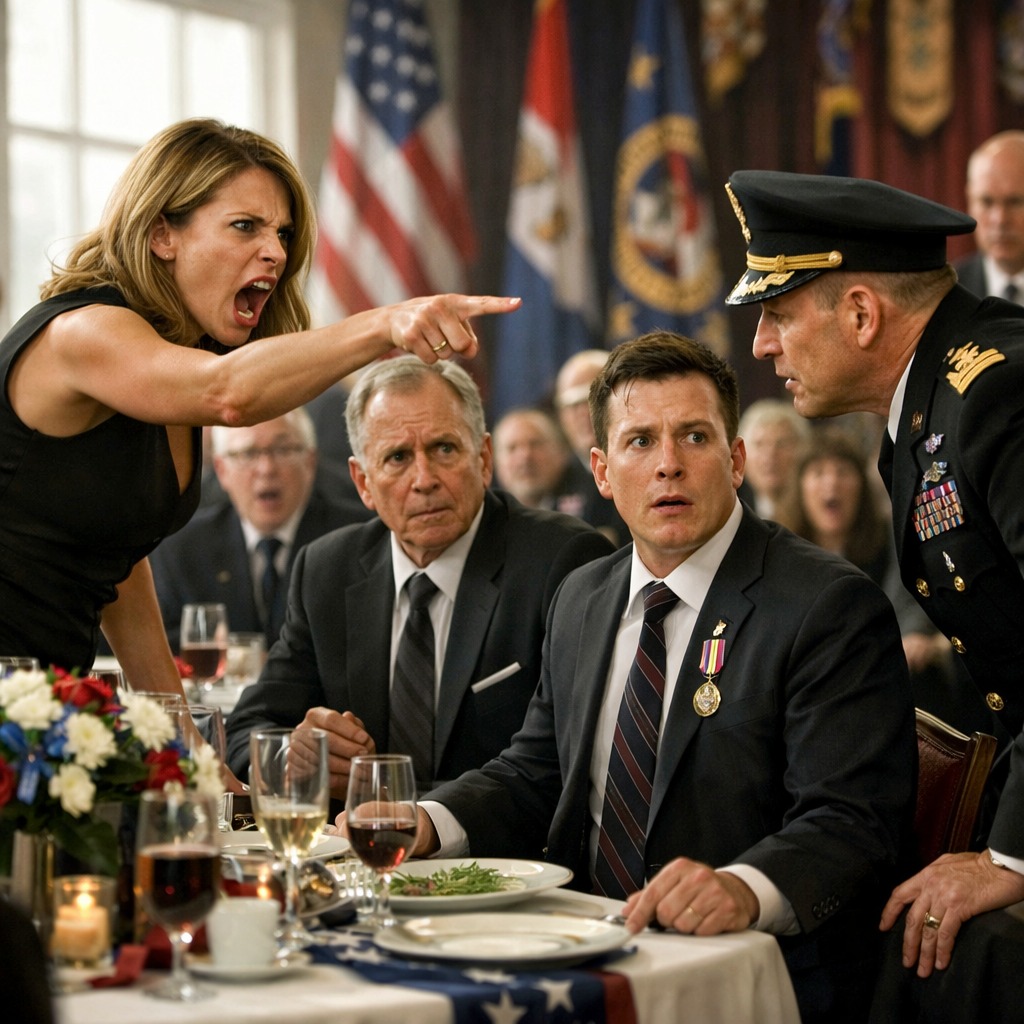
At A Veterans’ Dinner, The Colonel Leaned Toward My Brother And Asked One Simple Question: “Can You Tell Me How You Earned This Decoration, Son?” His Face Turned White. He Pointed At My Father And Said: “He Told Me It Belonged To Our Uncle.” The Uncle Never Existed.
The Ridgewood Armory smelled like every other veterans’ event I’d ever attended: floor wax, overcooked chicken, old coffee, and the faint metallic tang of too many American flags. Fluorescent lights buzzed overhead, casting a harsh glow on rows of folding tables and men in ill-fitting blazers trying to look like they still belonged in uniform. […]
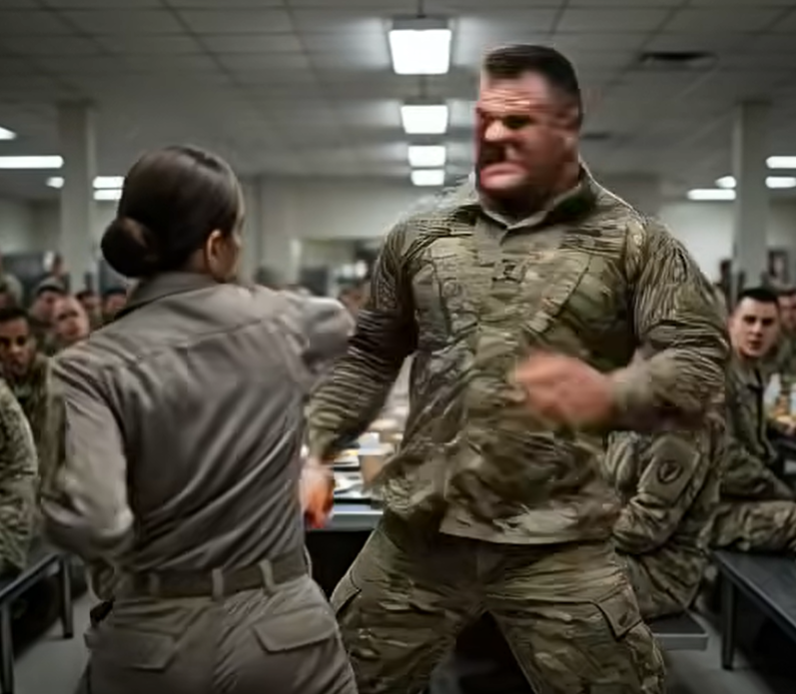
“Die, B*tch,” He Spat, Swinging a Massive Fist in the Mess Hall. He Thought I Was an Easy Target — He Had No Idea He Just Attacked a Classified SEAL Shadow Operative.
I was running on fumes. Seventy-two hours of off-the-books reconnaissance in the frozen Alaskan wilderness had left every muscle screaming. My joints ached from crawling through ice-crusted snow, my eyes burned from staring through night-vision gear, and the only thing keeping me upright was the promise of a hot meal and twelve hours of blackout […]

“Do You Know Who I Am?” He Pushed Her — Seconds Later, One ID Card Ended His Career
The dim lights of Rusty’s Bar flickered like dying stars just outside Camp Pendleton. It was a Friday night, the kind where Marines came to forget the sand and the screams they carried home from deployment. I had come here for the opposite reason — to disappear. My name is Commander Thalia Renwick. Highly decorated […]

15 Years After My Dad Kicked Me Out, I Saw Him At My Sister’s Wedding. He Sneered: “If It Wasn’t For Pity, No One Would’ve Invited You.” I Just Smiled And Sipped My Wine. Then The Bride Took The Mic And Changed Everything.
The South Carolina sun was merciless that June afternoon, turning the outdoor wedding venue into a glittering oven. I stood near the back in my crisp Army dress uniform, the brass buttons and medals catching the light with every breath. At 34 years old, I had come home for my little sister’s wedding — the […]

“A POLICE DOG FROZE IN THE AIRPORT. THEN A LITTLE GIRL TAPPED HIS HEAD. WHAT HAPPENED NEXT MADE EVERY TRAVELER STOP. HAVE YOU EVER WITNESSED A SILENT CRY FOR HELP?
The bustling international airport was a whirlwind of rolling suitcases, hurried announcements, and weary travelers rushing to their gates. Officer Liam Mercer patrolled the terminal with his loyal K9 partner, Rex — a highly trained German Shepherd known for his sharp instincts in detection and child safety operations. Everything seemed routine until Rex suddenly froze […]
End of content
No more pages to load