The cameras are rolling once more on one of the most explosive comebacks in Hollywood history. Mel Gibson, the Oscar-winning director whose 2004 masterpiece The Passion of the Christ shattered box-office records and sparked endless controversy, is back behind the lens with The Resurrection of the Christ—a bold, boundary-pushing sequel that promises to plunge deeper into the supernatural heart of faith than anything before it. Principal photography officially kicked off in October 2025 at Rome’s legendary Cinecittà Studios, with the massive production set to continue through June 2026 across ancient southern Italian landscapes. This isn’t just a follow-up; it’s a cinematic earthquake designed to challenge beliefs, divide audiences, and redefine what faith-based storytelling can achieve in the modern era.
Gibson’s return has been years in the making. After The Passion of the Christ grossed over $610 million worldwide on a modest $30 million budget—becoming the highest-grossing R-rated film of all time for two decades—the director teased a sequel as early as 2016. Development dragged through script revisions, casting debates, and shifting timelines, but the project never died. In early 2025, Gibson confirmed the title The Resurrection of the Christ during a candid podcast appearance, describing it as an “acid trip” into metaphysical realms—far from a straightforward retelling of biblical events. Now, with cameras finally turning, the film stands as Gibson’s most ambitious gamble yet: a two-part epic exploring the cosmic battle surrounding Christ’s resurrection, from the fall of angels to otherworldly dimensions, blending visceral drama with sci-fi-tinged supernatural spectacle.
At the helm of this colossal undertaking is Gibson himself, directing and producing through his Icon Productions banner alongside longtime partner Bruce Davey. The screenplay, co-written with Randall Wallace (Braveheart) and refined over seven years with input from theologians and historians for maximum biblical and historical accuracy, expands the narrative beyond the three days between crucifixion and resurrection. It delves into Christ’s descent into the realm of the dead, the Harrowing of Hell, and a non-linear journey through time, realms, and cosmic warfare. Gibson has teased elements of fallen angels, demonic confrontations, and a sweeping historical arc that spans from the fall of the angels to the death of the last apostle. The result? A film that refuses to play it safe, opting instead for a visually staggering, theologically provocative experience that could alienate as much as it inspires.
The production scale is staggering. Budget estimates hover around $250 million for the two parts combined—making it Gibson’s most expensive directorial effort by far. Much of the shoot occupies Cinecittà’s state-of-the-art facilities, including the brand-new Studio 22, where elaborate sets recreate first-century Judea and supernatural landscapes. Additional filming unfolds in southern Italy’s ancient towns—Matera (which doubled as Jerusalem in the original Passion), Ginosa, Gravina, Laterza, Altamura, and others—chosen for their raw, timeless authenticity. Gibson has embraced IMAX cameras for key sequences, signaling a grand theatrical vision that demands to be seen on the biggest screens possible.
Casting has ignited its own firestorm. Finnish actor Jaakko Ohtonen steps into the role of Jesus, replacing Jim Caviezel after years of speculation about de-aging technology or recasting. Ohtonen, known for his work in The Last Kingdom, brings a fresh intensity to the part, though his selection has drawn criticism over perceived “lightening” of Christ’s portrayal. Cuban actress Mariela Garriga takes on Mary Magdalene (previously Monica Bellucci), while other key roles include Kasia Smutniak as the Virgin Mary—her past activism sparking backlash from conservative circles in Poland—and Rupert Everett and Riccardo Scamarcio in supporting parts. The full recast reflects the film’s timeline shift and practical considerations, allowing Gibson to build a new ensemble around his visionary script.
The controversy surrounding The Resurrection of the Christ is already brewing. Gibson’s track record ensures it: The Passion faced accusations of anti-Semitism, excessive violence, and historical inaccuracy, yet it galvanized millions of faith-driven viewers and became a cultural phenomenon. This sequel risks even greater polarization. Its exploration of supernatural realms, demonic battles, and cosmic stakes could be hailed as revolutionary by believers or condemned as blasphemous by critics. Gibson’s own history—past scandals, outspoken views, and a reputation for unfiltered boldness—adds fuel to the fire. Yet the director remains unapologetic, positioning the film as a bold meditation on faith, hope, redemption, and the triumph of good over evil.
Release plans amplify the anticipation. The Resurrection of the Christ: Part One is slated for Good Friday, March 26, 2027, with Part Two following on Ascension Day, May 6, 2027—strategic dates tying directly to the liturgical calendar. Lionsgate handles distribution, promising a wide theatrical rollout that could dominate Easter season box offices. The two-part structure allows Gibson to fully explore the epic scope without compromise, delivering a narrative that unfolds across realms, eras, and spiritual dimensions.
As crews labor under Rome’s summer sun, building sets that blend ancient authenticity with otherworldly spectacle, the industry watches closely. This is Mel Gibson’s chance to reclaim his place as a visionary filmmaker, to prove that faith-based cinema can be massive, ambitious, and unapologetically daring. Whether it becomes the biggest film event of the decade or the most divisive remains to be seen—but one thing is certain: silence is not an option. When The Resurrection of the Christ hits screens, it will ignite debates in churches, theaters, social media, and beyond.
Gibson has never shied from controversy. Now, with the weight of history, faith, and a $250 million bet behind him, he’s ready to shake the world again. The thunderous return is underway—and holy cinema may never be the same.
News

“Shave Her Head,” the Sergeant Ordered Coldly. “If Discipline Won’t Break Her, Maybe Humiliation Will.” But What They Didn’t Know Was That the Woman They Underestimated Would Bring Their Entire Base to Its Knees.
General Alexander Vance had heard the whispers for months: Fort Blackwood was rotting from within. Soldiers spoke in hushed tones of systematic humiliation disguised as “discipline,” falsified training records, missing supply funds that somehow vanished into private accounts, and a toxic command climate built on fear and intimidation. Every official inspection came back sparkling clean […]

At A Veterans’ Dinner, The Colonel Leaned Toward My Brother And Asked One Simple Question: “Can You Tell Me How You Earned This Decoration, Son?” His Face Turned White. He Pointed At My Father And Said: “He Told Me It Belonged To Our Uncle.” The Uncle Never Existed.
The Ridgewood Armory smelled like every other veterans’ event I’d ever attended: floor wax, overcooked chicken, old coffee, and the faint metallic tang of too many American flags. Fluorescent lights buzzed overhead, casting a harsh glow on rows of folding tables and men in ill-fitting blazers trying to look like they still belonged in uniform. […]
“Die, B*tch,” He Spat, Swinging a Massive Fist in the Mess Hall. He Thought I Was an Easy Target — He Had No Idea He Just Attacked a Classified SEAL Shadow Operative.
I was running on fumes. Seventy-two hours of off-the-books reconnaissance in the frozen Alaskan wilderness had left every muscle screaming. My joints ached from crawling through ice-crusted snow, my eyes burned from staring through night-vision gear, and the only thing keeping me upright was the promise of a hot meal and twelve hours of blackout […]
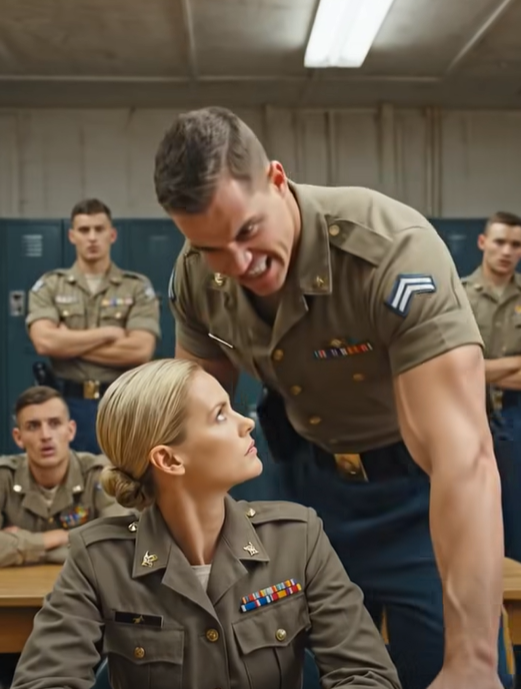
“Do You Know Who I Am?” He Pushed Her — Seconds Later, One ID Card Ended His Career
The dim lights of Rusty’s Bar flickered like dying stars just outside Camp Pendleton. It was a Friday night, the kind where Marines came to forget the sand and the screams they carried home from deployment. I had come here for the opposite reason — to disappear. My name is Commander Thalia Renwick. Highly decorated […]
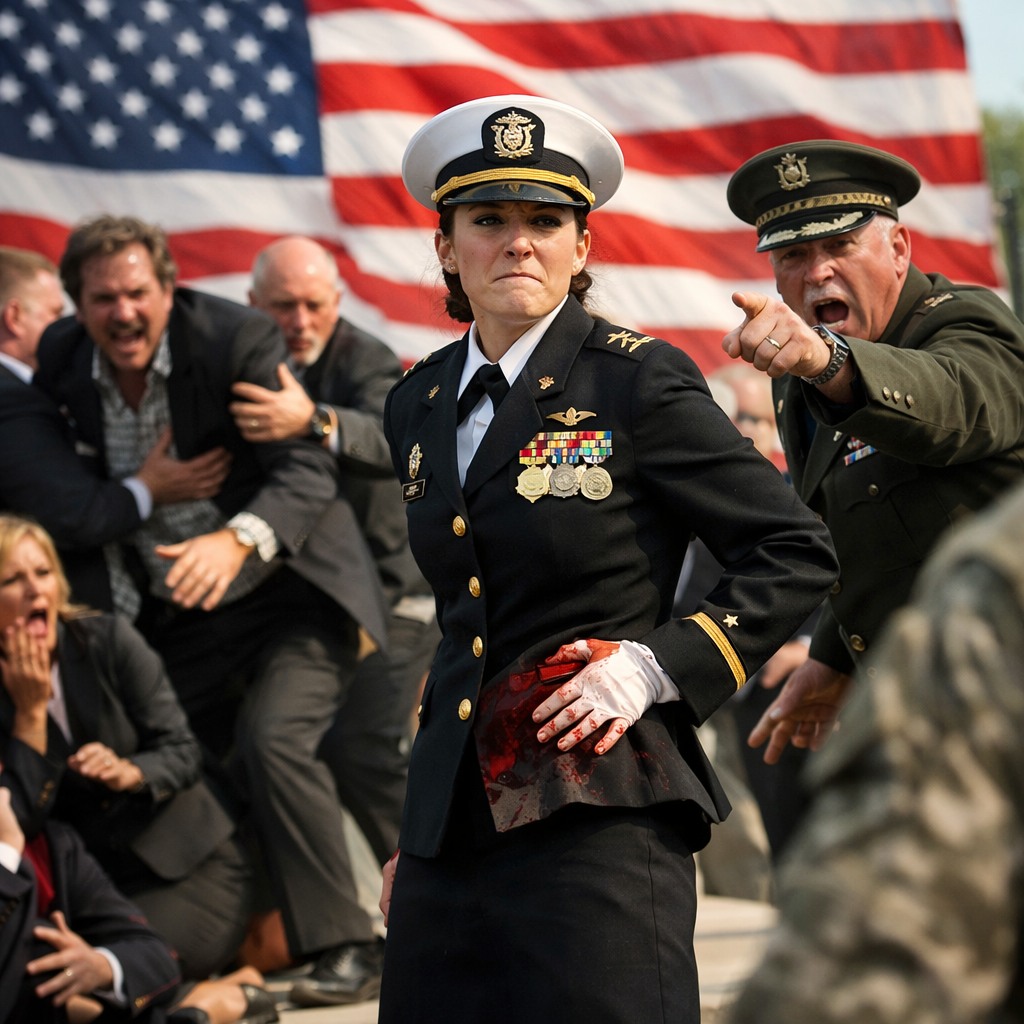
15 Years After My Dad Kicked Me Out, I Saw Him At My Sister’s Wedding. He Sneered: “If It Wasn’t For Pity, No One Would’ve Invited You.” I Just Smiled And Sipped My Wine. Then The Bride Took The Mic And Changed Everything.
The South Carolina sun was merciless that June afternoon, turning the outdoor wedding venue into a glittering oven. I stood near the back in my crisp Army dress uniform, the brass buttons and medals catching the light with every breath. At 34 years old, I had come home for my little sister’s wedding — the […]
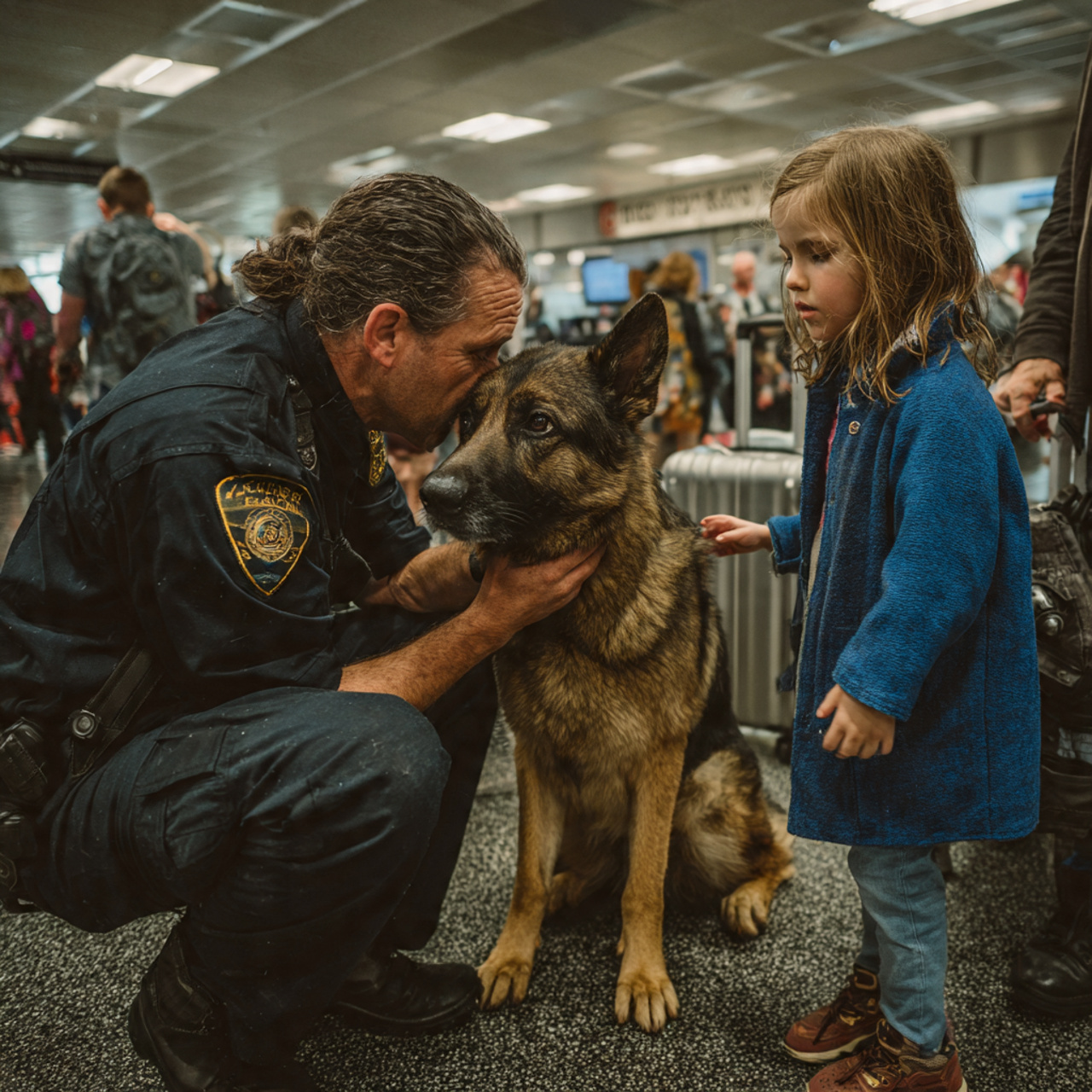
“A POLICE DOG FROZE IN THE AIRPORT. THEN A LITTLE GIRL TAPPED HIS HEAD. WHAT HAPPENED NEXT MADE EVERY TRAVELER STOP. HAVE YOU EVER WITNESSED A SILENT CRY FOR HELP?
The bustling international airport was a whirlwind of rolling suitcases, hurried announcements, and weary travelers rushing to their gates. Officer Liam Mercer patrolled the terminal with his loyal K9 partner, Rex — a highly trained German Shepherd known for his sharp instincts in detection and child safety operations. Everything seemed routine until Rex suddenly froze […]
End of content
No more pages to load