Netflix has quietly released one of the most emotionally devastating period dramas of the year with Mothering Sunday, a slow-burning adaptation that arrives on the platform after a limited theatrical run and festival acclaim. Directed by Eva Husson and based on Graham Swift’s acclaimed 2016 novel, the film stars Olivia Colman and Colin Firth in roles that strip away artifice to reveal raw, aching humanity. What unfolds is not a conventional war story filled with battlefields and heroism, but a deeply intimate portrait of the lives left shattered in the aftermath of conflict—one that lingers long after the final frame.
The film is set primarily on March 30, 1924—Mothering Sunday, the traditional English day when domestic servants were given leave to visit their mothers. Jane Fairchild (Odessa Young in the younger timeline, with Colman as the older Jane reflecting years later) is a maid in the Niven household, a well-to-do family still reeling from the loss of their two sons in the Great War. On this rare day off, Jane secretly meets Paul Sheringham (Josh O’Connor), the son of a neighboring aristocratic family and the only surviving child among their circle. Their stolen afternoon together becomes the emotional fulcrum of the entire story.
What begins as a clandestine lovers’ rendezvous in an empty manor house unfolds into something far more profound and tragic. Through flashbacks and elliptical storytelling, we see how Jane and Paul’s relationship began years earlier, during the war, when grief and longing brought them together in hidden moments. The film never shows the war itself; instead, it examines the invisible wounds it left behind—the silences, the absences, the way entire families and social structures were hollowed out by loss.
Olivia Colman, in a supporting yet pivotal role as the older Jane, delivers one of her most restrained and devastating performances to date. Speaking in voiceover and appearing in brief, reflective scenes, she carries the full weight of decades of unspoken sorrow. Her voice—soft, measured, almost detached—conveys a woman who has learned to live with regret so deep it has become part of her breathing. When she finally speaks the film’s most heartbreaking line near the end—“I remember everything”—the simplicity of the delivery lands like a physical blow.
Colin Firth, playing Mr. Niven, the grieving father of the lost sons, is equally powerful in a quieter register. His character is a man who has mastered the art of emotional suppression; every polite smile, every stiff upper lip hides a grief that threatens to break him. In one unforgettable scene, Firth stands alone in the garden, staring at the empty chairs where his sons once sat, and the camera lingers just long enough to let the audience feel the full depth of his isolation. It is acting of the highest order—subtle, internal, and almost unbearably real.

The younger leads—Odessa Young as Jane and Josh O’Connor as Paul—carry the bulk of the romantic narrative. Their chemistry is electric yet fragile; every touch feels stolen, every glance loaded with the knowledge that time is not on their side. Young in particular shines in scenes of quiet observation—watching the world of the upper class from the margins, absorbing every detail while remaining invisible. O’Connor brings a restless, almost desperate energy to Paul, a young man who knows his future is already mapped out by class and duty, yet cannot stop himself from reaching for something real with Jane.
Director Eva Husson, working from a screenplay by Alice Birch, crafts a film that is deliberately unhurried. Long, unbroken takes allow silences to stretch and emotions to settle. Cinematographer Jamie D. Ramsay bathes the English countryside in a golden, almost dreamlike light that contrasts sharply with the emotional desolation at the story’s core. The score by Dustin O’Halloran and Volker Bertelmann is minimal and haunting, letting the natural sounds—birds, wind, footsteps—carry much of the emotional weight.
Mothering Sunday is not a film that rushes to deliver big moments. Instead, it builds a slow, suffocating pressure through what is left unsaid. Conversations are polite, clipped, full of subtext. Glances last longer than they should. Doors close softly but irrevocably. The film trusts the audience to feel the ache without spelling it out.
The central romance is never allowed to become sentimental. Jane and Paul are not star-crossed lovers in the traditional sense; they are two people who find brief solace in each other amid overwhelming grief and social rigidity. Their intimacy is portrayed with tenderness and honesty—skin against skin, breath against breath—but always shadowed by the knowledge that it cannot last. The film refuses easy catharsis; there is no grand reunion, no triumphant escape. Only the quiet, permanent ache of what might have been.
The supporting cast adds depth and texture. Glenda Jackson, in one of her final screen roles, appears briefly as the elderly Jane’s employer, delivering a single scene of devastating clarity. Colin Firth’s Mr. Niven and Odessa Young’s Jane share a handful of quiet, charged moments that speak volumes about class, grief, and unspoken understanding. Every performance is calibrated to the same low, aching frequency.
Critics and audiences alike have praised the film for its emotional honesty and technical mastery. It has been called “a quiet masterpiece,” “heartbreakingly beautiful,” and “the kind of film that stays with you for days.” The performances—particularly Colman’s voiceover narration and Firth’s contained anguish—have been singled out as career-highlight work.
Netflix’s decision to acquire Mothering Sunday after its festival run reflects the platform’s ongoing commitment to prestige cinema. The film joins a growing slate of thoughtful, adult-oriented dramas that stand apart from the streamer’s blockbuster fare. For viewers seeking something deeper than escapism, Mothering Sunday offers a rare gift: a story that doesn’t just entertain—it wounds, gently and permanently.
In the end, Mothering Sunday is a film about what survives after everything else has been lost. It is about memory, about the things we carry silently, about love that endures even when it cannot be spoken. It is a film that doesn’t shout. It whispers—and the whisper echoes long after the credits roll.
News

“Shave Her Head,” the Sergeant Ordered Coldly. “If Discipline Won’t Break Her, Maybe Humiliation Will.” But What They Didn’t Know Was That the Woman They Underestimated Would Bring Their Entire Base to Its Knees.
General Alexander Vance had heard the whispers for months: Fort Blackwood was rotting from within. Soldiers spoke in hushed tones of systematic humiliation disguised as “discipline,” falsified training records, missing supply funds that somehow vanished into private accounts, and a toxic command climate built on fear and intimidation. Every official inspection came back sparkling clean […]
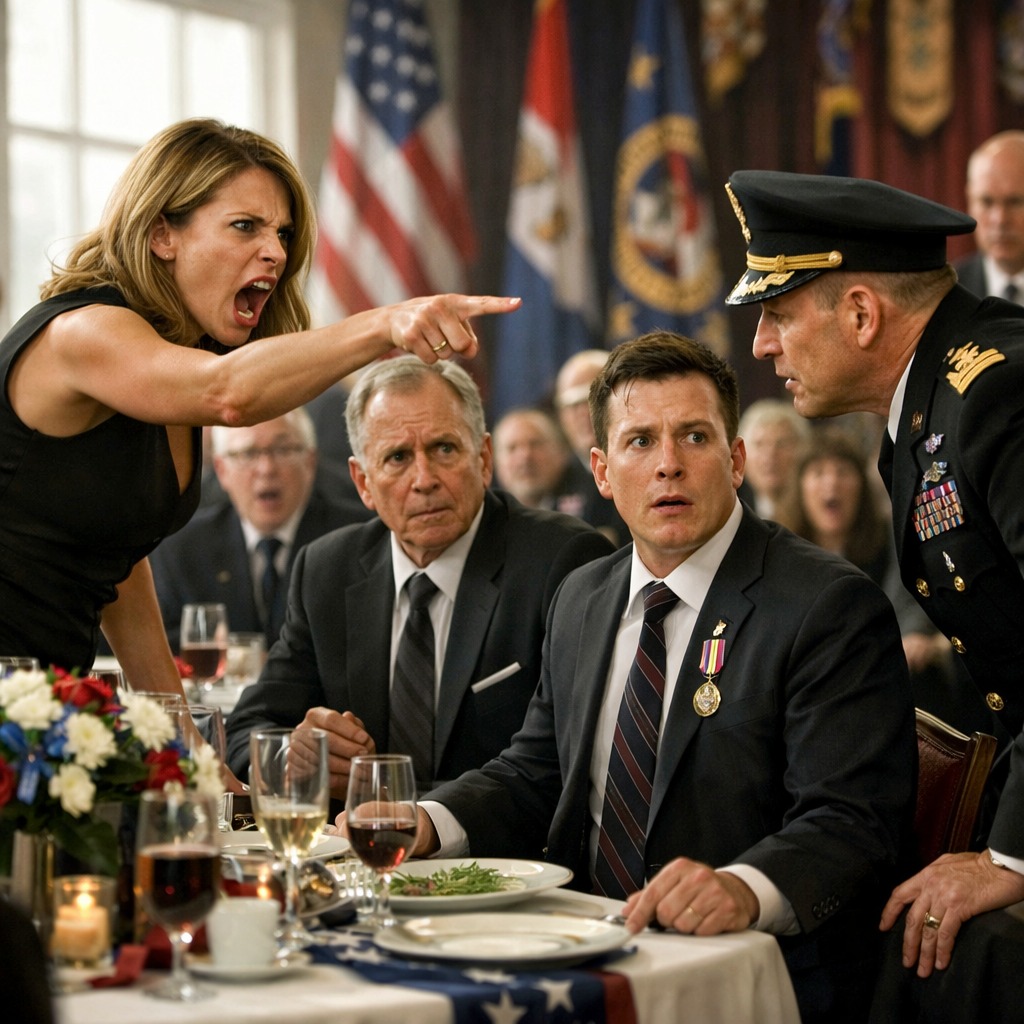
At A Veterans’ Dinner, The Colonel Leaned Toward My Brother And Asked One Simple Question: “Can You Tell Me How You Earned This Decoration, Son?” His Face Turned White. He Pointed At My Father And Said: “He Told Me It Belonged To Our Uncle.” The Uncle Never Existed.
The Ridgewood Armory smelled like every other veterans’ event I’d ever attended: floor wax, overcooked chicken, old coffee, and the faint metallic tang of too many American flags. Fluorescent lights buzzed overhead, casting a harsh glow on rows of folding tables and men in ill-fitting blazers trying to look like they still belonged in uniform. […]

“Die, B*tch,” He Spat, Swinging a Massive Fist in the Mess Hall. He Thought I Was an Easy Target — He Had No Idea He Just Attacked a Classified SEAL Shadow Operative.
I was running on fumes. Seventy-two hours of off-the-books reconnaissance in the frozen Alaskan wilderness had left every muscle screaming. My joints ached from crawling through ice-crusted snow, my eyes burned from staring through night-vision gear, and the only thing keeping me upright was the promise of a hot meal and twelve hours of blackout […]

“Do You Know Who I Am?” He Pushed Her — Seconds Later, One ID Card Ended His Career
The dim lights of Rusty’s Bar flickered like dying stars just outside Camp Pendleton. It was a Friday night, the kind where Marines came to forget the sand and the screams they carried home from deployment. I had come here for the opposite reason — to disappear. My name is Commander Thalia Renwick. Highly decorated […]
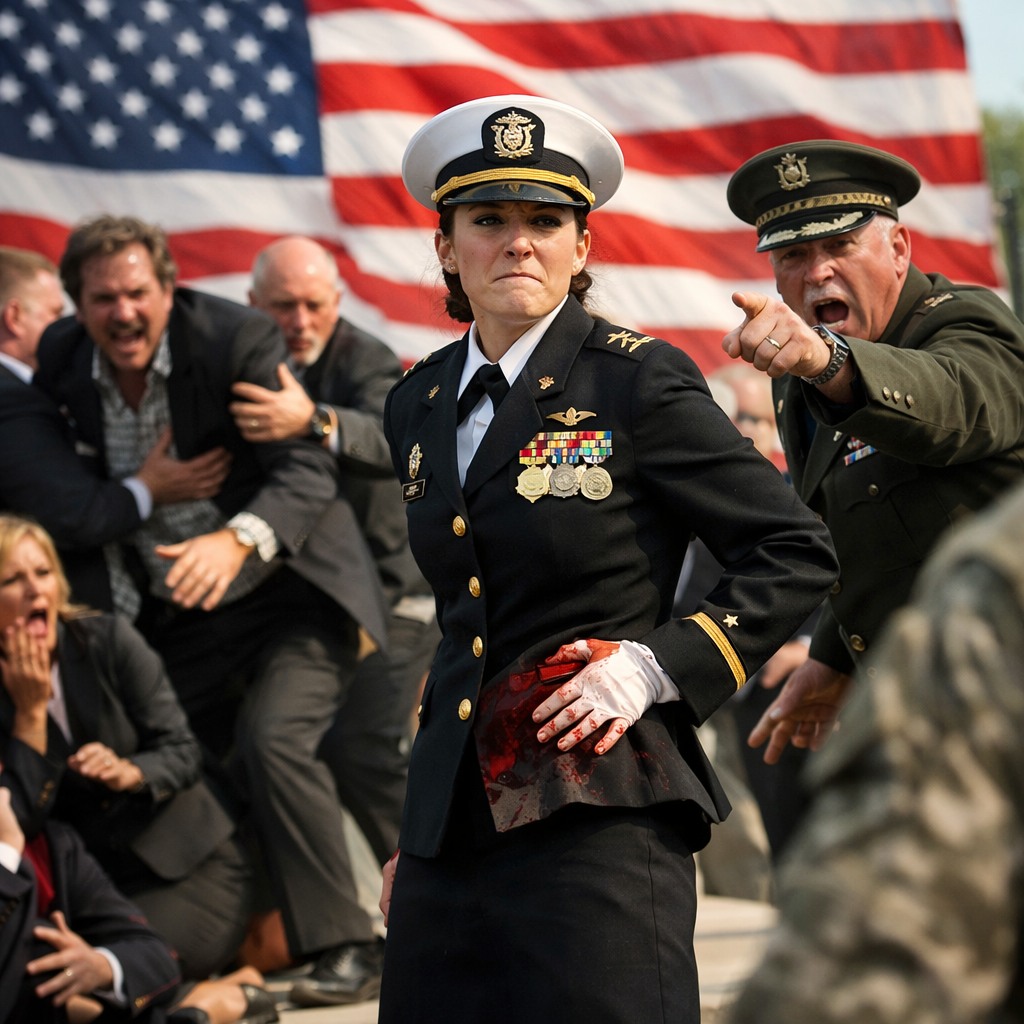
15 Years After My Dad Kicked Me Out, I Saw Him At My Sister’s Wedding. He Sneered: “If It Wasn’t For Pity, No One Would’ve Invited You.” I Just Smiled And Sipped My Wine. Then The Bride Took The Mic And Changed Everything.
The South Carolina sun was merciless that June afternoon, turning the outdoor wedding venue into a glittering oven. I stood near the back in my crisp Army dress uniform, the brass buttons and medals catching the light with every breath. At 34 years old, I had come home for my little sister’s wedding — the […]

“A POLICE DOG FROZE IN THE AIRPORT. THEN A LITTLE GIRL TAPPED HIS HEAD. WHAT HAPPENED NEXT MADE EVERY TRAVELER STOP. HAVE YOU EVER WITNESSED A SILENT CRY FOR HELP?
The bustling international airport was a whirlwind of rolling suitcases, hurried announcements, and weary travelers rushing to their gates. Officer Liam Mercer patrolled the terminal with his loyal K9 partner, Rex — a highly trained German Shepherd known for his sharp instincts in detection and child safety operations. Everything seemed routine until Rex suddenly froze […]
End of content
No more pages to load