They Left Their Captain for Dead — Until a Legendary Female Sniper Returned with Him
The SEAL team believed their captain was gone forever.
An ambush.
A failed extraction.
No signal. No movement. No body.
The order was given to pull back — but one woman refused to accept it.
Part 1
The sea was angry that night.
It wasn’t the poetic kind of anger people wrote about from safe balconies. It was the kind that smashed itself against rock like it meant to break the world open and climb through the cracks. Waves rose in black walls, capped in white foam that glowed under a thin moon, and the wind screamed through the cliffs with the metallic bite of salt, fuel, and something darker that turned the stomach before the mind could name it.
Blood.
The SEALs didn’t say it out loud, not at first. They carried the truth in their faces instead—tight jaws, eyes that refused to blink, hands that worked on muscle memory while the rest of them tried not to fall apart.
They had lost their captain.
Captain Marcus Hail had been leading the extraction when the ambush detonated the world. One moment he was upright in the wash of rotor-light, shouting orders into the roar, the next the hillside became fire and smoke and concussive force. The blast lifted men like toys. Rocks and shrapnel scythed through the air. Radios screamed. Someone yelled a name that was swallowed by everything else.
And then Marcus was simply not there.
No body in the immediate chaos. No movement. No voice answering when his call sign was barked into the night.
They searched anyway.
Seven minutes.
Seven minutes in hostile territory was not a measurement of time. It was a lifetime made of jagged seconds. Every heartbeat sounded like a gunshot. Every shadow seemed ready to stand up and start firing. Jake Harland—Commander Harland, the man who carried the unit like a spine—moved through the blast zone with his team fanned out, eyes scanning, rifles up, breaths tight.
“Marcus!” someone shouted again.
No answer.
Jake found Marcus’s dropped headset half-buried in wet dirt. He saw the scorch pattern where the blast had chewed the ground. He saw the torn strap of a pack. He did not see Marcus.
The enemy was already moving.
You could feel it the way you felt pressure before a storm. Voices on the ridgeline. Footsteps sliding on shale. A distant click of metal on metal—someone setting up for the follow-on kill.
Jake’s radio crackled with higher command, the voice clipped and urgent: “Fall back. Now. Enemy flooding the area.”
Jake stared into the smoke and refused to accept the shape of that sentence.
“We don’t leave our own,” he said, low enough that only the closest men heard him.
But the mission clock had run out. The extraction window was closing. Staying meant getting pinned and wiped. Staying meant there would be more names missing by dawn.
He swallowed the order like a piece of glass.
“Fall back!” he snapped.
They pulled out under fire, dragging their wounded, moving in disciplined bursts between cover, leaving scorch marks and unanswered questions behind. Every man on that bird carried the same weight. The helicopter lifted into the night with the enemy’s gunfire cracking below like rage given teeth.
Marcus Hail was dead.
That was what they told themselves, because the alternative was a kind of madness that kept you walking back into fire until you never walked out.
Back at the forward base, silence settled like ash.
The silence at the forward base was worse than the gunfire.
It pressed in from all sides, thick and suffocating, broken only by the low hum of generators and the occasional cough of a man trying to hide grief in smoke. The team sat scattered across the ops tent—some staring at nothing, some cleaning weapons they’d already cleaned twice, some pretending to sleep. No one spoke Marcus’s name. Saying it aloud would make the loss real, and they weren’t ready for real yet.
Commander Jake Harland stood outside under the star-pricked sky, arms crossed tight against his chest like he could hold the pieces of his unit together with sheer will. He replayed the ambush in his head on loop: the flash, the concussion, the sudden absence where his best friend had been. He’d given the order to pull back. He’d live with it. But living with it felt like swallowing barbed wire every breath.
Dawn was still hours away when the perimeter sentries hissed a warning over comms.
“Movement on the ridge. Single figure. Approaching slow.”
Jake’s head snapped up. “Armed?”
“Negative on visible weapons. But… it’s a woman.”
The team stirred like a hive poked. Rifles came up instinctively. Jake moved to the wire, night-vision goggles pressed to his eyes. Through the green glow, he saw her: tall, lean, moving with the deliberate economy of someone who’d spent years learning how not to be seen. Long dark hair tied back, face streaked with dirt and what might have been dried blood. She carried a heavy rucksack slung low, and something—no, someone—slung over her shoulder in a fireman’s carry.
A body.
Jake’s heart lurched. “Hold fire. Hold fire.”
She reached the gate, stopped ten meters out, and lowered the burden to the ground with careful strength. The figure groaned—alive, barely. Even from distance, Jake recognized the battered plate carrier, the blood-soaked sleeve where Marcus’s blood type was stenciled.
“Marcus?”
The woman straightened. Her eyes found Jake’s through the dark, steady and unreadable.
“Captain Hail,” she said, voice low, rough from disuse or smoke or both. “He’s alive. Barely. Needs a medic yesterday.”
The team surged forward. Corpsmen rushed in, hands flying over Marcus—pulse weak but present, breathing shallow, shrapnel wounds packed with what looked like torn shirt fabric and clotting agent. They lifted him onto a litter, voices overlapping in urgent triage.
Jake stepped toward her, weapon lowered but not slung. “Who the hell are you?”
She met his gaze without flinching. “Call sign: Reaper. Lieutenant Elara Voss. Marine Scout Sniper, attached to JSOC black ops until they decided I was too much trouble and scrubbed my file.”
Jake’s mind raced. Reaper. The name had floated in classified briefings like smoke—whispers of a ghost who’d racked impossible kills in denied areas, then vanished after a mission went sideways. Some said she’d been KIA. Others said she’d gone rogue. No one said she was real.
“You were supposed to be overwatch,” he said, piecing it together. “You were on the ridge that night.”
“Was.” She nodded toward the ridge line, now silent and empty. “I stayed. Watched the bird lift. Watched you leave.” No accusation in her tone—just fact. “Then I went hunting.”
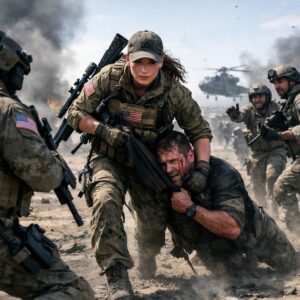
She unzipped the rucksack. Inside: enemy weapons, bloodied maps, a sat-phone with cracked screen, and a small stack of dog tags—none American. “They dragged him into a cave network. Thought he was finished. I didn’t. Took me three days. Sniped their sentries, slipped in at night, pulled him out while they were still arguing over ransom footage.”
Jake looked at Marcus, now being carried toward the aid station, then back at her. “You carried him out alone. Through hostile territory. For three days.”
“Four, actually,” she corrected quietly. “Time gets slippery when you’re moving at night and sleeping in shifts with one eye open.”
The team had gone quiet around them. Men who’d just buried hope were staring at this woman like she’d walked out of myth. One of the younger operators whispered, “Holy shit, that’s Reaper.”
Voss ignored it. She pulled a folded flag from her cargo pocket—small, bloodstained, the kind carried for emergencies—and handed it to Jake. “He wouldn’t let go of this. Kept saying your name. Told me if I got him out, tell you he’s sorry he missed the ride home.”
Jake took the flag. His throat closed. “Why’d you do it? After we left him?”
She looked past him, toward the sea that had howled that night. “Because someone had to believe he wasn’t gone. And because leaving people behind isn’t an order I follow.”
Medics called from the aid station—Marcus was stable enough for evac. The helo was inbound.
Voss turned to go.
Jake caught her arm. “You’re not walking away again. Not after this.”
She looked down at his hand, then up at his face. A small, tired smile ghosted her lips—the first crack in the armor.
“Wasn’t planning to,” she said. “Not this time.”
She stepped past him toward the aid station, toward the man she’d dragged back from the edge of the world. The team parted for her without a word—respect, awe, something deeper.
Outside, the sea had calmed. The wind carried salt and promise instead of blood. Dawn was coming, pale and clean over the cliffs.
They’d left their captain for dead.
But legends don’t die easy.
And sometimes, the ones who refuse to accept loss are the deadliest weapons of all.
News
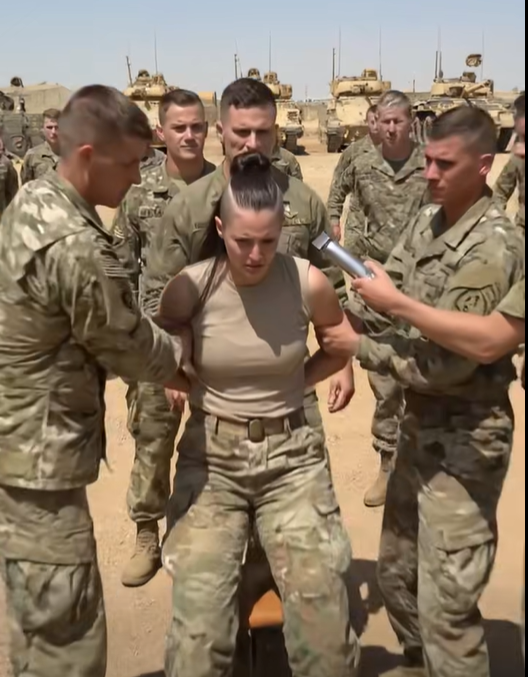
“Shave Her Head,” the Sergeant Ordered Coldly. “If Discipline Won’t Break Her, Maybe Humiliation Will.” But What They Didn’t Know Was That the Woman They Underestimated Would Bring Their Entire Base to Its Knees.
General Alexander Vance had heard the whispers for months: Fort Blackwood was rotting from within. Soldiers spoke in hushed tones of systematic humiliation disguised as “discipline,” falsified training records, missing supply funds that somehow vanished into private accounts, and a toxic command climate built on fear and intimidation. Every official inspection came back sparkling clean […]
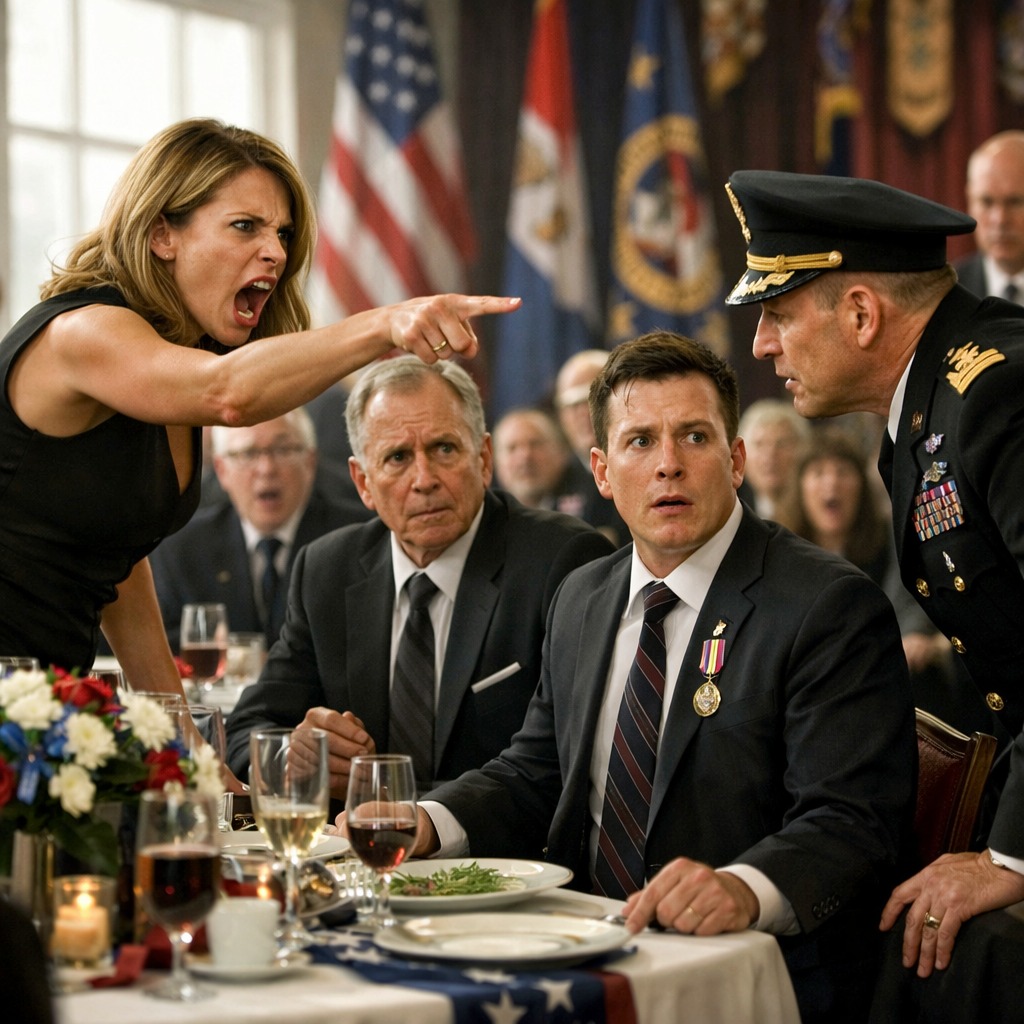
At A Veterans’ Dinner, The Colonel Leaned Toward My Brother And Asked One Simple Question: “Can You Tell Me How You Earned This Decoration, Son?” His Face Turned White. He Pointed At My Father And Said: “He Told Me It Belonged To Our Uncle.” The Uncle Never Existed.
The Ridgewood Armory smelled like every other veterans’ event I’d ever attended: floor wax, overcooked chicken, old coffee, and the faint metallic tang of too many American flags. Fluorescent lights buzzed overhead, casting a harsh glow on rows of folding tables and men in ill-fitting blazers trying to look like they still belonged in uniform. […]
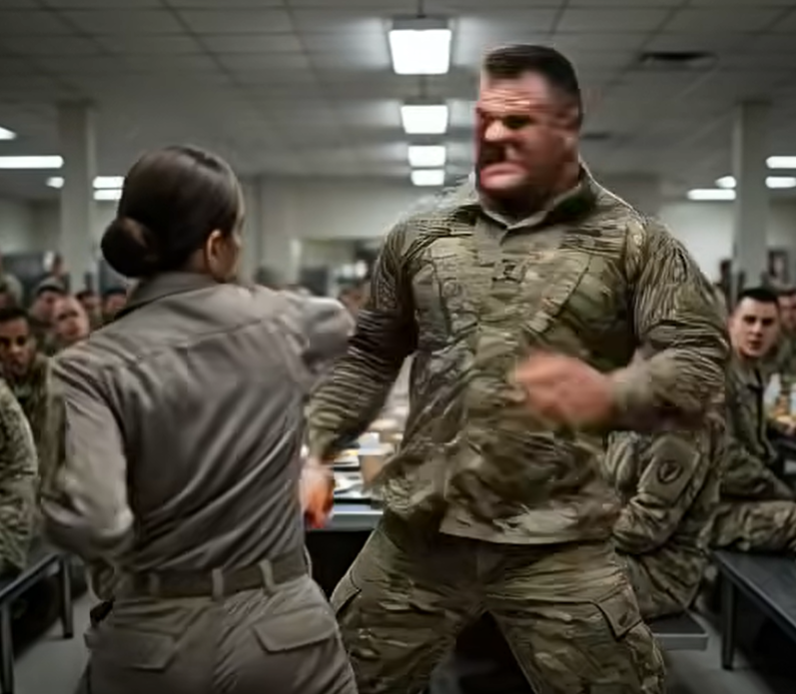
“Die, B*tch,” He Spat, Swinging a Massive Fist in the Mess Hall. He Thought I Was an Easy Target — He Had No Idea He Just Attacked a Classified SEAL Shadow Operative.
I was running on fumes. Seventy-two hours of off-the-books reconnaissance in the frozen Alaskan wilderness had left every muscle screaming. My joints ached from crawling through ice-crusted snow, my eyes burned from staring through night-vision gear, and the only thing keeping me upright was the promise of a hot meal and twelve hours of blackout […]
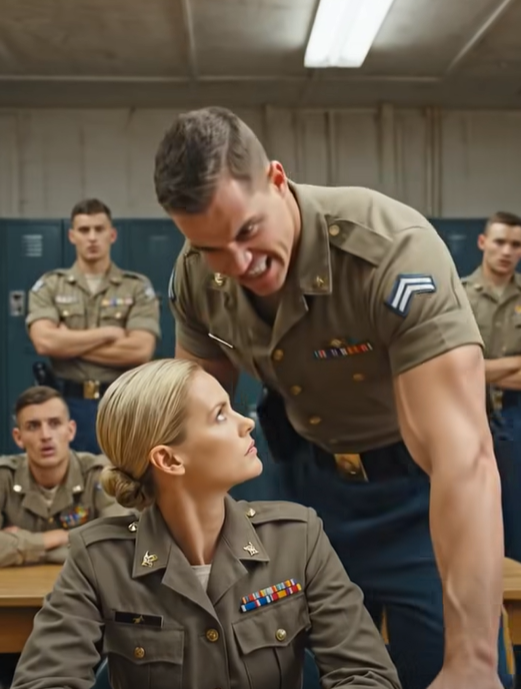
“Do You Know Who I Am?” He Pushed Her — Seconds Later, One ID Card Ended His Career
The dim lights of Rusty’s Bar flickered like dying stars just outside Camp Pendleton. It was a Friday night, the kind where Marines came to forget the sand and the screams they carried home from deployment. I had come here for the opposite reason — to disappear. My name is Commander Thalia Renwick. Highly decorated […]
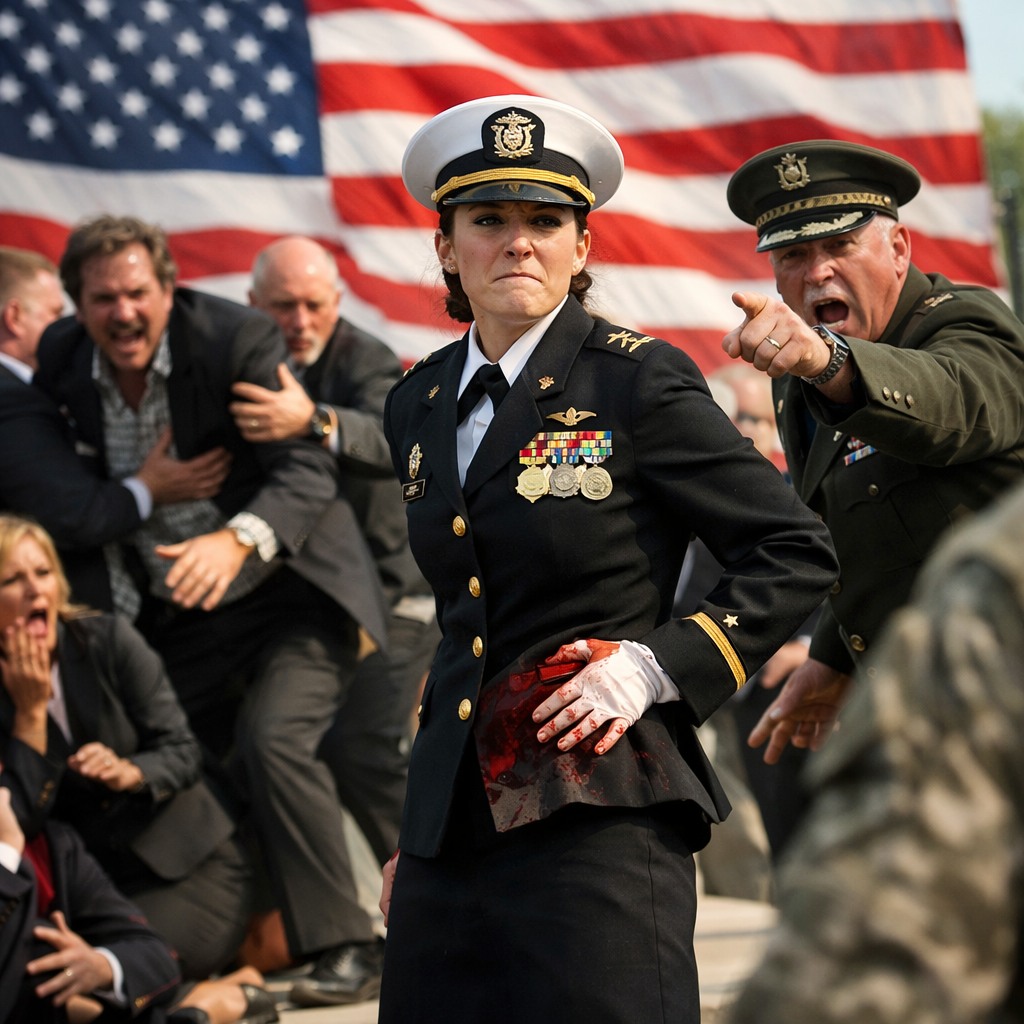
15 Years After My Dad Kicked Me Out, I Saw Him At My Sister’s Wedding. He Sneered: “If It Wasn’t For Pity, No One Would’ve Invited You.” I Just Smiled And Sipped My Wine. Then The Bride Took The Mic And Changed Everything.
The South Carolina sun was merciless that June afternoon, turning the outdoor wedding venue into a glittering oven. I stood near the back in my crisp Army dress uniform, the brass buttons and medals catching the light with every breath. At 34 years old, I had come home for my little sister’s wedding — the […]
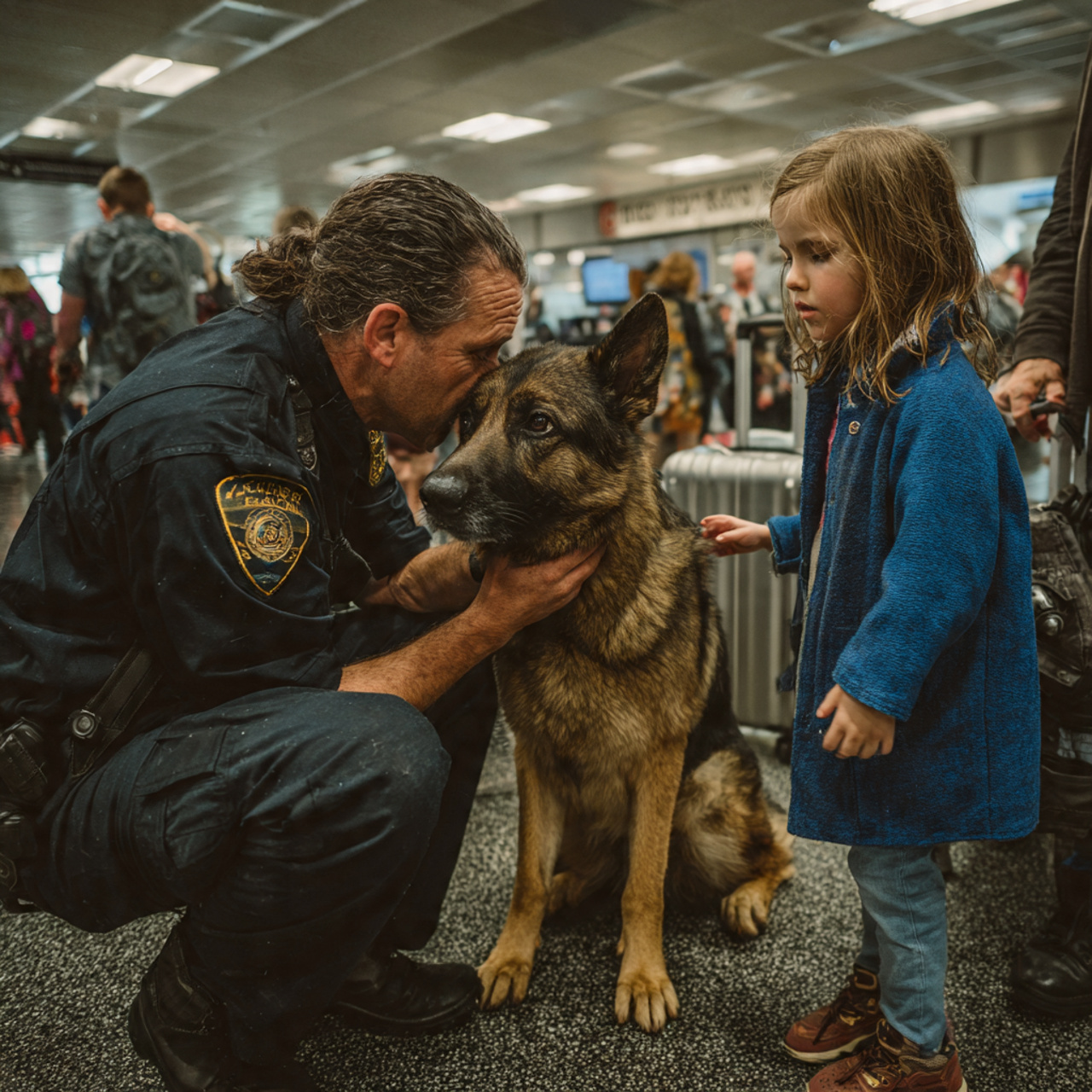
“A POLICE DOG FROZE IN THE AIRPORT. THEN A LITTLE GIRL TAPPED HIS HEAD. WHAT HAPPENED NEXT MADE EVERY TRAVELER STOP. HAVE YOU EVER WITNESSED A SILENT CRY FOR HELP?
The bustling international airport was a whirlwind of rolling suitcases, hurried announcements, and weary travelers rushing to their gates. Officer Liam Mercer patrolled the terminal with his loyal K9 partner, Rex — a highly trained German Shepherd known for his sharp instincts in detection and child safety operations. Everything seemed routine until Rex suddenly froze […]
End of content
No more pages to load