Marine Snipers Failed — “Can I Borrow Your Rifle?” She Nails 101 Targets Straight
Part 1
The desert wind didn’t just blow; it worried the world.
It combed the flats in long, dusty sighs, pulling at hats and banners, making the steel targets downrange hum as if they were already bracing for impact. The range flags drooped, then snapped halfheartedly, as though they couldn’t decide which direction was true. Mirage shimmer rose off the sand in nervous waves, blurring distance until the targets looked like they were floating.
On the line, the last Marine adjusted his position with the stiff precision of someone trying not to show frustration. He was good. Everyone out there was good. That was the whole point of the fundraiser match: the public came to watch a clean demonstration of skill, to donate to rehab programs, to clap and feel reassured that the people standing between their families and disaster were steady.
The rifle cracked.
A heartbeat later the spotter called it.
“Just outside the scoring ring.”
For a moment, no one made a sound. Then laughter rippled through the bleachers—uneasy and thin, the kind people used when they weren’t sure if it was acceptable to laugh.
No one wanted to mock Marines for missing.
But something about the string of misses had made the crowd restless. It wasn’t the misses themselves. It was the way they kept happening with the same shape—consistently off, stubbornly drifting, like the day itself had tilted and everyone was pretending not to see it.
Near the vendor tent, a woman set down a tray of paper cups.
She wore a faded navy ball cap pulled low and a braid tucked beneath it. Her arms were thick and strong, built for hauling lumber, not handing out lemonade. A small smudge of grease marked the corner of one thumbnail like a signature she never quite washed away. She looked like she belonged behind a hardware counter. She looked like someone’s aunt, someone’s neighbor, someone who would tell you where the duct tape was and ask if you needed help loading your truck.
Except her hands told a different story.

They were steady in a way that didn’t come from calm personality. It came from repetition. From hours spent making tiny movements matter. Fine scars traced the skin near her knuckles, and along her right hand ran a pale, nearly invisible line—the kind of scar left by a rifle bolt that bites once and is never forgotten.
The captain at the range table—sunburned, squared shoulders, voice trained to carry—barked, “Next.”
No one stepped forward.
For a fraction of a second, the Marines on the line looked at one another with that quick, silent calculation: who goes next, who takes the next miss, who risks being the one the crowd remembers.
The woman raised a finger.
“Sir,” she said calmly, as if she were ordering a part number. “May I borrow your rifle?”
Heads turned.
The captain’s mouth curled into a smirk. The spotter blinked. The crowd sensed something unfolding and pressed closer, phones rising like a sudden forest of glass.
The woman didn’t flinch beneath the attention. She wasn’t tall. She wasn’t trying to be impressive. She simply stood there as though she had decided something and the decision had already settled.
The captain’s smirk deepened. “You think you can outshoot Marines?”
She shook her head once. “No, sir.”
The answer surprised people, and the silence that followed made the wind seem louder.
She added, gentle but firm, “I think I can show you why they’re missing.”
A few Marines chuckled under their breath. Not cruelly. Nervously. Like men who’d rather face a hard run than a public mystery.
The captain studied her for a long moment, the kind of look that weighed risk against curiosity. Finally he shrugged, the motion sharp enough to make the Velcro on his vest rasp.
“Rifle’s zeroed for Sergeant Reyes,” he said, nodding toward the prone Marine who had just missed. “Wind’s running eight to twelve from three o’clock, gusting. Mirage is heavy. Good luck.”
He handed her the M40A6 like he was passing a live grenade.
She accepted it without ceremony, checked the chamber with a practiced flick, then settled behind the line as naturally as if the sand had been shaped for her body years ago. The Marines made room without being asked. The crowd hushed again, deeper this time, the way people quiet when they realize they might be watching something rare.
She didn’t rush.
She breathed once, slow and deliberate, the way you test water temperature before stepping in. Then she found the first target at 800 yards, a steel plate no bigger than a dinner tray dancing in the heat haze.
Crack.
The plate rang clear, a bright metallic note that carried all the way to the bleachers.
The spotter, voice suddenly flat with disbelief, called, “Center.”
A murmur rose. Phones tilted higher.
She worked the bolt smooth and fast, no wasted motion. The next shot followed before the echo of the first had died.
Crack. Ring.
Crack. Ring.
The rhythm was almost gentle, unhurried, the way a carpenter drives nails when the wood is good and the hammer is an old friend. Each round left the muzzle with the same soft sigh, and each target answered with the same obedient clang.
By the tenth hit the crowd had stopped counting out loud. By the twentieth, even the Marines were leaning forward, elbows on knees, watching the mirage bend around her scope like it had finally decided to behave.
At fifty, someone in the bleachers started clapping—one person, then a wave. She didn’t acknowledge it.
The wind shifted, stronger now, kicking sand against ankles and rifle stocks. The flags snapped hard enough to sting. Most shooters would have waited for a lull. She adjusted nothing visible, just kept shooting, the rifle never wavering, the crosshair apparently immune to the earth’s bad mood.
Eighty.
Ninety.
One hundred.
The final plate rang like a bell announcing closing time.
She lowered the rifle, worked the bolt once more to clear it, and stood. Sand slid from her jeans. She handed the weapon back to the captain butt-first, muzzle down, the way you return something you respect.
Silence held for three full seconds—long enough for everyone to realize what they’d just seen.
Then the bleachers exploded.
The captain stared at the rifle in his hands as if it had changed while he wasn’t looking. Finally he cleared his throat.
“Ma’am… who the hell taught you to shoot like that?”
She brushed a stray strand of hair behind her ear, the motion revealing the faint white scar along her jaw that the cap had hidden.
“My husband,” she said quietly. “He was a Scout Sniper. Fallujah, Ramadi, Helmand. Came home missing a leg and most of his hearing, but he could still outshoot anyone on this range on his worst day.”
She glanced toward the donation table, where a banner read WOUNDED WARRIORS REHAB FUND.
“He passed last winter,” she went on. “I promised him I’d keep coming to these things. He always said the wind out here was dishonest, but if you listened close enough, it would tell you exactly where to hold.”
The captain swallowed, suddenly aware of every camera pointed at him.
She gave a small nod, the kind that ends a conversation, and turned back toward the lemonade tray.
Behind her, the Marines started clapping—slow at first, then steady, the sound of men who understood that some lessons are only taught by people who’ve already paid the tuition.
The fundraiser ended up raising triple its goal that afternoon.
And every year after, when the desert wind worried the flats and the flags couldn’t decide which way was true, someone would tell the new shooters about the quiet woman in the navy ball cap who borrowed a rifle once, listened to the wind, and rang steel 101 times straight.
Just to remind them what steady really looks like.
News
“Shave Her Head,” the Sergeant Ordered Coldly. “If Discipline Won’t Break Her, Maybe Humiliation Will.” But What They Didn’t Know Was That the Woman They Underestimated Would Bring Their Entire Base to Its Knees.
General Alexander Vance had heard the whispers for months: Fort Blackwood was rotting from within. Soldiers spoke in hushed tones of systematic humiliation disguised as “discipline,” falsified training records, missing supply funds that somehow vanished into private accounts, and a toxic command climate built on fear and intimidation. Every official inspection came back sparkling clean […]
At A Veterans’ Dinner, The Colonel Leaned Toward My Brother And Asked One Simple Question: “Can You Tell Me How You Earned This Decoration, Son?” His Face Turned White. He Pointed At My Father And Said: “He Told Me It Belonged To Our Uncle.” The Uncle Never Existed.
The Ridgewood Armory smelled like every other veterans’ event I’d ever attended: floor wax, overcooked chicken, old coffee, and the faint metallic tang of too many American flags. Fluorescent lights buzzed overhead, casting a harsh glow on rows of folding tables and men in ill-fitting blazers trying to look like they still belonged in uniform. […]
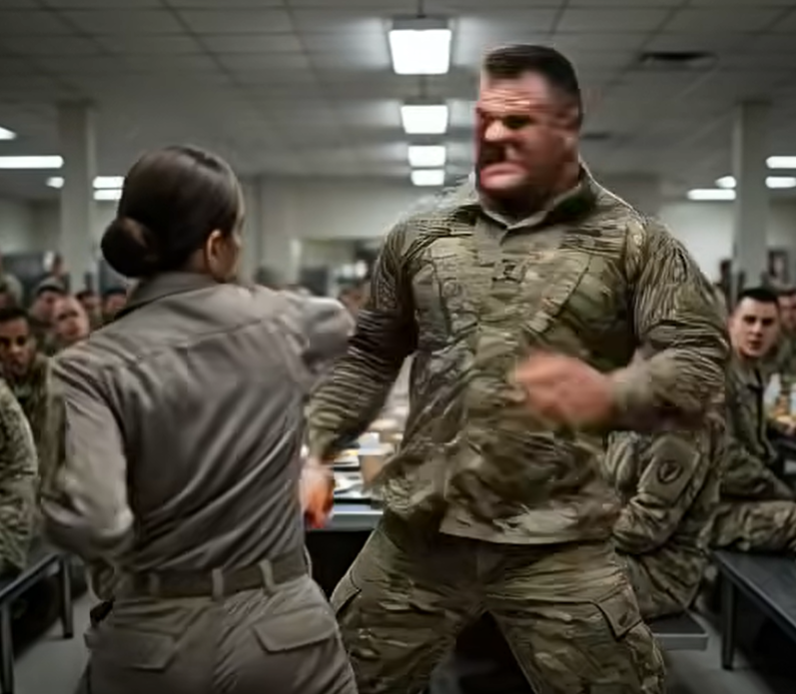
“Die, B*tch,” He Spat, Swinging a Massive Fist in the Mess Hall. He Thought I Was an Easy Target — He Had No Idea He Just Attacked a Classified SEAL Shadow Operative.
I was running on fumes. Seventy-two hours of off-the-books reconnaissance in the frozen Alaskan wilderness had left every muscle screaming. My joints ached from crawling through ice-crusted snow, my eyes burned from staring through night-vision gear, and the only thing keeping me upright was the promise of a hot meal and twelve hours of blackout […]
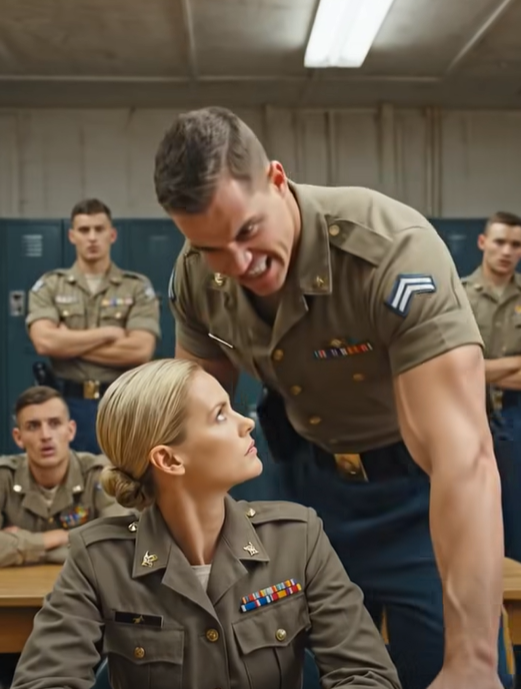
“Do You Know Who I Am?” He Pushed Her — Seconds Later, One ID Card Ended His Career
The dim lights of Rusty’s Bar flickered like dying stars just outside Camp Pendleton. It was a Friday night, the kind where Marines came to forget the sand and the screams they carried home from deployment. I had come here for the opposite reason — to disappear. My name is Commander Thalia Renwick. Highly decorated […]
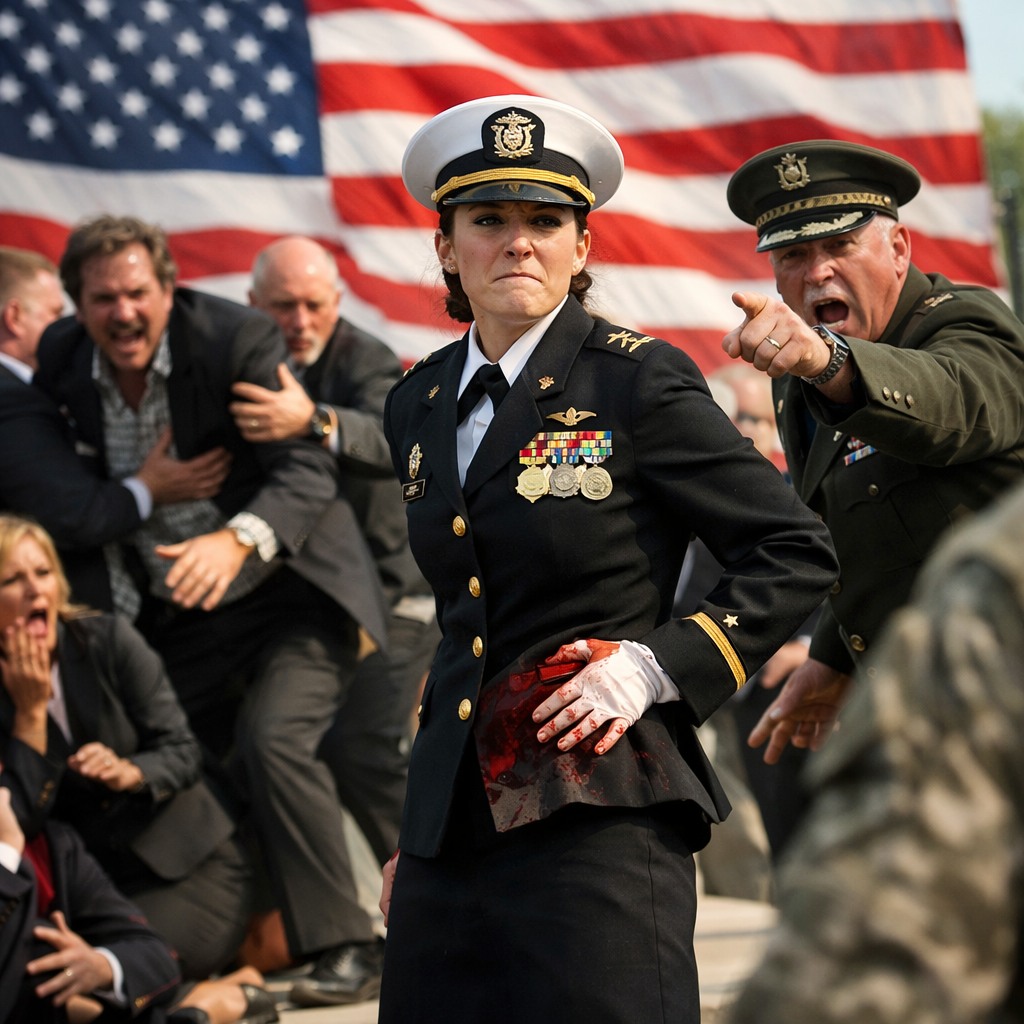
15 Years After My Dad Kicked Me Out, I Saw Him At My Sister’s Wedding. He Sneered: “If It Wasn’t For Pity, No One Would’ve Invited You.” I Just Smiled And Sipped My Wine. Then The Bride Took The Mic And Changed Everything.
The South Carolina sun was merciless that June afternoon, turning the outdoor wedding venue into a glittering oven. I stood near the back in my crisp Army dress uniform, the brass buttons and medals catching the light with every breath. At 34 years old, I had come home for my little sister’s wedding — the […]
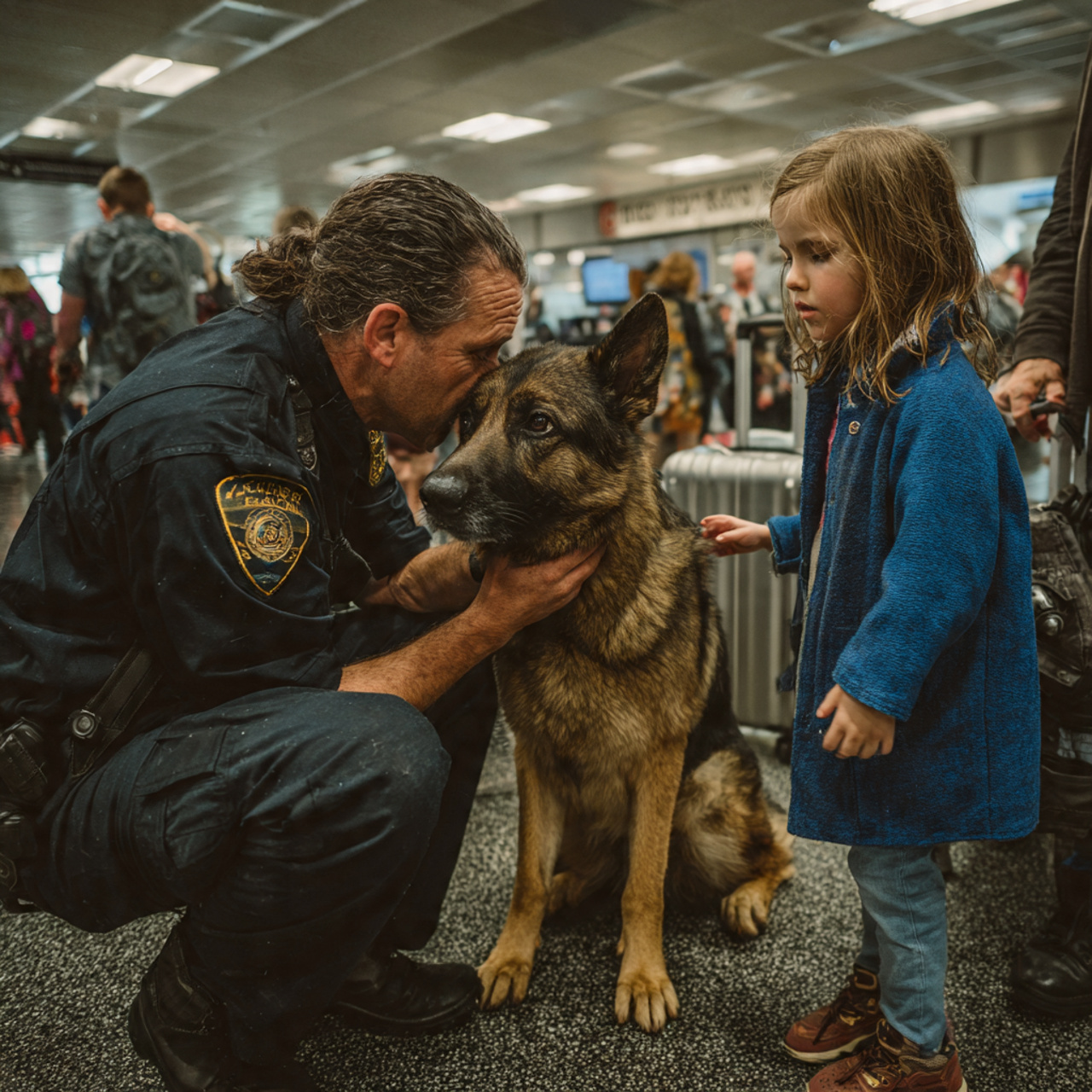
“A POLICE DOG FROZE IN THE AIRPORT. THEN A LITTLE GIRL TAPPED HIS HEAD. WHAT HAPPENED NEXT MADE EVERY TRAVELER STOP. HAVE YOU EVER WITNESSED A SILENT CRY FOR HELP?
The bustling international airport was a whirlwind of rolling suitcases, hurried announcements, and weary travelers rushing to their gates. Officer Liam Mercer patrolled the terminal with his loyal K9 partner, Rex — a highly trained German Shepherd known for his sharp instincts in detection and child safety operations. Everything seemed routine until Rex suddenly froze […]
End of content
No more pages to load