In an era where streaming slates are stacked with high-stakes thrillers and edge-of-your-seat dramas, A Man on the Inside Season 2 arrives like a warm cup of chamomile tea on a chilly autumn evening—gentle, invigorating, and utterly addictive. Premiering on Netflix this November, the eight-episode sophomore outing picks up where its charming predecessor left off, thrusting widowed engineering professor Charles Nieuwendyk back into the world of undercover sleuthing. But this time, forget the shuffleboard and suspicious seniors of a retirement home; Charles is swapping sensible loafers for lecture halls as he infiltrates the ivy-covered chaos of Wheeler College. Created by the inimitable Michael Schur—whose résumé boasts feel-good masterpieces like The Good Place, Parks and Recreation, and Brooklyn Nine-Nine—this season doubles down on the blend of wry humor, heartfelt introspection, and light-touch mystery that made Season 1 a sleeper hit. If you’re craving a show that leaves you chuckling one moment and misty-eyed the next, without demanding you solve a labyrinthine conspiracy, look no further. Charles is back, and he’s got tenure on your binge list.

For the uninitiated, A Man on the Inside draws loose inspiration from the poignant 2020 Chilean documentary The Mole Agent, which followed an elderly man posing as a resident in a nursing home to uncover potential mistreatment. Schur and his team transplant that premise into a sun-dappled San Francisco suburb, infusing it with his signature optimism and philosophical wit. Season 1 introduced us to Charles (Ted Danson), a brilliant but adrift retiree whose sharp mind and unquenchable curiosity make him an unlikely recruit for private investigator Julie Kovalenko’s ragtag agency. Posing as a new resident in a posh retirement community, Charles unraveled a web of thefts, loneliness, and long-buried secrets among his silver-haired peers. It was a masterclass in low-key comedy: think awkward stakeouts in mobility scooters, flirtations over Jell-O salads, and moments of profound tenderness that reminded us why Danson, at 77, remains one of television’s most magnetic presences.
Season 2 builds on that foundation with a fresh canvas that’s equal parts academic farce and emotional odyssey. Charles, now a seasoned (if still endearingly bumbling) apprentice PI, is chafing under the monotony of tailing cheating spouses and snapping photos of illicit lunch dates. His daughter Emily worries he’s overextending himself, but Charles thrives on purpose—the kind that gets his intellectual gears turning. Enter Wheeler College, a picturesque liberal arts haven teetering on the brink of financial ruin. When an anonymous extortionist dubbing themselves the “Wheeler Guardian” begins leaking damaging info from the college president’s stolen laptop, threatening a game-changing $400 million donation from a bombastic tech mogul, the administration turns to Julie’s firm for discretion. Charles, leveraging his professorial pedigree, goes undercover as a visiting lecturer in engineering ethics. What follows is a whirlwind of syllabus mix-ups, kegger stakeouts, and tense faculty lounge interrogations, all while Charles grapples with the ghosts of his academic past and the sparks of a budding late-life romance.
Without veering into spoiler territory, the season’s central mystery unfolds like a well-aged Scotch—smooth, layered, and rewarding with every sip. The blackmail plot serves as a clever McGuffin, propelling Charles through Wheeler’s eccentric ecosystem: pompous deans with Napoleon complexes, idealistic students plotting eco-revolutions, and a donor whose ego could fund a small nation. But true to Schur’s ethos, the real intrigue lies in the human connections. Charles forms unlikely alliances—a prickly history prof with a hidden soft side, a whip-smart undergrad who’s more detective than dilettante—and confronts the vulnerabilities of aging in a youth-obsessed world. Episodes like “Family Weekend” and “Spirit Week” blend raucous set pieces (imagine a retiree dodging foam fingers at a pep rally) with quieter beats that probe deeper questions: What does legacy mean when your best chapters feel behind you? How do we rebuild trust after loss? And can a man in his twilight years still rewrite his story?
At the heart of it all is Ted Danson, whose performance is less an acting job than a masterclass in effortless charisma. Charles isn’t your typical gumshoe; he’s a gentle giant with a twinkle in his eye and a mind like a steel trap wrapped in flannel. Danson imbues him with a lived-in warmth that radiates off the screen—watch him fumble through a Zoom lecture or bond over bad coffee with a colleague, and you’ll forget you’re watching fiction. It’s a role tailor-made for the Cheers alum, echoing his philosophical everyman from The Good Place but grounded in the tangible aches of real maturity. Danson’s real-life wife, Mary Steenburgen, joins as Mona Margadoff, Wheeler’s enigmatic music department chair and Charles’s tentative paramour. Their chemistry crackles with the easy intimacy of longtime partners, turning flirtatious banter into something profoundly moving. “It’s not fireworks,” one scene quips, “it’s a sustained glow”—a line that could double as a review of their onscreen spark.
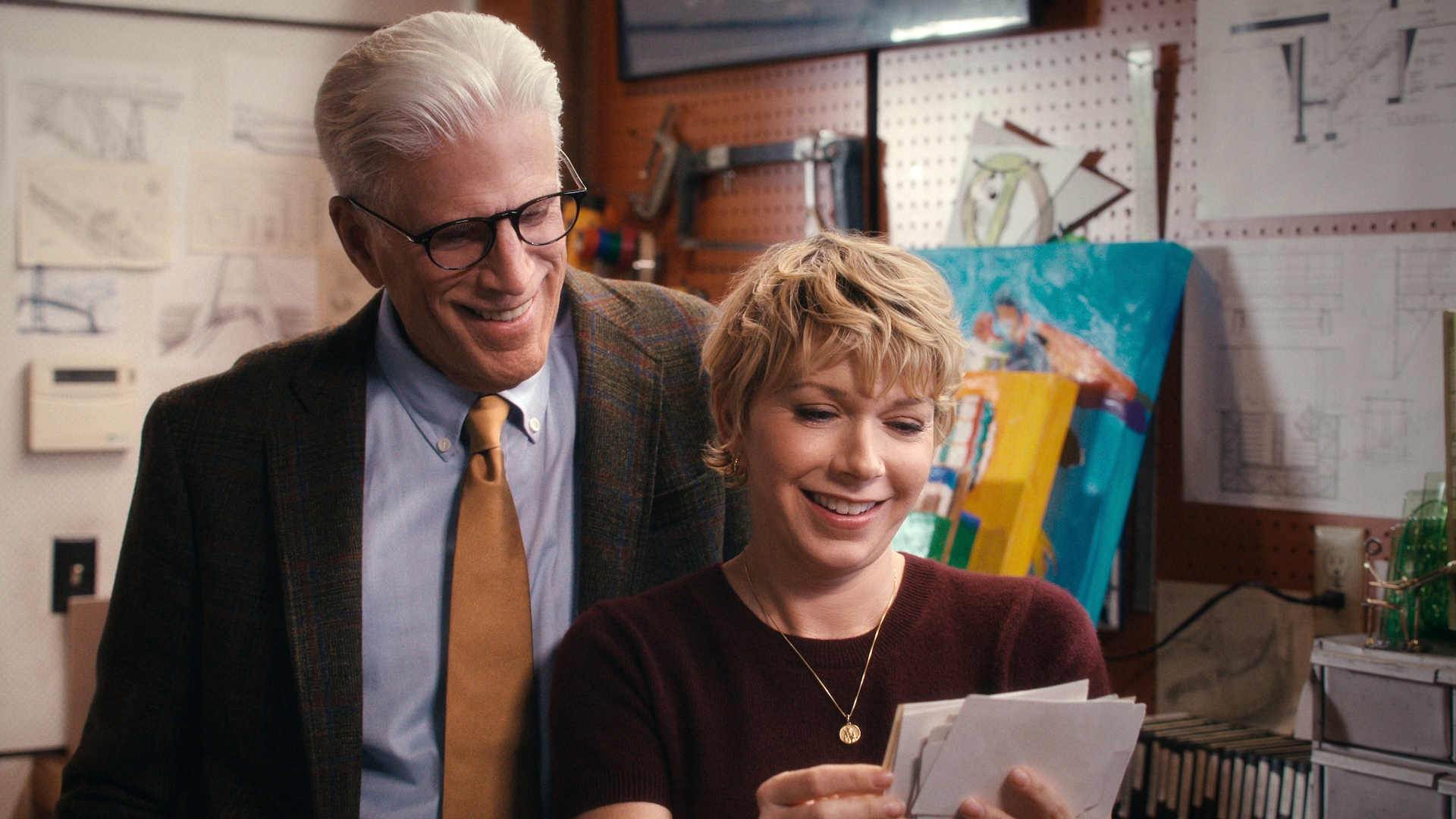
The ensemble around them is a Schur-staple delight: a murderers’ row of comedy vets and rising talents who elevate every quip and quiet aside. Lilah Richcreek Estrada shines as Julie Kovalenko, the no-nonsense PI boss with a heart of gold and a Rolodex of shady contacts; her dynamic with Charles evolves from mentor-mentee to surrogate family, laced with the kind of deadpan humor that recalls Amy Poehler’s Leslie Knope. Mary Elizabeth Ellis returns as Emily, Charles’s fiercely protective daughter, whose arc this season delves into the push-pull of adult parent-child bonds—think holiday dinners gone awry, with a side of emotional gut-punch. Gary Cole chews scenery as Brad Vinick, the donor whose blustery bravado masks deeper insecurities, delivering lines like a malfunctioning Roomba of entitlement. David Strathairn brings gravitas and sly wit as Dr. Benjamin Cole, the college’s beleaguered provost, while Max Greenfield (New Girl) nails the slacker-chic of student advisor Jack Berenger, all rumpled hoodies and half-baked schemes.
Newcomers add fresh flavors: Jill Talley (Ren & Stimpy) as the harried college president Holly Bodgemark, whose Type-A meltdowns are comedy gold; Madison Hu as ambitious undergrad Claire Chung, whose tech-savvy sleuthing gives Charles a run for his money; and Lisa Gilroy as the enigmatic Kelseigh Rose, a faculty wildcard whose motives keep everyone guessing. Veterans like Stephanie Beatriz (as the irreverent Didi from Season 1) and even a cameo-ish turn from Jason Mantzoukas inject bursts of chaotic energy, ensuring the show never settles into predictability. Filmed on the sun-kissed grounds of Caltech in Pasadena—standing in for the fictional Wheeler—the production captures academia’s dual allure: idyllic quads begging for picnics, shadowed by the grind of grant proposals and budget cuts. Schur’s writers’ room, packed with alums from his prior hits, weaves in subtle nods to those universes—a Parks and Rec-style improv seminar here, a Good Place-esque ethics debate there—rewarding superfans without alienating newcomers.
What elevates A Man on the Inside beyond breezy procedural fare is its unflinching gaze at life’s later acts. Season 2 trades the retirement home’s meditation on isolation for a campus critique of generational friction and institutional fragility. Wheeler isn’t just a backdrop; it’s a microcosm of America’s education crisis, where ballooning tuitions clash with shrinking endowments, and tenured profs eye adjuncts with quiet pity. Charles, lecturing on “the trolley problem” in one standout episode, becomes a stand-in for all of us navigating moral gray areas: Do you upend the status quo to save the institution, or play it safe and watch it crumble? These threads aren’t preachy; they’re peppered with levity, like Charles’s disastrous attempt at a viral TikTok to lure suspects, or a bottle episode parodying high-pressure holiday feasts à la The Bear. The result is television that’s intellectually nourishing without being stuffy—cozy escapism with a side of soul-searching.
Critics and viewers alike have embraced this alchemy, hailing Season 2 as a triumphant evolution. Early buzz pegs it as Schur’s most mature work yet, blending the laugh-out-loud accessibility of his early sitcoms with the poignant depth of his later ones. Fans on social media are already deep in the throes of all-nighters, tweeting about binge sessions that leave them “smiling through tears” and clamoring for renewals. One devotee summed it up perfectly: “It’s the show you watch when you need to remember people are mostly good, even when they’re messing up spectacularly.” With its runtime clocking in at a digestible six to eight hours (perfect for a rainy weekend), the season flies by, leaving you wistful for more Charles capers—perhaps a corporate retreat next? A political scandal? The possibilities are as endless as Danson’s charm.
In a landscape bloated with antiheroes and apocalyptic stakes, A Man on the Inside Season 2 is a refreshing reminder that stories don’t need explosions to explode with heart. It’s about a man—and by extension, all of us—refusing to fade into irrelevance, choosing instead to dive headfirst into the messiness of connection. Stream it now on Netflix, settle in with your favorite throw blanket, and let Charles show you that it’s never too late for a plot twist. Whether you’re a Danson diehard, a Schur acolyte, or just someone hunting for uncomplicated joy, this season delivers in spades. Consider your evening plans rerouted: class is in session, and the final bell can’t come soon enough.