In the dim, rattling confines of a Chicago Blue Line train, where the hum of fluorescent lights and the murmur of weary commuters form the city’s subterranean symphony, an act of incomprehensible barbarity unfolded on November 17, 2025. Bethany MaGee, a 26-year-old beacon of quiet ambition from the heartland of Indiana, became the unwilling epicenter of a nightmare that has seared itself into the collective conscience of a nation grappling with urban decay and unchecked violence. As the train hurtled toward the Clark/Lake station in the heart of the Loop, a stranger’s gasoline-soaked rage transformed her evening commute into a conflagration of terror. Doused in accelerant and set ablaze, Bethany fought through walls of flame to escape, collapsing on the platform in a haze of smoke and screams. Transported to Stroger Hospital’s burn unit in critical condition, she clung to life amid tubes and monitors, her body a map of third-degree scars covering nearly 60 percent of her frame. But on November 24, as consciousness flickered back like a hesitant dawn, her first whispered words to her vigil-keeping mother pierced the sterile air: “Mom… Am I dead?” In that fragile utterance, laced with disorientation and raw vulnerability, Bethany encapsulated not just her personal ordeal, but the profound human cost of a system that failed to contain its monsters.
Bethany MaGee was the embodiment of Midwestern grit wrapped in unassuming grace—a young woman whose life trajectory spoke of perseverance against the odds. Born and raised in the sleepy college town of Upland, Indiana, population 3,500, she grew up in the shadow of Taylor University, where her father, Dr. Gregory MaGee, a respected professor of Biblical studies, imparted lessons of faith and fortitude. Her mother, Emily, a devoted homemaker and volunteer at the local food pantry, instilled in Bethany a love for animals that bloomed into a menagerie of rescue cats and dogs back home. The middle child of three—flanked by brothers Mark, a budding software engineer in Indianapolis, and John, a high school athlete with dreams of college ball—Bethany was the family’s quiet anchor, the one who mediated sibling squabbles with a gentle smile and a well-timed joke.
At Purdue University in West Lafayette, Bethany channeled her analytical mind into a Bachelor of Science from the Polytechnic Institute, graduating in 2021 with honors in industrial engineering. Her thesis on sustainable supply chain logistics caught the eye of recruiters, landing her a coveted role as a business research analyst at Caterpillar Inc.’s Chicago headquarters. Relocating to the Windy City in early 2025, she traded Upland’s cornfields for a cozy one-bedroom in the bustling Ukrainian Village neighborhood, where the scent of pierogies mingled with the roar of the El tracks. By day, Bethany pored over data models in a sleek office overlooking the Chicago River, her spreadsheets forecasting efficiencies that saved the company millions. Evenings found her at Grace Community Church in Wicker Park, leading a young adults’ Bible study group, or volunteering at the Anti-Cruelty Society, where she’d coax skittish kittens from their crates with murmured psalms. Social media glimpses—Instagram reels of her hiking the Indiana Dunes with her brothers, or TikToks of her belting out worship anthems in her car—painted a portrait of joy unadorned, her feed dotted with captions like “Grateful for the small miracles #FaithOverFear.”
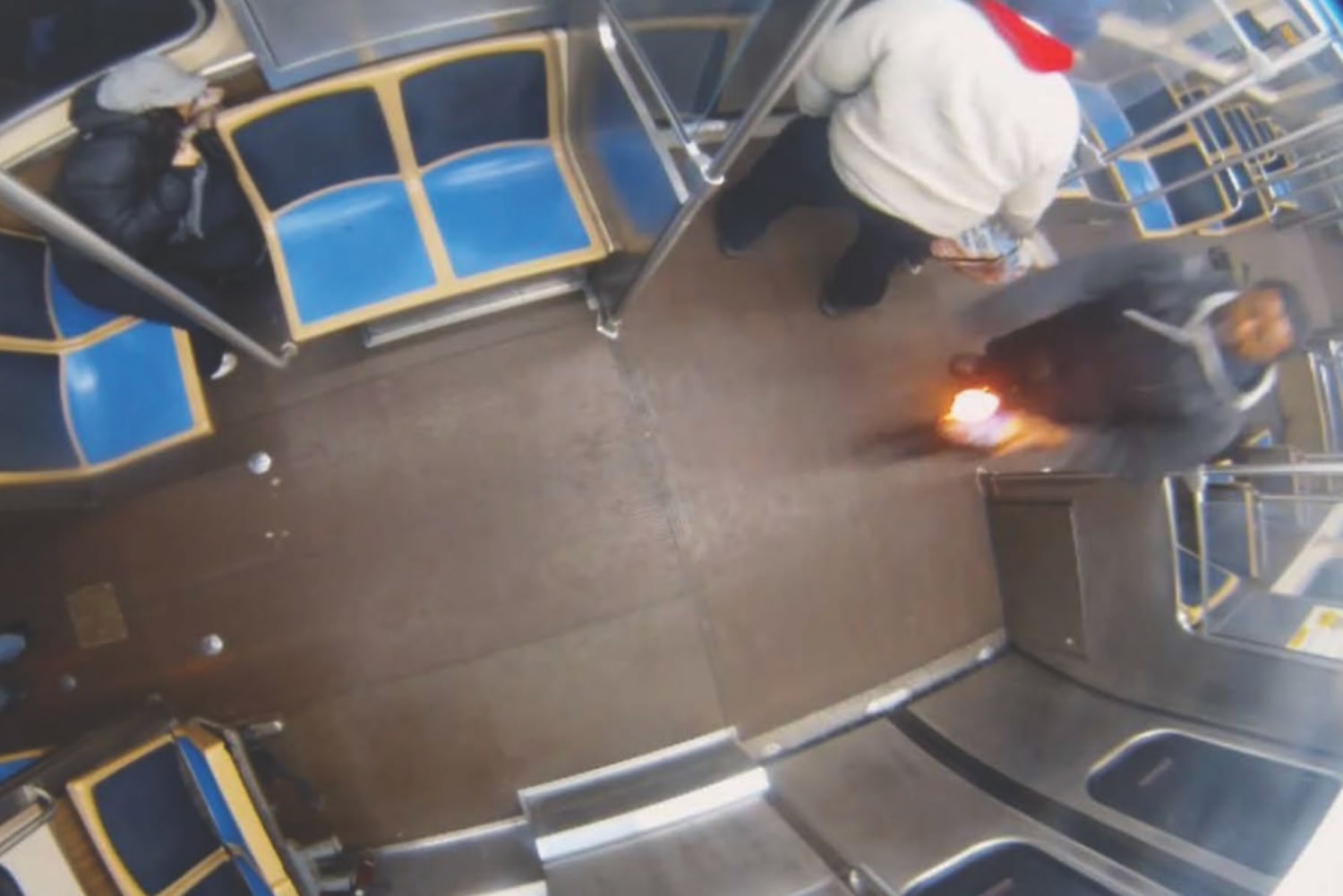
November 17 began as an unremarkable Monday for Bethany, a microcosm of her disciplined routine. After a grueling day crunching numbers on a locomotive parts project—ironic, given the venue of her later horror—she boarded the Blue Line at the Grand station around 9 p.m., her backpack slung over one shoulder, earbuds piping a playlist of Hillsong United tracks. Dressed in her signature uniform of slim jeans, a navy Caterpillar hoodie, and practical ankle boots, she settled into a window seat near the rear of the car, scrolling through emails about an upcoming team retreat. The train, a metallic vein ferrying 1.5 million riders daily through Chicago’s underbelly, was sparsely populated: a cluster of night-shift nurses chatting softly, a lone businessman dozing with his briefcase clutched like a shield, and scattered individuals lost in their phones. Unbeknownst to Bethany, Lawrence Reed, a 50-year-old specter of the city’s underclass, had boarded two stops earlier at Washington, clutching a nondescript plastic bottle filled with $3.50 worth of gasoline, purchased 30 minutes prior at a Garfield Park Shell station.
Reed’s shadow had loomed over Chicago for decades, a tragic footnote in a litany of systemic failures. With 72 arrests since turning 18—spanning aggravated battery, criminal trespass, and public intoxication—his rap sheet read like a chronicle of untreated mental illness and revolving-door justice. Diagnosed with schizophrenia in his 20s, Reed had cycled through Cook County Jail’s psych ward more times than he could count, his outbursts punctuated by delusions of government conspiracies targeting him. Just days before the attack, he’d been eyed as a suspect in an attempted arson at the City Hall-County Building, hurling Molotov cocktails at its facade while ranting about “corporate overlords.” Released in August on electronic monitoring after assaulting a social worker—over prosecutors’ vehement objections—a judge deemed him “low flight risk.” Yet, violations piled up: six breaches in three months, including the curfew infraction logged at noon on November 17. That evening, his ankle bracelet’s alert pinged unanswered in a bureaucratic void, as the monitoring program—recently outsourced from the Sheriff’s Office to a private vendor—languished understaffed and overwhelmed.
Surveillance footage, later released in grainy black-and-white by the Chicago Transit Authority (CTA), captured the horror in merciless detail. At 9:28 p.m., as the train swayed between Jackson and Monroe, Reed—disheveled in a threadbare coat and scuffed Timberlands—loomed behind Bethany’s seat. Without warning, he uncapped the bottle and upended its contents over her head, the acrid liquid soaking her hair and hoodie in seconds. Bethany, startled from her reverie, whipped around, her eyes widening in primal terror. “What the—?” she stammered, but Reed was already fumbling for his lighter, a Zippo etched with faded initials. The spark caught, and flames erupted like a biblical scourge, engulfing her upper body in a roaring inferno. Screams shattered the car’s fragile calm—the nurses bolting upright, the businessman fumbling for his phone—as Bethany thrashed, her hands clawing at the blaze, skin blistering under the assault. In a surge of adrenaline-fueled instinct, she bolted toward the front, trailing fire like a comet’s tail, her cries devolving into guttural pleas: “Help! God, please!”
The train screeched to a halt at Clark/Lake, doors hissing open to the bustling platform thronged with post-theater crowds spilling from nearby theaters. Bethany stumbled out, a human torch collapsing in a heap amid gasps and chaos. Bystanders—emboldened by the city’s unspoken code of communal grit—sprang into action: a burly construction worker smothering the flames with his jacket, a quick-thinking barista dousing her with a thermos of water, and a cluster of office workers dialing 911 in frantic unison. Reed, singed on his right hand but otherwise unscathed, sauntered to the platform’s edge, watching impassively before melting into the crowd, his figure swallowed by the stairwell shadows. Paramedics from Engine 13 arrived within four minutes, their sirens wailing through the Loop’s canyons, airlifting Bethany to Stroger via a medevac chopper that sliced the night sky like a silver arrow.
The burn unit at Stroger Hospital—a fortress of beeping ventilators and whispered consultations—became Bethany’s battlefield. Admitted with burns spanning her face, neck, torso, left arm, and hands—classified as 60 percent total body surface area, with third-degree depths requiring grafting—she hovered in a medically induced coma for six days, her vitals a tightrope walk over sepsis and organ failure. Surgeons labored through marathon sessions, debriding necrotic tissue and applying synthetic skin substitutes, while IV drips pumped antibiotics and painkillers into her veins. Her family, air-dashed from Indiana, formed a vigilant phalanx: Dr. MaGee clutching his Bible in the waiting room, murmuring Psalms 23; Emily stroking Bethany’s bandaged hand through gloved fingers; brothers Mark and John pacing corridors, their faces etched with a helplessness that clawed at their souls. Friends from Caterpillar and Grace Church flooded the hospital with care packages—plush blankets scented like lavender, playlists of her favorite hymns—while a GoFundMe surged past $250,000, earmarked for reconstructive therapies and lost wages.
On November 24, as monitors trilled a stabilizing rhythm, doctors eased the sedation, coaxing Bethany back to the world. Eyelids fluttering like fragile wings, she oriented to the blur of white coats and fluorescent glare. Emily, perched at her bedside since dawn, leaned in as Bethany’s parched lips parted. The words emerged hoarse, barely audible over the hum of machines: “Mom… Am I dead?” The room froze, a tableau of collective heartbreak—nurses pausing mid-chart, Dr. MaGee’s Bible slipping from numb fingers, Emily’s composure fracturing into sobs. In that moment, disoriented by morphine haze and the ghost-pain of her ravaged body, Bethany voiced the abyss she’d glimpsed: a limbo between life and loss, where flames had licked at eternity’s edge. Emily, choking back tears, cupped her daughter’s cheek—the unburned right side, miraculously spared—and whispered, “No, baby. You’re here. You’re alive. God’s got you.” The utterance, later shared in a family statement to local media, rippled outward like a shockwave, humanizing the statistics into a clarion of survival’s fragility.
Bethany’s awakening marked not an end, but the grueling dawn of reconstruction. Prognoses painted a marathon: months of skin grafts, physical therapy to reclaim dexterity in her dominant left hand, and psychological counseling to unpack the PTSD shadows. Yet, her spirit—forged in Upland’s steady hearths—flickered defiantly. By November 26, she was off the ventilator, managing sips of water and tentative nods to visitors. “She’s a fighter,” Dr. Raj Patel, her lead surgeon, confided to reporters outside the hospital. “That first question? It broke us all, but it also showed her core—turning to faith even in the dark.” Family statements, released through Taylor University’s chaplaincy, urged prayers: “Bethany’s road is long, but her light endures. Thank you for carrying her with us.”
The attack’s fallout cascaded beyond Stroger’s walls, igniting a bonfire of outrage over Chicago’s fractured safety net. Lawrence Reed’s arrest—effected November 18 in a West Side flophouse, his singed hand bandaged and gasoline bottle confiscated—exposed the rot at the heart of the justice system. Charged federally with attempted murder and domestic terrorism, plus state counts of aggravated arson, Reed faces life if convicted, his bail denied amid prosecutorial fury. Critics, from Transportation Secretary Sean Duffy—who blasted “Chicago’s carelessness” on X, decrying the 72-arrest specter—to former President Donald Trump, who thundered at a rally about “liberal judges unleashing lunatics,” lambasted the electronic monitoring debacle. The program’s privatization in 2024, stripping sworn oversight for cost-cutting, left alerts unanswered—Reed’s curfew breach on attack day lost in a backlog of 5,000 violations. Unions like SEIU Local 700 decried the “terrifying consequences,” vowing lawsuits, while CTA riders, spooked by a 20 percent surge in assaults that year, demanded metal detectors and increased patrols.
Nationally, Bethany’s story echoed the August stabbing of Ukrainian refugee Iryna Zarutska in Charlotte—a grim duet underscoring transit terror’s bipartisan toll. Advocacy groups like RAINN and the Burn Foundation rallied, launching #SurviveTheFlames campaigns with survivor testimonials and policy pushes for mental health funding. In Upland, Taylor University held a candlelit vigil on November 25, its chapel aglow with 500 souls singing “It Is Well,” Dr. MaGee delivering a homily on resilience drawn from Job. Caterpillar, Bethany’s employer, pledged matching donations and job security, its CEO issuing a memo: “Bethany’s data drives our future; her strength defines our now.” Back in Ukrainian Village, neighbors transformed her block into a fortress of solidarity—bear hugs at stoops, free therapy sessions in church basements.
As November 26 dawned crisp and unforgiving—the current chill seeping through Chicago’s canyons—Bethany’s journey pressed onward, a testament to the indomitable thread binding suffering to hope. Her first words, “Mom… Am I dead?”, linger not as defeat, but as a pivot: a daughter’s anchor in the maelstrom, a mother’s vow renewed. In the burn unit’s hush, where beeps chart life’s stubborn pulse, Bethany MaGee stirs toward tomorrow—scarred, yes, but unbroken. Her story, born in flames, illuminates the cracks: in justice, in transit, in the human heart. And in its glow, a city—and a nation—pauses, whispers prayers, and resolves to fan embers into reform. For Bethany, alive against all odds, is no victim; she is resurrection, her light defying the dark.